Email: [email protected] Whatsapp: +8618266768780

Email: [email protected] Whatsapp: +8618266768780


Understanding how to find a factory to manufacture your product starts well before your first supplier call — it starts with a precise definition of what you actually need built. Skipping this step is one of the most common and costly mistakes product developers make.
Manufacturer (n.): A facility that transforms raw materials into finished goods through fabrication, machining, welding, or assembly — not a reseller or distributor of existing parts.
Before reaching out to any factory, document the following technical baseline:
With these requirements documented, you’re ready to identify which industrial partners can realistically fulfill them — and that process begins with knowing exactly where to look.
With your manufacturing requirements clearly defined, the next challenge is knowing where to look — and what to filter for. Sourcing custom manufacturing services for heavy equipment or complex assemblies demands more precision than a basic supplier search.
Follow this sequence to build a qualified shortlist:
Once you have a shortlist, the next critical step is verifying whether each candidate actually manufactures — or simply assembles.
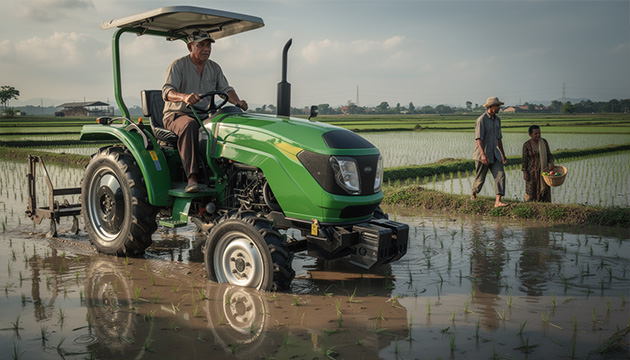
Once you’ve built a shortlist of potential partners, it’s time to look under the hood. Identifying a capable industrial manufacturer means going beyond a polished website — it means asking direct, operational questions before committing.
Start with component ownership. Ask what percentage of core components — engines, axles, hydraulic rams — are produced in-house versus sourced externally. High vertical integration typically signals tighter quality control and faster lead times. A factory that outsources most critical parts introduces variables you can’t easily manage.
| Component Type | In-House Production | Outsourced Production |
|---|---|---|
| Quality Control | Direct oversight at each stage | Dependent on supplier standards |
| Lead Time | Shorter, more predictable | Vulnerable to third-party delays |
| Customization | Easier to accommodate | Limited by external specs |
Confirm heavy-duty capability. If your product demands high-torque or heavy-duty performance, verify the factory has the machinery and engineering staff to match those requirements — not just willingness.
Ask about data infrastructure. Factories managing decades of technical documentation benefit from modern internal data systems. Modern data systems can dramatically reduce “time to information” across 30-year manufacturing archives, improving production consistency.
Verify their actual role. Always confirm you’re dealing with the manufacturer directly, not a broker or middleman, according to guidance from sourcing experts. This distinction affects pricing, accountability, and customization flexibility — all factors that become critical once prototyping begins.
With a vetted shortlist in hand, the next move is converting specs into something tangible. This phase tells you far more about a contract manufacturer than any sales pitch ever will.
Follow this sequence:
⚠ Warning: Prototype costs can range from hundreds to thousands of dollars depending on complexity and material. Budget accordingly and get cost breakdowns in writing before approving any sample run.
In practice, manufacturers that invest in digitalization and process improvements can reduce break-even sales ratios by nearly 10% — a signal that operational efficiency will carry through to your production timeline.
Once you’re satisfied with the prototype, the real due diligence begins: stepping onto the shop floor itself.
Knowing how to manufacture a product successfully means going beyond spreadsheets and supplier profiles — seeing the operation firsthand is essential. Whether you arrange an in-person visit or a live virtual walkthrough, a structured audit reveals truths that no brochure will.
Run through this five-point checklist during your audit:
The Shop Floor Reality: A clean, organized facility with labeled workstations, calibrated equipment, and visible QC logs signals operational maturity. Chaos on the floor predicts chaos in your order.
Once the audit confirms a credible operation, the relationship moves into formal territory — which is exactly what the next step addresses.
Once prototypes are approved and the shop floor is audited, closing the deal correctly is what separates a productive partnership from a costly dispute. Unlike evaluating suppliers vs manufacturers — where the distinction often hinges on flexibility — this stage is purely about legal clarity. As the US Chamber of Commerce notes, contract manufacturing lets brands scale without factory ownership costs, but only when the partner is vetted and the agreement is airtight.
Every manufacturing contract should include these must-haves:
In practice, factories that push back on these terms are signaling future problems. A manufacturer confident in their operation will accept reasonable accountability without hesitation. Getting these foundations right also sets the stage for the long-term production strategies covered next.

With contracts signed and production schedules locked in, the real work of sustaining a successful manufacturing relationship begins. These key takeaways distill the most critical lessons from each step covered above.
Finding the right factory is a process — but knowing the landscape helps. Globally, the largest manufacturing economies are China, the United States, and Germany, each dominating different sectors from electronics to precision engineering. This context is crucial when deciding where to source production.
Supplier vs. manufacturer is a distinction worth clarifying before you sign anything. A supplier sources and sells existing goods; a manufacturer produces them. Working directly with a manufacturer typically means lower per-unit costs, greater customization, and tighter quality control.
Contract manufacturing exists for practical reasons: companies with strong product ideas often lack the capital, equipment, or expertise to build in-house production lines. Partnering with a specialized factory lets businesses scale faster while keeping overhead lean. As Epos Now notes, finding the right manufacturing partner is often the single most important sourcing decision a business makes.
The path forward is clearer when you work with experts who understand heavy-duty production. Whether you’re researching reliable compact equipment or evaluating full-scale manufacturing partners, Qilu Machinery brings the industrial expertise and proven processes to help you move from concept to production with confidence.
FAQ
Q: What is the difference between a supplier and a manufacturer? A supplier sells pre-made goods; a manufacturer produces them. Manufacturers offer more customization and direct pricing.
Q: Why do companies use contract manufacturing? Contract manufacturing reduces overhead and accelerates scaling without requiring in-house production infrastructure.
Q: Who are the leading manufacturing countries? China, the United States, and Germany consistently rank as the top three global manufacturing economies.







-1.png)