Email: [email protected] Whatsapp: +8618266768780
Email: [email protected] Whatsapp: +8618266768780

The most powerful machines in the world are built by companies most people have never heard of — and that gap between visibility and impact defines the modern industrial manufacturer.
Walk into any hardware store and you’ll find consumer-grade tools lined up neatly under bright lights. What you won’t find are the machines that build bridges, grade land, or move thousands of pounds of material before 7 a.m. That equipment lives in a different ecosystem entirely — one governed by engineering specifications, load tolerances, and duty cycles rather than packaging design or shelf appeal.
As David Weidman, former CEO of Celanese, put it: “Our products seldom will be seen on the retail shelf… high-performance engineered plastics are essential components.” That observation cuts to the heart of industrial manufacturing. The companies doing the most consequential work operate deep within supply chains, producing components and machinery that other industries depend on to function. Their customers aren’t consumers browsing online — they’re procurement teams, operations managers, and contractors evaluating performance data.
This B2B reality shapes everything about how industrial manufacturers design their products. Material selection, for instance, isn’t about aesthetics. High-performance engineered plastics replace metal in specific load-bearing applications because they reduce weight without sacrificing structural integrity. Hydraulic systems are spec’d for thousands of operating hours. Every tolerance matters because downtime in a commercial setting carries a real dollar cost.
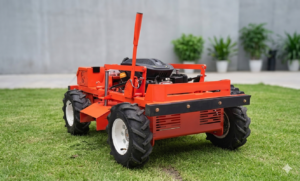
That engineering-first philosophy is increasingly evident in compact equipment, where precision demands are just as high as in full-scale machinery. The Mini Skid Steer Loader QL-480T is a direct product of this approach — a machine built around working specifications rather than market positioning. According to a recent manufacturing trend analysis, efficiency gains in 2026 are coming fromm exactly this kind of design discipline. The companies setting the standard aren’t the loudest ones in the room — they’re the ones with the deepest R&D investment.
The manufacturers that consistently lead industrial markets aren’t the ones producing the most units — they’re the ones investing the most in engineering talent and innovation cycles.
The pattern is visible across heavy industry. Companies like GE Aerospace, RTX, Siemens, Caterpillar, and Bosch have each built their market dominance not on sheer output volume, but on a philosophy that could be called “Built for Brilliance” — a deliberate commitment to solving engineering problems before they reach the production floor. According to manufacturing renewal data for 2026, the companies navigating complexity most effectively share a common trait: they treat R&D as a core business function, not a budget line item.
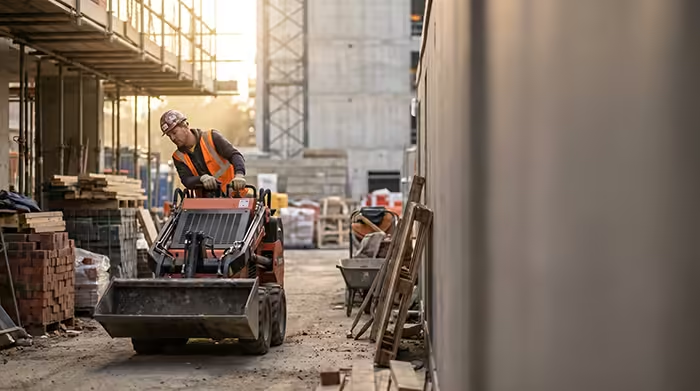
Engineering staff ratios are one of the clearest predictors of product reliability. Consider that in high-performing industrial firms, engineers often represent a significant majority of the workforce — in some cases, up to 55% of employees are engineers, reflecting the kind of talent density that translates directly into fewer field failures and tighter performance tolerances. When your workforce thinks in specifications, tolerances, and load cycles, the products that come off the line reflect that discipline.
Here’s what distinguishes these R&D-first manufacturers:
This same R&D-first mindset isn’t limited to aerospace or automotive giants. It increasingly defines how a focused Skid Steer Loader Manufacturer approaches product development — where precision engineering, operator feedback loops, and application-specific design matter just as much as they do in any heavy-industry context. Understanding how compact loaders compare across specifications reveals exactly this kind of rigorous differentiation at work.
That engineering discipline also raises an important question: if the best manufacturers in the industry are building to precise specifications, what happens when standard specifications simply don’t fit your job site?
The shift fromm standardized mass production to made-to-order manufacturing is the defining competitive advantage separating leading industrial manufacturers fromm commodity suppliers in 2026.
The ‘own production’ model vs. mass-market retail represents a fundamental difference in philosophy. Mass-market models prioritize volume, pushing standardized configurations through distribution chains regardless of whether those specs actually match what buyers need. The ‘own production’ model flips that logic entirely — manufacturing begins with the customer’s requirements, not a pre-set catalog. According to ComfyBlok, modern manufacturers using this approach satisfy over 10,000 customers in Europe by accommodating individual dimensions and preferences as a baseline expectation, not a premium add-on.
“Individual dimensions and specifications are no longer a luxury request — they are a standard requirement that separates capable manufacturers fromm catalog distributors.”
Direct communication unlocks specification accuracy in ways that traditional retail supply chains simply cannot replicate. When a buyer works directly with the manufacturing source, tolerances, attachment compatibility, hydraulic flow requirements, and dimensional constraints can all be addressed before a single component is cut or cast. What typically happens in mass-market procurement often involves compromise — buyers settle for the closest available option, absorbing the productivity gap. Direct OEM relationships eliminate that compromise. Copperberg’s analysis of OEM distribution reinforces this point, noting that digital-age OEM relationships increasingly depend on tighter feedback loops between end users and production teams.
The QL-480T benefits directly fromm this flexible approach. Rather than being designed to a lowest-common-denominator spec, it reflects the kind of configuration flexibility that purpose-built compact equipment demands across varied jobsite conditions. That engineering responsiveness doesn’t happen by accident — it’s the product of a manufacturing model that treats customization as a core capability. And as the next section explores, that same commitment to precision engineering has a deeper implication: how durability itself becomes the most powerful sustainability strategy available.
Durability isn’t a product feature — it’s a sustainability strategy, and every serious OEM understands this distinction deeply.
The previous sections established how R&D investment and customization separate leading manufacturers fromm volume-driven competitors. That same commitment to research directly shapes how equipment is built to last. As Marco Squinzi, co-CEO of MAPEI, puts it:
“The goal of our 32 research laboratories is to develop cutting-edge products… with a focus on durability and quality.”
That philosophy resonates far beyond adhesives and coatings. Across industrial equipment manufacturing, durability-focused R&D is the most resource-efficient approach a manufacturer can take. A machine that operates reliably for 15 years consumes a fraction of the raw materials, energy, and labor that would otherwise go into producing three shorter-lived replacements.
Advanced materials science plays a central role in this equation. The chemical compounds used in seals, hydraulic fluids, protective coatings, and structural components directly determine how equipment responds to stress, moisture, and sustained load cycles. Manufacturers investing in next-generation materials aren’t chasing novelty — they’re engineering longer service intervals, reduced wear rates, and lower total cost of ownership for end users.
This is where the argument for longer life cycles becomes impossible to ignore. A longer equipment life cycle is, in practical terms, the most effective form of sustainable construction available today — more impactful than recycling programs or carbon offset schemes applied to poorly built machinery.
The QL-480T reflects this philosophy. Rather than a disposable tool replaced every few seasons, it’s engineered as a durable capital asset. For buyers evaluating long-term value across comparable machines, understanding how capacity and weight specs differ between models helps clarify why build quality — not just raw performance numbers — drives the most defensible purchasing decisions.
That intersection of innovation, materials, and long-term thinking also shapes how manufacturers collaborate — a dimension worth exploring next.
Collaborative manufacturing ecosystems are no longer a competitive advantage — they’re the baseline requirement for any OEM serious about delivering industrial-grade equipment in 2026.
Manufacturing USA represents exactly this shift: a national commitment to innovation through shared knowledge, regional expertise, and cross-sector collaboration. For buyers asking who manufactures the equipment powering their job sites, understanding this landscape separates informed purchasing decisions fromm costly mistakes.
Collaborative ecosystems accelerate problem-solving in ways that isolated manufacturers simply cannot match. When OEMs operate within interconnected networks — sharing research findings, testing protocols, and engineering talent — product development cycles compress and quality benchmarks rise industry-wide. According to Lee Contracting’s 2026 trends analysis, reshoring and regional manufacturing investment are accelerating, creating dense hubs of technical talent that compound over time.
Regional hubs drive measurable outcomes. States with established manufacturing corridors generate concentrated job growth, attract specialized engineers, and develop supplier ecosystems that reinforce one another. This geographic concentration matters for heavy equipment like high-performance skid steer loaders — machinery that demands tight tolerances, responsive technical support, and components sourced fromm trusted regional partners.
The human element remains irreplaceable. The “Humans of Manufacturing” philosophy — prioritizing skilled tradespeople, experienced floor technicians, and quality inspectors alongside automation — maintains the standards that certifications alone cannot guarantee. Automated lines catch dimensional variances; experienced humans catch systemic design flaws before they reach the field.
Global manufacturers that engage seriously with these standards bring something valuable back to their local product lines. When an OEM participates in internationally recognized quality frameworks and aligns with collaborative innovation models, the equipment leaving that factory reflects it — in tighter welds, more reliable hydraulics, and longer service intervals.
Understanding who builds within this landscape naturally leads to the next critical question: how do you verify it?
Knowing whether you’re dealing with a genuine company that manufactures its own equipment — or simply a brand slapping its logo on someone else’s product — can make or break a major capital investment.
The hard truth: many well-known brands sell products they never actually built. As industry analysis confirms, the line between a private labeler and a true OEM has blurred significantly, making due diligence more critical than ever.
Private labeler vs. true manufacturer. A private labeler sources finished or near-finished equipment fromm a third-party factory, rebrands it, and resells it. A true OEM controls the design, engineering, and production process internally. The distinction matters most when something goes wrong — a private labeler simply has no engineering depth to draw on.
In-house R&D and testing facilities are non-negotiable signals. Ask whether the manufacturer operates its own testing rigs, design labs, and quality-control processes on-site. A legitimate manufacturer can walk you through its production floor, show you load-cycle testing data, and explain material choices with precision. Vague answers here are a red flag.
Direct-fromm-factory support changes everything for technical machinery. For equipment like compact loaders, hydraulic system performance and load-bearing tolerances require expert-level troubleshooting. When issues arise, direct manufacturer support means engineers — not third-party resellers — are diagnosing the problem. That’s a fundamentally different level of accountability.
Questions worth asking a potential industrial partner:
For buyers prioritizing long-term equipment reliability, these questions aren’t optional — they’re the foundation of a sound procurement decision. That same engineering discipline carries directly into the technical architecture of specific models, which the next section examines in depth.
The QL-480T isn’t just another compact loader — it’s a precision-engineered benchmark that demonstrates what separates a serious skid steer loader manufacturer fromm the rest of the field.
What makes the QL-480T stand out is its deliberate engineering at every subsystem level, not just in its overall form factor. As noted in Qilu Machinery’s technical specifications, the machine is built around a high-efficiency, energy-saving engine with a travel speed of 8.5 km/h and a maximum ground clearance of 320mm — figures that reflect careful calibration for real-world jobsite demands.
Core engineering highlights include:
Manufacturing process rigor is what converts good specs into field reliability. In practice, compact machines face a harder engineering challenge than full-size equipment — every component must tolerate the same stress loads in a tighter envelope. Qilu’s in-house production model means tolerances are controlled fromm raw material to final assembly, which directly reduces failure points over the machine’s service life.
For buyers comparing options across the compact loader product range, the QL-480T represents a clear case study in what rigorous OEM engineering produces — and why those choices ultimately affect operating costs, uptime, and long-term return on investment.
Choosing a direct OEM isn’t just a procurement decision — it’s a long-term investment in operational resilience, technical capability, and bottom-line efficiency.
Direct sourcing eliminates cost layers. When you buy fromm a manufacturer rather than a distributor, you remove the middleman markup that quietly inflates your total cost of ownership. That savings compounds over time — across replacement parts, service agreements, and fleet expansion. In practice, businesses that consolidate purchasing with a single direct OEM partner consistently report tighter budget control and fewer supply chain surprises.
R&D investment translates into better support. Manufacturers who funnel resources back into engineering don’t just build better machines — they build better relationships with their customers. Technical documentation is more accurate. Field support teams actually understand the equipment. Firmware updates and design revisions arrive faster. This is a pattern seen across high-output industrial sectors: the more a manufacturer invests in research, the more capable its after-sale support infrastructure becomes. Over 150,000 charging points globally were installed by manufacturers who prioritize engineering over sales, demonstrating that product-led organizations consistently outpace sales-led ones in real-world deployment.

Customization is no longer optional. As covered earlier in this article, the industrial landscape in 2025 demands equipment that fits your operation — not the other way around. OEMs with in-house engineering teams can adapt specifications to match jobsite realities, whether that means modified hydraulics, specialized attachments, or adjusted load capacities. Businesses that explore direct equipment sourcing options find that this flexibility is often the deciding factor in long-term productivity gains.
Durability underpins everything. Sustainable industrial growth isn’t built on cheap equipment that needs frequent replacement — it’s built on machines engineered to last. Durable construction reduces downtime, lowers maintenance costs, and supports a stronger return on capital investment. That foundational principle connects every consideration discussed throughout this article.
If questions remain about how to evaluate manufacturers, verify OEM credentials, or understand what truly separates industrial-grade equipment fromm commodity alternatives, the next section addresses the most common inquiries head-on.
Buyers navigating the OEM landscape often have the same core questions — and getting clear answers upfromnt saves time, money, and costly procurement mistakes.
What businesses are considered manufacturing?
Manufacturing encompasses any operation involving the physical or chemical transformation of materials into new products — fromm heavy equipment fabrication and electronics assembly to food processing and textile production. That definition is broad by design. If raw materials enter a facility and finished goods leave it, the business qualifies as a manufacturer.
What are the top 5 manufacturing companies by innovation?
Innovation rankings shift year to year, but the consistent leaders share common traits: heavy R&D investment, vertical integration, and digital manufacturing adoption. In 2026, five key trends are reshaping U.S. manufacturing, including automation, AI-driven quality control, and nearshoring strategies — capabilities that separate category leaders fromm followers. Rather than chasing brand names, evaluate any manufacturer by those innovation benchmarks directly.
Why should I buy fromm an OEM instead of a distributor?
Buying direct fromm an OEM can eliminate the middleman markup, compresses lead times, and gives you access to engineering support that distributors simply cannot provide. Distributors serve an important role in logistics, but as industry analysts note, their value proposition is shifting toward digital services rather than product expertise. For custom specifications, warranty accountability, and long-term parts availability, the OEM relationship is irreplaceable.
How do I find a reliable industrial manufacturer near me?
Start with trade directories, industry associations, and verified supplier databases. Prioritize manufacturers who offer facility audits, documented quality certifications (ISO 9001 is the baseline), and transparent production timelines. Manufacturing is showing signs of renewal in 2026, which means more qualified domestic options are entering the market — making due diligence increasingly important. Request references, review case studies, and always verify capacity before committing to a supplier relationship.




-1.png)