Email: [email protected] Whatsapp: +8618266768780

Email: [email protected] Whatsapp: +8618266768780


When purchasing a 2.5 ton excavator like the QL-25Eco, focus on matching technical specifications to your specific job requirements for maximum return on investment.
• Match bucket size to your heaviest material’s loose density – this determines efficiency more than machine size alone
• Calculate total ownership costs including fuel, maintenance, and resale value – not just the purchase price
• Verify hydraulic flow rates match your attachments – most 2.5 ton models need at least 25 L/min for proper tool operation
• Request quotes from minimum three suppliers with complete project details – more information yields more accurate pricing
• Inspect engine, hydraulics, and undercarriage components thoroughly – check for leaks, wear patterns, and structural cracks before purchase
The QL-25Eco’s 2400mm digging depth and compact 3100x1300x2350mm dimensions make it ideal for urban construction, utility work, and landscaping projects where space is limited but professional performance is required.
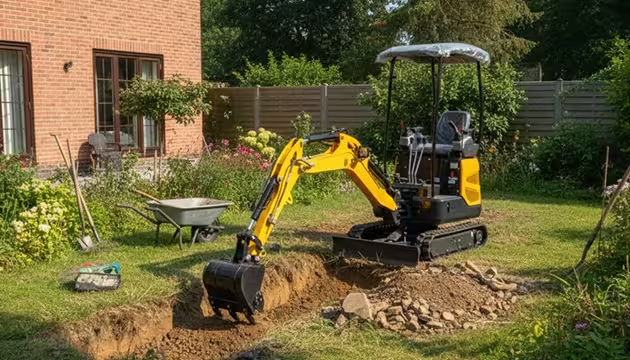
Choosing the right 2.5 ton excavator demands careful evaluation of technical specifications, performance capabilities, and long-term value. The compact size of these machines makes them ideal for urban construction, landscaping, and utility work, but not all models deliver the same level of professional-grade performance.
With this in mind, we’ve created this comprehensive guide focusing on the QL-25Eco to help you make an informed decision. Whether you’re searching for the best 2.5 ton mini excavator or comparing options from different 2.5 ton excavator suppliers, understanding key specifications is essential. We’ll cover everything from technical breakdowns and applications to selecting between 2.5 ton mini excavator for sale options and calculating your total investment when evaluating any 2.5 3 ton excavator.
The QL-25Eco operates at a total weight of 2500 kg, providing stability without sacrificing mobility on confined job sites. This weight classification delivers a ground pressure of 23 kPa, which prevents surface damage on finished landscapes while maintaining traction on soft terrain. The machine generates a maximum digging force of 12 kN and an arm digging force of 5 kN, giving you sufficient breakout power for compacted soil and clay-heavy ground conditions.
The standard bucket capacity measures 0.06 m³, with a bucket width of 400 mm. Running speed reaches 2.8 km/h, while the machine handles grades up to 30 degrees and produces a maximum traction of 12 kN.
You get multiple engine configurations with the QL-25Eco. The primary option features a Laidong 385 engine delivering 18.8KW, while alternative configurations include the Kubota D1703 at 18.2KW and the Yanmar 3TNV80F at 15.2KW. All engines maintain a rated power of 22.1KW at 2200 RPM with a displacement of 1.617 L. These three-cylinder diesel engines meet EURO5 and EPA emission standards, making them compliant for urban work zones with strict environmental regulations.
The hydraulic system uses a TAITE main pump with a GEAR 12/12/04 configuration. Flow rate operates at 24/24 L/min, powered by a TAITE 400 cc swing motor and a 200 cc traveling motor. The fuel tank holds 45 L, while the hydraulic oil tank capacity reaches 30 L. This system configuration increases work efficiency by up to 30%, allowing faster cycle times during repetitive loading operations.
Maximum digging depth extends to 2400 mm, giving you reach for utility trenching and foundation work. The maximum digging height reaches 3200 mm, with a dumping height of 2200 mm. Digging radius spans 3600 mm, while the dozer blade lifts to 210 mm and cuts down to 150 mm.
Overall dimensions measure 3100 x 1300 x 2350 mm, with a track length of 1890 mm and track width of 245 mm. The chassis width spans 1300 mm, and the platform tail slewing radius measures 950 mm. These compact measurements allow trailer transport without special permits.
Foundation work stands out as a primary application for the 2.5 ton excavator in residential settings. We can maneuver between existing houses and fence lines to dig footings for extensions and garage additions. The compact footprint excels at road repair jobs, specifically cut and patch operations where you need to remove damaged asphalt sections without blocking entire roadways. Trenching for utilities represents the core strength here. Electricians and plumbers rely on this size for running 24-inch-deep lines across finished properties. The machine handles small structure demolition work while navigating narrow alleys and accessing interior spaces for wall removal.
Grading hillsides for retaining walls and excavating natural swimming pools showcase the versatility of the best 2.5 ton excavator in landscape applications. We achieve precise land leveling using grading buckets, ensuring proper slope for drainage and uniform surfaces for patios or lawn installation. Hardscaping projects benefit from the ability to move pallet loads of pavers and landscape boulders. Land clearing operations remove invasive vegetation like honeysuckle or buckthorn, while stump extraction eliminates roots without excessive manual labor.
Gas line installations, electrical conduit placement, and fiber optic cable trenching fall within the operational range of most 2.5 ton excavator suppliers’ offerings. Septic system work includes digging tank holes and leech field lines. The narrow trenching capability proves vital for irrigation pipe installation and drainage tile systems without disrupting surrounding landscapes. Foundation waterproofing projects require digging alongside existing structures to access and repair cracks.
Farmers deploy the 2.5 ton mini excavator for sale for fixing tile drains and clearing silt from ponds. Installing fencing becomes efficient with auger attachments that dig consistent fence post holes. Drainage ditch excavation prevents field waterlogging and crop damage. Barn and shed construction benefits from quick foundation trench excavation coupled with the ability to load building materials on-site.
Matching the right machine to your specific job requirements prevents costly mismatches and maximizes return on investment. Your selection process needs to balance technical capabilities against operational realities.
Start by identifying your typical tasks and required digging depth. The bucket serves as your starting point, not the machine itself. Determine the loose density of your heaviest material, then select bucket size and capacity to handle that load efficiently. Stick length directly affects reach and breakout force, with shorter sticks delivering more digging power while longer sticks provide extended reach but less force.
Power output, measured in horsepower or kilowatts, determines how effectively the motor drives hydraulic systems. Torque represents the rotational force needed for heavy loads and tough excavation work. Fuel efficiency impacts both operational costs and environmental footprint. Evaluate engines based on your workload and operational conditions, ensuring the power output aligns with lifting, digging, and specialized tasks.
Hydraulic flow rate must match your tools properly. Most 2.5 ton excavator models require flow rates of at least 25 liters per minute. Coupler compatibility matters significantly; quick couplers allow operators to switch attachments from the cab, while pin grabber and S-Type couplers provide different locking mechanisms.
Add your purchase price to operating costs and maintenance costs, then subtract estimated resale value. Factor in fuel consumption, insurance, taxes, financing interest, regular maintenance, and replacement parts. Operating hours directly affect overall value.
Hydraulic safety interlock systems prevent accidental machine operation. Fluorescent seat belts improve visibility for supervisors. ROPS and FOPS cab certification provides rollover and falling object protection. Integrated cameras eliminate blind spots, while ergonomic seats and climate control reduce operator fatigue during extended shifts.
Securing competitive pricing requires obtaining quotes from at least three different 2.5 ton excavator suppliers. Include complete project information when requesting quotes: project size, soil type, job duration, and any special requirements. The more details you provide, the more accurate your quote becomes. Compare not just prices but also machine specifications, supplier reputation, delivery times, and after-sales support options. Negotiate by discussing competing quotes with suppliers, especially when you demonstrate serious interest. Purchasing during off-peak seasons or fiscal year-end periods often yields better discounts.
Check the engine exhaust pattern, oil condition, coolant, and blow-by rate. A specialist should measure the play in the slewing ring to assess wear. Test the hydraulic pump performance at operating temperature, then measure main pump pressure and control pressure. Inspect hydraulic cylinders for internal leaks and examine travel motors and final drives. Look for cracks in welds at the frame, boom, stick, and blade. Check undercarriage components including track shoes, idlers, carrier rollers, and links.
Drain fluids if required by carrier or state regulations. Remove oversized attachments such as buckets or arms to reduce dimensions. Secure all moving parts with straps or locks to prevent shifting during transit. Clean the machine to avoid debris falling off in transit. Take clear photos of the excavator before pickup for documentation purposes.
The QL-25Eco delivers professional-grade performance for contractors and property owners who need reliable digging power in tight spaces. Use the technical specifications and application examples we’ve covered to match machine capabilities against your specific workload requirements. When you select the right 2.5 ton excavator, you’re securing years of productive operation. Compare multiple suppliers, inspect thoroughly, and calculate total ownership costs to make the best investment for your business.
Q1. How deep can a 2.5 ton excavator dig?
A 2.5-ton excavator typically provides a digging depth of around 8 to 9 feet. This depth capacity makes it suitable for most residential utility work, including sewer lines and water mains that are usually buried between 3 and 6 feet deep, with plenty of room to spare for safe operation.
Q2. What should I inspect before purchasing an excavator?
Before buying, check the engine exhaust, oil condition, and coolant levels. Inspect the hydraulic system for leaks and test pump performance. Examine the undercarriage components including tracks, rollers, and links. Look for cracks in welds on the frame, boom, and stick. Also verify the cab condition, battery expiration date, and check for any oil or fuel stains that indicate leaking.
Q3. What are the main applications for a 2.5 ton excavator?
These machines excel at urban construction tasks like foundation work, trenching for utilities, and road repairs. They’re ideal for landscaping projects including grading, land leveling, and hardscaping. Additional uses include utility installation work such as gas lines and fiber optic cables, plus agricultural applications like drainage ditch excavation and fence post installation.
Q4. What engine options are available for the QL-25Eco?
The QL-25Eco offers three engine configurations: the Laidong 385 delivering 18.8KW, the Kubota D1703 at 18.2KW, and the Yanmar 3TNV80F at 15.2KW. All engines maintain a rated power of 22.1KW at 2200 RPM and meet EURO5 and EPA emission standards for environmental compliance.
Q5. How do I calculate the total cost of ownership for an excavator?
Add the purchase price to operating costs (fuel consumption, insurance, taxes, financing interest) and maintenance costs (regular service, replacement parts). Then subtract the estimated resale value. Consider operating hours as they directly affect overall value, and factor in attachment compatibility and operator comfort features that impact long-term productivity.




-1.png)