Welcome to Shandong Qilu Industrial Co., Ltd

 English
 Arabic
 Bulgarian
 Bengali
 Czech
Czech
 Danish
 German
 Greek
Greek
 Spanish
 Finnish
 French
 Hindi
Hindi
 Croatian
 Hungarian
 Indonesian
 Italian
 Japanese
 Korean
 Lithuanian
 Dutch
Dutch
 Norwegian
 Polish
 Portuguese
 Romanian
 Russian
 Slovak
 Slovenian
 Swedish
 Thai
Thai
 Turkish
 Ukrainian
 Vietnamese
 Tagalog
 Malay
Malay
 Estonian
 Catalan
 Latvian
 Urdu
Urdu
 Serbian
 Persian
 Swahili
 Albanian
 Armenian
 Icelandic
 Bosnian
 Luxembourgish
 Afrikaans
English Arabic
Bulgarian
Bengali
Czech
Danish
German
Greek
Spanish
Finnish
French
Hindi
Croatian
Hungarian
Indonesian
Italian
Japanese
Korean
Lithuanian
Dutch
Norwegian
Polish
Portuguese
Romanian
Russian
Slovak
Slovenian
Swedish
Thai
Turkish
Ukrainian
Vietnamese
Tagalog
Malay
Estonian
Catalan
Latvian
Urdu
Serbian
Persian
Swahili
Albanian
Armenian
Icelandic
Bosnian
Luxembourgish
Afrikaans
Afrikaans
English Arabic
Bulgarian
Bengali
Czech
Danish
German
Greek
Spanish
Finnish
French
Hindi
Croatian
Hungarian
Indonesian
Italian
Japanese
Korean
Lithuanian
Dutch
Norwegian
Polish
Portuguese
Romanian
Russian
Slovak
Slovenian
Swedish
Thai
Turkish
Ukrainian
Vietnamese
Tagalog
Malay
Estonian
Catalan
Latvian
Urdu
Serbian
Persian
Swahili
Albanian
Armenian
Icelandic
Bosnian
Luxembourgish
Afrikaans
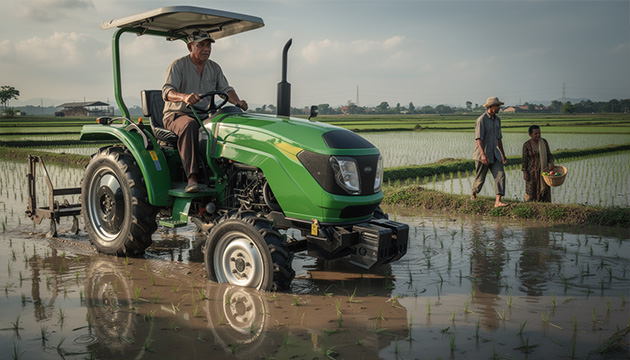
The High-Density Challenge: Why Standard Tractors Fail in the Orchard
Standard tractors were engineered for open fields — not the tight, canopy-laden corridors of a modern high-density orchard. That mismatch isn’t a minor inconvenience; it’s a fundamental incompatibility that threatens both yield and equipment.
Orchard Profile: A high-density orchard is a vertically constrained, row-intensive growing environment where tree spacing can drop to as little as 3–4 feet apart and trained canopies extend to within inches of equipment pathways.
Open-field agriculture rewards power and width. Orchards demand precision and low clearance — two priorities that pull in completely opposite directions. Where a row-crop tractor might pass through a soybean field without a second thought about hood height, that same machine becomes a liability the moment it enters a V-trellis apple block or a spindle-trained pear row. The geometry simply doesn’t cooperate.
Canopy snagging is the most immediate and costly consequence of running conventional equipment through mature orchards. Standard Roll-Over Protective Structures (ROPS) and tall hoods — often standing 7 to 8 feet above ground — catch low-hanging scaffold branches, tear fruit spurs, and knock developing fruit loose mid-season. As University of California Agriculture and Natural Resources (UC ANR) notes, standard utility tractors are frequently too tall for mature orchards, which is precisely why specialized models feature sloped hoods and recessed lighting as baseline design requirements — not optional extras.
The difference between open-field farming and orchard work is also a difference in accountability. Every pass through a high-density block puts thousands of dollars of fruit within inches of moving steel. That reality reframes the equipment conversation entirely: a low profile orchard tractor isn’t an upgrade over a conventional machine — it’s the only appropriate tool for the environment. Just as purpose-built field equipment has evolved to match the demands of modern agriculture, orchard tractors represent their own distinct branch of that evolution.

Understanding why these machines look and perform so differently from standard tractors starts with their most defining characteristic: the precise dimensional envelope they’re engineered to occupy — and that’s exactly where the next conversation begins.
The Critical Dimensions: Navigating the 48-to-60 Inch Gap
Orchard-ready tractors are defined not by horsepower alone, but by a precise set of physical constraints that determine whether the machine can actually do the job safely and efficiently.
Understanding what orchard farming demands at a mechanical level means accepting that width is everything. Modern high-density spindle orchards plant trees in rows spaced as close as 10 to 14 feet apart, leaving a working corridor that a standard agricultural tractor simply cannot navigate without clipping branches, bruising fruit, or compacting soil in critical root zones. According to John Deere’s specialty tractor specifications, orchard tractors must maintain a total width profile of 48 to 60 inches — a range that has become the de facto industry standard for modern high-density operations.
Every inch beyond 60 inches of total width translates directly into crop damage and lost revenue. That’s not an abstraction — it’s the operational reality growers face every spray cycle, every harvest pass, every pruning run.
The non-negotiable dimensions that define a true orchard tractor include:
- Overall width: 48–60 inches to clear standard high-density row spacing
- Low center of gravity: A lowered chassis and compact hood profile to maintain stability on sloped, uneven orchard floors without rollover risk
- Recessed lighting and flush-mounted panels: Smooth body contours and tucked-in components prevent snagging branches and bruising fruit on contact
- Operator envelope: Cab or ROPS width contained within the overall machine profile, balancing protection with the tight width requirement
Low center of gravity deserves particular attention. Orchard floors are rarely level — irrigation berms, tree roots, and seasonal erosion create constant lateral challenges. A tractor built with a lowered engine bay and wide-stance axles relative to its height dramatically reduces tip risk, which matters especially on hillside blocks.
The trade-off, however, is real. Compressing everything into a 48-to-60 inch envelope forces compromises in operator space. Narrower cabs mean tighter seating, limited visibility angles, and reduced comfort during long spray days. Manufacturers address this through ergonomic seat positioning and telescoping steering columns — but growers should evaluate operator fatigue honestly before purchase.
That narrow profile also affects how the tractor handles turning maneuvers — particularly at the end of rows, where the geometry of the headland becomes the next critical constraint to solve.
Turning Radius and the Headland Efficiency Problem
Tight turning radius is one of the most underappreciated performance metrics when growers evaluate which is best tractor for agriculture in high-density orchard settings — and it’s where specialized low-profile machines earn their keep most decisively.
Headlands are the strips of ground at each end of an orchard row where a tractor must turn around and realign before entering the next pass. In open field farming, headlands are a minor inconvenience. In a modern orchard, they’re a genuine operational bottleneck. Row ends are often bordered by irrigation infrastructure, tree stakes, or fencing, leaving virtually no room for error. A machine that can’t pivot cleanly within the available space forces the operator into a multi-point turn — and those turns carry a cost that compounds across an entire season.
Multi-point turns consume significantly more fuel per acre than clean single-arc reversals, but fuel isn’t the only casualty. Each additional forward-and-reverse maneuver adds wheel pressure to the same narrow strip of soil at the row end. Over hundreds of passes, this creates compaction layers that restrict root development precisely where orchard trees need lateral spread the most. Compacted headland soil also drains poorly, increasing the risk of disease pressure at the base of the canopy.
This is where the physics of specialized steering geometry matter. Specialized orchard tractors often achieve a turning radius as tight as 10 to 12 feet, according to data from Kubota’s M-Series narrow specifications, compared to the 15-to-20-foot radius typical of standard agricultural tractors. That difference — seemingly modest on paper — translates to clean, single-arc headland turns even in constrained end-of-row conditions.
The mechanical advantage comes from a combination of narrow-track front axles, tighter steering lock angles, and in many cases, rear-axle articulation that standard machines simply don’t offer. Understanding how a tractor’s PTO and drivetrain configuration interacts with its steering geometry is equally important — because the next critical question for orchard operators isn’t just whether the machine can turn, but whether it can power the attachments that make each pass count.
Hydraulic Flow: The Hidden Metric of Crop Protection
Choosing the best tractor for orchard farming means looking beyond horsepower — hydraulic flow rate is the specification that actually determines whether your implements perform or fail.
Growers often spend considerable time comparing engine output figures, yet the number that dictates day-to-day productivity is gallons per minute (GPM) of hydraulic flow. As Growing Produce / American Fruit Grower notes, “the most important feature for an orchard tractor is the hydraulic flow rate, as it dictates the effectiveness of sprayers and pruners.” That single metric separates a machine that handles modern orchard attachments with precision from one that constantly underperforms them.
PTO-driven sprayers and hydraulic pruners are particularly demanding. A standard orchard air-blast sprayer requires consistent hydraulic pressure to maintain uniform droplet distribution across the canopy. When flow is inadequate, pressure fluctuates mid-row, and chemical coverage becomes patchy — meaning some sections of the tree receive the correct dose while others receive too little. In disease management, that inconsistency isn’t a minor inconvenience; it’s a crop risk. Hydraulic pruners compound the challenge further, requiring steady flow to deliver reliable cutting force through dense, mature wood. Hesitation in the hydraulic circuit translates directly into operator fatigue and slower pruning cycles.
The practical benchmark most modern orchard attachments demand falls between 8 and 15 GPM, depending on the implement. Single-function tools like hydraulic shakers may operate acceptably at the lower end, while multi-function sprayer rigs with powered fans push toward the upper range. Tractors spec’d with PTO compatibility and variable flow options give operators far greater flexibility when rotating between seasonal implements.
On the other hand, a 60-horsepower tractor with a weak hydraulic pump will consistently outperform a 75-horsepower unit whose pump delivers insufficient GPM for the attached implement. Horsepower moves the tractor; hydraulic flow runs the work. For operations investing in modern precision attachments, verifying the hydraulic specification before purchase is not optional — it’s foundational.
That hydraulic calculus becomes even more consequential when budget constraints enter the picture, which is exactly the challenge smaller orchard operations face when shopping the current market.
Finding the Best Orchard Tractor for Small-Scale Operations
Finding an affordable tractor for a small orchard is one of the most common challenges facing growers managing 5 to 10 acres — tight budgets collide with the non-negotiable need for a narrow, low-profile machine.
The affordability gap is real, but it doesn’t mean growers have to choose between price and performance. As noted across discussions in the farming community, small orchard owners frequently seek options that don’t sacrifice the narrow profile required for tight row spacing. The challenge is that purpose-built orchard tractors have historically been priced for commercial-scale operations, leaving smaller growers to navigate a frustrating middle ground.
Budget — what the market actually offers small growers. The used equipment market can appear attractive at first glance. A 20- to 40-horsepower machine from a decade ago may list at a compelling price, but older tractors often lack the hydraulic capacity discussed in the previous section — limiting compatibility with modern sprayers and mowers. Newer value-tier brands have entered the conversation as a genuine alternative. Compact models with multi-implement compatibility — supporting 3-point linkage, PTO, loaders, and sprayers — can deliver purpose-built narrow profiles without the premium price of legacy manufacturers.
Versatility — the case for adding a front loader. A front loader transforms a single-task orchard tractor into a year-round workhorse. Growers can learn from equipment buying guides that loader compatibility significantly increases a machine’s return on investment for operations that need to move compost, clear debris, and manage seasonal tasks beyond canopy work.
Durability — using California almonds as the benchmark. California almond operations have become an informal industry standard for small-to-midsize orchard efficiency. Growers in that sector demand machines that withstand sandy soil, repetitive narrow-row passes, and intensive seasonal schedules without frequent downtime. Any tractor evaluated for a small orchard should meet that same durability threshold — regardless of brand tier.
That question of brand tier and machine origin leads directly into a sharper comparison: how do purpose-built low-profile tractors actually stack up against modified standard utility models?
Low Profile vs. Standard: A Comparative Analysis
Matching orchard tractor specifications to your operation isn’t just a preference — it’s the difference between a machine that pays for itself and one that costs you every season.
Purpose-built low-profile tractors consistently outperform modified standard models in confined canopy environments. The comparison becomes stark once you move beyond sticker price and look at total operating cost.
The ROPS factor is often where the gap first becomes visible. According to University of California Agriculture and Natural Resources, a low center of gravity and a low-profile ROPS are essential to prevent the tractor from snagging on overhead canopies. Standard utility tractors typically carry ROPS structures that exceed 90 inches in height — well above the 60–80 inch clearance required in mature apple, peach, or cherry rows. That single dimension can make an otherwise capable machine completely impractical. For context on how ROPS certification standards apply across different machine categories, this overview of protective structures explains the engineering principles behind roll-over protection.
Modified standard tractors — where operators lower tire pressure, remove cab structures, or retrofit aftermarket ROPS — almost always introduce new problems. Altered geometry shifts the center of gravity unpredictably, and voided warranties leave growers exposed. What typically happens is that short-term savings evaporate through increased maintenance, reduced stability on slopes, and attachment compatibility issues that purpose-built machines simply don’t have.
The ROI calculation favors the specialty machine once crop damage enters the equation. A standard tractor clipping even a modest percentage of fruit-bearing branches per pass can translate to hundreds of dollars in lost yield per acre, per season. Over a five-year horizon, that erosion frequently exceeds the price premium of a proper orchard tractor.
The good news for growers watching margins is that purpose-built doesn’t have to mean prohibitively expensive — which is exactly where the next conversation begins.
The Qilu Advantage: Balancing Specs and Affordability
Growers who need professional orchard dimensions don’t have to pay a premium price to get them — and that’s exactly where Qilu Machinery changes the equation.
Narrow-track, low-profile engineering is Qilu’s core focus, not an afterthought bolted onto a standard ag platform. Where many general-purpose manufacturers adapt their line for orchard use, Qilu Machinery specializes in agricultural equipment that prioritizes maneuverability and specialized dimensions from the ground up. That distinction matters when you’re operating between rows where an extra two inches of width causes real canopy damage and real crop losses.
Width compliance is one area where the difference becomes concrete. Modern high-density orchards — particularly apple and cherry operations running trellised systems — demand machines that fit comfortably within 48 to 60 inches of track width. Qilu’s orchard-spec models are engineered to hit that window without requiring aftermarket wheel modifications or compromised stability. For a grower managing row spacing that was designed around a specific machine profile, that out-of-the-box compliance eliminates a costly guessing game.
Durability in demanding conditions is the other side of the value proposition. Fruit farming environments are harsh: wet soils in spring, rocky ground in drier months, and constant PTO engagement for sprayer and mower operations. Qilu machines are built for that kind of continuous work cycle. Pair that with a purpose-built 50HP power range and the math starts to favor smaller operations that want professional capability without the debt load of a flagship brand purchase.
Three orchard-specific features that define the Qilu approach:
- Narrow track width engineered within the 48–60 inch standard for modern high-density rows
- Low-profile ROPS and hood design protecting canopy integrity across multiple crop seasons
- Robust hydraulic output supporting commercial-grade sprayers and implements without added conversion hardware
For expanding orchards watching every dollar, that combination of spec compliance and competitive pricing positions Qilu as the smart-money choice — a theme worth keeping in mind as you weigh the final purchase criteria ahead.
The Bottom Line: What You Need to Know Before Buying
Buying the wrong tractor for your orchard isn’t a minor inconvenience — it’s a compounding mistake that costs you in crop damage, operator hours, and long-term soil compaction every single season.
As covered throughout this article, modern orchard efficiency is determined by the synergy between tractor width and implement power requirements, according to Growing Produce. That synergy doesn’t happen by accident. It starts with disciplined spec evaluation before you ever talk to a dealer.
Width and turning radius are non-negotiable starting points. Target an overall machine width under 60 inches and a turning radius under 12 feet. These two numbers alone will determine whether your tractor fits your rows without grazing trunks and whether headland turns stay efficient as tree canopies mature and close in. Everything else — horsepower, transmission type, loader capacity — is secondary to getting these dimensions right.
Hydraulic flow is the hidden deal-breaker. Many growers assume any tractor with a rear PTO is compatible with their sprayer. In practice, airblast and tower sprayers have specific GPM demands that mid-range hydraulic systems can’t always meet. Before signing a purchase agreement, pull your sprayer’s spec sheet and match it against the tractor’s auxiliary hydraulic output. If you need guidance on selecting compatible attachments, treat implement specs with the same weight as tractor specs.
Low-profile ROPS and sloped hoods protect the crop — not just the operator. Flat hoods and tall rollover structures clip low-hanging fruit and strip scaffold limbs. These aren’t optional features you can retrofit cheaply; they need to be part of the base machine.
Affordability and specialty dimensions can coexist — but only if you look beyond the dominant brands. Manufacturers that specialize in orchard and vineyard configurations, like Qilu Machinery, often deliver purpose-built geometry at a price point that makes the ROI calculation considerably easier.
The right specs exist. The right price point exists. The decisions you make on paper, before purchase, are what ultimately protect your orchard for decades to come.
Conclusion: Securing the Future of Your Orchard
The best tractor for your orchard isn’t the most powerful one on the market — it’s the one that fits cleanly between your rows without touching a single branch.
Every section of this guide has pointed to the same truth: row spacing is the non-negotiable starting point for any equipment decision. As Forum4Farming notes, “Choosing the right tractor is the most significant capital decision an orchardist makes for the decade.” That statement carries real weight when you consider how long the wrong machine will keep costing you — in bruised fruit, compacted root zones, stressed operators, and seasons of avoidable loss.
Wrong equipment doesn’t just underperform — it actively works against your yield. A standard-width tractor forced through a tight orchard row creates a cascade of problems: canopy damage that opens trees to disease, soil compaction that restricts root development, and operator fatigue that slows every task from spraying to harvesting. These aren’t one-time costs. They compound across every season the wrong machine stays in your fleet.
The practical step forward is straightforward. Pull the spec sheets on any tractor you’re evaluating and look specifically for “Narrow,” “Orchard,” or “Low-Profile” designations — not as marketing labels, but as engineering commitments. Overall width, clearance height, and turning radius should all be measured against your actual row dimensions before a purchase decision is made. If you’re also thinking about matching your mowing equipment to the same tight-clearance standard, that same spec-first discipline applies.
When purpose-built performance and accessible pricing both matter, the path is clear. Explore Qilu Machinery’s specialized orchard tractor lineup and find the configuration that was engineered — not improvised — for the way your orchard actually grows.