Email: [email protected] Whatsapp: +8618266768780
Email: [email protected] Whatsapp: +8618266768780


The modern farm tractor is no longer just a workhorse — it’s a precision platform, a data node, and a multi-implement powerhouse that has redefined what’s possible in agricultural production.
That transformation didn’t happen overnight. Early traction engines ran on steam, requiring crews of operators just to move across a field. The shift to internal combustion in the early 20th century was the first major turning point, shrinking both the machine and the workforce needed to run it. As iron and engineering evolved, tractors shed their single-purpose identity — initially built only to pull — and began accepting a growing family of attachments that turned one machine into many.
The tractor’s role today is fundamentally different: it is the central power hub from which an entire farming operation is orchestrated.
By the mid-20th century, manufacturers had standardized connection systems and hydraulic circuits that let operators switch between planting, tilling, hauling, and harvesting with the same chassis. That versatility accelerated through the digital era. GPS receivers, load sensors, telematics systems, and automated steering have turned the cab into something closer to a command center than a cockpit. As PrecisionAg / Meister Media Worldwide notes, “Precision agriculture is no longer a luxury; it is a necessity for sustainable farming, with tractors serving as the primary hub for data collection.”
The optimal range for most operations is the 50HP to 70HP range — powerful enough for demanding field work, yet compact enough for livestock yards, orchards, and construction sites. This class of machine now represents the industry’s benchmark for versatility.
To fully leverage that versatility, understanding the language of the machine is essential.
Understanding tractor specifications is crucial for making informed purchasing and operational decisions for any agricultural tractor.
The previous section explained how tractors evolved into sophisticated power platforms. Before exploring why they’re indispensable assets, it’s worth grounding that conversation in the technical vocabulary operators use daily. These terms aren’t just jargon — they directly determine how well a machine performs across tasks.
**PTO (Power Take-Off)**
A rotating shaft that transfers mechanical power from the tractor’s engine directly to attached implements. Standard PTO speeds run at 540 or 1,000 RPM, powering everything from mowers and balers to grain augers.
**Three-Point Hitch**
The [industry-standard mounting system](https://en.wikipedia.org/wiki/Tractor) for attaching implements to a tractor’s rear. Critically, this design transfers the tractor’s own weight onto the implement, improving ground traction under heavy load conditions.
**Hydraulic Flow Rate**
Measured in gallons per minute (GPM), this determines how quickly and powerfully hydraulic-driven attachments — like front loaders, backhoes, and grapples — can operate. Higher GPM means faster cycle times and greater lifting capacity.
**ROPS (Roll-Over Protective Structure)**
A reinforced cab frame or roll bar engineered to protect the operator if the tractor tips. ROPS is a non-negotiable safety standard on modern machines and is often paired with a seatbelt requirement for full protection.
**Draft Control**
An automatic sensing system that adjusts implement depth in real time based on soil resistance. In practice, this keeps tillage tools working at a consistent depth without constant manual input, preserving fuel efficiency and soil structure.
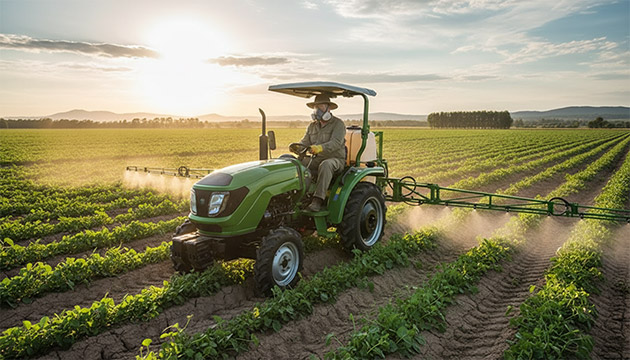
A tractor with mismatched specifications isn’t just inefficient — it can also be unsafe or damaging to the soil. When evaluating performance specs, understanding how HP ratings interact with these systems matters enormously. A well-matched power tier ensures each of these systems operates within its optimal range. Together, these five elements form the foundation for understanding why the farm tractor remains an irreplaceable asset — a case the next section makes in full detail.
Modern farm operations cannot survive on manual labor alone — mechanical efficiency isn’t a luxury, it’s the backbone of agricultural profitability.
The numbers make this point hard to argue with. The global agricultural tractor market is projected to reach $121.1 billion by 2032, driven by accelerating labor shortages and the urgent push toward mechanization worldwide. That growth reflects a simple reality: farms that rely heavily on manual labor are falling behind on cost, speed, and output consistency.
Here’s why a tractor is no longer optional for serious agricultural operations:
Determining which tractor size provides the right balance of power and efficiency — especially for operations navigating soil compaction concerns — is where the 50HP to 70HP segment becomes particularly compelling.
The 50HP–70HP range has become the undisputed sweet spot for modern mixed-use farming — powerful enough for serious field work, yet agile enough for precision growing environments.
Weight vs. power balance is the first reason operators gravitate toward this category. Heavier utility tractors can cause significant soil compaction, reducing crop yield over time by degrading root structure and water absorption. Mid-range 50hp-70hp tractors deliver meaningful drawbar pull while keeping ground pressure at levels that protect soil health — a practical advantage that pays dividends across multiple growing seasons.
Fuel efficiency is the second compelling argument. Mid-range diesel engines in this class are engineered to operate closer to their optimal load curve during typical field tasks, burning less fuel per productive hour than oversized machines running at partial capacity. For operators managing tight seasonal budgets, that efficiency difference compounds quickly. According to the Association of Equipment Manufacturers (AEM), compact and sub-compact tractors are experiencing the highest growth rates in the market, driven largely by specialized orchard and vineyard management needs — environments where this power class genuinely thrives.
Capability analysis tells the full story. A 30HP tractor handles light cultivation and lawn maintenance reliably, but it lacks the hydraulic lift capacity and PTO output for heavy round baling, subsoiling, or large loader work. A 70HP machine bridges that gap decisively. You can explore how power requirements scale with task complexity when comparing these two power tiers.
| HP Range | Ideal Task | Key Benefit |
|---|---|---|
| Under 40HP | Lawn care, light cultivation | Low cost, minimal compaction |
| 50HP–70HP | Baling, orchard work, loader tasks | Versatility with efficiency |
| 80HP+ | Large-scale tillage, row cropping | Maximum draft and payload |
Understanding what this range can do sets the foundation for the next critical question: how do you operate it efficiently to maximize every dollar invested?
Tractor operational efficiency is the difference between a machine that pays for itself and one that quietly drains your margins season after season.
Fuel costs are the first lever every operator must control. According to Iowa State University Extension and Outreach, fuel expenses account for approximately 15% to 25% of total variable operating costs over a tractor’s lifespan — making it the single largest controllable cost factor after labor.
💡 Fuel is not a fixed cost — it’s a management decision. How you load, run, and maintain your engine directly determines where in that 15–25% range you land.
Engine cooling systems play a larger role in fuel economy than most operators initially expect. A properly functioning cooling system keeps the diesel engine operating within its ideal thermal range. When an engine runs too hot — even intermittently — combustion efficiency drops, fuel consumption spikes, and long-term wear accelerates. In practice, neglecting coolant maintenance is one of the fastest ways to erode the efficiency gains built into modern compact diesel designs.
Transmission ratio optimization is equally critical. Matching gear selection to the specific resistance of each field task — whether plowing, mowing, or hauling — reduces engine strain and keeps fuel consumption lean. Running a higher gear at lower throttle is a well-established practice for cutting consumption without sacrificing output. Understanding which PTO and drivetrain settings align with each implement type puts this principle into action immediately.
GPS-assisted field navigation is rapidly becoming standard on even mid-range compact units. Automated guidance reduces field overlap — a common source of hidden fuel waste — while also cutting input costs on seed and fertilizer. Studies across precision agriculture programs consistently show GPS guidance can reduce overlap by 3% to 10%, translating directly into measurable savings per acre.
Together, these four efficiency levers form a framework that compounds over time — and how well that framework holds up depends entirely on what happens after the first thousand hours of operation.
A well-maintained compact tractor in the 50HP–70HP class can realistically serve as a precision agriculture hub for 5,000 hours or more — but the path there runs directly through disciplined maintenance at every interval.
The first 1,000 hours represent a critical proving period. In practice, this is when minor issues surface: small hydraulic weeps, belt tension drift, and minor seal compression losses. Operators who log these early signs and address them promptly establish a maintenance rhythm that carries the machine well into mid-life without costly surprises.
Engine Compact diesel engines are remarkably durable, but longevity depends on consistent filter changes, clean fuel quality, and coolant system integrity. According to owner-documented analysis, maintenance of compact diesel engines is the primary factor in reaching the 5,000+ hour mark without major overhauls. Skipping even one oil change interval under heavy load conditions can accelerate cylinder wear measurably.
Hydraulics Hydraulic fluid integrity is a quietly decisive factor in long-term performance. Contaminated or degraded fluid accelerates pump wear and causes spool valve sticking — failures that are expensive relative to the cost of a simple fluid flush. A common pattern is to sample hydraulic fluid at 500-hour intervals, checking for moisture intrusion and particulate count.
Chassis The chassis itself rarely fails, but the components bolted to it do. Common wear points include:
Knowing which tractor specs support your workload from day one helps you plan maintenance intervals accurately, rather than reacting to failures. Those operational disciplines connect naturally into specialized use cases — which is where maintenance demands shift in ways most buyers don’t anticipate.
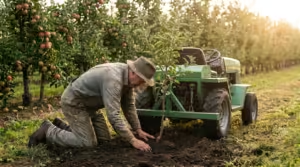
No two farming operations demand the same tractor configuration — and the gap between a sprawling row-crop farm and a boutique orchard illustrates exactly why versatility defines the modern power hub.
As the Association of Equipment Manufacturers (AEM) notes, modern farmers are moving away from one-size-fits-all machinery toward smaller, versatile tractors that prioritize maneuverability. That shift is most visible in specialty crop environments.
“Orchard and vineyard operators need machines that fit between rows without damaging root zones or canopy structures — a full-size row-crop tractor simply isn’t the right tool.”
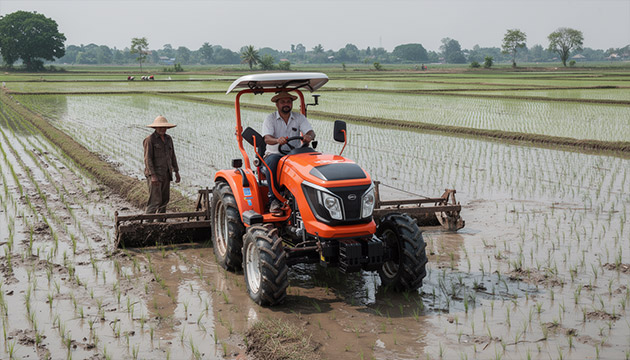
Narrow-track tractors are purpose-built for exactly this constraint. With reduced chassis widths — sometimes under 50 inches — they navigate tight orchard alleys while still delivering the PTO output and hydraulic capacity needed for sprayers, mowers, and pruning equipment. Row spacing in commercial vineyards typically runs 5–8 feet, leaving little tolerance for oversized iron.
Beyond field work, front-end loaders transform tractors into indispensable small-business workhorses. Nurseries, landscaping companies, and feed suppliers routinely rely on loader-equipped units for pallet stacking, debris clearing, and bulk material handling — tasks that would otherwise require a dedicated skid steer.
“A tractor with a loader and a set of pallet forks is basically a forklift, a debris handler, and a soil mover in one package.”
Stationary PTO applications add another layer of utility. Tractors connected to hydraulic pumps, irrigation systems, or generator heads can power entire operations during outages or in off-grid locations — a capability that compact utility models in the 50HP range handle efficiently.
“The emerging 5-ton electric tractor segment is generating real interest — but for now, diesel remains dominant where sustained PTO load and all-day runtime are non-negotiable.”
The right platform depends entirely on your operation’s geometry, load demands, and power source access — which makes implement compatibility the logical next consideration.
A tractor’s true value isn’t measured in horsepower alone — it’s measured by the range of implements it can competently drive, lift, and control.
As covered in earlier sections, specialized operations like orchards and vineyards demand specific attachments. But every farm, regardless of size or crop type, relies on a core set of implements. According to the Qilu Machinery Product Catalog, implements like skid steer loaders and backhoes are often compatible with mid-range tractors via universal mounting plates — a detail that dramatically expands your options.
Here are five foundational implements worth evaluating:
One critical rule: never exceed 75% of your tractor’s rated three-point lift capacity when selecting rear-mounted implements. Overloading shortens hydraulic life and compromises steering stability. If you’re evaluating platforms in the mid-range class, understanding lift capacity specifications upfront saves costly mismatches down the road.
As implement technology evolves, so does the intelligence behind it — setting the stage for the autonomous and electric systems reshaping farm mechanization next.
The next agricultural revolution is already underway — driven by autonomous systems, electric powertrains, and data intelligence that transform tractors from simple machines into smart farming platforms.
IoT and GPS integration is reshaping how tillage, planting, and spraying get done. Modern precision agriculture systems use real-time GPS guidance to automate steering within sub-inch accuracy, reducing overlap, cutting fuel costs, and allowing a single operator to manage larger acreage without fatigue. What typically happens is that IoT sensors relay soil moisture, compaction, and temperature data back to farm management software — allowing operators to make input decisions on the fly rather than relying solely on seasonal intuition.
Electric powertrains represent perhaps the boldest shift on the horizon. Electric tractors are currently being tested for small farm businesses specifically to reduce local emissions and fuel overhead, with 5-ton electric models showing steady battery capacity improvements that make full-day operation increasingly viable. Lithium-ion advancements continue pushing charge cycles higher while reducing weight penalties — two critical factors for field-ready machines.
Data collection is quietly becoming as valuable as horsepower itself. Tractors equipped with telematics platforms log engine hours, fuel consumption, PTO engagement patterns, and geospatial planting maps. Over multiple growing seasons, that data improves crop yield decisions by identifying which field zones respond best to specific tillage depths or planting densities.
The Right to Repair movement is gaining momentum alongside these advances, pushing manufacturers toward modular engine components and open diagnostic protocols that let independent technicians service complex systems without proprietary barriers.
Future Outlook: Autonomous navigation, electric power, and connected data ecosystems aren’t distant concepts — they’re active development priorities reshaping what operators expect from every machine on the lot.
These advances are raising the bar for what constitutes a well-engineered, future-ready tractor — and some manufacturers are already building that standard into today’s models.
Matching the right machine to the right farm starts with understanding where global agricultural demand actually concentrates — and for most small to mid-sized operations worldwide, that target zone is firmly between 50HP and 70HP.
Shandong Qilu Industrial Co. has built its entire product philosophy around this reality. Rather than chasing the headline numbers of large commercial tractors, Qilu’s engineering focus centers on versatility, durability, and affordability within the power range that genuinely serves the broadest cross-section of working farmers. The result is a lineup engineered to function as a true multi-purpose power hub — not simply a towing vehicle — capable of driving implements, managing loaders, and integrating with modern precision agriculture systems.
Factory-direct quality control is a core competitive advantage. Manufacturing from Shandong, one of China’s most established agricultural machinery provinces, means Qilu maintains direct oversight at every production stage — from component sourcing to final assembly. That vertical integration reduces the cost gaps that typically inflate dealer-channel pricing without compromising build standards.
What distinguishes this approach further is the comprehensive support structure provided to compact tractor owners after purchase. In practice, owning a capable machine matters little without accessible technical guidance, parts support, and operational resources. Qilu addresses this directly through its Qilu Machinery Blog, which offers deep-dive technical guides covering everything from PTO configurations to implement compatibility — practical content built for operators, not just buyers.
For farmers ready to explore specific models, the 50HP and 70HP tractor category provides a clear starting point based on the power thresholds discussed throughout this article.
As the evidence across every preceding section reinforces, the smartest tractor investment decisions come down to a focused set of priorities — which the following key takeaways distill into actionable guidance.
Choosing the right tractor comes down to five decisions that determine whether your investment pays off over a decade or becomes a costly compromise.
As this article has explored — from hydraulic systems and PTO versatility to autonomous technology and manufacturer value — every layer of the tractor decision connects back to a core set of principles. Here’s what to carry forward:
The right tractor isn’t the most powerful option available — it’s the one that fits your land, your implements, and your 10-year plan. Still have specific questions about sizing, compatibility, or engine longevity? The next section addresses the most common ones directly.
The right farm tractor choice depends on your acreage, workload, and attachment ecosystem — here are the most common questions answered directly.
What is the best tractor size for a 20-acre farm?
According to the Qilu Machinery Blog, a 50HP tractor is generally sufficient for most 20–50 acre operations. For lighter tasks like mowing, tilling, and hay cutting on flat ground, 50HP delivers the power you need without the added fuel and purchase costs of a larger machine.
How many hours does a diesel tractor engine last?
A well-maintained diesel tractor engine typically runs between 5,000 and 10,000 hours before requiring a major overhaul. In practice, operators who follow scheduled service intervals — oil changes, filter replacements, and cooling system flushes — consistently reach the higher end of that range.
Can I use skid steer attachments on a farm tractor?
Not directly. Skid steer attachments use a universal quick-attach plate that differs from a tractor’s standard three-point hitch system. However, adapter brackets are widely available, making many loader-style attachments compatible. Always verify hydraulic flow requirements before purchasing an adapter setup.
What are the benefits of a 70HP tractor over a 50HP model?A 70HP tractor is better suited for heavy baling, steep terrain, and multi-implement work. The additional horsepower delivers more consistent PTO output under load, reduces engine strain on slopes, and supports larger implement widths — directly shortening field time on bigger operations.
Watch: Testing a 5-Ton Electric Tractor
For deeper guidance on sizing and specifications, visit the Qilu Machinery Blog for further reading on matching tractor power to real-world farm demands.

-1.png)