Welcome to Shandong Qilu Industrial Co., Ltd

 English
 Arabic
 Bulgarian
 Bengali
 Czech
Czech
 Danish
 German
 Greek
Greek
 Spanish
 Finnish
 French
 Hindi
Hindi
 Croatian
 Hungarian
 Indonesian
 Italian
 Japanese
 Korean
 Lithuanian
 Dutch
Dutch
 Norwegian
 Polish
 Portuguese
 Romanian
 Russian
 Slovak
 Slovenian
 Swedish
 Thai
Thai
 Turkish
 Ukrainian
 Vietnamese
 Tagalog
 Malay
Malay
 Estonian
 Catalan
 Latvian
 Urdu
Urdu
 Serbian
 Persian
 Swahili
 Albanian
 Armenian
 Icelandic
 Bosnian
 Luxembourgish
 Afrikaans
English Arabic
Bulgarian
Bengali
Czech
Danish
German
Greek
Spanish
Finnish
French
Hindi
Croatian
Hungarian
Indonesian
Italian
Japanese
Korean
Lithuanian
Dutch
Norwegian
Polish
Portuguese
Romanian
Russian
Slovak
Slovenian
Swedish
Thai
Turkish
Ukrainian
Vietnamese
Tagalog
Malay
Estonian
Catalan
Latvian
Urdu
Serbian
Persian
Swahili
Albanian
Armenian
Icelandic
Bosnian
Luxembourgish
Afrikaans
Afrikaans
English Arabic
Bulgarian
Bengali
Czech
Danish
German
Greek
Spanish
Finnish
French
Hindi
Croatian
Hungarian
Indonesian
Italian
Japanese
Korean
Lithuanian
Dutch
Norwegian
Polish
Portuguese
Romanian
Russian
Slovak
Slovenian
Swedish
Thai
Turkish
Ukrainian
Vietnamese
Tagalog
Malay
Estonian
Catalan
Latvian
Urdu
Serbian
Persian
Swahili
Albanian
Armenian
Icelandic
Bosnian
Luxembourgish
Afrikaans

Rated Operating Capacity vs Tipping Load: Which Mini Skid Steer Number Matters First?
A practical guide to mini skid steer rated operating capacity, tipping load, load center, attachment weight, forks, buckets, slopes, and real job planning.
Mini skid steer rated operating capacity vs tipping load is one of the most important buyer questions because the two numbers do not mean the same thing. Tipping load describes a threshold under a specific test condition. Rated operating capacity is the practical working number derived from that threshold using a safety factor. A buyer who confuses them may choose a machine that looks stronger on paper than it feels on a real jobsite.
QiLu Machinery buyers reviewing skid steer loader options should look beyond the largest number in a brochure. Forks, buckets, grapple loads, mulch, wet soil, pavers, slopes, turning, tracks, tires, and operator habits all affect usable capacity. A small loader can be productive when the load is matched to the machine and moved correctly.
This article uses practical loader handling habits and general safety ideas from OSHA, NIOSH, and NIOSH work zone resources. It is written for contractors, landscapers, and property owners who need a machine that can move material without guessing at stability.
What Tipping Load Tells You
Tipping load is usually determined under controlled conditions. It helps compare machines, but it is not a daily working target. The jobsite is less controlled than a test surface. Ground can slope, attachments can change the load center, tires can sink, tracks can climb over bumps, and the operator may turn while carrying material. Those factors reduce the margin available in real work.
The tipping number is still useful. It tells you something about the machine structure, counterweight, lift path, and stability envelope. It becomes dangerous only when treated as the weight that should be carried every day. A loader working near its tipping threshold has little room for bumps, turns, braking, or uneven ground.
Rated Operating Capacity Is the Working Starting Point
Rated operating capacity is intended to be a more practical working figure. It is commonly derived as a fraction of tipping load, with the exact method depending on machine type and applicable standards. Buyers should ask how the rating was calculated and under what conditions. If the number is not clearly explained, ask for the underlying tipping load, attachment configuration, and test assumptions.
Even rated operating capacity is not a promise for every job. A pallet on forks places weight farther forward than material in a bucket. A wet soil bucket may weigh more than the same bucket of dry mulch. A load carried high is less stable than a load carried low. A turn on uneven ground changes the machine faster than many new operators expect.
Load Center and Attachment Weight
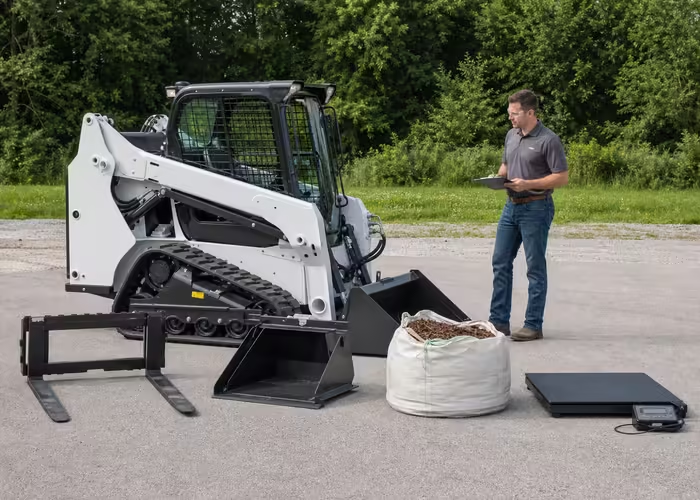
The load center matters because leverage matters. Pallet forks move the weight forward. A grapple adds attachment weight before the material is even picked up. A longer bucket can change leverage. If the rated operating capacity is stated with a standard bucket, it may not apply directly to forks, a grapple, or a heavy specialty attachment.
Attachment weight should be subtracted from usable lift expectations. A loader that can handle a certain bucket load may not handle the same material plus a heavier attachment. Buyers should ask for attachment weights and compare them with the work they actually do: pavers, sod, logs, wet soil, gravel, feed, manure, or landscape debris.
Decision Table for Common Loads
The safest choice is not made by a single number. Use load type, surface, route, and attachment together. A table helps expose the difference between a load that is easy to lift and a load that is easy to carry safely.
| Load or task | Main capacity question | Risk to control |
|---|---|---|
| Pallet of pavers | Fork load center and pallet weight | Forward leverage and visibility |
| Bucket of gravel | Material density and bucket fill level | Uneven ground and braking distance |
| Mulch or compost | Volume versus actual wet weight | Overfilling a large bucket |
| Logs or brush | Grapple weight plus irregular load shape | Load shifting during turns |
| Landscape grading | Attachment weight and downforce needs | Loss of traction and surface damage |
Ground Conditions Change the Margin
Level pavement is the easiest place to understand the machine. A sloped yard, wet lawn, gravel ramp, or rough construction path is different. The loader should carry material low, travel slowly, avoid sudden turns, and stop when the route changes. If the operator needs speed to keep the machine moving, the load or route should be reconsidered.
Tracks and tires also change the feel. Tracks can spread weight and improve traction in some conditions, but they can still climb bumps, damage turf, or slide on certain surfaces. Tires can be predictable on pavement but may rut soft ground. The machine setup should match the surface as well as the load.
For internal planning, compare the work with QL1100 mini skid steer loader, skid steer loader application solutions, and product application solutions. Capacity numbers make more sense when tied to actual material handling routes.
How Buyers Should Compare Models
When comparing models, ask for rated operating capacity, tipping load, machine weight, lift path, hydraulic flow, attachment plate type, fork rating, bucket capacity, and recommended counterweight options. Then ask which attachment was used for each capacity number. A number measured with one attachment may not describe another attachment.
Also ask how the loader will be transported. A higher-capacity machine may weigh more, need a stronger trailer, or require more access width. If the job is narrow backyard landscaping, transport and access can matter as much as capacity. If the job is open material handling, capacity and cycle time may become more important.
Operator Rules That Protect Stability
Keep loads low during travel. Face uphill or downhill as the manual recommends. Avoid turning with a raised load. Do not lift a pallet higher than necessary to clear the ground. Stop when a spotter or pedestrian enters the route. Keep people away from the path of travel and from the downhill side of the machine.
These rules sound basic because they are. They are also the rules most likely to be ignored when a crew is rushing. General safety guidance from OSHA struck-by hazard resources is relevant because compact loaders often work near walls, vehicles, helpers, and expensive finished surfaces.
Testing Capacity on a Real Jobsite
A useful test starts with a known load on level ground. Lift only enough to clear, carry the load low, brake gently, turn slowly, and inspect how the machine feels. Then repeat on the actual route with mats or surface protection in place. If the load feels questionable in a test, reduce the load before the job begins.
A crew should also record real material weights when possible. Pavers, wet gravel, mulch, soil, and debris vary more than many operators expect. A small scale, supplier ticket, or known pallet weight can remove guesswork. Over time, these notes become the crew capacity chart for that machine.
Use broader resources such as QiLu Machinery products, equipment application guidance, and the machinery blog when choosing between a mini skid steer, compact tractor, or mini excavator for material handling. The right machine is the one that fits the load, route, surface, and operator.
How to Translate Capacity Into Daily Work
Capacity becomes useful when it is converted into daily decisions. Instead of asking whether the machine can lift a maximum number, ask what it must carry repeatedly. A landscape crew may move paver pallets, mulch, gravel, topsoil, sod rolls, logs, and waste material in the same week. Each material behaves differently. Some loads are dense and compact. Others are bulky, wet, loose, or irregular. A loader that works well with mulch may feel very different with gravel.
Daily work also includes the route. A machine lifting a pallet on level pavement has a different stability margin than the same machine carrying gravel across a rutted yard. A short route with clear visibility is different from a long route past walls, trees, workers, and vehicles. Capacity should always be paired with the route, because the route is where the load becomes risky; general vehicle and equipment safety reminders from NHTSA road safety information can help crews keep transport and work-zone habits aligned.
Forks, Buckets, and Grapples Change the Question
Pallet forks make capacity feel precise because pallets often have known weights. They also move the load forward, which reduces stability margin. A bucket brings the load closer, but material density can be uncertain. A grapple adds attachment weight and may hold irregular material that shifts. A buyer should ask how the capacity number changes with the attachment used most often.
Attachment weight is often ignored during comparison. A heavy grapple, trencher, or snow tool consumes part of the machine’s usable capacity before material is added. The operator may feel this as slower lift, front-heavy behavior, or reduced traction. When comparing machines, list the attachment package first, then compare capacity. The attachment is not an afterthought; it is part of the load.
Lift Path and Dump Height
Lift path affects what the loader does best. Some loaders are stronger and more predictable through certain parts of the lift arc. A machine used mostly for low carry work, grading, and short dumping may not need the same lift behavior as a machine loading trucks or placing pallets. Buyers should test the intended lift height with the intended attachment and material.
Dump height is useful only when the machine stays stable and controlled at that height. A loader that can technically reach a truck side may still be a poor fit if the load must be carried high over uneven ground. The safer routine is to carry low, approach slowly, stop, then lift only when needed to dump or place the material.
Warning Signs During Operation
Operators should learn the warning signs before they become incidents. Rear of the machine feeling light, tracks or tires losing full contact, steering becoming abrupt, load swinging or shifting, attachment bouncing, or the operator needing extra speed to climb a small grade all deserve attention. These signs mean the machine is telling the operator the margin is shrinking.
The answer is usually to reduce load, lower the load, improve the route, add surface protection, change attachment, or use a larger machine. The answer is not to keep pushing because the brochure number says the machine should manage. Real work is allowed to be more conservative than the specification sheet.
Crew Communication Around Load Handling
Compact loaders often work near crews installing pavers, plants, fencing, drainage, or hardscape. The operator should have a clear route and simple stop signals. A spotter should stand where the operator can see them, not behind the machine or beside a wall. If the operator loses sight of the spotter, the loader should stop. If the load blocks forward view, the route should be changed or the load reduced.
Good communication also protects finished work. A small loader can damage edging, irrigation, turf, walls, and parked vehicles quickly. When the load is heavy, the operator has less room for correction. The crew should clear the path before the loader moves, not while it is already approaching.
Buyer Checklist Before Choosing a Mini Skid Steer
Ask for rated operating capacity, tipping load, machine weight, hydraulic flow, attachment weights, bucket volume, fork rating, lift height, lift path, ground pressure, transport weight, and required maintenance intervals. Ask whether the capacity number changes with tracks, tires, counterweights, or operator platform. Ask what load was used during testing and whether the rating assumes a standard bucket.
Then test the job that matters most. If the crew mainly moves pavers, test pallet forks and a realistic pallet. If the crew moves mulch, test bucket volume and travel speed. If the job includes wet yards, test surface protection and turning. A careful test can reveal that a smaller machine is enough, or that the job really needs a larger loader, different attachment, or different staging plan.
Practical FAQ
Is tipping load the weight I can carry? No. It is a threshold measured under specific conditions. Rated operating capacity is the safer starting point, and real job conditions may require a lower load.
Why do pallet forks reduce practical capacity? Forks move the load center forward, which increases leverage and reduces stability margin compared with a load closer to the machine.
What should I test before buying? Test the intended attachment, material weight, route, slope, turning space, trailer fit, and operator visibility with a realistic load.
Mini skid steer rated operating capacity vs tipping load is not just a specification question. It is a jobsite planning question: know the load, know the route, keep the material low, and leave enough stability margin for the unexpected.