Welcome to Shandong Qilu Industrial Co., Ltd

 English
 Arabic
 Bulgarian
 Bengali
 Czech
Czech
 Danish
 German
 Greek
Greek
 Spanish
 Finnish
 French
 Hindi
Hindi
 Croatian
 Hungarian
 Indonesian
 Italian
 Japanese
 Korean
 Lithuanian
 Dutch
Dutch
 Norwegian
 Polish
 Portuguese
 Romanian
 Russian
 Slovak
 Slovenian
 Swedish
 Thai
Thai
 Turkish
 Ukrainian
 Vietnamese
 Tagalog
 Malay
Malay
 Estonian
 Catalan
 Latvian
 Urdu
Urdu
 Serbian
 Persian
 Swahili
 Albanian
 Armenian
 Icelandic
 Bosnian
 Luxembourgish
 Afrikaans
English Arabic
Bulgarian
Bengali
Czech
Danish
German
Greek
Spanish
Finnish
French
Hindi
Croatian
Hungarian
Indonesian
Italian
Japanese
Korean
Lithuanian
Dutch
Norwegian
Polish
Portuguese
Romanian
Russian
Slovak
Slovenian
Swedish
Thai
Turkish
Ukrainian
Vietnamese
Tagalog
Malay
Estonian
Catalan
Latvian
Urdu
Serbian
Persian
Swahili
Albanian
Armenian
Icelandic
Bosnian
Luxembourgish
Afrikaans
Afrikaans
English Arabic
Bulgarian
Bengali
Czech
Danish
German
Greek
Spanish
Finnish
French
Hindi
Croatian
Hungarian
Indonesian
Italian
Japanese
Korean
Lithuanian
Dutch
Norwegian
Polish
Portuguese
Romanian
Russian
Slovak
Slovenian
Swedish
Thai
Turkish
Ukrainian
Vietnamese
Tagalog
Malay
Estonian
Catalan
Latvian
Urdu
Serbian
Persian
Swahili
Albanian
Armenian
Icelandic
Bosnian
Luxembourgish
Afrikaans
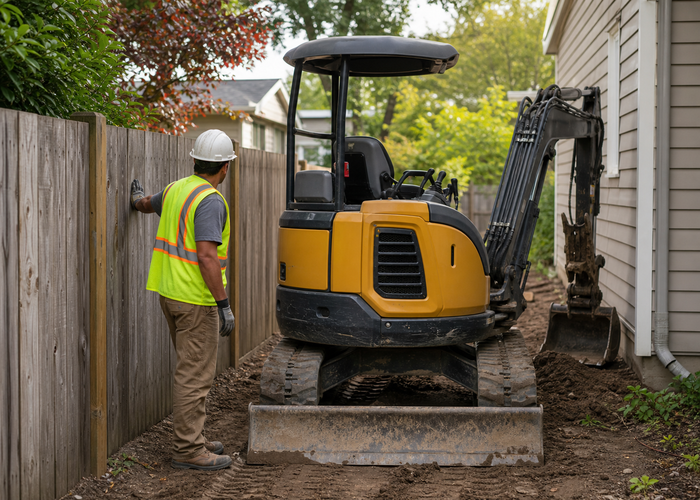
Zero Tail Swing vs Conventional Tail Swing: Which Mini Excavator Fits Backyard Access, Fence Lines, and Foundation Work?
A practical mini excavator guide for choosing zero tail swing or conventional tail swing around walls, fence lines, tight gates, and foundation jobs.
The zero tail swing versus conventional tail swing decision is not about which excavator looks more modern in the yard. It is about what happens when the machine has to rotate beside a wall, thread through a gate, load spoil near a fence, or clean a footing trench without the operator feeling blind or boxed in. Buyers who understand that difference early usually choose a machine that is calmer to own, not just easier to sell.
That is especially true on jobs around backyards, retaining walls, pool lines, utility side yards, and foundation repairs. A machine from the QiLu mini excavator range may have enough digging depth and hydraulic capability for the task, but tail swing still decides whether the operator can rotate cleanly without clipping a fence, tapping a foundation corner, or losing confidence every time the house wall gets close.
The buyer guide Compact Mini Excavator Basics is useful because it explains how compact excavator geometry changes real jobsite behavior. That matters when comparing a smaller access-focused machine such as the 0.8 ton mini excavator with a larger support unit such as the 3.5T excavator.
Backyard Access Makes the Decision Early
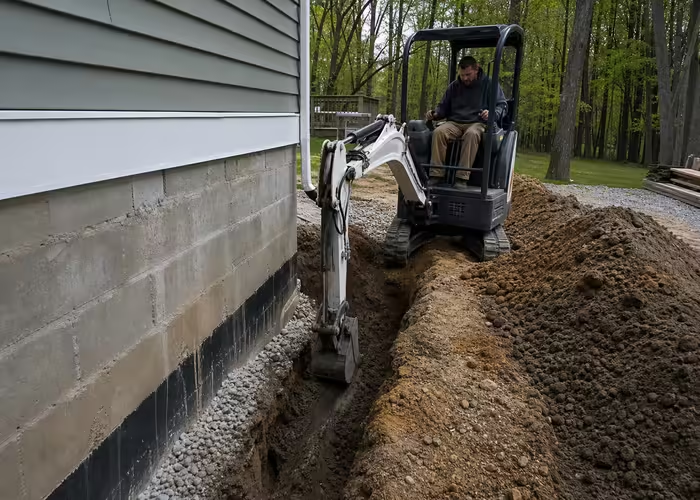
Most backyard excavation jobs begin with an access question rather than a trench question. The gate width, side-yard bends, eave overhang, retaining edges, and parked structures all decide whether the machine can arrive in one piece and rotate without fear. Zero tail swing often wins those first minutes because the rear of the house stays closer to the track width, so the operator can concentrate on the attachment and the job line instead of protecting a wider tail arc.
That does not mean conventional tail swing is obsolete. It can still be a smart choice when the job opens into a wider work zone and the buyer values the feel, counterweight behavior, or cost position of a more traditional upper structure. The point is that access should be scored first. If the machine cannot move or rotate comfortably in the propertys tight places, the rest of the spec sheet matters less.
Fence Lines Reward Controlled Rotation
Fence-line work exposes the tail-swing difference quickly. When trenching for drainage, cable, irrigation, or footing cleanup beside a boundary, the operator keeps glancing over the shoulder to judge whether the house is about to reach beyond the track line. A zero tail swing machine can reduce that stress because the rear stays closer to the undercarriage during the swing. That does not eliminate the need for spotters, patient staging, or clear spoil placement, but it usually gives the operator more usable rotation room.
Fence-line jobs also benefit from a clear spoil strategy. The buyer should decide whether the spoil will remain on the open side, whether a truck or loader can approach, and whether the bucket has to pass close to plantings or surface features during each swing. Those decisions tie directly to the excavator application solutions that connect machine size with working envelope and job sequence.
Foundation Work Changes the Visibility and Reach Question
Foundation work can push the decision in a different direction. Around footings, crawl spaces, or slab edges, the operator may want not only close rear clearance but also a stable feel, good boom placement, and predictable spoil movement. A conventional tail swing machine can still perform very well when the work zone is open enough to allow the rear arc and when the buyer values the counterweight behavior that comes with a broader upper structure.
The key is not to treat one layout as universally better. The question is whether the job rewards maximum clearance beside the machine or whether it gives the operator enough room to benefit from the different feel of a conventional house. If the job repeatedly comes back to walls, fences, gate posts, pool decks, and finished landscaping, zero tail swing deserves strong weight in the decision.
Clearance Planning Comes Before Digging Depth
It is easy to compare reach, dig depth, and transport weight because they look clean on the page. Clearance is harder to summarize, so buyers often underweight it until the first rental day or first delivery. That is expensive. Tail-swing mistakes cause rework, surface damage, broken panels, and a level of operator fatigue that does not show up in the sales conversation.
The first practical step is to walk the site with a tape measure and sketch the turning points. Note the gate width, the distance from wall to fence, the tree canopy, the spot where spoil must pile, and the exit route for loading or cleanup. The 811 before-you-dig process also belongs in that walk, because buried utility decisions and access decisions often collide at the exact point where the machine has the least clearance.
A second step is to define the swing zones before the tracks move. Where can the machine rotate fully? Where can it only swing part-way? Where does the bucket have to dump? Where will a helper or truck stand? The OSHA trenching safety references in Trenching and Excavation Safety and 29 CFR 1926.651 are useful reminders that site control and spoil placement are planning decisions, not afterthoughts.
The video A Closer Look: Bobcat’s E40 Mini Excavator Gets Long Arm, Short Tailswing is useful because it shows how short tailswing changes the operators workable envelope without pretending that careful site planning is optional.
Operator Confidence and Productivity Usually Follow the Layout
An excavator that fits the site lets the operator spend more attention on grade, bucket angle, pipe placement, and finish quality. An excavator that barely fits forces the same operator to spend attention on not hitting the environment. That difference is not minor. It slows the workday, increases stress, and often reduces the quality of the final trench or footing because the operators mental bandwidth is tied up protecting the rear of the machine.
This is why backyard and foundation buyers should judge tail swing through the lens of operator confidence. Can the machine turn without repeated stop-and-check movements? Can spoil be placed without brushing finished surfaces? Can the operator keep the bucket motion smooth? The article Thumbs and Grapple Attachments for Compact Excavators is about attachments, but it also reinforces a useful point: compact jobs reward control, visibility, and clean motion more than brute size.
Productivity follows that control. A machine that can rotate freely in a tight alley often finishes faster than a theoretically stronger unit that must creep through every cycle. Tail swing does not change only the risk profile. It changes how many smooth cycles the job gets in an hour.
Trailer Position and Spoil Truck Position Also Favor the Right Layout
Tail swing decisions do not stop at the trench edge. They also affect how the excavator loads out spoil, how it hands material to a truck, and how comfortably it can pivot toward a staging area without the rear of the machine reaching into traffic, landscaping, or a parked structure. On a narrow residential lot, a short rear profile can turn an awkward loading sequence into a workable one because the operator has more freedom to rotate toward the dump point without backing the tracks repeatedly.
This matters even more when the excavator alternates between digging and cleanup. A machine that must continually reposition because the rear arc is crowding the job will lose time every hour. A machine that fits the loading angle naturally often keeps the trench cleaner because spoil can be placed consistently instead of being dumped wherever the house happened to fit that cycle. Buyers should therefore judge tail swing as part of the full job choreography: entry, digging, spoil placement, loading, and exit.
Owner-Operator Comfort Is a Real Productivity Factor
Compact excavator buyers sometimes dismiss operator comfort as a soft issue, but on close-clearance work it becomes a measurable one. When the operator trusts the rear clearance, the work rhythm smooths out. Bucket positioning improves, trench walls stay cleaner, and the machine spends less time frozen in cautious half-swings. When the operator does not trust the clearance, even a technically capable excavator can feel slow because the mental effort of protecting the machine overwhelms the actual digging task.
That comfort difference also changes training time. A newer operator can usually become productive faster on a machine that gives clearer clearance margins in the properties tightest zones. The result is not only fewer anxious pauses. It is better trench consistency, cleaner spoil handling, and less temptation to dig from the wrong position simply because the operator is trying to avoid one difficult swing angle.
On owner-run sites that difference often determines whether a compact excavator gets used aggressively enough to replace handwork or only cautiously enough to slow the whole plan. Geometry that fits the site encourages the machine to be used to its full practical value.
When Conventional Tail Swing Still Makes Sense
Conventional tail swing remains a rational choice when the site is open enough to give the rear arc room and when the buyer wants a more traditional feel for trenching, loading, or broader earthmoving. Larger yards, detached structures, open field-edge utility work, and foundations with generous setback can all support a conventional layout. If the open area is real, not imagined, the buyer may get a machine that feels planted and cost-effective without suffering the clearance penalty that hurts tighter jobs.
When Zero Tail Swing Deserves the Higher Priority
Zero tail swing deserves priority when the machine will regularly work beside buildings, walls, fences, parked structures, and landscape elements that are expensive or awkward to repair. It also deserves priority when the operator will be less experienced, because narrower rear sweep reduces one common source of mistakes. The right question is not whether zero tail swing is fashionable. It is whether the property keeps forcing the rear of the machine into conflict with the site.
Buyer Checklist Before Ordering
Measure the narrowest gate, the closest wall-to-fence corridor, the tightest rotation point, and the space needed for spoil. Ask whether the machine will carry a thumb, breaker, or auger, because attachment use can slow the cycle and make clean rotation more important. Then compare those notes against the live product application solutions and the wider machinery blog rather than relying on memory from an open-yard demo.
Choose the Layout That Matches the Sites Tightest Mistake Zone
Every compact excavator job has a place where mistakes cost more than the rest of the property. It may be beside the foundation, by the decorative fence, at the gate post, or under the roof overhang. That place should drive the layout choice. If the sites tightest mistake zone keeps crowding the rear of the machine, zero tail swing is usually the more practical answer. If the site genuinely opens up and the rear arc is not a risk, conventional tail swing can remain a strong value choice.
A mini excavator earns its keep by working where larger machines stop making sense. The buyer should protect that advantage by choosing the house layout that makes the machine calmer, cleaner, and more precise in the narrowest real work zone. Tail swing is therefore not a minor detail. On many residential and access-limited jobs, it is the detail that decides whether the machine feels easy or exhausting from the first hour onward.
Practical FAQ
Is zero tail swing always better for trenching? Not always. It is often better near fences, walls, and finished surfaces, but open trenching in wider spaces can still suit a conventional tail swing machine well.
Does tail swing matter if the gate is already wide enough? Yes. Gate width only answers entry. Tail swing still matters at rotation points, spoil placement zones, and any work area beside structures or boundaries.
What should I record during a site walk? Record the narrowest access, the closest wall or fence clearance, the spoil zone, overhead limits, and the point where the operator must rotate with the least forgiveness.