Welcome to Shandong Qilu Industrial Co., Ltd

 English
 Arabic
 Bulgarian
 Bengali
 Czech
Czech
 Danish
 German
 Greek
Greek
 Spanish
 Finnish
 French
 Hindi
Hindi
 Croatian
 Hungarian
 Indonesian
 Italian
 Japanese
 Korean
 Lithuanian
 Dutch
Dutch
 Norwegian
 Polish
 Portuguese
 Romanian
 Russian
 Slovak
 Slovenian
 Swedish
 Thai
Thai
 Turkish
 Ukrainian
 Vietnamese
 Tagalog
 Malay
Malay
 Estonian
 Catalan
 Latvian
 Urdu
Urdu
 Serbian
 Persian
 Swahili
 Albanian
 Armenian
 Icelandic
 Bosnian
 Luxembourgish
 Afrikaans
English Arabic
Bulgarian
Bengali
Czech
Danish
German
Greek
Spanish
Finnish
French
Hindi
Croatian
Hungarian
Indonesian
Italian
Japanese
Korean
Lithuanian
Dutch
Norwegian
Polish
Portuguese
Romanian
Russian
Slovak
Slovenian
Swedish
Thai
Turkish
Ukrainian
Vietnamese
Tagalog
Malay
Estonian
Catalan
Latvian
Urdu
Serbian
Persian
Swahili
Albanian
Armenian
Icelandic
Bosnian
Luxembourgish
Afrikaans
Afrikaans
English Arabic
Bulgarian
Bengali
Czech
Danish
German
Greek
Spanish
Finnish
French
Hindi
Croatian
Hungarian
Indonesian
Italian
Japanese
Korean
Lithuanian
Dutch
Norwegian
Polish
Portuguese
Romanian
Russian
Slovak
Slovenian
Swedish
Thai
Turkish
Ukrainian
Vietnamese
Tagalog
Malay
Estonian
Catalan
Latvian
Urdu
Serbian
Persian
Swahili
Albanian
Armenian
Icelandic
Bosnian
Luxembourgish
Afrikaans
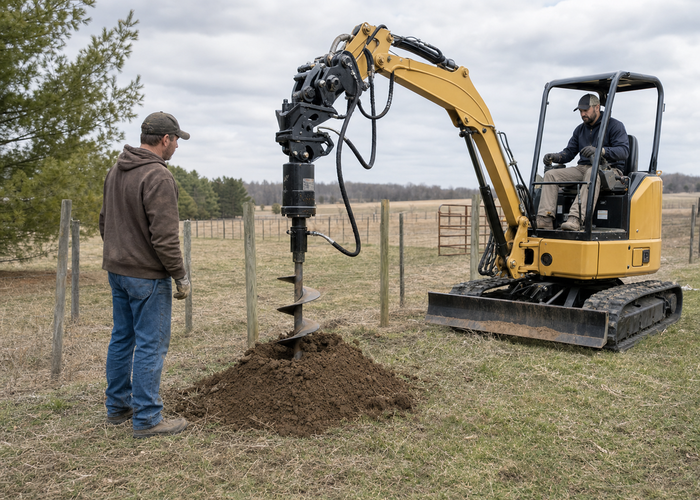
Mini Excavator Auxiliary Hydraulic Flow: Matching Augers, Breakers, and Attachments Before the Job
A practical guide to matching mini excavator auxiliary hydraulic flow, pressure, couplers, hoses, augers, breakers, and attachments before jobsite work.
Mini excavator auxiliary hydraulic flow determines whether an attachment works smoothly, overheats, stalls, or damages components. A bucket can dig with the standard boom and arm circuit, but augers, breakers, grapples, compactors, and thumbs depend on oil flow, pressure, couplers, hose routing, and operator control. The attachment is only as useful as the hydraulic match behind it.
Buyers comparing mini excavator equipment often focus on digging depth and machine weight first. Those numbers matter, but attachment-ready owners should also ask about auxiliary lines, flow range, pressure rating, return path, coupler size, and whether the job needs one-way or two-way flow.
This guide uses practical jobsite checks and general safety references from OSHA, NIOSH, and 811 before-you-dig guidance. It does not replace the machine or attachment manual; it helps buyers ask better questions before the attachment is connected.
Flow, Pressure, and Return Lines Are Separate Questions
Flow is usually discussed as gallons per minute or liters per minute. It affects attachment speed and whether the tool can maintain useful motion. Pressure affects force. Return-line design affects heat and back pressure, especially for tools such as breakers that may need a low-restriction return path. A machine can have enough pressure but too little flow, or enough flow with couplers that restrict the attachment.
Do not rely on attachment category names alone. A small auger, a larger auger in hard clay, and a breaker for concrete removal can all ask different things from the hydraulic circuit. The owner should compare the attachment manufacturers required flow and pressure with the excavator specification, then confirm couplers and hoses match that requirement in the real setup.
One-Way and Two-Way Auxiliary Flow
Some attachments need one-way flow, where oil powers the tool in one direction and returns freely. Others need two-way flow, where the operator can move the attachment in both directions. A thumb, grapple, or tilt tool may need control that is different from a breaker. The buyer should ask not only whether auxiliary hydraulics exist, but how they are controlled.
Control feel matters on small jobsites. A precise thumb can place stones or brush without tearing the site apart. A poorly matched grapple may snap open or close too quickly. An auger that spins too fast in unstable soil can wander, enlarge the hole, or create unnecessary risk near utilities.
Utilities and Ground Conditions Come First
Before drilling or breaking, the jobsite must be marked and understood. 811 location practices are especially important for fence, drainage, landscape, and driveway work. Even a compact machine can damage utility lines quickly. The operator should expose uncertain areas cautiously and stop when markings, plans, and site conditions do not agree.
Ground conditions also change attachment performance. Soft soil may let an auger pull down too aggressively. Rocky soil can shock the drive head. Reinforced concrete can punish a breaker and machine if the tool is not sized correctly. The attachment plan should include material, depth, access, spoil handling, and cleanup route.
Attachment Matching Table
Use a comparison table before buying or assigning an attachment. The numbers must come from the actual machine and attachment manuals, but the decision categories stay consistent across most compact excavation work.
| Attachment | Main hydraulic question | Jobsite question |
|---|---|---|
| Hydraulic auger | Does flow match drive head speed and torque needs? | Are utilities marked and is the soil suitable for drilling? |
| Hydraulic breaker | Is pressure, flow, and return restriction within the tool range? | Is the concrete thickness and work zone controlled? |
| Grapple or thumb | Is two-way control smooth enough for placement? | Can the operator see the load and swing path? |
| Compactor plate | Can the circuit support continuous operation without heat problems? | Is the trench or surface prepared for compaction? |
| Tilt or grading tool | Are couplers and controls compatible with frequent angle changes? | Does the finish grade require precision or just rough shaping? |
Hoses, Couplers, and Heat
Hoses should be routed so they do not pinch at full curl, full reach, or when the boom is swung. Couplers should be clean before connection. A small amount of contamination can create wear, leakage, or poor tool response. If a hose stretches during normal movement, the attachment is not ready for work.
Heat is another warning sign. Continuous attachments, repeated breaker use, and restricted return flow can raise hydraulic temperature. If the machine slows, the attachment feels weak, or the oil temperature warning appears, stop and diagnose. Running harder is not a repair.
Operators should check the manual for warm-up and cool-down procedures. Cold oil can make a tool feel slow and can stress components. Overheated oil can reduce performance and shorten seal life. A short pre-job hydraulic routine is cheaper than replacing hoses or repairing a pump.
Machine Size and Attachment Expectations
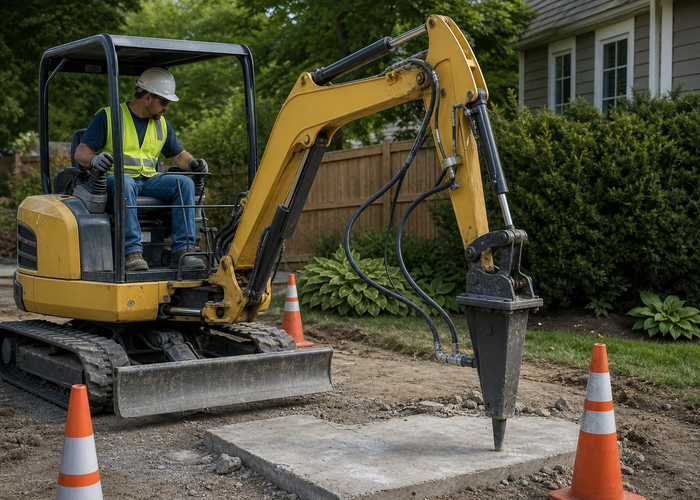
A small mini excavator can be excellent for access-limited work, but the owner must keep expectations realistic. A compact unit may run a small auger or light-duty hydraulic tool very well. That does not mean it should run a heavy breaker all day on thick reinforced concrete. Match the tool to the class of machine and the duty cycle, not only to the quick-coupler pin size.
For example, buyers comparing a compact access machine such as the 0.8 ton mini excavator with a larger unit such as the 3.5T excavator should think about attachment duty, transport, reach, stability, and hydraulic demand together. A bigger machine may carry more hydraulic capacity and stability, but it also needs more access and transport planning.
Buyer Checklist Before Ordering Attachments
Ask for auxiliary flow, pressure, coupler type, hose size, control pattern, return-line requirements, attachment weight, recommended machine class, and service parts availability. Also ask whether the attachment needs a case drain, special mounting bracket, or different quick coupler. These questions belong in the same purchase discussion as bucket width and digging depth.
Internal planning pages such as excavator application solutions, product application solutions, and equipment application guidance can help connect a single attachment with the wider job sequence.
Jobsite Stop Rules
Stop when a hose rubs, a coupler leaks, the attachment stalls, the machine rocks unexpectedly, the work zone changes, or a utility concern appears. Stop when a helper enters the swing radius. Stop when the attachment requires a force that the machine cannot apply smoothly. Those stop rules sound simple, but they prevent many attachment problems from becoming repairs.
For excavation near trenches or unstable edges, review OSHA trenching and excavation resources and use site-specific professional guidance. For general injury prevention, CDC agricultural injury prevention resources are useful background for small property and farm users who work around compact machinery.
Pre-Connection Inspection Routine
Before connecting an attachment, place the machine on stable ground, lower the boom, relieve hydraulic pressure according to the manual, and clean both sides of the coupler. Dirt at the coupler face is a small problem that can become a large problem inside the hydraulic system. Keep caps on unused fittings and replace missing caps before the next dusty transport or demolition job.
Inspect hose length with the attachment resting on the ground and again through the expected movement range. Curl the attachment, extend the arm, raise the boom, and swing slowly while watching for pinch points. A hose that looks long enough at rest can become tight at full extension. A hose that is too long can loop into the work, rub the bucket linkage, or catch on debris.
After connection, run the attachment at low speed first. Listen for unusual noise, watch for leaks, check smooth response, and stop if the tool chatters or stalls unexpectedly. A short test cycle protects the attachment and tells the operator whether the machine controls match the job. Do not start by drilling at full depth or breaking hard material at maximum force.
Duty Cycle and Heat Management
Duty cycle is easy to overlook because small machines feel capable during the first few minutes. A breaker, compactor, or trencher may run continuously enough to heat oil and stress seals. An auger may work in short bursts but create shock loads when it hits rock or roots. The operator should plan pauses, inspect hose temperature, and follow the duty guidance from the attachment manual.
Heat problems often appear as slower response, weak attachment motion, warning lights, or oil smell. When that happens, the answer is not to push harder. Stop, let the system cool as directed, inspect couplers and hose routing, and confirm the attachment is within the excavator rating. If the same tool overheats repeatedly, the match is probably wrong for that duty cycle.
Attachment Weight and Machine Stability
Hydraulic fit is not only about oil. Attachment weight changes machine stability, transport, and digging geometry. A heavy breaker or auger drive mounted far from the stick can make a small excavator feel nose-heavy. A thumb or grapple can improve material control but adds weight and changes the way the operator should swing, lift, and place debris.
The owner should compare attachment weight with lift capacity at the actual reach used on the job. Lifting close to the blade on level ground is not the same as carrying a tool at reach on a slope. If the machine rocks, lifts a track, or needs sudden counter-movement, the setup should be reduced, repositioned, or assigned to a larger machine.
Documentation That Prevents Repeat Mistakes
Crews should keep a simple attachment card for each tool. Include the required flow range, pressure range, coupler size, hose notes, grease points, wear items, compatible machines, and known job limits. This card prevents a common problem: the right attachment is available, but the operator has to guess the setup because the information is buried in a manual or remembered by one person.
Record which materials caused problems. Clay that stuck to the auger, concrete that made the breaker overheat, rocky soil that bent pilot holes, or brush that snagged hoses all belong in the job notes. Over time those notes become a buying guide. They show whether the crew needs a different auger size, a stronger breaker, a larger excavator, better mats, or a different job sequence.
Good documentation also helps the sales conversation. Instead of saying the machine needs to run attachments, the buyer can say which attachments, how often, in what soil or material, and for how long per day. That level of detail makes it easier to match the excavator, hydraulic circuit, and attachment package without overbuying or underbuying.
Transport and Storage Details
Attachment planning should include transport and storage. A breaker, auger drive, or compactor needs a stable place on the trailer or in the yard so hoses are not crushed and couplers do not collect dirt. If a crew carries several tools, the loading order should match the work order at the jobsite. The tool needed first should not be trapped behind two heavier attachments.
Storage also affects service life. Keep hydraulic tools out of standing water, cover exposed couplers, grease pins before long storage, and inspect hoses before the next use. Small attachment problems often begin between jobs, not during the first minute of work.
A clean storage habit also makes leaks, cracked guards, missing pins, and damaged hose sleeves easier to spot before transport.
Practical FAQ
Can any mini excavator run any hydraulic attachment? No. The machine and attachment must match by flow, pressure, couplers, hose routing, weight, and control type.
Why does an auger stall? It may be mismatched to flow or torque, drilling into unsuitable material, using too much down pressure, or hitting rock, roots, or buried obstruction.
Why does a breaker need extra care? Breakers can create heat, shock, and return-flow demands. Incorrect sizing can damage the attachment, pins, hoses, or machine.
Mini excavator auxiliary hydraulic flow is a buying decision, a setup decision, and an operating decision. Confirm the numbers, inspect the hoses, respect the work zone, and match every attachment to the machine before the job starts.