Email: [email protected] Whatsapp: +8618266768780
Email: [email protected] Whatsapp: +8618266768780


You will see the future of farming transform as new tractor technologies redefine what you can achieve in the field.
AI-driven soil analysis can raise your crop yields by up to 30%. Autonomous equipment, guided by GPS and AI, reduces labor costs and improves productivity. The integration of these innovations makes The Journey of a Tractor: From Our Factory to a Customer’s Farm more efficient and sustainable than ever.
Smart automation in tractors changes how you manage your farm. You now see machines that drive themselves, make decisions, and keep your operations safe and efficient. These advancements help you save time, reduce costs, and improve productivity.
Autonomous tractors perform field tasks with high precision. You can rely on these machines to plow, seed, and harvest without constant supervision. They use advanced sensors and GPS to follow exact paths, which reduces overlap and soil compaction.
Modern tractors use 360º situational awareness systems to detect obstacles. You benefit from enhanced safety because the tractor automatically stops if it senses a person or object nearby. For example:
Tip: Always check your tractor’s safety features before starting a task. Automation helps prevent accidents, but regular inspections keep your farm even safer.
Voice recognition technology lets you control your tractor with simple commands. You can start, stop, or adjust settings without leaving your seat. This feature streamlines your workflow and reduces the need for manual controls. You save time and reduce distractions, especially during long workdays.
AI decision systems analyze data from your fields and equipment. You receive real-time insights that guide your choices and improve your results.
AI systems collect and process data as you work. You see instant feedback on soil conditions, crop health, and machine performance. This information helps you make quick adjustments and avoid costly mistakes.
| Impact Area | Description |
|---|---|
| Labor Costs | Automation fills the gap in labor shortages, allowing you to focus on strategy rather than logistics. |
| Operational Safety | Reduces dependency on human labor for repetitive tasks, enhancing safety in agricultural operations. |
| Productivity | Machines perform tasks with precision and consistency, boosting overall farm productivity. |
AI assigns tasks to your equipment based on field conditions and priorities. You can optimize planting, watering, and harvesting schedules. The system helps you manage resources and reduce waste.
| Benefit | Description |
|---|---|
| Automation | Reduces labor costs and lets you focus on strategic management. |
| Precision Farming | Guides better decisions on planting, watering, and harvesting, increasing yield and reducing waste. |
| Pest and Disease Management | Early detection enables targeted interventions, saving time and money. |
| Resource Management | Intelligent irrigation systems optimize water use, conserving resources. |
| Yield Prediction | AI predicts crop yields accurately, aiding in better planning. |
| Crop Variety Development | Analyzes genetics and environmental factors to recommend resilient crops. |
| Climate Impact Forecasting | Helps you prepare for climate change risks. |
Note: Integrating AI into your existing tractor fleet may present challenges. You need reliable data and consistent formats for the best results. Budget constraints and resistance to change can slow adoption, but training and gradual integration help overcome these barriers.
A large farm in the Midwest adopted autonomous tractors for plowing and seeding. The machines operated day and night, using obstacle detection to avoid collisions. The farm reported a 30% reduction in labor costs and a 20% increase in productivity. Real-time data from AI systems allowed the manager to adjust irrigation schedules and respond quickly to pest outbreaks.
Smart automation gives you the tools to run a safer, more efficient, and more productive farm. You can leverage these technologies to address labor shortages, improve safety, and make better decisions every day.
Modern tractors rely on efficient powertrains to help you save fuel, reduce emissions, and lower operating costs. You see new models that combine advanced engineering with smart technology, making your farm more sustainable and profitable.
You benefit from several fuel-saving technologies in 2026 tractor models. These innovations help you cut energy costs and improve overall efficiency.
Hybrid powertrains combine electric motors with traditional engines. You use less fossil fuel and get more torque for heavy tasks. Hybrid tractors switch between power sources based on workload, which means you save fuel during lighter operations and get extra power when you need it most.
| Technology | Benefits |
|---|---|
| AI-Guided Automation | Enhances precision in planting and harvesting through real-time adjustments. |
| Telematics | Provides quick operational diagnostics and fuel management insights. |
| Hybrid & Electric Drivetrains | Reduces fossil fuel use and lowers environmental impact. |
| Advanced Soil Management | Ensures optimal input application for improved soil health and sustainability. |
| Multifunctional Implements | Streamlines operations by performing multiple tasks in a single pass, increasing efficiency. |
You notice that hybrid systems work best when paired with AI-guided automation. The tractor analyzes field conditions and adjusts power output, which helps you avoid wasting energy. Telematics give you instant feedback on fuel consumption, so you can make smarter decisions every day.
Tip: Use telematics to monitor your tractor’s fuel usage. Small adjustments in your operation can lead to big savings over time.
Battery technology has improved rapidly. You now see electric tractors with longer run times and faster charging. Advanced batteries allow you to complete heavy-duty tasks without frequent stops. Electric tractors produce zero tailpipe emissions, which means you work in a cleaner and quieter environment.
You can read more about battery innovations and electric tractor trends at Farm Equipment Magazine and follow discussions on Twitter #ElectricTractor.
Efficient powertrains play a key role in lowering emissions. You meet new standards and help protect the environment while keeping your farm competitive.
You achieve low-emission operations by using electric and hybrid tractors. These machines cut greenhouse gas emissions and help you comply with strict regulations. Electric tractors eliminate tailpipe emissions, while hybrids reduce the amount of diesel burned.
You also see benefits in your community. Cleaner air and quieter machines make your farm a better neighbor.
You must stay informed about changing regulations. The EPA’s Phase 2 GHG standards begin in mid-2026, targeting CO₂ emissions and fuel efficiency. The 2027 Heavy-Duty NOx Rule requires an 80-90% reduction in NOx emissions, which means you need tractors with advanced engines and cleaner technologies.
You can track regulatory updates at EPA Agriculture and join conversations on LinkedIn AgTech.
Note: Regulatory changes may affect your equipment choices. Review local guidelines and consult with your dealer to ensure compliance.
Efficient powertrains give you the tools to run a sustainable, cost-effective farm. You save money, meet environmental standards, and prepare for the future of agriculture.
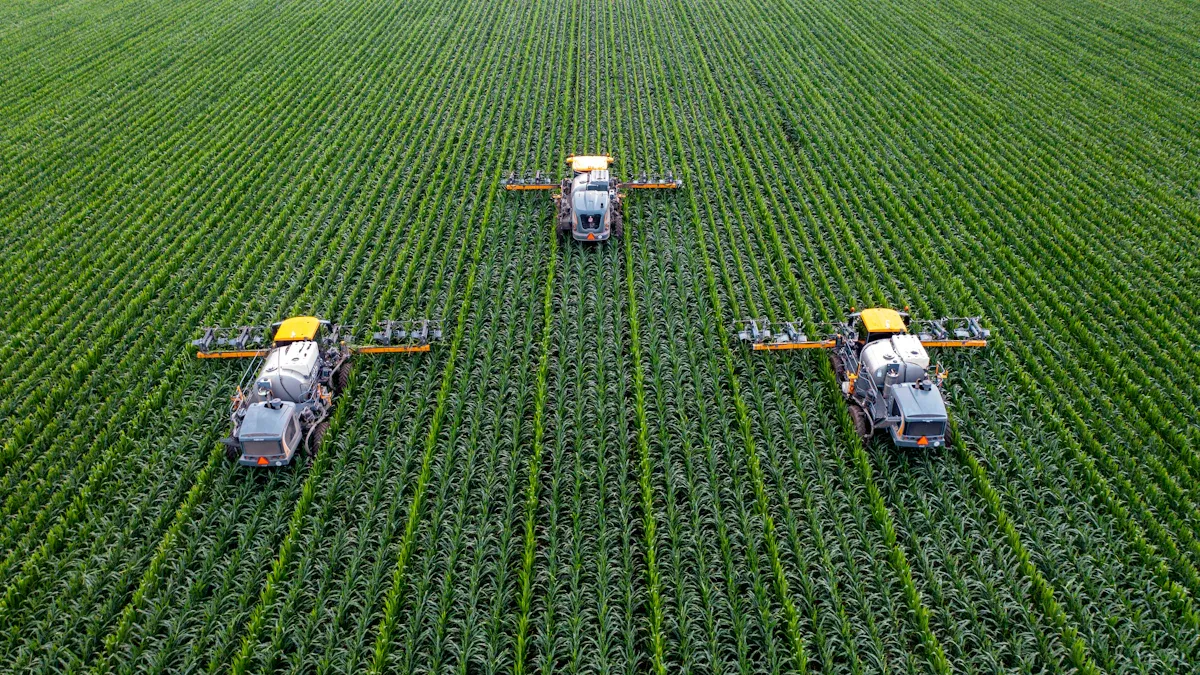
Precision agriculture gives you powerful tools to monitor your fields and crops with unmatched accuracy. You use smart sensors and data-driven systems to make informed decisions, boost yields, and conserve resources.
Smart sensors transform how you manage your farm. You gain instant access to field data and can respond quickly to changing conditions.
You install sensors that measure soil moisture, temperature, and nutrient levels. These devices send real-time data to your phone or computer. You see which areas need water or fertilizer, so you avoid overuse and save money.
Tip: Place sensors in different zones of your field. This strategy helps you identify variations and adjust your management practices for each area.
Smart sensors track crop growth, health, and stress levels. You detect pest outbreaks and diseases before they spread. Early detection improves crop resilience and reduces losses.
| Sensor Feature | Benefit |
|---|---|
| Remote Data Access | Monitor fields from anywhere |
| Real-Time Monitoring | Respond to issues immediately |
| Predictive Analytics | Plan for yield and risk |
You can learn more about sensor technology at American Society of Agricultural and Biological Engineers and join discussions on Twitter #AgTech.
Data-driven farming uses information from sensors and machines to guide your decisions. You increase profitability and sustainability by optimizing every step.
You use GPS-guided machinery and variable rate technology to plant seeds at the best depth and spacing. You tailor your planting strategy based on soil data, which maximizes crop potential and minimizes input costs.
Your system makes automatic changes to irrigation, fertilization, and pest control. You set parameters, and the technology handles the rest. This automation saves you time and ensures consistent results.
Recent research shows that data-driven farming increases profitability by optimizing resource management. You see higher yields and lower operational costs. These technologies also support sustainability by reducing greenhouse gas emissions and conserving water.
A farm in California installed soil moisture sensors and automated irrigation. The farmer reduced water usage by 25% and increased crop yield by 15%. Real-time alerts allowed quick responses to dry spots, preventing stress and loss.
| Metric | Before Sensors | After Sensors |
|---|---|---|
| Water Usage | 100% | 75% |
| Crop Yield | Baseline | +15% |
| Fertilizer Waste | High | Low |
You can explore more case studies at Farm Progress and follow updates on LinkedIn #PrecisionAg.
Precision agriculture integration empowers you to make smarter decisions, save resources, and improve your farm’s sustainability.
Compact tractors now play a vital role in modern farming. You see these machines on small plots, urban gardens, and even in landscaping and municipal work. Their size and agility let you tackle a wide range of tasks, from tilling and planting to snow removal and road maintenance. The market for compact tractors grows quickly as more farmers and landowners seek efficient solutions for limited spaces.
You benefit from advanced features that make compact tractors adaptable and high-performing. Automated steering systems help you create straight, accurate rows, which reduces overlap and saves time. You attach versatile implements to your tractor, transforming it into a multi-functional tool for every season.
Compact tractors adapt to many environments and tasks. You use them for horticulture, organic farming, and high-value crops. Their agility lets you navigate tight spaces and work on uneven terrain. You switch between attachments like front-end loaders, disc harrows, and grading scrapers to handle soil preparation, material movement, and road maintenance.
| Trend | Evidence |
|---|---|
| Non-Agricultural Applications | Compact tractors serve landscaping, municipal, and construction needs, showing versatility. |
| Demand for Horticulture | Organic and specialty crops require precise cultivation, which compact tractors provide. |
| Dealer Network Expansion | Wider dealership coverage and digital sales boost confidence and market reach. |
Tip: Choose attachments that match your farm’s needs. Switching tools quickly helps you stay productive throughout the year.
You notice that small automated features boost your tractor’s performance. Automated steering ensures precision, while versatile attachments let you complete multiple tasks with one machine. You move soil, plant trees, and maintain roads without switching equipment.
| Feature | Benefit |
|---|---|
| Automated Steering System | Straight rows and efficient field coverage |
| Versatile Attachments | Multi-tasking for planting, grading, and material handling |
| Front-end Loaders | Quick movement of soil, gravel, and supplies |
| Disc Harrows | Effective soil preparation for planting |
| Post Hole Diggers | Easy tree planting and installation beyond fencing |
| Grading Scrapers | Smooth farm roads and pathways |
You see compact tractors used in snow removal and construction, proving their value beyond traditional farming. The rise in small-scale farming and peri-urban agriculture increases demand for these machines. You find support and advice on platforms like Farm Equipment Magazine and social media hashtags such as #CompactTractor.
Note: Regular maintenance and training help you get the most from your compact tractor. Stay connected with dealer networks and online communities for updates and best practices.
Compact and versatile designs give you the flexibility to manage diverse farming operations. You save time, reduce costs, and improve productivity with the right combination of automated features and attachments.
Digital platforms and connectivity features now shape how you manage your farm. You use advanced tools to monitor, control, and optimize your tractor fleet from anywhere. These technologies help you save time, reduce costs, and improve decision-making.
You can operate tractors remotely using mobile interfaces. This technology lets you start, stop, and adjust equipment from your phone or tablet. You manage field operations without being physically present, which increases flexibility and efficiency.
Mobile interfaces give you direct access to tractor controls and data. You view real-time updates on machine status, fuel levels, and field progress. You make quick adjustments to settings, improving productivity during busy seasons.
Tip: Use mobile apps to monitor your fleet during planting and harvesting. You can respond to issues instantly, keeping your farm running smoothly.
Fleet management systems help you oversee multiple tractors at once. You track location, performance, and maintenance needs for each machine. Distributed fleet management optimizes equipment use across large farms, improving overall efficiency.
| Feature | Benefit |
|---|---|
| Real-time monitoring | Enables precise, efficient farm management and cost control. |
| AI advice | Provides actionable insights for better decision-making in farming operations. |
| Satellite data | Enhances accuracy in farm management through detailed environmental information. |
| Distributed Fleet Management | Optimizes equipment usage across large-scale operations, improving overall efficiency. |
| Remote Diagnostics | Facilitates predictive maintenance, reducing downtime and extending machine service life. |
| Connectivity Included | Offers limitless connectivity without subscription fees, ensuring continuous data access. |
You can find more information and community discussions on Twitter #AgTech and LinkedIn #FarmTech.
Cloud analytics process data from your tractors and sensors in real time. You use these insights to plan maintenance, coordinate tasks, and collaborate with your team.
Predictive maintenance uses connected IoT sensors to monitor vehicle parts. You receive alerts when components need attention, which helps you avoid breakdowns and reduce downtime.
Note: Regularly review maintenance alerts in your cloud dashboard. Early action prevents costly repairs and keeps your fleet reliable.
Collaboration tools let you share data and coordinate with your team. You assign tasks, track progress, and communicate instantly. These platforms help you manage labor, schedule fieldwork, and respond to changing conditions.
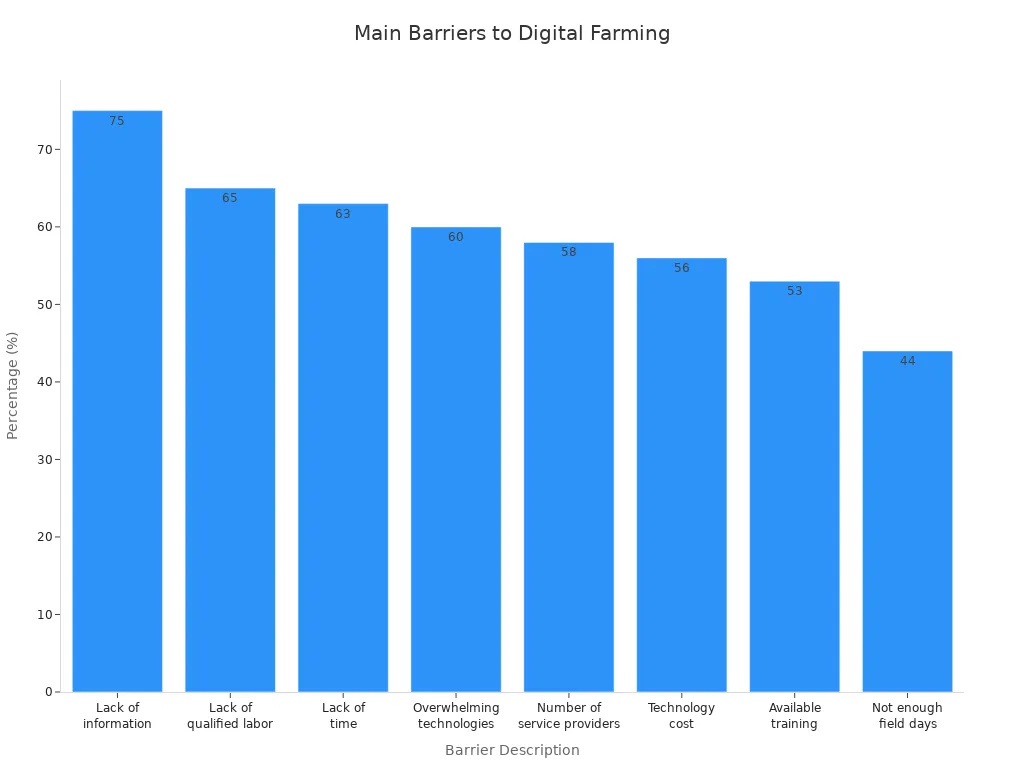
You face some barriers when adopting digital platforms. Many farmers lack information about the value of digital agriculture, and qualified labor remains scarce. Time constraints and the overwhelming number of technologies also slow adoption.
| Barrier Description | Percentage (%) |
|---|---|
| Lack of information about digital agriculture value | 75 |
| Lack of qualified labor to manage digital agriculture | 65 |
| Lack of time | 63 |
| Overwhelming number of technologies | 60 |
| Number of service providers | 58 |
| Technology cost | 56 |
| Available training | 53 |
| Not enough field days | 44 |
Tip: Join online forums and attend digital agriculture workshops to learn more about new technologies. Training and community support help you overcome adoption barriers.
Connectivity and digital platforms give you powerful tools to manage your farm efficiently. You improve productivity, reduce downtime, and make smarter decisions every day.
Sustainability now shapes the way you see tractor manufacturing. You notice a shift toward eco-friendly materials and processes that reduce environmental impact and meet the expectations of a new generation of farmers. Manufacturers respond to your demand for greener products by rethinking every stage of production.
You see more tractors built with materials that protect the environment and conserve resources. These choices help you lower your farm’s carbon footprint and support a healthier planet.
Manufacturers use recyclable components to reduce waste and promote circularity. You benefit from tractors that last longer and create less landfill. Many parts, such as body panels and interior fittings, now use advanced composites and biocomposites.
Tip: When choosing a tractor, ask about the recyclability of its components. This helps you make a more sustainable investment.
You benefit from tractors produced in energy-efficient factories. Manufacturers adopt renewable energy sources and optimize manufacturing lines to cut energy use. These improvements lower the environmental impact of each tractor before it even reaches your farm.
You play a key role in reducing agriculture’s carbon footprint by choosing sustainable tractors. Manufacturers support your efforts through innovations that cut emissions and meet strict regulations.
You see new tractors equipped with advanced engines and smart systems that limit emissions. These machines help you comply with environmental standards and improve air quality on your farm.
| Initiative | Description | Impact on Carbon Footprint |
|---|---|---|
| EPA Regulations | Tier 4 Final engines for diesel-powered vehicles | Reduces greenhouse gas emissions significantly |
| Precision Agriculture | AI for targeted spraying | Minimizes chemical usage, reducing environmental impact |
| No-Till Planting | Practices that maintain soil organic matter | Enhances soil health and reduces carbon release |
| Retrofit Solutions | Upgrades for older equipment to improve efficiency | Reduces waste and enhances sustainability |
You can explore more about emission standards and sustainable farming practices at the EPA Agriculture page.
You must stay informed about evolving regulations. Compliance ensures your equipment meets legal standards and supports your farm’s reputation as a responsible steward of the land.
Note: Staying compliant not only avoids penalties but also appeals to consumers who value sustainability. Recent trends show a 35% increase in preference for eco-friendly products, especially among younger buyers. Your commitment to sustainable practices can set your farm apart in a competitive market.
Sustainability in tractor manufacturing empowers you to make choices that benefit both your business and the environment. By selecting tractors with eco-friendly materials and low emissions, you lead the way toward a greener future in agriculture.
When you compare emerging tractor technologies, you need to focus on features that directly impact your farm’s productivity and long-term value. Farmers like you often look beyond basic horsepower and consider a range of factors that shape daily operations and future returns.
You should evaluate these important features before making a decision:
Tip: Always ask about warranty terms and available support when comparing tractor models. Good support can make a big difference during busy seasons.
You need to look at both upfront costs and long-term expenses. While advanced technologies may increase the initial price, they often reduce operating costs and improve resale value. Fuel-saving features and predictive maintenance systems help you spend less on repairs and energy. Tractors with strong brand reputations and robust support networks also tend to hold their value better.
| Feature | Upfront Cost | Long-Term Savings | Resale Value | Support Availability |
|---|---|---|---|---|
| Autonomous Operation | High | Significant | High | 24/7 |
| Electric Powertrain | Moderate | High | Moderate | Standard |
| Advanced Analytics | Moderate | Moderate | High | 24/7 |
| Basic Model | Low | Low | Low | Limited |
You can find more cost analysis and feature comparisons at Farm Progress and join discussions on Twitter #AgTech.
You see adoption rates for advanced tractor technologies vary widely by region. Local policies, farm sizes, and economic conditions all influence how quickly farmers embrace new innovations.
The table below shows how adoption trends differ across major regions:
| Region | Key Trends and Influencing Factors |
|---|---|
| Asia-Pacific | Rapid growth due to mechanization, government support, and tailored affordable models. |
| North America | Focus on automation, advanced solutions, and data-driven management for large-scale farms. |
| Europe | Early adoption of electric tractors and integration of sustainable models due to strict regulations. |
| Latin America | Growth driven by large farms and government mechanization schemes, with emerging affordable options. |
| Africa | Increasing tractor penetration supported by international subsidies and development programs. |
You can explore more about regional trends at LinkedIn #FarmTech and American Society of Agricultural and Biological Engineers.
You notice that regions with strong government support and established dealer networks tend to lead in technology adoption. North America and Europe often set the pace with automation and sustainability, while Asia-Pacific and Latin America show rapid growth thanks to affordable models and mechanization programs. Africa continues to expand tractor use with help from international development efforts.
Note: Stay informed about local incentives and support programs. These can help you access the latest technologies and improve your farm’s competitiveness.
Comparing tractor technologies helps you make smarter investments and choose equipment that fits your needs. You gain more value by considering features, costs, and adoption trends in your region.
You face important decisions when investing in new tractor technologies. Many farmers see a return on investment (ROI) quickly. Recent economic analyses show that 22% of farmers achieve ROI within one year, while 67% reach this milestone within three years. Technologies such as guidance and section control often deliver financial benefits in just one to two years. You notice reduced input costs and increased efficiency almost immediately.
| Timeframe for ROI | Percentage of Farmers |
|---|---|
| Within 1 year | 22% |
| Within 3 years | 67% |
You can expect faster ROI when you choose solutions that match your farm’s needs. For example, guidance systems help you reduce overlap during planting, which saves seed and fertilizer. Section control technology prevents waste by shutting off equipment in areas that do not need treatment. These improvements lower your operating costs and boost your bottom line.
Tip: Evaluate your current expenses and identify areas where automation or precision tools can reduce waste. Small changes often lead to significant savings.
Long-term savings become clear as you continue using advanced tractor technologies. Variable rate technology may take six to seven years to show full financial benefits, but you gain efficiency and reduce input costs over time. You spend less on fuel, fertilizer, and repairs because smart systems optimize every operation.
You can explore more about ROI and technology benefits at Farm Progress.
Training plays a vital role in successful technology adoption. You build technical skills through hands-on workshops and online courses. Comprehensive training resources help you understand new systems and use them effectively. Peer-to-peer support networks allow you to share experiences and learn from other farmers.
Note: Join local farmer groups and online forums to access training materials and support. Collaboration accelerates your learning and boosts confidence.
Integration strategies help you bring new technologies into your daily operations. You benefit from policy support and rural investment, which make adoption more accessible. Inclusive innovation models ensure that solutions fit your farm’s unique needs.
You improve your farm’s productivity and sustainability by combining training with smart integration. You stay competitive and ready for future challenges.
Tip: Start with one technology and expand as you gain experience. Gradual integration reduces risk and helps you maximize benefits.
You can find more resources and community support at American Society of Agricultural and Biological Engineers and LinkedIn #FarmTech.
The Journey of a Tractor: From Our Factory to a Customer’s Farm begins long before you see the machine in your field. This journey involves advanced manufacturing, careful delivery, and seamless integration of new technologies that shape your daily work.
You witness major changes in how tractors are built. Factories now use robotics and automation to assemble each part with precision. These innovations help you get tractors that are more reliable and efficient. Here are the key steps in The Journey of a Tractor: From Our Factory to a Customer’s Farm:
Tip: Ask your dealer about the latest assembly innovations. These features can make a big difference in your tractor’s performance and lifespan.
You benefit from strict quality control at every stage of The Journey of a Tractor: From Our Factory to a Customer’s Farm. Factories use advanced testing equipment to check engines, electronics, and safety systems. Each tractor goes through a series of inspections before it leaves the factory. This process ensures you receive a machine that works as promised and stands up to tough conditions.
| Quality Check Stage | What Happens | Benefit to You |
|---|---|---|
| Engine Testing | Engines run under load to check performance | Reliable power |
| Electronics Review | Sensors and controls tested for accuracy | Fewer breakdowns |
| Safety Inspection | Brakes, lights, and alarms checked | Safer operation |
| Final Audit | Full tractor review before shipping | Confidence in purchase |
The Journey of a Tractor: From Our Factory to a Customer’s Farm continues with careful logistics. Your tractor travels by truck, rail, or ship, depending on your location. Logistics teams use tracking systems to monitor each shipment and avoid delays. When your tractor arrives, local technicians inspect it again to confirm everything works as expected.
Note: Reliable logistics mean you get your tractor on time and in perfect condition. You can follow updates on delivery trends at Farm Equipment Magazine.
You play a key role in the final stage of The Journey of a Tractor: From Our Factory to a Customer’s Farm. Advanced tractor technologies, such as autonomous driving and precision agriculture tools, become part of your daily routine. You use AI and GPS to guide your tractor during plowing and planting. These features help you save labor and increase productivity. Telematics systems give you real-time data, so you can manage your fleet and make better decisions.
You may need some training to get the most from these new tools. Many manufacturers and dealers offer workshops and online resources. You can also connect with other farmers on social media platforms like Twitter #AgTech to share tips and experiences.
Tip: Start with basic features and add more as you gain confidence. This approach helps you integrate new technology smoothly into your farm.
The Journey of a Tractor: From Our Factory to a Customer’s Farm shows how modern manufacturing, smart delivery, and advanced technology come together to support your success.
You see tractor technologies in 2026 driving measurable gains across your farm. The table below highlights key improvements:
| Improvement Type | Description |
|---|---|
| AI-Driven Technology Adoption | Over 65% of new farm tractors feature AI-driven precision farming technology. |
| Efficiency in Operations | Modern tractors help you meet global food demands and optimize daily work. |
| Precision Farming Technologies | GPS-guided steering and IoT sensors boost planting and irrigation accuracy. |
| Reduced Fuel Usage and Emissions | Hybrid and electric models lower your carbon footprint and meet regulations. |
| Efficient Input Application | Precision placement of fertilizers reduces waste and runoff. |
You benefit from higher yields, lower costs, and a cleaner environment. To leverage these advancements, follow these steps:
Tip: Use manufacturer support and training resources to overcome technical challenges and maximize your investment.
You save time and reduce labor costs. Autonomous tractors complete tasks with high accuracy. You can focus on planning and management while machines handle repetitive fieldwork.
Hybrid powertrains use electric motors and engines. You use less fuel and spend less on maintenance. You see lower energy bills and fewer breakdowns over time.
You can retrofit many older tractors with GPS, sensors, and automation kits. You improve efficiency and safety without buying a new machine.
Smart sensors measure soil moisture, temperature, and crop health. You receive real-time updates. You adjust irrigation and fertilization based on accurate field data.
Predictive maintenance uses sensors to monitor tractor parts. You get alerts before failures happen. You schedule repairs early and keep your equipment running longer.
You start with training for you and your team. You test new systems on a small scale. You use dealer support and online resources to solve problems quickly.
You can use electric tractors for many tasks. Battery advances allow longer run times. For very large farms, you may combine electric models with hybrids for best results.
You check local rules and update your equipment as needed. You use low-emission tractors and track chemical use with precision tools. You avoid penalties and protect your farm’s reputation.


-1.png)