Email: [email protected] Whatsapp: +8618266768780

Email: [email protected] Whatsapp: +8618266768780

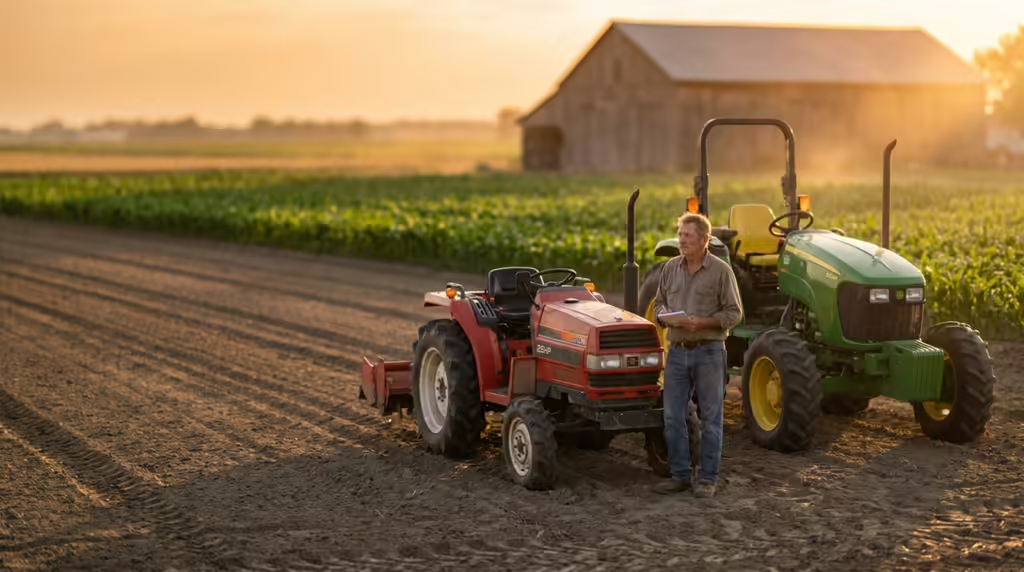
Choosing between a 25HP vs 50HP Tractor is one of the most consequential purchasing decisions a landowner will make — and getting it wrong means years of either underpowered frustration or unnecessary expense.
At the most practical level, these two classes serve fundamentally different operators. Sub-compact and compact tractors in the 25HP range target hobby farmers, homesteaders, and residential property owners managing roughly 5 acres or less. The 50HP class — typically categorized as compact utility tractors — steps up to serve small commercial operations, serious hobby farms, and landowners working 20 or more acres with demanding implements.
The 25HP threshold carries weight beyond marketing. Tractors under 25 engine horsepower are largely exempt from the most complex Tier 4 Final emissions requirements set by the EPA under the Clean Air Act Standards for Nonroad Diesel Engines. That regulatory boundary means simpler engines, fewer maintenance-intensive components, and lower long-term ownership costs. Cross above that line — as 50HP machines do — and diesel particulate filters, diesel exhaust fluid systems, and the associated service intervals enter the picture.
| Feature | ~25HP Class | ~50HP Class |
|---|---|---|
| Category | Sub-compact / compact | Compact utility |
| Typical acreage | Up to 5 acres | 20+ acres |
| Emissions complexity | Simplified (pre-Tier 4 Final) | Full Tier 4 Final |
| Starting price range | ~$15,000–$22,000 | ~$35,000–$55,000 |
| Typical weight | 1,500–2,500 lbs | 3,500–5,500 lbs |
On price-to-performance, the 25HP class wins on accessibility — lower purchase price, cheaper parts, and reduced fuel consumption. The 50HP class justifies its premium through raw capability: heavier implements, larger loader buckets, and the torque reserve needed for serious ground engagement.
Before selecting your horsepower class, it helps to speak the language dealers and spec sheets use — which is exactly where the essential tractor terminology breakdown comes in next.
Understanding the right terminology is the foundation of every smart tractor purchase — without it, spec sheets become noise and salespeople hold all the leverage.
Before diving into what each horsepower class can realistically accomplish, buyers navigating the subcompact vs compact Tractor spectrum need a firm grip on five core concepts that actually determine real-world performance.
PTO Horsepower
The usable power delivered to implements at the Power Take-Off shaft — a 25HP engine typically produces only 18–20 PTO HP, meaning roughly 20–25% of rated engine power is lost to drivetrain friction before it ever reaches your attachments, according to [TractorTime with Tim](https://www.youtube.com/watch?v=bpra6-zc23s).
Lift Capacity at Pivot Pins
The true benchmark of loader strength, measured at the pivot pin rather than maximum height — this figure directly determines whether a tractor can handle loaded buckets, pallets, or round bales without straining the front-end loader frame.
Tier 4 Final
The EPA emissions standard that becomes mandatory above roughly 25HP, requiring additional engine technology that adds complexity, cost, and maintenance obligations absent from smaller machines — worth understanding before buying, as covered in this [overview of diesel emissions standards](https://qilumachinery.com/ru/how-to-choose-and-use-a-diesel-farm-tractor-on-a-small-farm/).
DPF and DEF
Diesel Particulate Filter (DPF) and Diesel Exhaust Fluid (DEF) are the maintenance-intensive emissions components typically found on 50HP-class machines; both require periodic servicing and add ongoing operating costs that 25HP buyers simply don’t encounter.
Hydrostatic vs. Gear Transmission
Hydrostatic transmissions offer smooth, pedal-controlled speed changes ideal for loader work and mowing, while gear transmissions deliver greater efficiency and pulling power — both options appear across the 25HP and 50HP ranges, though hydrostatic dominates the smaller segment.
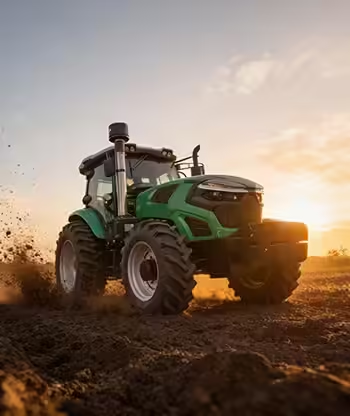
The single most common buyer mistake is shopping by engine HP while ignoring PTO HP, lift capacity, and emissions requirements — three specs that define daily usability far more than the headline number on the brochure. With these terms defined, the real question becomes what each class can actually handle in the field.
A 25HP tractor is a legitimate workhorse for properties under 10 acres — but its capabilities have real ceilings that every buyer should understand before signing a purchase agreement.
Mowing and light groundskeeping are where the 25HP class genuinely excels. These tractors handle 5-foot finish mowers and light-duty rotary cutters with confidence, making them well-suited for maintaining pastures, lawns, and overgrown fence lines. Paired with a front loader, they also manage light grading on driveways and food plots. For landowners comparing a 25 vs 35 HP Tractor, the gap on routine mowing tasks is surprisingly narrow — but it widens fast once conditions get demanding.
Lifting capacity is the most significant constraint. According to John Deere’s 3 Series and 4 Series technical specifications, a 25HP tractor typically supports only 800–1,200 lbs at the pivot pins. That rules out round bale handling and makes work in heavy, wet soil a real struggle. Pushing through compacted ground or lifting saturated material pushes the hydraulic system and engine to their limits quickly.
Maneuverability is a genuine strength. Compact dimensions let a 25HP machine navigate tight barn doors, wooded trails, and terraced garden beds that would stop a larger tractor cold. For anyone managing small-scale gardens or mixed-use homestead properties, this agility is a practical daily advantage — weight, traction, and implement fit often matter more than raw horsepower numbers.
Transportability is another underrated benefit. Most 25HP tractors tip the scales between 2,000–2,500 lbs, meaning a standard half-ton pickup truck with a trailer handles the load without special permits or heavy-duty equipment.
Where the 25HP class runs out of answers — thick brush, heavy bales, commercial-scale work — is exactly where the 50HP tractor steps in.
A 50HP tractor isn’t just more power — it’s a fundamentally different category of machine built for tasks that a smaller unit simply cannot complete safely or efficiently.
Understanding what can a 25HP Tractor do helps clarify exactly where the 50HP class becomes mandatory rather than optional. The gap shows up fastest in vegetation management. As noted by TractorTime with Tim, “the 50HP range is the sweet spot for running a 6-foot brush hog in thick brush, while a 25HP unit is limited to a 4-foot or light-duty 5-foot cutter.” On overgrown acreage with woody stems, saplings, or dense field grass, undersizing your tractor means bogging down constantly, overheating the PTO, and finishing a job in three passes that should take one.
Lifting capacity is the second hard ceiling. A 50HP tractor typically delivers a 3-point hitch capacity in the 2,500–3,500 lb range, making it capable of handling large round bales, pallet forks loaded with building materials, or fully loaded material buckets. That’s a non-negotiable requirement for anyone moving hay on a working farm or managing commercial landscaping on properties above 10 acres. Before spec’ing out any attachment for this class, it’s worth reviewing compatible hitch and PTO options to ensure your implement matches the machine’s output.
Commercial and small-farm operations feel the difference daily. Row cultivation, subsoiling, and multi-pass tillage all demand sustained torque that a 25HP tractor depletes quickly under load. The 50HP class handles these tasks with reserve power remaining — a critical safety buffer when terrain changes unexpectedly.
One factor buyers often overlook at this point: the 50HP machine’s considerably heavier chassis affects far more than raw stability. That weight has direct consequences for traction, soil impact, and the truck you’ll need to haul it — all of which deserve a closer look.
In any Tractor horsepower comparison, weight is the variable most buyers overlook — yet it shapes traction, soil health, and hauling logistics more than engine output alone.
Any tractor generates pulling force through friction between its tires and the ground. Without sufficient machine weight pressing down, horsepower simply spins the tires. This is why a heavier tractor often outperforms a lighter one on slopes or in wet conditions, even when the power ratings look similar on paper. According to Kubota USA product specifications, 25HP tractors typically weigh between 1,500 and 2,500 lbs, while 50HP models often exceed 5,000 lbs — a difference that fundamentally changes how each machine behaves in the field.
That weight gap has real consequences across four areas buyers should evaluate carefully:
Ballasting is a tool, not a fix — it supplements inherent machine weight rather than replacing it. For operators focused on soil health, the lighter 25HP class has a genuine advantage on sensitive ground. Those running heavier implements consistently will find the 50HP’s natural mass works in their favor. Worth noting: engine weight also connects directly to emissions hardware decisions — a distinction the next section breaks down in full.
The emissions classification of your engine — not just its horsepower — can be the deciding factor in long-term ownership costs, especially if you’re searching for the best Tractor for 5 acres.
| Maintenance Factor | 25HP Tractor | 50HP Tractor |
|---|---|---|
| Emissions system | None/Tier 4 Interim | Tier 4 Final (DPF + DEF) |
| DEF fluid cost | None | ~$10–$15/gallon, ongoing |
| Regen cycles | None | Every 8–50 hours of operation |
| Cold weather risk | Minimal | DPF blockage, DEF freezing |
| Filter servicing | Standard air/fuel filters | Adds DPF cleaning intervals |
The 25HP Emissions Sweet Spot. Sub-compact and compact tractors in the 25HP range typically fall under less stringent EPA non-road diesel thresholds, meaning many models avoid Diesel Particulate Filter (DPF) and Diesel Exhaust Fluid (DEF) requirements entirely. According to the EPA’s Clean Air Act standards for non-road diesel engines, tractors at 50HP or more must meet Tier 4 Final standards — a threshold that triggers considerably more complex emissions hardware. That’s a significant operational difference, not merely a regulatory footnote.
DPF Regeneration Is a Real Workflow Interruption. On a 50HP Tier 4 Final engine, passive and active DPF regeneration cycles occur regularly. Active regen — where the engine burns off accumulated soot at high exhaust temperatures — can take 20–40 minutes and requires the machine to remain running at elevated RPM. Interrupting this cycle repeatedly can accelerate DPF failure, an expensive repair. How modern emissions standards continue evolving reflects a broader regulatory push that increasingly affects diesel-powered outdoor equipment at every size class.
Cold Weather Amplifies the Risk. DEF fluid freezes at approximately 12°F (−11°C), and frozen DEF can prevent a Tier 4 engine from starting or sustaining power. In practice, operators in colder climates must store DEF properly, allow warm-up time, and monitor tank levels more carefully — adding friction that 25HP owners simply don’t face.
These mechanical realities connect directly to what your tractor can actually do with implements — which brings the question of tool compatibility squarely into focus.
The tractor you choose determines not just what implements you can run — but what they cost, how well they perform, and whether your hydraulic system can keep up.
Horsepower class dictates hitch category. A 25HP tractor typically operates a Category 1 three-point hitch, which accepts implements with 7/8-inch pins — standard for compact tillage tools, small box blades, and light-duty mowers. Step up to a 50HP machine and you generally gain access to a Category 2 hitch, with 1-1/8-inch pins rated for heavier, wider implements. Running a Category 2 implement on a Category 1 hitch isn’t just an adapter problem — it’s a structural mismatch that stresses the tractor’s lift arms under load.
Hydraulic flow rate is the overlooked bottleneck. A 25HP tractor typically delivers 5–8 gallons per minute (GPM) of hydraulic flow, which is adequate for basic loader work and simple rear implements. A 50HP tractor commonly delivers 11–15 GPM — enough to run a mid-size backhoe or a loader with genuine curl-and-lift speed. If you’re asking is 50HP enough for a Tractor running a backhoe on a daily basis, the answer is yes — provided the GPM spec matches the attachment’s requirement.
Implement width directly ties to cost. A 4-foot tiller runs $800–$1,400 and fits neatly within a 25HP power envelope. Upgrade to a 6-foot model and pricing jumps to $1,800–$3,200 — but it also demands more PTO horsepower to turn effectively. According to John Deere’s 3 and 4 Series technical documentation, a 50HP tractor can lift 2,500–3,500 lbs at the pivot pins, nearly triple the capacity of a 25HP unit.
Here’s a practical breakdown by implement category:
A 25HP tractor simply cannot safely handle heavy round bale spears. The math doesn’t work: a large round bale weighs 1,200–1,800 lbs, and the leverage at the loader’s pivot point multiplies that load significantly. Attempting it risks tipping, damaging the loader frame, or overloading the hydraulic circuit. This is one capability gap that no ballast or attachment modification can bridge.
Understanding these hard limits sets the foundation for a sharper decision — and once you map your implement list, the next logical step is matching horsepower to your actual acreage and workload.
The right horsepower class for your property isn’t about preference — it’s about acreage, task frequency, and how much of your weekend you’re willing to spend in the seat.
Under 5 acres is where a 25HP sub-compact tractor genuinely excels. Properties this size rarely demand more than light loader work, finish mowing, and occasional tilling. A 25HP machine handles a 60-inch mid-mount mower deck cleanly, maneuvers through tight gateways, and costs significantly less to own and operate. For hobby farms, landscaped estates, or rural residential lots, oversizing to 50HP typically adds weight, fuel cost, and complexity without a measurable productivity return.

At 5–15 acres, the calculus shifts. Medium-sized farms in this range typically evaluate the 25–50HP class based on task frequency — and that detail matters. A property that requires weekly brush hogging, regular box blade work, and seasonal hay cutting will strain a 25HP engine repeatedly. The transition point most operators encounter is around 10 acres: at that scale, a 50HP tractor with a 72-inch or wider rear-discharge mower deck can cut mowing time by 30–40% compared to a 25HP unit running a smaller deck, simply through wider coverage per pass.
At 15+ acres, a 50HP machine stops being an upgrade and starts being a practical necessity. Example scenario: managing a 15-acre woodlot requires clearing fallen timber, running a hydraulic log splitter, and maintaining access trails. A 25HP tractor can attempt this work — but it will cycle through regenerative cycles on loader lifts and bog under heavy three-point hitch loads. A 50HP tractor with a higher-output hydraulic system handles these tasks without thermal stress, reducing long-term wear. For properties combining pasture, woodland, and cultivation, the 50HP class delivers the versatility explored in detail by Heritage Tractor that makes choosing the right model within that class the real decision — which is exactly where we’ll go next.
Not all 50HP tractors are built equal — the gap between an economy open-station model and a premium cab unit can mean $15,000+ in price and a completely different daily experience.
The 50HP class splits cleanly into two tiers. Economy models prioritize function over comfort — simpler instrument clusters, open stations, and fewer electronic aids. They deliver the same raw horsepower at a lower entry point, making them a practical choice for landowners who use the machine seasonally. Premium models, on the other hand, bundle in features that are virtually nonexistent in the 25HP sub-compact class. According to Heritage Tractor, the 50HP range offers options like climate-controlled cabs — a genuine quality-of-life upgrade when you’re spending four-plus hours operating in July heat or a February freeze.
Cab vs. open station is arguably the single most consequential spec decision in this class. For properties over 10 acres where loader work, bush hogging, or tilling stretches across half a day, a cab pays dividends in operator fatigue reduction and year-round usability. Open-station models remain legitimate choices for light-duty or fair-weather tasks where lower cost and better sightlines matter more.
Transmission matters significantly under loader stress. Hydrostatic transmissions handle repetitive forward-reverse loader cycles smoothly, while gear-drive setups with a synchronized shuttle shift offer more pulling efficiency for PTO-heavy work like running a finish mower or auger. Match the transmission to your primary task, not your secondary one.
On brand differentiation, the Kubota L-Series and comparable utility-class machines each bring distinct strengths. Before finalizing any purchase, use this checklist of must-have features when evaluating 50HP units:
Those feature decisions tie directly into what you’ll pay — and how that purchase price compares to total long-term ownership costs.
The sticker price gap between a 25HP and 50HP tractor is just the opening act — total cost of ownership tells the real story.
Most buyers enter the market focused on the purchase price, which is understandable. A capable 25HP compact tractor typically runs between $15,000 and $25,000 new, while a well-equipped 50HP utility tractor often lands between $35,000 and $50,000 or more depending on cab configuration. That’s a real $15,000–$25,000 difference that shapes budgets from day one. But the downstream costs deserve equal attention before you sign anything.
Fuel consumption is one of the most consistent ongoing expenses. Three-cylinder engines common in 25HP machines are inherently more fuel-efficient under moderate load, burning roughly 1–1.5 gallons of diesel per hour during typical tasks. Four-cylinder 50HP engines can consume 2–3 gallons per hour under heavier load conditions. Over a full season, that gap compounds quickly — especially for owners running equipment several hours per week.
Hidden costs are where many buyers get caught off guard:
Also worth noting: emissions compliance is a real consideration for newer diesel engines — whether you’re buying compact or full-size diesel equipment, EPA Tier 4 standards affect parts availability and service complexity.
When you add it all up, the right choice isn’t just about which machine you can afford today — it’s about what it costs to own, operate, and eventually sell. Those factors shape the final verdict just as much as horsepower ratings do.
Choosing between 25HP and 50HP comes down to three hard limits: what you’ll lift, what terrain you’ll cross, and how much mechanical complexity you’re willing to manage.
After walking through purchase prices, total ownership costs, and model comparisons, the decision framework actually simplifies into a handful of non-negotiable checkpoints. Here’s what the evidence consistently points to:
The single most common buyer regret is underbuying on lift capacity, not horsepower. Keep that in mind as you evaluate your final shortlist — and explore the resources in the next section to dig deeper into specific models and compatibility specs.
The right resource at the right moment turns a confusing purchase into a confident one. Whether you’ve settled on a 25HP compact or you’re ready to step up to a 50HP workhorse, the links below give you the next logical step in your research.
One final thought: horsepower class shapes every ownership decision that follows — from implement budgets to financing terms to resale value. Take the data in this guide, map it against your specific acreage and task list, and request a side-by-side quote on both classes before committing. The gap often surprises buyers in both directions.






-1.png)