Email: [email protected] Whatsapp: +8618266768780

Email: [email protected] Whatsapp: +8618266768780


You want a tight, clean cut that hugs garden borders, sidewalks, and fence lines without endless touch‑ups. If your space is under about one‑eighth of an acre with tricky corners and narrow passages, the right electric mower can deliver crisp edges, quick maneuvering, and low maintenance. This guide shows you how to size the deck, match battery and runtime to your yard, set the right cutting height by grass type, and dial in techniques that reduce post‑mow trimming. Want an even quieter session? Choosing a quiet electric mower for small yards and mowing outside local quiet hours makes a noticeable difference for neighbors.
Precision seekers should start with edge quality, then maneuverability, then runtime. Here’s the hierarchy I recommend for tight spaces and tidy borders. Cut‑to‑edge capability comes first: favor short blade‑to‑wheel distance, a touch of deck overhang, and rear‑edge reach so you can trace along hardscapes with minimal gap. Next is maneuverability and weight: a lighter mower with a narrower deck turns easily around beds and through gates, reducing missed strips and scalping on corners. Then comes the battery and motor system: brushless motors are efficient and durable; size battery energy to your square footage and mowing style so you are not racing the charge. Finally, confirm a fine cutting‑height range (roughly one to four inches), solid mulching airflow, and practical storage and safety features such as a blade‑brake and child lock.
Small yards vary widely. Gates can be 28 to 36 inches, side yards pinch near air‑conditioning units, and patio beds snake around corners. A practical way to size your deck is to measure your narrowest passage and the common widths of mowing lanes you will actually push through.
Think of deck width as a steering tool more than a speed number. In obstacle‑dense yards, many owners find a 13 to 16 inch deck reduces multi‑point turns and trims closer to borders. If your lawn is a simple rectangle with few obstacles, a 17 to 19 inch deck can be efficient without sacrificing finish quality. Make these calls based on your tightest gap and turning space, not a generic “bigger is faster” mindset. Does your broom‑width mockup glide through the gate without three‑point turns? If not, downsize the target deck.
Tip to test fit before you buy. Tape a cardboard strip to the front of your current mower or a push broom at the target deck width and walk your routes. Do you clip bed corners cleanly and pass gates without three‑point turns? That quick rehearsal will tell you more than a spec sheet.
Battery packs list voltage and amp‑hours. Multiply them to get energy in watt‑hours. That’s your starting point for planning coverage.
Below are two worked examples using conservative assumptions to help a precision‑focused small‑yard owner decide whether one pack can finish the job.
| Scenario | Battery specs | Calculated Wh | Usable Wh at 75% | Yard size example | Estimated coverage range |
|---|---|---|---|---|---|
| Smaller lawn session | 36 V × 4.0 Ah | 144 Wh | 108 Wh | 1,000 sq ft | Typically completes on a single charge with mulching at moderate pace |
| One‑eighth acre target | 40 V × 5.0 Ah | 200 Wh | 150 Wh | ~5,445 sq ft mowable area after subtracting beds and hardscape | May require efficient pathing and higher cutting height for a single session; consider a brief mid‑charge if grass is tall |
Assumptions for the estimates. Dry grass, sharp blade, moderate walking pace, mulching, and minimal overlap. Taller, wet, or dense growth will shorten coverage, while higher cutting heights and slower passes can conserve energy.
For week‑to‑week cadence, a pack that recharges in about an hour often supports small yards well. Keep a second pack if your lawn’s density changes dramatically through spring flush.
Set your target height by species and stick to the one‑third rule so you are never removing more than one‑third of the blade in a single mow. That habit dramatically reduces scalping in tight turns and along edging lanes.
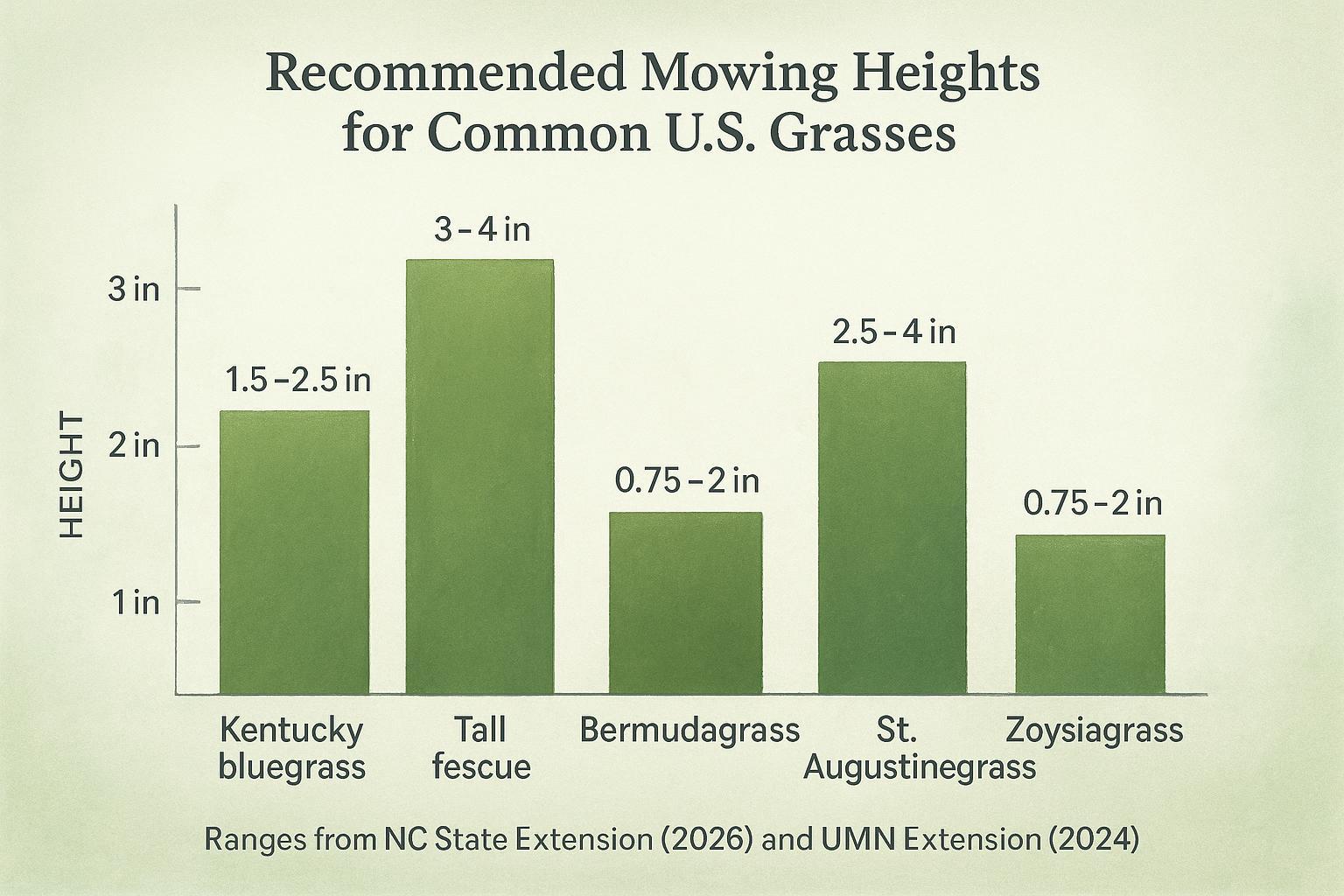
| Grass species | Recommended cutting height |
|---|---|
| Kentucky bluegrass | 1.5–2.5 in |
| Tall fescue | 3–4 in |
| Bermudagrass | 0.75–2 in |
| St. Augustinegrass | 2.5–4 in |
| Zoysiagrass | 0.75–2 in |
Practical precision tip. In tight corners and along pavers, raise the deck one notch for the first perimeter pass, slow your pace, and overlap your next pass at a right angle. That small adjustment curbs scalping and cleans up tufting.
Cut‑to‑edge performance is as much about design as it is about technique. Blade proximity matters: a shorter distance from blade tip to wheel lets the blade reach closer to fences and curbs. A touch of deck overhang on one side allows you to ride the wheel along hardscape while the blade trims just inside the edge. Rear‑edge reach helps when you pull straight back from a bed or post, and a smooth deck skirt with clean baffles reduces clumping at borders so mulched clippings drop evenly instead of forming ridges.
Operator technique matters too. Mow the perimeter first, trace edges with a steady wheel against the hardscape, then work in straight, overlapping passes. Finish with a short cross‑pass to erase faint stripes along the border. You will often cut edging time by nearly half once your geometry and pathing are dialed in.
Electric mowers are notably quieter than many engine‑powered units, but hearing safety still matters. The National Institute for Occupational Safety and Health sets a recommended exposure limit of 85 dBA as an eight‑hour time‑weighted average and uses a three‑decibel exchange rate to halve allowable time with each 3 dB increase. Learn more in the CDC resource on understanding noise exposure: NIOSH noise exposure overview.
For general safety beyond noise, follow the U.S. Consumer Product Safety Commission’s homeowner guidance. Keep children and pets indoors while mowing, pick up debris before you start, and avoid mowing in reverse unless absolutely necessary. Review the fact sheet here: CPSC mowing safety tips.
Local quiet‑hour rules and HOA covenants vary widely. Check your municipality and community handbook before early morning or evening mowing so you are a good neighbor and in compliance.
If you are comparing specification sheets or exploring mower formats, these pages from Qilu Machinery can help you understand how manufacturers present deck size, height range, weight, and storage details:
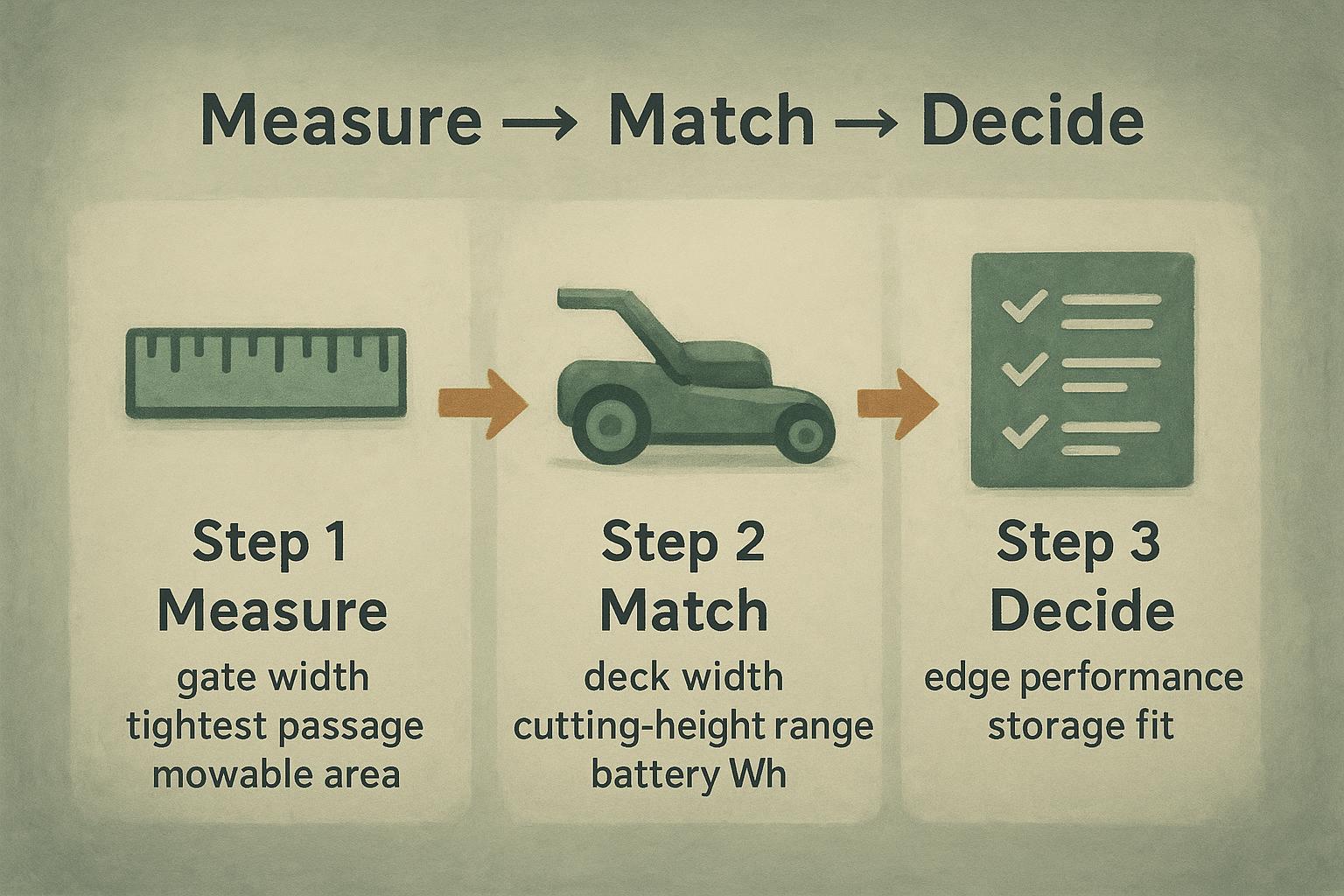
Now is the moment to measure your space, match the right deck width and cutting‑height range to your grass species, and size your battery to finish in one session. With that quick homework done, choosing the best electric mower for a small yard becomes straightforward and the results will show up in every crisp edge you cut.






-1.png)