Email: [email protected] Whatsapp: +8618266768780
Email: [email protected] Whatsapp: +8618266768780


The global drilling industry is undergoing its most significant transformation in decades — and the companies that recognize this shift early are the ones capturing the strongest infrastructure ROI. A drilling rig is no longer simply a machine that punches holes into the earth; it is a data-gathering, precision-engineered system that determines project timelines, cost overruns, and long-term ground stability across every major infrastructure vertical.
The numbers confirm the momentum. According to Fortune Business Insights, the global drilling rig market is projected to grow from $73.48 billion in 2023 to $131.33 billion by 2030, representing a compound annual growth rate of 8.6%. That kind of expansion doesn’t happen without a fundamental rethinking of what rigs need to do — and how they should be built.
A critical driver behind this growth is automation. As the International Association of Drilling Contractors (IADC) notes, “The shift toward automated drilling systems is not just about speed; it is primarily about removing personnel from the ‘red zone’ of the drill floor to enhance safety.” Manual labor on the drill floor is becoming a liability — operationally, financially, and ethically. Modern buyers are prioritizing equipment that minimizes human exposure to high-risk zones without sacrificing throughput.
Equally important is the role of Chinese manufacturing in making high-specification equipment accessible at scale. Where advanced drilling technology was once limited to a handful of Western suppliers with premium price tags, Chinese engineers have systematically closed the performance gap while expanding what’s possible across geothermal, geotechnical, and water-well applications. This democratization is reshaping procurement decisions from Southeast Asia to Sub-Saharan Africa.
To navigate this evolving landscape, procurement teams and project engineers need a structured approach. This guide introduces the Precision-First framework — a selection methodology built around rig category fit, automation tier, and total cost of ownership rather than upfront price alone.
Understanding where each rig type excels — from large-scale rotary systems to the adaptable XY drilling rig series — is the logical starting point.
Understanding the drilling industry’s transformation — outlined in the previous section — requires a clear map of the machinery driving it. Not all rigs are created equal, and mismatching equipment to application is one of the most expensive mistakes an infrastructure project can make. The right rig selection directly determines sample quality, operational efficiency, and ultimately, return on investment.
| Rig Type | Primary Use | Key Technical Requirement |
|---|---|---|
| Rotary Drilling Rig | Large-scale infrastructure, oil & gas | High rotational torque, depth capacity |
| Geotechnical Rig | Soil investigation, foundation analysis | Sample preservation, precision control |
| XY Series Core Drill | Mineral exploration, core sampling | Versatility across formations, portability |
| Geothermal Rig | Deep energy extraction | Heat-resistant components, sustained torque |
The rotary drilling rig is the backbone of large-scale construction and resource extraction worldwide. These rigs operate by rotating a drill bit under continuous downward pressure, penetrating rock, soil, and consolidated formations at considerable depth and speed. According to Grand View Research, the global drilling rig market continues to expand as infrastructure demand accelerates across emerging economies — with rotary configurations dominating land-based deployments.
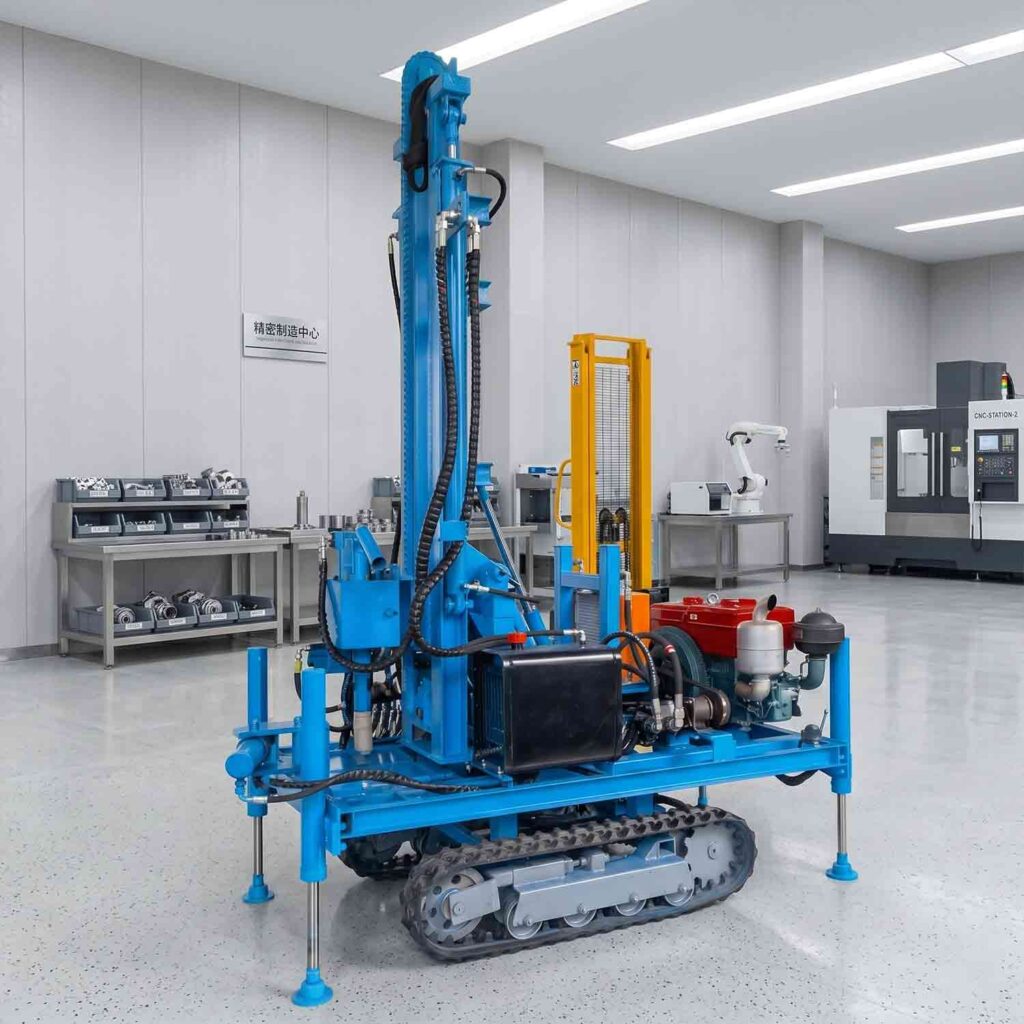
In practice, rotary rigs are deployed wherever scale and speed define the project requirements: highway foundation boring, bridge piling, high-rise construction, and pipeline corridors. Their strength is raw throughput. The trade-off is that standard rotary drilling is not optimized for precise sample retrieval — which is where geotechnical rigs step in.
The most consequential rig decision isn’t about horsepower — it’s about matching the machine’s core capability to the ground truth your project demands.
Geotechnical drilling: A specialized drilling discipline focused on extracting undisturbed soil and rock samples to assess subsurface conditions for engineering, environmental, or construction purposes.
For foundation engineers and environmental surveyors, sample preservation is the primary KPI — not drilling speed. Geotechnical rigs are engineered to minimize sample disturbance, delivering intact cores that accurately represent subsurface conditions. Diamond core drilling, recognized by the International Society for Soil Mechanics and Geotechnical Engineering, is the preferred method in mineral exploration precisely because it provides intact cylindrical samples that preserve structural integrity.
This distinction matters enormously at the project planning stage. A compromised sample leads to flawed soil analysis, which cascades into miscalculated load-bearing assumptions, costly redesigns, and potential structural failure. The investment in proper geotechnical equipment pays dividends that extend far beyond the drill site.
XY series drilling rigs: A family of hydraulic core drilling machines standardized around interchangeable drill rod systems, widely used in geological surveying, mineral exploration, and water well construction.
The XY series represents the global standard for core drilling versatility. These rigs accommodate multiple rod sizes and can transition between soft alluvial formations and hard crystalline rock without requiring a full equipment swap. For project managers working across varied terrain — a common scenario in developing infrastructure markets — this adaptability directly reduces mobilization costs and project timelines.
Geothermal applications push drilling equipment to its operational limits. According to the U.S. Department of Energy, geothermal energy production requires drilling to depths of 3,000 to 10,000 feet — depths that demand sustained high-torque performance and heat-resistant drill string components operating in environments where conventional materials degrade rapidly.
Geothermal rigs are purpose-built with reinforced rotary heads, thermally stable fluid circulation systems, and extended bit life ratings. The operating requirements overlap significantly with deep mineral exploration, making this segment technically demanding and capital-intensive.
Each of these categories sets a distinct performance threshold — and increasingly, the manufacturers meeting those thresholds at competitive price points are redefining where the industry looks for procurement. That shift leads directly to a closer examination of what modern Chinese land rig manufacturers are now delivering to global buyers.
For years, “made in China” carried a familiar stigma in heavy equipment circles — synonymous with acceptable quality at a discount price. That narrative has fundamentally collapsed in the drilling industry. China’s top-tier rig manufacturers have spent the last two decades engineering their way into conversations previously reserved for European and North American brands, and the results are impossible to ignore.
The pivot from low-cost supplier to high-tech innovator wasn’t accidental. It was the product of sustained R&D investment, rigorous international certification programs, and deliberate field-testing across some of the world’s most demanding geological environments. Chinese-manufactured land rigs now routinely carry API certification — the American Petroleum Institute’s stamp of compliance, which validates that equipment meets strict international standards for design, materials, and performance. For procurement teams evaluating total cost of ownership, API certification transforms a Chinese rig from a budget option into a credible, bankable asset.
API Certification: A globally recognized compliance standard issued by the American Petroleum Institute, confirming that drilling equipment meets defined specifications for safety, reliability, and interoperability on international job sites.
What’s particularly telling is the trajectory of depth records. China’s self-developed automated drilling rigs have successfully reached record depths in Asia, demonstrating technical parity — and in some cases, superiority — with established global competitors. That kind of field-proven performance is the most persuasive data point available to skeptical buyers.
The XY series has become a reference-point product line within the geotechnical drilling rig market — equipment designed specifically for soil investigation, foundation analysis, and core sampling in civil and infrastructure projects. These rigs deliver a combination of compact mobility, variable spindle speed, and high torque output that makes them exceptionally well-suited for urban construction sites, bridge foundations, and tunneling programs where spatial constraints are real.
Three factors consistently explain the XY series’ market dominance:
The latest generation of Chinese land rigs doesn’t just match international standards — it’s actively pushing them. Automated pipe handling, real-time downhole monitoring, and integrated safety shut-off systems are now factory-standard features on premium models, not expensive add-ons. According to Drilling Contractor, Chinese manufacturers have positioned themselves to compete at the highest levels of global rig supply, with automation capability as a central argument.
This automation integration matters directly to your infrastructure ROI. Fewer manual handlings mean reduced labor costs, less crew fatigue, and lower incident rates — all factors that protect project timelines and insurance profiles.
Understanding what makes these rigs perform at this level, however, requires looking beneath the surface. The true differentiators live inside the machine — in the power systems, hoisting capacity, circulation architecture, and safety engineering that determine how long a rig performs before it costs you money instead of making it.
Understanding what separates a high-performing drilling rig from an expensive liability starts beneath the surface — literally. Across all drilling rig types, four interconnected systems determine whether a rig delivers decades of reliable output or becomes a maintenance burden that bleeds your project budget. Each component plays a non-negotiable role, and each carries its own failure risks when quality is compromised at the procurement stage.
The power system is the heartbeat of any land rig. Two dominant configurations define the modern market: Silicon Controlled Rectifier (SCR) systems and traditional mechanical drives.
SCR System: An electronic power management architecture that converts AC power into variable DC output, allowing precise motor speed control across drawworks, rotary tables, and mud pumps simultaneously.
SCR and its successor, AC-Variable Frequency Drive (AC-VFD), dominate high-performance applications. According to SMKST-Petro technical data, 2000HP land rigs — such as those designed for deep-well exploration — specifically utilize AC-DA or SCR systems to manage extreme power demands that mechanical drives simply cannot regulate with comparable precision. The payoff is lower fuel consumption, reduced mechanical wear, and more granular control during sensitive drilling phases.
Maintenance Tip: Regularly inspect SCR cabinets for dust ingress and verify cooling fan operation. Electrical faults in SCR panels are among the most common sources of unplanned downtime on land rigs.
Hoisting capacity — measured in hook load — and rotary torque are the two figures that most directly reflect a rig’s true operational ceiling. A drawworks rated beyond the crown block’s load tolerance creates catastrophic failure risk. Equally, a top drive or rotary table that lacks sufficient torque will stall in hard-formation drilling, costing operators time and casing integrity.
The rotating system’s torque capacity is, in practice, the ultimate constraint on how deep and how efficiently a rig can drill. Undersizing this specification to save on upfront costs is one of the most expensive procurement errors in the industry.
Maintenance Tip: Monitor crown and traveling block sheave wear monthly. Rope replacement schedules should be based on actual ton-mile calculations, not calendar dates alone.
Drilling fluid circulation — the process of pumping mud down the drill string and back up the annulus to carry cuttings to surface — is what keeps a wellbore stable at depth. High-output mud pumps (typically duplex or triplex piston designs) must maintain consistent pressure across extreme depths, while solids control equipment (shale shakers, desanders, desilters, and centrifuges) processes the returning fluid for reuse.
At depths exceeding 5,000 meters, fluid density management becomes critical to preventing wellbore collapse and blowout risk.
Maintenance Tip: Inspect pump liner and piston assemblies every 500 operating hours. Worn liners reduce volumetric efficiency quietly — and pressure losses accumulate before the problem becomes obvious.
Modern rigs increasingly rely on automated pipe-handling systems and Emergency Shutdown (ESD) systems to reduce human exposure to high-torque, high-pressure environments. Automated iron roughnecks, pipe racking systems, and real-time blowout preventer (BOP) monitoring have redefined the risk profile of deep drilling operations, measurably reducing crew injuries and equipment damage incidents.
Maintenance Tip: Test BOP actuator response times against manufacturer specifications on a scheduled basis — regulatory compliance and crew safety depend on sub-second response accuracy.
The quality of these four systems collectively defines a rig’s ROI trajectory over its service life. Knowing which questions to ask about each system at the procurement stage — certifications, spare parts availability, and manufacturer support — is where smart operators gain a decisive edge. That evaluation framework is exactly what the next section addresses.
Once you understand what makes a drilling rig technically sound — the mast ratings, drawworks capacity, and drilling rig components that separate reliable equipment from costly liabilities — the next challenge is evaluating the manufacturer behind those specs. Procurement decisions at this scale are rarely undone cheaply. Getting them right the first time demands a structured approach.
Use this checklist before signing any purchase agreement:
Non-Productive Time (NPT): Any period during a drilling operation when the rig is not advancing the well due to mechanical failure, equipment delays, or unplanned maintenance — widely recognized as the single largest cost-driver in drilling operations.
As noted in the [Industry Standard Procurement Guide], field-proven equipment reduces the risk of NPT, which is the single largest cost-driver in drilling operations. This makes case study verification not a nice-to-have, but a financial imperative.
A common procurement mistake is treating purchase price as the primary variable. In practice, the true cost of a drilling rig unfolds over its operational lifespan — through maintenance cycles, parts replacement, downtime events, and the productivity ceiling of its engineering design. A rig priced 15–20% lower at acquisition can erode that advantage entirely within the first two years if support infrastructure is weak or components require frequent replacement.
On the other hand, manufacturers that invest in post-sale ecosystems — stocking regional parts inventories, training local technicians, and building long-term client relationships — deliver compounding returns that show up in uptime percentages and project completion rates. According to the Surface Drilling Rig Market forecast, demand for high-reliability surface rigs is accelerating globally, meaning the premium on proven manufacturer support will only increase.
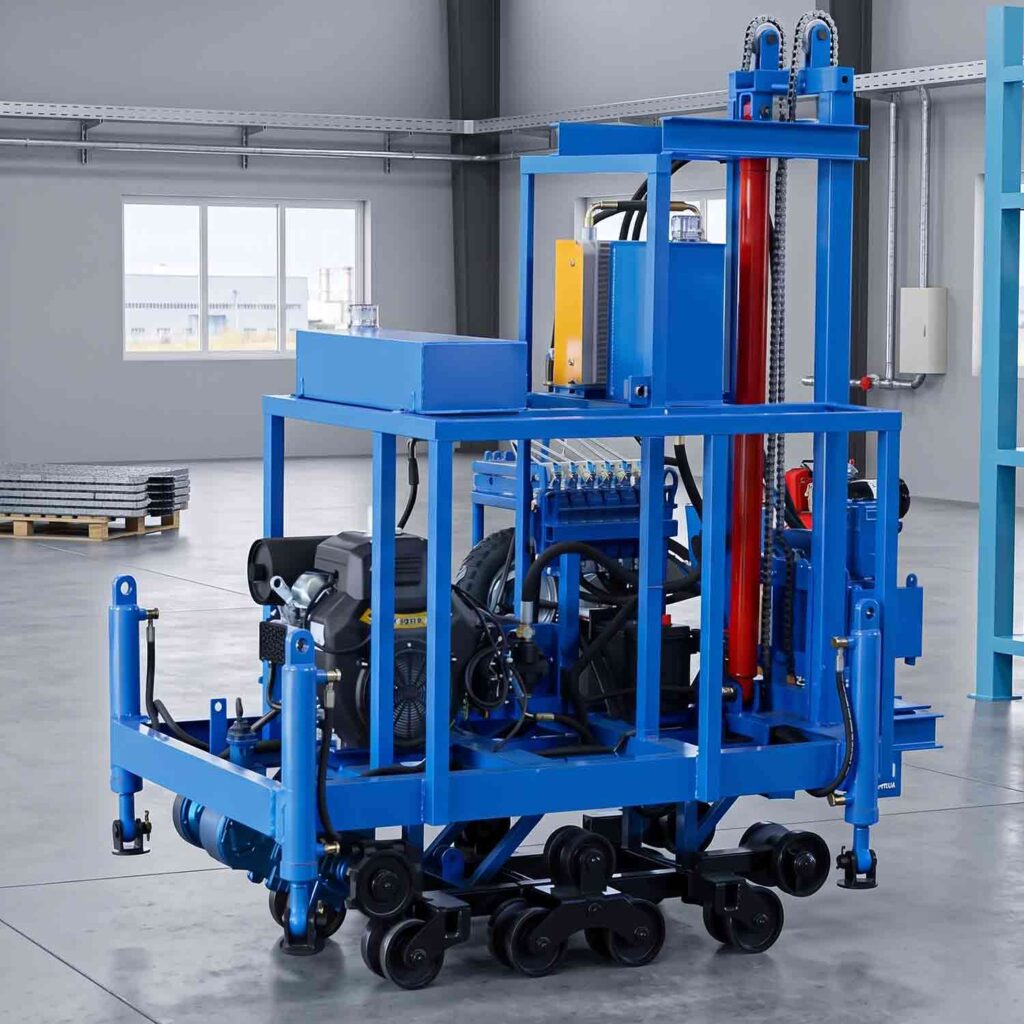
Qilu Machinery positions itself at a deliberate intersection: rigs engineered for the exacting tolerances of geotechnical work without sacrificing the structural durability demanded by heavy-duty land drilling applications. That dual focus matters because most procurement teams eventually face a project scope that expands — a site survey that deepens into resource extraction, or a foundation job that encounters unexpectedly hard formation. Equipment that was built only for one scenario becomes a constraint. Equipment built for both becomes a competitive advantage.
When evaluating any manufacturer, the questions you still need answered — about rig type selection, maintenance planning, and operational fit — are exactly what experienced procurement teams ask most frequently. Those answers deserve their own focused attention.
A rotary drilling rig uses a rotating drill string and bit to bore through rock and soil formations, typically for oil, gas, or deep mineral extraction. A geotechnical rig, by contrast, is a smaller, site-investigation tool designed to collect subsurface samples and test soil bearing capacity — not to extract resources. Rotary rigs operate under significantly higher torque and depth ratings, often exceeding 5,000 meters, while geotechnical rigs rarely surpass 100 meters. Choosing the wrong rig category for a project isn’t just a budget mistake — it’s an operational failure waiting to happen.
XY drilling rigs dominate mineral exploration globally because of their versatility and portability. Their spindle-drive mechanism allows variable angle drilling — from vertical to near-horizontal — making them ideal for core sampling across complex geological formations. They’re compact enough to transport to remote sites yet capable enough to reach depths that satisfy junior mining companies and major producers alike. According to Dataintelo’s surface drill rigs research, demand for compact, high-performance exploration rigs continues to accelerate in emerging markets across Africa, Southeast Asia, and Latin America.
This is one of the most common questions buyers face when evaluating chinese land drilling rigs for sale against pre-owned equipment from Western manufacturers. The core tradeoff involves upfront cost versus uncertainty. A new Chinese rig from a reputable manufacturer typically carries a full warranty, current emissions compliance, and modern PLC automation. A used Western rig may carry brand prestige, but hidden maintenance liabilities — worn drawworks, degraded BOP systems, outdated control architecture — can erase any initial savings quickly. In practice, total cost of ownership over a five-year horizon typically favors new Chinese equipment, especially for operators in cost-sensitive markets.
A 2000HP land rig demands a structured preventive maintenance program across four primary systems: the drawworks (monthly brake inspection, quarterly gear lubrication), the rotary table and top drive (bearing checks every 500 operational hours), the mud pumps (liner and valve replacement per manufacturer intervals), and the mast and substructure (weld integrity inspection before every move). According to the Global Land Drilling Rigs Tracker by Westwood, operational availability directly correlates with maintenance discipline — rigs with documented service histories consistently outperform those without.
The bottom line: Selecting and maintaining a drilling rig is a long-cycle capital decision that rewards preparation. Buyers who evaluate components rigorously, vet manufacturers strategically, and commit to proactive maintenance protocols position themselves for durable ROI — regardless of where the rig was built.





-1.png)