Welcome to Shandong Qilu Industrial Co., Ltd

 English
 Arabic
 Bulgarian
 Bengali
 Czech
Czech
 Danish
 German
 Greek
Greek
 Spanish
 Finnish
 French
 Hindi
Hindi
 Croatian
 Hungarian
 Indonesian
 Italian
 Japanese
 Korean
 Lithuanian
 Dutch
Dutch
 Norwegian
 Polish
 Portuguese
 Romanian
 Russian
 Slovak
 Slovenian
 Swedish
 Thai
Thai
 Turkish
 Ukrainian
 Vietnamese
 Tagalog
 Malay
Malay
 Estonian
 Catalan
 Latvian
 Urdu
Urdu
 Serbian
 Persian
 Swahili
 Albanian
 Armenian
 Icelandic
 Bosnian
 Luxembourgish
 Afrikaans
English Arabic
Bulgarian
Bengali
Czech
Danish
German
Greek
Spanish
Finnish
French
Hindi
Croatian
Hungarian
Indonesian
Italian
Japanese
Korean
Lithuanian
Dutch
Norwegian
Polish
Portuguese
Romanian
Russian
Slovak
Slovenian
Swedish
Thai
Turkish
Ukrainian
Vietnamese
Tagalog
Malay
Estonian
Catalan
Latvian
Urdu
Serbian
Persian
Swahili
Albanian
Armenian
Icelandic
Bosnian
Luxembourgish
Afrikaans
Afrikaans
English Arabic
Bulgarian
Bengali
Czech
Danish
German
Greek
Spanish
Finnish
French
Hindi
Croatian
Hungarian
Indonesian
Italian
Japanese
Korean
Lithuanian
Dutch
Norwegian
Polish
Portuguese
Romanian
Russian
Slovak
Slovenian
Swedish
Thai
Turkish
Ukrainian
Vietnamese
Tagalog
Malay
Estonian
Catalan
Latvian
Urdu
Serbian
Persian
Swahili
Albanian
Armenian
Icelandic
Bosnian
Luxembourgish
Afrikaans

Tracked Skid Steer Loader vs. Wheeled: Which One is Better?
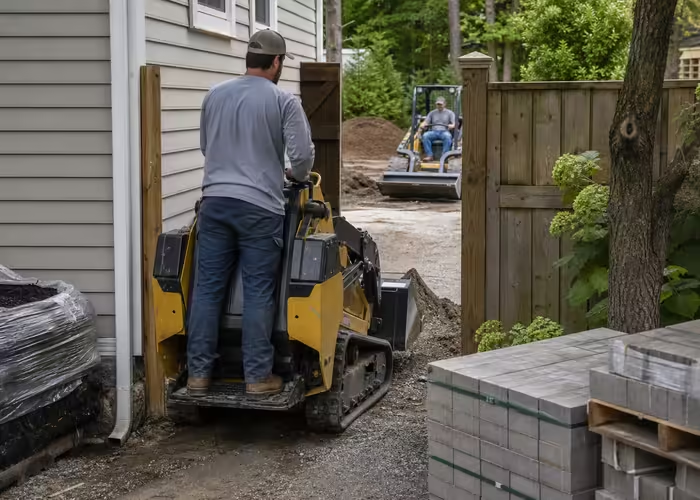
Tracked skid steer loaders are designed with continuous rubber tracks instead of traditional wheels.
Introduction
When it comes to choosing the right skid steer loader for your project, the decision often boils down to two main options: tracked skid steer loaders and wheeled skid steer loaders. Both types of machines offer unique advantages and disadvantages, making them suitable for different types of terrain and tasks. Understanding the key differences between these two types of loaders can help you make an informed decision that maximizes productivity, efficiency, and cost-effectiveness.
In this comprehensive guide, we will explore the features, benefits, and limitations of both tracked and wheeled skid steer loaders to help you determine which one is the better choice for your specific needs.
Understanding Tracked Skid Steer Loaders
Advantages of Tracked Skid Steer Loaders
Tracked skid steer loaders are designed with continuous rubber tracks instead of traditional wheels. This design provides several key benefits:
- Superior Traction and Stability: The tracks distribute the weight of the machine more evenly across the surface, reducing ground pressure and preventing the loader from sinking into soft terrain. This makes tracked skid steer loaders ideal for wet, muddy, snowy, or sandy conditions.
- Enhanced Performance on Uneven Ground: The continuous tracks provide better stability on slopes and uneven surfaces, reducing the risk of tipping and improving overall safety.
- Reduced Ground Disturbance: Tracked loaders are less likely to cause ground compaction, making them a better choice for projects where environmental preservation is a priority.
- Higher Lifting Capacity: Due to the even weight distribution, tracked skid steer loaders often have a higher lifting capacity compared to wheeled models of the same size.
Disadvantages of Tracked Skid Steer Loaders
Despite their numerous advantages, tracked skid steer loaders also have some limitations:
- Higher Initial Cost: Tracked skid steer loaders are generally more expensive to purchase than their wheeled counterparts.
- Increased Maintenance: The tracks require more maintenance and cleaning, especially when operating in muddy or rocky conditions. Replacing tracks is also more complicated and costly than replacing tires.
- Slower Travel Speed: Due to the increased friction and weight of the tracks, tracked skid steer loaders have a slower travel speed compared to wheeled models.
Understanding Wheeled Skid Steer Loaders
Advantages of Wheeled Skid Steer Loaders
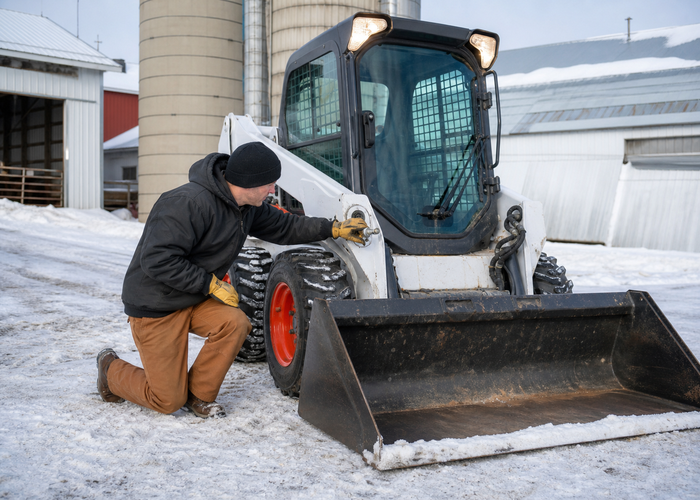
Wheeled skid steer loaders are equipped with rubber tires, making them suitable for smooth, solid surfaces. They offer several key benefits:
- Faster Travel Speed: Wheeled skid steer loaders are faster and more agile on hard, flat surfaces, making them ideal for tasks that require quick movement across job sites.
- Lower Initial Cost: Wheeled skid steer loaders are generally cheaper to purchase and maintain, making them a more cost-effective option for many projects.
- Easier Maintenance: With fewer moving parts in the undercarriage, wheeled skid steer loaders require less maintenance and are easier to repair.
- Better Fuel Efficiency: Wheeled skid steer loaders are more fuel-efficient, especially when working on solid ground, due to the lower rolling resistance of tires compared to tracks.
Disadvantages of Wheeled Skid Steer Loaders
While wheeled skid steer loaders offer several advantages, they also have some limitations:
- Limited Traction on Soft Terrain: Wheeled skid steer loaders can struggle in soft, muddy, or uneven conditions, as the tires can sink and lose traction.
- Less Stable on Slopes: Wheeled skid steer loaders are more prone to tipping on slopes or uneven surfaces compared to tracked models.
- Higher Ground Pressure: The weight of the machine is distributed across only four tires, which can cause ground compaction and leave deep ruts in soft terrain.
Comparison Table: Tracked vs. Wheeled Skid Steer Loaders
| Feature | Tracked Skid Steer Loader | Wheeled Skid Steer Loader |
|---|---|---|
| Terrain Suitability | Ideal for soft, uneven, or challenging terrain (mud, snow, gravel) | Best on hard, flat surfaces (asphalt, concrete) |
| Traction and Stability | Superior traction and stability on slopes and uneven ground | Less stable on slopes, higher risk of tipping |
| Travel Speed | Slower due to increased friction and weight | Faster movement on solid ground |
| Maneuverability | Less maneuverable on solid surfaces | Excellent maneuverability and agility on flat surfaces |
| Maintenance Costs | Higher maintenance costs due to complex track system | Lower maintenance costs, easier to repair |
| Fuel Efficiency | Typically less efficient due to track friction | More fuel-efficient on hard surfaces |
| Initial Cost | Higher purchase price | Lower purchase price |
| Ground Disturbance | Less likely to cause ground compaction | Higher ground pressure, potential for compaction |
| Lifting Capacity | Often higher lifting capacity | Lower lifting capacity compared to tracked models |
Choosing the Right Skid Steer Loader for Your Project


The choice between a tracked skid steer loader and a wheeled skid steer loader ultimately depends on the specific requirements of your project. Here are some key factors to consider:
Terrain Conditions
- Soft or Uneven Terrain: If your project involves working in muddy, snowy, sandy, or otherwise challenging terrain, a tracked skid steer loader is the better choice due to its superior traction and stability.
- Hard, Flat Surfaces: For tasks that primarily involve smooth, hard surfaces like asphalt or concrete, a wheeled skid steer loader offers faster travel speeds and greater maneuverability.
Project Requirements
- Heavy Lifting and Excavation: Tracked skid steer loaders often have higher lifting capacities and are better suited for tasks that require moving heavy loads.
- Speed and Mobility: Wheeled skid steer loaders are faster and more agile, making them ideal for projects that require quick movement across job sites.
Cost Considerations
- Initial Investment: Wheeled skid steer loaders are generally cheaper to purchase and maintain, making them a more cost-effective option for many projects.
- Long-Term Costs: While tracked skid steer loaders have higher initial costs, their durability and performance in challenging conditions can provide long-term benefits.
Environmental Impact
- Ground Preservation: If your project requires minimal ground disturbance, a tracked skid steer loader is a better choice due to its lower ground pressure.
- Surface Protection: Wheeled skid steer loaders are less likely to damage paved surfaces, making them suitable for tasks on asphalt or concrete.
Conclusion
Both tracked and wheeled skid steer loaders offer unique advantages and are suitable for different types of projects. Tracked skid steer loaders excel in challenging terrain, providing superior traction, stability, and lifting capacity. They are ideal for construction, landscaping, and agricultural tasks that require moving heavy loads across soft or uneven ground. On the other hand, wheeled skid steer loaders offer faster travel speeds, lower maintenance costs, and better fuel efficiency, making them a more cost-effective and agile choice for tasks on hard, flat surfaces. By carefully considering the terrain conditions, project requirements, cost considerations, and environmental impact, you can make an informed decision that maximizes productivity, efficiency, and cost-effectiveness for your specific project.
FAQ
What is a tracked skid steer loader best for?
A tracked skid steer loader is best for soft, uneven, or challenging terrain such as mud, snow, gravel, or loose sand. It provides excellent traction and stability, making it ideal for construction, landscaping, and agricultural tasks that require moving heavy loads across unstable ground.
Can I use a wheeled skid steer loader on rough terrain?
While a wheeled skid steer loader can handle light rough terrain, it is not ideal for very soft or uneven surfaces. It is better suited for hard, paved ground where speed and maneuverability are more important.
Which type of skid steer loader is more fuel-efficient?
Wheeled skid steer loaders are generally more fuel-efficient, especially when working on solid ground, due to the lower rolling resistance of tires compared to tracks.
Do tracked skid steer loaders have better lifting capacities?
Yes, tracked skid steer loaders often have a higher lifting capacity due to the even weight distribution from the tracks, which allows them to handle heavier loads in more challenging environments.
Which skid steer loader is more expensive to maintain?
Tracked skid steer loaders tend to have higher maintenance costs due to the complexity of their tracks and the wear and tear they experience on rougher terrains.