Email: [email protected] Whatsapp: +8618266768780
Email: [email protected] Whatsapp: +8618266768780


You see the impact of a Skid Steer Loader on modern construction sites every day. These machines solve common challenges with their ability to navigate restricted spaces and deliver high productivity. Over 64% of contractors and builders prefer them for jobs where space is tight. You can tackle grading, trenching, demolition, snow removal, and landscaping tasks with one machine. Choosing the right model and support helps you maximize your investment and improve efficiency.
You often see a Skid Steer Loader on construction sites because it combines power, flexibility, and a compact footprint. This machine uses a rigid frame and lift arms, which you can equip with a wide range of attachments. You can use it for digging, grading, lifting, and even snow removal. The compact size allows you to work in tight spaces where larger equipment cannot fit.
Here is a quick comparison to help you understand how a Skid Steer Loader stands out from other compact machines:
| Feature | Skid Steer Loaders | Compact Track Loaders |
|---|---|---|
| Wheeled system | Allows for quick turns and sharp maneuvers | Rubber tracks provide better traction and stability |
| Compact size | Ideal for small spaces and tight areas | Better flotation for rough terrain |
| Maneuverability | Turns easily in narrow spots | Stability on sloped terrain |
Tip: You can maximize your productivity by choosing the right attachment for each task.
You control a Skid Steer Loader using two independent drive wheels on each side. This setup lets you turn the machine within its own footprint, which is called a zero-turn radius. The hydraulic system powers both the movement and the attachments. You get precise control for lifting, lowering, and tilting, which helps you handle materials efficiently.
The hydrostatic transmission gives you continuous power delivery. You can adjust speed and direction smoothly, which is important when you need to react quickly on a busy job site. Regular maintenance of the hydraulic system keeps your loader running at peak performance.
You can choose from several types of Skid Steer Loaders, each designed for specific tasks. The main variants include wheeled and tracked models. Wheeled loaders excel on hard, flat surfaces and offer fast movement. Tracked loaders provide better traction on soft or uneven ground.
Here is a table showing common types and their features:
| Type | Features |
|---|---|
| Wheeled Loader | Fast on pavement, easy to maneuver |
| Compact Track Loader | Superior traction on mud, sand, or snow |
| Vertical Lift Loader | Lifts higher, ideal for loading trucks |
| Radial Lift Loader | Better for digging and grading |
A contractor faced a challenge on a city renovation project. The site had narrow alleys and uneven ground. By understanding the basics of Skid Steer Loaders, the team selected a compact, vertical lift model with a bucket and pallet fork attachment. This choice allowed them to move materials through tight spaces and lift supplies onto platforms efficiently. The project finished ahead of schedule, and the team reduced labor costs by 20%.
For more information on Skid Steer Loader operation and selection, you can visit industry resources like Construction Equipment Guide or follow updates on LinkedIn Construction News.
You often face space constraints on modern construction sites. Urban projects, renovations, and infill developments create crowded environments where every square foot matters. Common space challenges include:
A Skid Steer Loader helps you overcome these obstacles. Its compact design allows you to move through narrow passages and operate in congested areas where larger machines cannot fit. You can perform essential earthmoving tasks without sacrificing maneuverability. For example, a contractor working on a downtown building renovation used a skid steer loader to transport debris through a narrow alley. The loader’s zero-turn capability allowed the team to clear the site efficiently, reducing project time by 15%. For more insights on space management in construction, you can visit ForConstructionPros.
Material handling remains a core challenge on every job site. You must move, lift, and place a wide range of materials, from gravel and soil to pallets and pipes. The right equipment makes these tasks safer and more efficient. Here is how typical material handling requirements compare and how a skid steer loader meets these demands:
| Feature | Description |
|---|---|
| Load Capacity | Ranges from 800 lbs to two tons, accommodating various material handling needs. |
| Versatility | Can be equipped with different tools for tasks like excavation and landscaping. |
| Size and Power | Available in various frame sizes and engine power to suit different construction tasks. |
You can equip a skid steer loader with attachments such as forks, buckets, and grapples. This flexibility allows you to switch between moving pallets, loading trucks, and grading surfaces without changing machines. On a recent infrastructure project, a team used a skid steer loader to unload heavy pipes and distribute gravel across a tight site. The loader’s quick attachment system helped the crew complete material handling tasks 30% faster than with traditional equipment. For more information on material handling best practices, check out Construction Equipment Guide.
Construction schedules grow tighter each year. You must deliver projects on time to maintain client satisfaction and control costs. Several factors make meeting deadlines challenging:
A skid steer loader supports your deadline-driven work. Advanced features like electro-hydraulic controls and automation enable faster cycle times. The compact size lets you operate in confined spaces, minimizing downtime and accelerating project completion. For instance, a residential builder faced a six-week deadline to finish site prep and landscaping. By using a skid steer loader with automated grading and quick-change attachments, the team finished the project five days early and reduced fuel costs by 12%. You can find more tips on managing construction deadlines at ENR (Engineering News-Record).
You face unpredictable terrain and weather on almost every construction site. Mud, snow, ice, soft soil, and steep slopes can slow down your work and increase safety risks. Skid steer loaders help you overcome these challenges with their advanced design and adaptability.
You can choose between wheeled and tracked skid steer loaders. Each type offers unique advantages, but compact track loaders stand out in tough conditions. Tracks spread the machine’s weight over a larger area. This design gives you better stability and control when the ground is soft, wet, or uneven. You reduce the risk of getting stuck or damaging the surface.
Here are some ways skid steer loaders help you handle difficult terrain and weather:
Tip: You can switch between tracks and wheels depending on the season or job site conditions. This flexibility helps you stay productive all year.
The table below shows how different types of skid steer loaders perform in various tough conditions:
| Condition | Wheeled Loader Performance | Compact Track Loader Performance |
|---|---|---|
| Muddy Ground | Low traction, risk of sinking | High traction, stable movement |
| Snow/Ice | Slippery, reduced control | Maintains grip, safer operation |
| Soft Soil | May cause ruts or get stuck | Spreads weight, less ground damage |
| Steep Slopes | Risk of sliding | Better stability, safer climbs |
| Uneven Terrain | Bumpy ride, less control | Smooth operation, steady control |
You can see that compact track loaders give you a clear advantage in harsh environments. For example, a construction crew working on a hillside during early spring faced muddy slopes and frequent rain. By using a compact track loader, the team completed earthmoving tasks without delays. They avoided getting stuck and finished the project on schedule, even when wheeled machines on nearby sites struggled with traction.
If you want to learn more about equipment performance in harsh conditions, check out ForConstructionPros’ guide to working in winter weather or join discussions on LinkedIn Construction News.
You can transform your job site efficiency by using the right attachments with your equipment. Skid steer loaders stand out because you can switch between dozens of tools in minutes, making them one of the most adaptable machines in construction.
You have access to a wide range of attachments that help you tackle almost any task. Here are some of the most widely used options:
The table below shows how you can use these attachments on your job site:
| Attachment | Typical Use Case |
|---|---|
| Bucket | Digging, grading, material transport |
| Auger | Drilling holes for posts or trees |
| Grapple | Handling logs, debris, or scrap |
| Fork | Lifting and moving pallets |
| Trencher | Digging narrow trenches for utilities |
| Stump Grinder | Removing tree stumps |
| Mulcher | Clearing brush and vegetation |
| Hydraulic Hammer | Breaking concrete or rock |
| Broom | Sweeping debris from surfaces |
| Dozer Blade | Pushing soil or snow |
| Backhoe | Excavating deeper holes |
For the latest innovations in attachments, you can follow updates on ForConstructionPros or check out discussions on LinkedIn Construction News.
You rely on buckets for most earthmoving and material handling tasks. They let you dig, grade, and transport materials quickly. Augers help you drill precise holes for fence posts, trees, or footings. You can complete landscaping or foundation work faster by switching between these two attachments.

You use grapples to grab and move bulky items like logs, rocks, or demolition debris. Forks make it easy to lift and transport pallets or building materials. These attachments help you keep your site organized and safe.
You save valuable time with quick change systems. These systems let you switch attachments in seconds, so you do not need to stop work for long. You reduce physical strain and lower the risk of injury because you avoid manual changes. Quick attach systems also let you use your machine for snow removal in winter and digging in summer. You cut costs because you do not need to buy or maintain multiple machines.
You boost your productivity when you use one machine for many jobs. Skid steer loaders let you finish projects faster and take on more work. The table below highlights the main benefits:
| Benefit | Description |
|---|---|
| Maneuverability | Navigate tight spaces, ideal for urban sites |
| Multi-tasking | Equip with various attachments for different tasks |
| Time Efficiency | Complete projects up to 25% faster than with larger equipment |
| Cost-effectiveness | Lower need for multiple machines, reducing investment and operational costs |
You minimize labor hours and finish jobs quickly. This approach leads to direct financial benefits for your business.
A contractor working on a city park renovation needed to clear brush, dig post holes, and move pallets of pavers. The team used a skid steer loader with a mulcher, auger, and forks. Quick attachment changes let them switch tasks in minutes. The project finished ahead of schedule, and the contractor reduced equipment costs by 30%. You can see more examples of attachment versatility on Construction Equipment Guide and industry social media channels.
Tip: You can maximize your investment by learning which attachments fit your most common tasks.
You can prepare a job site much faster when you use a skid steer loader. These machines move quickly and handle a variety of tasks, from grading to debris removal. The speed advantage becomes clear when you compare them to manual labor or other equipment. The table below shows how much time you can save:
| Equipment Type | Maximum Speed (mph) | Speed Advantage (%) |
|---|---|---|
| Skid Steer Loaders | 10-12 | 40-50 |
| Compact Track Loaders | 6-8 | N/A |
You can see that a skid steer loader can complete site preparation up to 50% faster than other compact machines. This speed helps you stay on schedule, especially when you face tight deadlines. Quick site prep also means you can move on to the next phase of your project without delay.
You reduce labor costs significantly when you add a skid steer loader to your workflow. These machines handle digging, lifting, and moving materials with fewer workers. According to a study from the National Association of Home Builders, you can cut labor costs by up to 30% on residential sites. This happens because one operator can do the work of several people.
Tip: You can use one machine for many jobs, which means you need fewer workers and spend less on labor.
A contractor working on a new housing development needed to excavate foundations and move materials. By using a skid steer loader, the team finished site prep in three days instead of five. Labor costs dropped by 28%, and the project stayed ahead of schedule. For more data on construction productivity, you can visit Construction Equipment Guide or join discussions on LinkedIn Construction News.
You improve your workflow when you use a skid steer loader. These machines help you move quickly between tasks, which reduces idle time. You can switch attachments in minutes, so you do not waste time waiting for other equipment.
You see workflow improvements in many areas:
The best skid steer loaders combine lift height, dump reach, and hydraulic features. These qualities help you complete repetitive tasks with fewer mistakes and less rework. Operator comfort and safety features also keep performance consistent throughout the day.
Note: You can find more examples of workflow improvements on ForConstructionPros and industry forums.
You often work in environments where space is limited. Skid steer loaders help you overcome these challenges with their compact design. The narrow body allows you to fit the machine into areas where larger equipment cannot operate. You can move through gates, between buildings, or inside warehouses with ease. The small turning radius gives you the flexibility to reposition quickly, even when obstacles surround you.
This design means you can complete tasks in places that would otherwise require manual labor or smaller, less efficient tools. You save time and reduce the risk of property damage.
You gain a significant advantage with the zero-turn capability of skid steer loaders. This feature allows you to control each wheel independently, so you can pivot the machine within its own footprint. You do not need extra space to turn around, which is essential on crowded job sites.
| Feature | Description |
|---|---|
| Zero-Turn Capability | Allows independent control of each wheel, enabling tight pivots without large turns. |
| Efficiency | Jobs can be completed around 30% quicker in narrow spaces compared to other equipment. |
| Space Requirement | Can pivot entirely within their own footprint, fitting through gates less than 1.5 meters wide. |
You finish tasks faster because you do not waste time repositioning. The zero-turn system also helps you avoid accidental contact with walls, fences, or other structures. This precision keeps your worksite safer and more efficient.
Tip: Use the zero-turn feature to navigate around obstacles and reduce the risk of delays.
You face unique challenges when working in urban or indoor environments. Skid steer loaders offer several advantages that make them ideal for these settings:
You can use a skid steer loader for demolition, breakout, and finishing work. Specialized attachments let you perform utility tasks such as trenching and foundation preparation. This versatility means you need fewer machines on site, which saves space and reduces costs.
For more insights on maneuverability and equipment selection, you can explore resources at ForConstructionPros or join discussions on LinkedIn Construction News.
You rely on your equipment to withstand tough job site conditions every day. Skid steer loaders feature heavy-duty frames and reinforced components. Manufacturers design these machines to handle repeated impacts, vibrations, and exposure to harsh weather. High-strength steel and advanced welding techniques give the loader a long service life. Sealed electrical systems and protected hydraulic lines reduce the risk of breakdowns. You can trust these machines to perform in mud, snow, or rocky terrain.
Here is a quick look at what makes a skid steer loader durable:
| Feature | Benefit |
|---|---|
| Reinforced frame | Withstands heavy loads and impacts |
| Sealed hydraulics | Reduces maintenance needs |
| Heavy-duty axles | Handles rough terrain |
| Corrosion-resistant paint | Extends machine lifespan |
Tip: Regular maintenance helps you get the most out of your loader’s robust construction.
You want to keep your team safe on every project. Modern skid steer loaders come with a range of built-in safety features that protect both operators and bystanders.
These features work together to reduce the risk of injury. The ROPS protects you if the loader tips over. The FOPS shields you from falling debris. Side screens prevent arms or tools from leaving the cab. Operator restraints keep you secure in your seat. The interlock system ensures the loader only moves when you are properly seated. The lift-arm safety bar adds another layer of protection during maintenance. Audible alarms alert others when the machine is moving.
Note: Always check that all safety systems are in place before starting work.
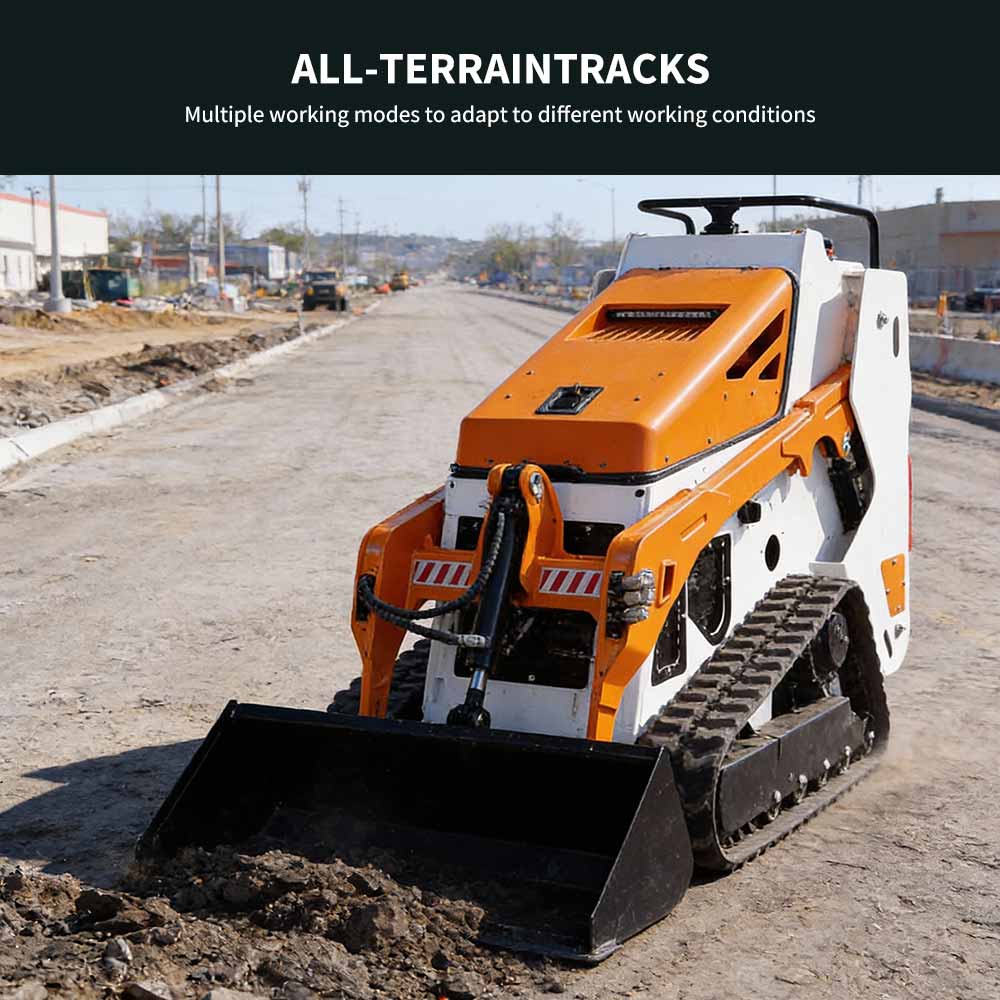
You spend long hours in the cab, so comfort matters. Modern skid steer loaders offer ergonomic improvements that help you stay focused and productive.
A comfortable operator works more efficiently and makes fewer mistakes. You benefit from less physical stress and better job satisfaction. These features also help you maintain high productivity throughout the day.
For more information on safety standards and operator comfort, you can visit ForConstructionPros or Construction Equipment Guide.
You face many choices when selecting a skid steer loader for your project. Comparing models helps you find the best fit for your needs. Consider these important criteria:
Utilizing a loader that does not match your application can lead to lost productivity. If the machine lacks enough power or hydraulic capability, you may experience downtime and lower efficiency.
| Model Type | Horsepower | Rated Capacity | Lift Type | Hydraulic Flow | Comfort Features |
|---|---|---|---|---|---|
| Compact Wheeled | 55 HP | 1,700 lbs | Radial | Standard | Basic |
| Compact Tracked | 65 HP | 2,200 lbs | Vertical | High | Enhanced |
| Large Wheeled | 75 HP | 2,800 lbs | Vertical | High | Premium |
You can compare specifications and expert reviews on platforms like Construction Equipment Guide or ForConstructionPros.
Matching the right loader to your job improves efficiency and safety. You should consider several factors:
A well-matched loader helps you complete projects faster and reduces risks. For example, using a compact tracked loader on a muddy site allows you to move materials without getting stuck.
A contractor needed to prepare a new residential site with limited access and soft soil. The team compared three loader models:
| Loader Model | Terrain Suitability | Lift Capacity | Attachment Options | Project Outcome |
|---|---|---|---|---|
| Compact Wheeled | Hard surfaces | 1,700 lbs | Basic | Delays, stuck |
| Compact Tracked | Soft/uneven ground | 2,200 lbs | Multiple | On-time, efficient |
| Large Wheeled | Large open sites | 2,800 lbs | Advanced | Overkill, costly |
The compact tracked loader finished the job on schedule and avoided downtime. The contractor improved safety and reduced costs by choosing the right machine.
You benefit from expert advice when selecting a skid steer loader. Industry professionals help you match loader features to your project needs. They guide you on durability, lift capacity, and attachment compatibility.
Operational safety depends on proper center-of-gravity control and rated load capacity. The loader that fits your needs should let you lift and carry typical loads confidently, with enough stability to reduce tipping risk—especially on uneven terrain or when using heavy attachments.
Reliability comes from matching equipment to the right tasks. Small machines used for heavy lifting fail early. Large machines used for simple jobs wear out faster. The right-sized loader operated within its design limits gives you years of trouble-free service and maximum return on investment.
You can find expert support and comparison tools on sites like Construction Equipment Guide and ForConstructionPros. These resources help you make informed decisions and maximize your investment.
You gain many advantages when you choose a Skid Steer Loader for your construction projects.
Consult with equipment specialists to match your loader to job site needs. Assess material handling, power, size, attachment compatibility, and operator comfort before making your decision.
You can use a skid steer loader for digging, grading, lifting, demolition, snow removal, and landscaping. With the right attachments, you can also handle trenching, material transport, and site cleanup. Learn more at ForConstructionPros.
Wheeled loaders work best on hard, flat surfaces. Tracked loaders give you better traction on soft, muddy, or uneven ground. Consider your job site conditions before you decide.
Common attachments include buckets, forks, augers, grapples, and trenchers. You can switch attachments quickly to handle different tasks. See more options at Construction Equipment Guide.
Lift capacity depends on the model. Most compact loaders lift between 1,300 and 2,800 pounds. Always check the rated operating capacity in the specifications before you start work.
You can learn to operate a skid steer loader quickly. Modern machines have user-friendly controls and good visibility. Many operators become comfortable after a short training session.
Look for ROPS (Rollover Protective Structure), FOPS (Falling Object Protective Structure), seat belts, backup alarms, and interlock systems. These features help protect you and your team on the job.
You should check fluids, inspect tires or tracks, clean filters, and grease fittings regularly. Follow the maintenance schedule in your operator’s manual. Proper care extends the life of your machine.





-1.png)