Welcome to Shandong Qilu Industrial Co., Ltd

 English
 Arabic
 Bulgarian
 Bengali
 Czech
Czech
 Danish
 German
 Greek
Greek
 Spanish
 Finnish
 French
 Hindi
Hindi
 Croatian
 Hungarian
 Indonesian
 Italian
 Japanese
 Korean
 Lithuanian
 Dutch
Dutch
 Norwegian
 Polish
 Portuguese
 Romanian
 Russian
 Slovak
 Slovenian
 Swedish
 Thai
Thai
 Turkish
 Ukrainian
 Vietnamese
 Tagalog
 Malay
Malay
 Estonian
 Catalan
 Latvian
 Urdu
Urdu
 Serbian
 Persian
 Swahili
 Albanian
 Armenian
 Icelandic
 Bosnian
 Luxembourgish
 Afrikaans
English Arabic
Bulgarian
Bengali
Czech
Danish
German
Greek
Spanish
Finnish
French
Hindi
Croatian
Hungarian
Indonesian
Italian
Japanese
Korean
Lithuanian
Dutch
Norwegian
Polish
Portuguese
Romanian
Russian
Slovak
Slovenian
Swedish
Thai
Turkish
Ukrainian
Vietnamese
Tagalog
Malay
Estonian
Catalan
Latvian
Urdu
Serbian
Persian
Swahili
Albanian
Armenian
Icelandic
Bosnian
Luxembourgish
Afrikaans
Afrikaans
English Arabic
Bulgarian
Bengali
Czech
Danish
German
Greek
Spanish
Finnish
French
Hindi
Croatian
Hungarian
Indonesian
Italian
Japanese
Korean
Lithuanian
Dutch
Norwegian
Polish
Portuguese
Romanian
Russian
Slovak
Slovenian
Swedish
Thai
Turkish
Ukrainian
Vietnamese
Tagalog
Malay
Estonian
Catalan
Latvian
Urdu
Serbian
Persian
Swahili
Albanian
Armenian
Icelandic
Bosnian
Luxembourgish
Afrikaans
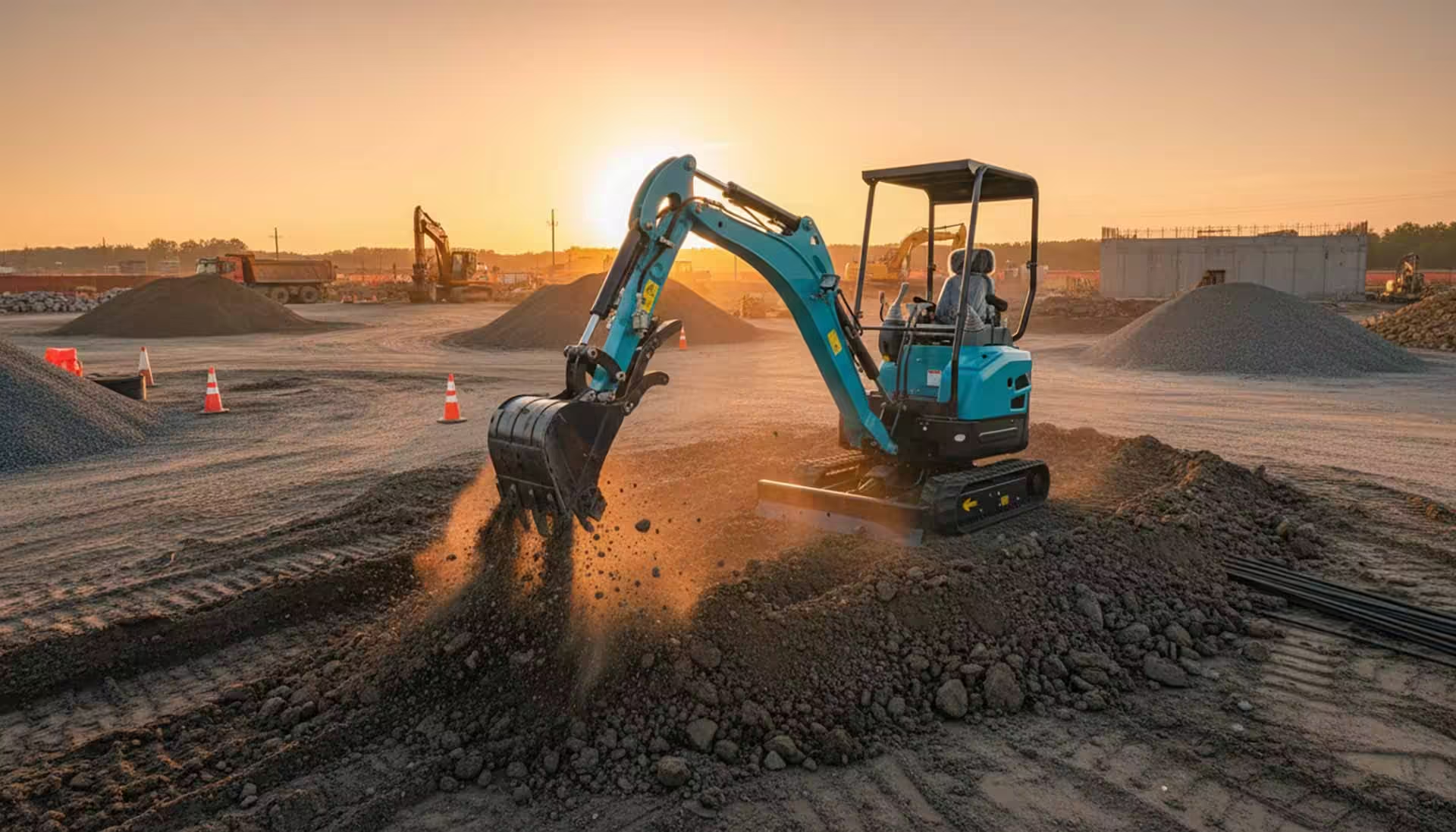
How to Prepare Your Yard for a Pool with a Mini Excavator
You can prepare your yard for a pool by using a Mini-Excavator to handle the heavy lifting and digging. Imagine you stand in your backyard, marking out the pool’s shape while checking for utility lines. You put on your safety gear and review local codes before starting. Proper planning prevents common incidents, such as hitting buried utility lines or leaving the site unsafe. The following table highlights frequent issues and solutions you should consider:
| Challenge | Solution |
|---|---|
| Hitting and damaging utility lines | Call 811 or local utility companies to mark underground utilities before digging. |
| Neglecting safety protocols | Create thorough safety plans, assign safety officers, and conduct frequent inspections. |
| Open excavation site hazards | Secure the area with fencing and signage; cover the excavation if left open. |
You also need to factor in pool size, soil type, and weather. Softer soils and smaller pools speed up the process, but rocky ground or rain can slow you down. With careful steps, you can achieve professional results.
Key Takeaways
- Plan your pool site carefully to avoid costly mistakes and ensure compliance with local regulations.
- Always check for underground utilities before digging to prevent accidents and service disruptions.
- Select the right mini-excavator based on your yard’s size and the complexity of your project.
- Gather essential safety gear, including hard hats and gloves, to protect yourself during excavation.
- Clear the area of debris and obstacles to create a safe and efficient workspace for your excavation.
- Maintain accurate measurements and check depth frequently to ensure a level pool base.
- Document your excavation process with photos and notes to assist with inspections and future reference.
- Follow proper compaction and grading techniques to prevent settling and ensure a stable foundation for your pool.
Plan Your Pool Site
Before you start any excavation, you must plan your pool site with precision. Careful preparation reduces costly mistakes and keeps your project on schedule. You will need to assess your yard, mark the pool area, check for underground utilities, and ensure equipment access. Local regulations often require you to secure permits and schedule inspections, so always check with your municipality before breaking ground.
Tip: Planning ahead helps you avoid delays, budget overruns, and safety hazards.
Mark the Pool Area
Accurate marking sets the foundation for a successful pool installation. Follow these steps to outline your pool:
- Measure 0.60 meters from a corner picket and mark a line lengthwise. Repeat this process widthwise with another picket to find the intersection.
- Mark the crossing point with a picket, then use marking spray to trace a quarter-circle form.
- Draw a perimeter line 0.60 meters outside the pool’s edge to define the excavation boundary.
- Use a builder’s level to set elevation points at each corner of the pool rectangle.
- Mark the bottom of the deep end wall by measuring 1.12 meters above your reference point.
- Remove grass along the excavation line and place pickets at intervals to mark the edges.
- When you finish marking, you can rent a Mini-Excavator and begin digging at the shallow end.
A homeowner in Texas recently followed these steps for a backyard pool. By carefully measuring and marking, they avoided costly rework and ensured the pool fit perfectly within their property lines.
Check for Underground Utilities
You must identify all underground utilities before you dig. Striking a water line or cable can cause injury, service outages, and expensive repairs. Contact 811, a free national service, to have professionals mark the approximate location of buried utilities with paint or flags. For added safety, use pipe locators to trace water lines and cable locators for signal lines. Magnetic locators can detect ferrous objects but are not reliable for utilities.
Safety Alert: Never start excavation until all utilities are clearly marked and verified.
Ensure Mini-Excavator Access
You need to confirm that your yard provides enough space for equipment entry and movement. Most Mini-Excavators require a minimum turning radius of 1.3 meters. Typical dimensions are 2.8 meters in length, 1 meter in width, and 2 meters in height. Measure all gates, pathways, and tight corners to ensure the machine can reach the dig site without obstacles.
| Challenge | Description | Solutions |
|---|---|---|
| Design Changes | Mid-project modifications cause delays and extra costs. | Communicate design limits, document changes, and manage expectations. |
| Material Availability | Shortages disrupt schedules and increase expenses. | Source reliable suppliers and plan for contingencies. |
| Subcontractor Coordination | Miscommunication hinders progress. | Hold regular meetings and use project management tools. |
| Equipment Malfunctions | Breakdowns lead to project delays. | Maintain equipment and keep spare parts on hand. |
| Budget Overruns | Unplanned expenses exceed your budget. | Estimate costs thoroughly and monitor expenses regularly. |
| Inspection Delays | Scheduling conflicts slow down progress. | Coordinate with authorities and prepare for inspections in advance. |
Note: Local regulations may require you to obtain a demolition permit (costing $500–$1,500), verify utility disconnection, and schedule site inspections before and after backfilling. Pools near structures may also need engineering reports.
By following these steps, you set the stage for a smooth excavation and pool installation.
Choose Tools and Safety Gear
Selecting the right equipment and safety gear sets the foundation for a successful pool excavation. You must evaluate your yard’s conditions, project scope, and local regulations before you begin. This section guides you through choosing a Mini-Excavator, gathering essential safety gear, and securing permits.
Select the Right Mini-Excavator
You need a Mini-Excavator that matches your yard’s size and the complexity of your pool project. Consider the following factors when making your selection:
- Machine size: Ensure the excavator fits through gates and tight spaces.
- Lifting capacity: Choose a model that can handle the weight of soil and debris.
- Breakout force: Higher force helps you dig through dense or rocky ground.
- Maneuverability: Swing boom capability allows you to work efficiently in confined areas.
- Safety features: Look for rollover protection and warning systems.
- Operator comfort: A well-designed cab reduces fatigue during long hours.
- Attachment versatility: Select a model that supports buckets, augers, and other tools.
- Transportation: Confirm the transport height and weight for legal road movement.
- Fuel efficiency: Lower fuel consumption reduces operating costs.
- Budget and financing: Assess total ownership costs, including maintenance and insurance.
- Brand support: Reliable dealer support ensures quick repairs and parts availability.
- Warranty: Comprehensive coverage protects your investment.
Tip: Always review the operator’s manual and complete safety checks before starting. Industry authorities like the Occupational Safety and Health Administration (OSHA) recommend thorough training and machine inspection.
Here is a comparison of common Mini-Excavator features:
| Feature | Compact Model | Standard Model | Heavy-Duty Model |
|---|---|---|---|
| Machine Size | Fits narrow spaces | Suits most yards | Needs wide access |
| Lifting Capacity | Low | Medium | High |
| Breakout Force | Moderate | High | Very High |
| Maneuverability | Excellent | Good | Fair |
| Attachment Options | Basic | Multiple | Extensive |
| Fuel Efficiency | High | Medium | Low |
Gather Safety Equipment
You must equip yourself with the right safety gear before operating a Mini-Excavator. Industry standards recommend the following items:
- Hard hat for head protection
- Safety glasses or tinted glasses to shield your eyes
- High-visibility vest to increase your visibility
- Steel-toed boots for foot safety
- Work gloves for grip and hand protection
- Hearing protection in noisy environments
Safety Alert: Complete a safety check before each use. Inspect your gear for damage and replace any worn items. OSHA and local safety authorities provide guidelines for personal protective equipment.
Secure Permits
You must obtain the necessary permits before starting excavation. The process can take two weeks to two months, depending on your municipality. The design and approval phase often lasts four to eight weeks, including multiple inspections and approvals. Contact your local building department early to avoid delays.
Note: Social platforms and community forums can offer advice on navigating local permit processes. Always verify requirements with your city or county office.
By choosing the right Mini-Excavator, wearing proper safety gear, and securing permits, you create a safe and efficient work environment. These steps help you avoid costly mistakes and keep your project on track.
Clear and Prep the Area
Preparing your yard for pool installation requires a systematic approach to clearing and grading. You must remove all debris, tackle stumps and roots, and create a level base for construction. This process ensures safety, prevents future complications, and sets the stage for a successful dig.
Remove Debris and Obstacles
Begin by clearing the site of any furniture, rocks, branches, and plant material. You should secure the perimeter with fencing to prevent unauthorized access and mark underground utilities to avoid accidental damage. Dust control and erosion prevention are essential, especially in dry or windy conditions.
| Common Obstacles | Removal Technique |
|---|---|
| Rocks | Use shovel or excavator bucket |
| Tree branches | Cut and haul away |
| Old furniture | Remove manually |
| Underground utilities | Mark and avoid during excavation |
| Plant debris | Rake and dispose |
Tip: Always wear personal protective equipment such as helmets, gloves, eye protection, and dust masks. Certified operators should handle heavy machinery. Monitor for hazards like unstable soil or debris piles.
A homeowner in Georgia recently faced a yard filled with old patio furniture and overgrown shrubs. By organizing a cleanup crew and renting a dumpster, they cleared the area in one afternoon, allowing the excavation to begin on schedule. For more on site safety, visit OSHA’s Construction Safety.
Stump and Root Removal
Tree stumps and large roots can hinder excavation and compromise pool stability. You must remove them efficiently to avoid future settling or damage.
Techniques for Stubborn Stumps
- Cut through the root system using the bucket edge of your Mini-Excavator, applying steady pressure.
- Dig underneath the stump to isolate it from major roots and create leverage points.
- Position the bucket beneath the stump, then lift slowly while rocking it back and forth.
A property owner in Oregon removed a stubborn oak stump by digging around its base and using the excavator’s bucket to pry and twist until the stump broke free. This method saved hours compared to manual removal. For guidance on safe stump removal, refer to Tree Care Industry Association.
Handling Large Roots
You should use the bucket to cut through smaller roots and pry larger ones loose. Remove all root fragments to prevent regrowth and ensure a stable pool foundation.
Level and Grade the Ground
Proper grading prevents water accumulation and ensures a smooth pool base. Use the grid method by placing stakes and running strings to identify high spots. Mark these areas for adjustment, then dig down to match the lowest point. Rake the ground to distribute soil evenly and remove debris. Compact the soil with a tamper or lawn roller for stability. Spread two inches of masonry sand, rake it smooth, and compact it to create a level layer beneath the pool liner.
Note: Plan for drainage to avoid water pooling. Consider French drains or dry creek beds to manage runoff. Thoughtful landscaping enhances the pool area’s appeal and supports environmental sustainability.
Mini-Excavator Digging Steps
Excavating your pool site with a Mini-Excavator requires precision and planning. You must follow each step carefully to achieve a professional result and avoid costly mistakes.
Set Boundaries for Digging
You need to establish clear boundaries before you start digging. Follow these steps for accurate pool excavation:
- Clear all vegetation and remove the topsoil to expose a firm base.
- Level the area using a laser or transit level. This creates a uniform work surface for your Mini-Excavator.
- Drive stakes at each pool corner. Outline the edges with chalk or spray paint to mark the exact excavation limits.
Tip: Accurate boundaries help you avoid over-excavation and ensure your pool fits the planned dimensions.
Dig the Pool Area
Once you set the boundaries, you can begin digging. You must maintain control and monitor depth throughout the process.
Bucket Positioning and Control
Position the Mini-Excavator bucket at the starting point of the shallow end. Lower the bucket slowly and scoop out soil in small increments. Keep the bucket level to avoid uneven cuts. Use the controls to adjust the angle and depth as you move along the perimeter. Experienced operators recommend working in layers, removing soil gradually to maintain stability.
Note: Advanced controls allow you to shape curves and corners with precision. Practice smooth movements to avoid jerky cuts that can destabilize the excavation walls.
Maintaining Slope and Depth
You must maintain the correct slope and depth for your pool. The recommended excavation depth for standard in-ground pools is 44½ inches, measured from a reference point above ground level. Use a shot stick and transit or water level to check your progress. Mark the shallow end and over dig ledge clearly. Check measurements frequently to avoid errors.
- Measure depth at multiple points to ensure consistency.
- Adjust the slope gradually from the shallow end to the deep end.
- Use a rake or shovel to fine-tune the base after machine digging.
Safety Alert: Never dig deeper than planned. Over-excavation can lead to structural issues and increased costs.

Manage Soil and Spoil Piles
Proper soil management keeps your site organized and safe. You must designate areas for spoil piles away from the excavation edge. Use the Mini-Excavator to move soil efficiently. Compact spoil piles to prevent erosion and keep pathways clear for equipment.
| Common Mistakes | Solutions |
|---|---|
| Hiring unqualified companies or DIY attempts | Hire experienced professionals for pool excavation |
| Leaving parts of the pool intact | Ensure complete removal of the pool structure |
| Inexperienced operators falling into the pool | Train operators on safety and respect for equipment |
| Damage from inexperienced demolition of walls | Use skilled contractors for wall demolition |
| Using inappropriate equipment like bobcats | Select suitable machinery for pool demolition |
| Overkill equipment causing property damage | Choose equipment that matches the project needs |
| Slow project completion | Hire contractors with a proven track record |
| Wrong strategy for project completion | Develop a clear and effective plan before starting |
| Poor access routes impacting property | Plan access routes carefully to minimize damage |
| Not protecting sensitive trees | Implement protective measures for nearby trees |
| Using sod instead of seed | Opt for seeding to ensure better recovery |
Tip: Plan spoil pile locations before you start. This prevents accidental damage to landscaping and keeps your work area safe.
Case Study: Step-by-Step Pool Digging
A homeowner in Florida prepared their yard for a new pool using a Mini-Excavator. They started by clearing vegetation and marking boundaries with stakes and spray paint. The operator used a transit level to ensure the work surface was even. Digging began at the shallow end, with the bucket positioned carefully to remove soil in layers. The operator checked depth with a shot stick and water level, maintaining the recommended 44½-inch depth. Spoil piles were placed on tarps away from the excavation edge to protect the lawn. The project took three days, with daily checks for slope and measurements. The homeowner followed guidance from industry tutorials on YouTube and referenced pool construction guides for best practices.
For more detailed instructions, visit Pool Construction Guide or search for “Mini-Excavator pool digging tutorial” on social media platforms.
Digging Time Statistics
| Pool Size (sq. ft.) | Typical Digging Time (hours) |
|---|---|
| 200 | 8–12 |
| 400 | 14–20 |
| 600 | 20–28 |
Note: Digging times vary based on soil type, weather, and operator experience. Always plan for extra time if you encounter rocks or roots.
By following these steps, you can excavate your pool site efficiently and safely. Careful planning, precise measurements, and proper equipment use ensure a successful project.
Trenching and Footings
When you prepare your pool site, trenching and footing excavation play a critical role in ensuring long-term stability and proper utility installation. You must approach these steps with precision and attention to detail.
Trench for Plumbing and Electrical
You need to dig trenches for plumbing and electrical lines before installing the pool shell. Building codes require specific trench dimensions to protect pipes and wires from damage and ensure safe operation.
| Aspect | Dimension |
|---|---|
| Trench Width | At least 2 ft |
| Trench Depth | At least 2 ft |
For conduit installation, follow these depth requirements:
| Conduit Type | Depth Required |
|---|---|
| Metal Conduit | 6 inches |
| Plastic Conduit | 18 inches |
You should mark trench paths with spray paint and flags. Use a Mini-Excavator to dig straight, uniform trenches. Always check the slope to promote drainage and prevent water pooling. Place warning tape above utility lines before backfilling to alert future diggers.
Tip: Call your local inspection office to confirm trench dimensions and placement before you start. This step helps you avoid costly rework and code violations.
Case Study: Safe Trenching in Residential Pool Installation
A homeowner in Arizona planned a pool with integrated lighting and water features. They marked trench paths and measured widths and depths according to local codes. The operator used a Mini-Excavator to dig trenches 2 feet wide and deep, then installed plastic conduit at an 18-inch depth for electrical lines. The project passed inspection on the first attempt, and no safety incidents occurred. According to local safety reports, most trenching accidents result from improper depth or lack of warning tape. By following code and marking utilities, you reduce risk.
Excavate Pool Footings
Pool footings support the structure and prevent shifting or settling. You must excavate footings with care to maintain stability and alignment.
Depth and Width Tips
Follow these recommended techniques for footing excavation:
- Bulk Excavation: Shape the pool and reach the required depth using heavy machinery.
- Trenching: Dig precise trenches for plumbing and utilities to avoid leaks.
- Rock Excavation: Break up hard materials in rocky soil to secure the pool’s foundation.
- Grading and Sloping: Adjust the ground to manage drainage and prevent water problems.
You should dig footings to the depth specified in your pool plans, usually between 12 and 24 inches below the pool base. Maintain a consistent width, typically 12 inches, to support the walls evenly. Use a measuring tape and level to check dimensions as you work.
Alignment Checks
You must verify alignment at every stage. Place stakes and run string lines along the footing edges. Use a builder’s level to confirm that the footings are straight and at the correct elevation. Check for gaps or uneven sections, then adjust as needed. Accurate alignment ensures the pool shell sits evenly and prevents future cracking.
Note: Document your measurements and take photos for inspection records. Consistent checks help you catch errors early and avoid structural issues.
By following these steps, you create a safe, code-compliant foundation for your pool. Careful trenching and footing excavation set the stage for a successful installation.
Final Prep and Cleanup
Check Depth and Dimensions
You must verify the accuracy of your excavation before moving forward. Start by establishing fixed reference points in your yard. Use a measuring tape or laser measure to check the pool’s length and width from these points. Walk the perimeter and measure at several locations to confirm consistency. For pools with curves or special features, measure those areas separately. Record every measurement in a notebook or on your phone for future reference.
To check depth, insert a measuring pole vertically at multiple spots across the pool base. Mark the pole at ground level, then read the distance to the bottom. Repeat this process at the shallow and deep ends. Taking several measurements ensures you catch any uneven spots early.
Tip: Document your measurements and take photos. This record helps during inspections and if you need to troubleshoot later.
| Common Issues Found During Final Prep | How to Address Them |
|---|---|
| Uneven base or slopes | Re-grade and re-measure affected areas |
| Incorrect pool dimensions | Adjust excavation boundaries as needed |
| Standing water in excavation | Improve drainage or pump out water |
| Missed utility lines | Pause work and re-check with locator tools |
Compact and Grade Base
Proper compaction and grading prevent future settling and structural problems. Use heavy machinery to grade the base evenly. For clay-heavy soil, larger excavators break through dense material efficiently. In sandy or loose soil, wider tracks or stabilizers keep equipment from sinking. Mechanical compactors or rollers are essential for compacting loose soils. Spread each lift of soil in 6-inch layers and compact thoroughly before adding the next.
“Fill the pool correctly to avoid a sinking mud hole in your yard. It’s crucial to do it right. Spread each lift of soil in 6″ layers and compact it. We use a padded foot drum roller for the best results.”
After grading, check the surface with a level or laser to confirm uniformity. Good compaction ensures your pool will not shift or settle over time.
Clean Up and Remove Equipment
A thorough cleanup leaves your site safe and ready for the next phase. Begin by rough grading the disturbed areas and leveling the ground to match existing landscaping. Provide proper drainage by sculpting the land and smoothing out the surface. Aerate the topsoil to encourage new grass growth. Apply seed and straw mat or lay sod for a finished look. Reinstall any fencing you removed for equipment access.
Pick up and haul away all debris, including broken concrete and rebar. Import engineered fill if needed to restore the area. Complete a final walk-through to inspect the site and collect any remaining debris.
Note: Final inspections often focus on permits, electrical safety, and adherence to plans. Schedule these with your local authority before proceeding.
| Inspection Requirement | Description |
|---|---|
| Permits and Regulations | Inspections ensure adherence to submitted plans and safety regulations. |
| Electrical Safety | Focus on ensuring electrical installations are up to code to prevent hazards. |
| Continuous Inspections | Inspections occur at various stages from excavation to final installation, ensuring safety. |
Case Study:
A homeowner in North Carolina completed their pool excavation by double-checking all measurements, compacting the base with a mechanical roller, and restoring the yard with fresh seed. Their attention to detail helped them pass inspection on the first try and achieve a smooth transition to pool installation. For more best practices, review pool construction guidelines.
You have learned how to prepare your yard for a pool using a mini-excavator. Careful planning, accurate measurements, and strict safety practices set you up for success. When you double-check every step, you avoid costly mistakes and pass inspections with ease. For example, a homeowner who measured twice and compacted the base thoroughly enjoyed a smooth installation and fewer repairs. The table below shows the long-term benefits of thorough site preparation:
| Benefit | Description |
|---|---|
| Stable foundation | Pool withstands settling and uneven stresses over time. |
| Reduced maintenance costs | Fewer repairs from cracking or structural issues. |
| Durability through weather | Pool resists movement during severe conditions. |
| Peace of mind | Proper base minimizes risks of sinks or premature wear. |
| Longevity for owners | Structural integrity lasts for generations. |
Take your time, follow local codes, and ask for help when needed. You will enjoy the satisfaction of a well-prepared pool site.
FAQ
How deep should you dig for a standard in-ground pool?
You should dig to a depth of 44½ inches for most standard in-ground pools. Always check your pool design and local codes. Measure at several points to confirm consistent depth. Adjust as needed for sloped or multi-level pools.
Can you operate a mini-excavator on wet or muddy ground?
You can operate a mini-excavator on damp soil, but avoid saturated or muddy areas. Wet ground increases the risk of equipment sinking or sliding. Wait for drier conditions or lay down gravel for better traction.
What safety checks should you perform before starting excavation?
You should inspect the mini-excavator for leaks, loose parts, and proper fluid levels. Test all controls. Confirm that safety gear fits. Mark all utilities. Review your emergency plan with anyone on-site.
How do you handle unexpected rocks or boulders during excavation?
You should use the mini-excavator’s bucket to loosen smaller rocks. For large boulders, dig around them and lift with the machine if possible. If the rock is too heavy, consider breaking it into smaller pieces or hiring a specialist.
What should you do if you find unmarked utility lines?
Stop work immediately. Mark the location and contact your local utility provider. Do not attempt to move or repair the line yourself. Wait for professional guidance before continuing.
How do you ensure the pool area remains level during excavation?
You should use a laser level or builder’s level to check elevation points frequently. Mark reference stakes around the site. Adjust the excavation as you go. A homeowner in California avoided costly rework by checking levels every hour.
Is it possible to prepare a yard for a pool without professional help?
You can prepare your yard if you have the right equipment, safety training, and follow local codes. Many homeowners succeed by researching best practices and consulting with inspectors. For complex sites, consider hiring a professional for guidance.
What is the best way to dispose of excess soil from excavation?
You should contact local waste management or landscaping companies. Some areas allow you to reuse soil for grading or garden beds. A homeowner in Ohio arranged for a hauler to remove spoil piles, keeping the site clean and compliant.