Welcome to Shandong Qilu Industrial Co., Ltd

 English
 Arabic
 Bulgarian
 Bengali
 Czech
Czech
 Danish
 German
 Greek
Greek
 Spanish
 Finnish
 French
 Hindi
Hindi
 Croatian
 Hungarian
 Indonesian
 Italian
 Japanese
 Korean
 Lithuanian
 Dutch
Dutch
 Norwegian
 Polish
 Portuguese
 Romanian
 Russian
 Slovak
 Slovenian
 Swedish
 Thai
Thai
 Turkish
 Ukrainian
 Vietnamese
 Tagalog
 Malay
Malay
 Estonian
 Catalan
 Latvian
 Urdu
Urdu
 Serbian
 Persian
 Swahili
 Albanian
 Armenian
 Icelandic
 Bosnian
 Luxembourgish
 Afrikaans
English Arabic
Bulgarian
Bengali
Czech
Danish
German
Greek
Spanish
Finnish
French
Hindi
Croatian
Hungarian
Indonesian
Italian
Japanese
Korean
Lithuanian
Dutch
Norwegian
Polish
Portuguese
Romanian
Russian
Slovak
Slovenian
Swedish
Thai
Turkish
Ukrainian
Vietnamese
Tagalog
Malay
Estonian
Catalan
Latvian
Urdu
Serbian
Persian
Swahili
Albanian
Armenian
Icelandic
Bosnian
Luxembourgish
Afrikaans
Afrikaans
English Arabic
Bulgarian
Bengali
Czech
Danish
German
Greek
Spanish
Finnish
French
Hindi
Croatian
Hungarian
Indonesian
Italian
Japanese
Korean
Lithuanian
Dutch
Norwegian
Polish
Portuguese
Romanian
Russian
Slovak
Slovenian
Swedish
Thai
Turkish
Ukrainian
Vietnamese
Tagalog
Malay
Estonian
Catalan
Latvian
Urdu
Serbian
Persian
Swahili
Albanian
Armenian
Icelandic
Bosnian
Luxembourgish
Afrikaans
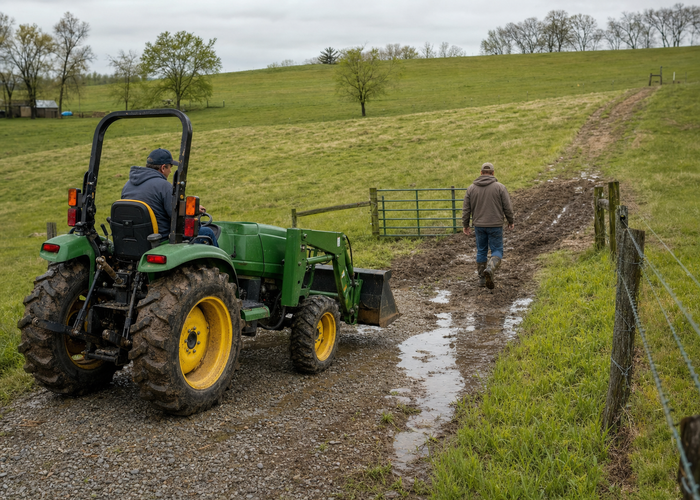
2WD vs 4WD Farm Tractor Choice: Loader Work, Wet Fields, Slopes, and Ownership Tradeoffs
A practical guide to choosing a 2WD or 4WD farm tractor by loader work, wet soil, slopes, traction, ballast, maintenance, and ownership needs.
A 2WD vs 4WD farm tractor decision should start with the work, not with the badge on the hood. A tractor that spends most of its life mowing dry lanes and pulling light implements may not need the same drivetrain as a tractor that carries loader buckets across wet gateways, climbs pasture slopes, or backs trailers into soft yards. The useful question is where traction is lost, how often that happens, and what the operator must do when it happens.
QiLu Machinery buyers comparing farm tractor options often ask about horsepower first. Horsepower matters, but traction decides whether that power reaches the ground. A well-ballasted 2WD tractor can be efficient on firm soil, while a 4WD tractor can make loader work and damp field access more controlled when the front axle is carrying part of the job.
This guide uses practical field checks and safety thinking from OSHA tractor operation resources, University of Minnesota Extension tractor safety guidance, and CDC NIOSH agricultural safety resources. It is written for owners who need a tractor that fits real routes, seasons, and attachments rather than a brochure comparison.
Start With the Jobs That Stop the Tractor
Every farm has a few places where the tractor struggles: a damp gate, a compacted feed lane, a loose gravel ramp, a hay field entrance, or a slope near the barn. Those places matter more than the easy acres. If a 2WD tractor completes ninety percent of the work but fails every rainy week at the same gate, the ownership problem is not theoretical. It is lost time, rut repair, and the possibility of unsafe recovery.
List the jobs that create the most traction demand. Loader work loads the front axle and can make rear traction unpredictable if ballast is wrong. Wet soil reduces tire bite. Slopes change weight transfer. Heavy drawbar loads pull differently from three-point implements. Transport work values road manners and tire wear. A useful 2WD vs 4WD farm tractor comparison separates these jobs before comparing models.
Loader Work Changes the Drivetrain Question
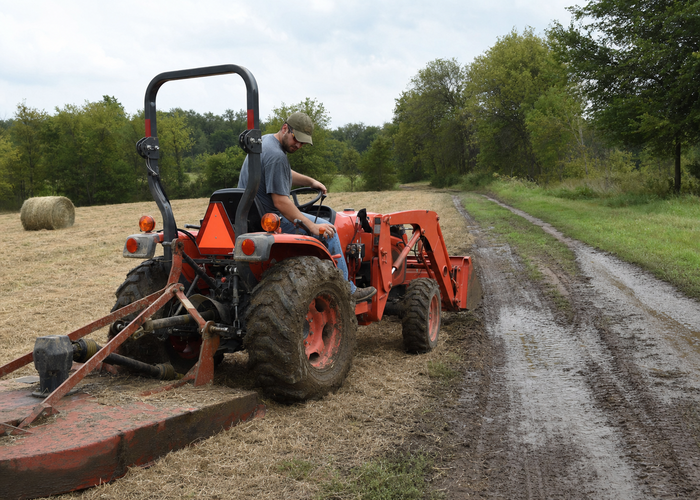
A loader tractor often benefits from front axle drive because the front tires are already carrying a load. When the bucket is full, front traction can help the tractor steer and move without spinning the rear tires. That does not remove the need for rear ballast. It does mean the operator has another tool when the surface is loose, sloped, or wet.
A 2WD loader tractor can still work well on firm yards if it has correct rear ballast, suitable tires, and a conservative operating pattern. The warning sign is repeated rear tire spin when the bucket is loaded. Spinning tires polish wet ground, dig ruts, and invite the operator to raise the bucket higher than necessary, which is the wrong direction for stability.
Wet Fields and Soil Protection
Four-wheel drive can reduce wheel slip when used correctly, but it is not permission to enter soil that should be left alone. Wet field travel should be judged by compaction risk, rut depth, and the value of the crop or surface being protected. Soil health resources from USDA NRCS are a useful reminder that the ground condition is part of the machinery decision.
If the tractor must cross a damp area, use low speed, avoid sharp turns, keep loads low, and choose the route with the least surface damage. If the job can wait, waiting may be cheaper than repairing ruts. A 4WD tractor may get through a soft spot, but the repair bill can still belong to the soil.
Decision Table: Where Each Drivetrain Fits
A simple table can keep the choice practical. The point is not to declare one drivetrain better everywhere. The point is to match the tractor to the work that repeats, the surface that fails, and the operator habits that are realistic on the property.
| Work condition | 2WD usually fits when | 4WD usually helps when |
|---|---|---|
| Dry mowing or light towing | Ground is firm, slopes are mild, and implements are not traction-limited | The same route includes wet gateways, slopes, or loaded front attachments |
| Front loader chores | Loads are light, yard is firm, and rear ballast is correct | Bucket work is frequent, surfaces vary, or steering traction is limited |
| Wet field access | Work can wait until soil firms or only short low-load moves are needed | The farm regularly needs controlled access after rain without heavy rutting |
| Sloped property | Slopes are gentle and travel is mostly straight with low loads | Traction loss appears during climbing, turning, or backing with attachments |
| Transport and road use | Lower cost and simpler driveline are priorities | The tractor also handles field entrances, loader work, or winter access |
Tires, Ballast, and Operator Habits Still Decide the Result
The best drivetrain cannot overcome poor tire choice or careless ballast. R1 agricultural tires, R4 industrial tires, turf tires, liquid ballast, wheel weights, rear implements, and loader counterweight all change the feel of the tractor. A buyer comparing 60HP tractor work with 90HP tractor applications should think about the full setup, not only the axle drive.
Operators should also decide when 4WD is engaged. On many tractors, 4WD is useful in loose or slippery conditions but should not be abused on hard surfaces where driveline wind-up and tire wear can increase. The operator manual is the final guide. The practical field habit is to use traction assistance deliberately, then return to the correct mode when conditions change.
Transmission choice, braking practice, and speed discipline matter as well. A tractor that enters a slope too fast or turns sharply with a raised loader is not made safe by 4WD. Extension safety material from Penn State Extension reinforces the same principle: stability and planning come before productivity.
Ownership Cost and Maintenance Tradeoffs
A 2WD tractor is often simpler to buy and maintain. There are fewer front-drive components, fewer driveline wear points, and often a lower purchase cost. If the property is dry, open, and mostly flat, that simplicity can be a real advantage. The owner can put budget into a better implement, a safer ROPS setup, quality tires, or maintenance supplies.
A 4WD tractor brings more components and usually higher purchase cost, but it can reduce wasted time on properties where traction problems repeat. The value is strongest when the tractor regularly handles loader work, winter chores, wet lanes, uneven yards, and slopes. The buyer should compare the added cost with the cost of delays, stuck-machine recovery, surface repairs, and reduced confidence during daily chores.
Questions to Ask Before Ordering
Ask where the tractor will work after rain, what it will carry in the loader, how steep the worst route is, which tires will be fitted, how the rear will be ballasted, and whether the operator is experienced with traction modes. Also ask whether the same tractor will handle post-hole work, mowing, snow cleanup, trailer moving, or material handling. These jobs connect drivetrain choice with the wider QiLu product application solutions.
It is also worth reviewing service access and maintenance intervals. Front axle oil, steering joints, tire wear, loader pins, hydraulic leaks, and wheel torque all belong in the ownership routine. General maintenance practices such as the ones outlined by University of Missouri Extension can help owners turn the decision into a workable inspection habit.
How to Test the Choice on Your Property
Walk the property before finalizing the tractor. Mark the wettest gate, the steepest lane, the tightest turn, the heaviest loader route, and the longest road travel. Then describe the worst normal day, not the easiest day. If the tractor can handle that day with safe margins, it will probably handle the rest of the year.
Use internal planning pages such as QiLu Machinery products and tractor application solutions to connect drivetrain choice with loader, mower, and implement needs. A tractor is rarely bought for one perfect job. It is bought for many imperfect days.
Field Test Routine Before the Final Decision
A useful field test does not need to be dramatic. It needs to repeat the normal work that creates doubt. Start with an empty tractor and drive the route slowly. Then repeat with the loader mounted, then with a modest load, and then with the rear ballast or implement that would normally be used. Record where the tractor turns easily, where the front tires push, where the rear tires slip, and where the operator becomes tempted to use speed instead of traction.
For a 2WD tractor, pay close attention to steering during loader work. If the front tires are lightly loaded, steering may be easy, but the rear tires may spin. If the front bucket is loaded and the surface is loose, steering may feel vague or the rear may become too light without ballast. For a 4WD tractor, check whether the machine feels controlled at low speed without relying on aggressive throttle. Four-wheel drive should make controlled work easier, not encourage rougher work.
Run the same test after light rain if the property often works in damp conditions. A dry demonstration can hide the exact problem that the buyer is trying to solve. The test should include stopping, starting, backing, turning, and carrying the load low. If the tractor only performs well when the operator keeps momentum, that is a warning sign for real work around gates, buildings, animals, or people.
Implement Work Is Not the Same as Loader Work
Pulling a mower, blade, sprayer, or light trailer places different demands on the tractor than lifting material with a front loader. A 2WD tractor may be perfectly acceptable for many rear implement jobs because weight transfer favors the rear tires. The same tractor may feel less confident with a full bucket on damp ground. Buyers should separate rear implement traction from loader traction before deciding the drivetrain.
Three-point hitch setup also affects the comparison. A heavy rear implement can improve loader stability but may be awkward near fences, doors, or tight yards. Wheel weights or liquid ballast may be less intrusive but less flexible. A buyer who expects frequent attachment changes should consider how long the ballast routine takes, because inconvenient ballast is often skipped at the worst moment.
Seasonal Planning and Resale Thinking
Seasonal use can shift the answer. A tractor bought in summer for mowing may become a winter machine for feed lanes, snow piles, and wet gateways. If the property has freeze-thaw cycles, shaded slopes, or spring mud, 4WD may earn its value in the months when the ground is least predictable. If the machine is mainly a fair-weather mower on firm ground, 2WD simplicity may remain the better ownership choice.
Resale can matter too, but it should not replace job fit. Some markets strongly prefer 4WD compact tractors, especially when loaders are installed. Other buyers value simple, lower-cost tractors for dry acreage and light implement work. The owner should keep service records, tire records, ballast notes, and loader maintenance notes either way. A well-maintained tractor with a clear work history is easier to explain to the next owner.
Risk Controls That Apply to Both Drivetrains
Both drivetrain types need the same basic safety discipline. Keep the loader low, avoid side slopes with raised loads, slow before turns, use the correct hitch point, wear the seat belt when the machine has rollover protection, and stop when the ground changes. Drivetrain choice can improve traction, but it cannot correct poor route planning or unstable load handling.
Operators should set simple rules for wet days. Do not enter soil that leaves deep ruts unless the job is urgent and the repair plan is accepted. Do not use 4WD as a substitute for waiting when the surface is saturated. Do not recover a stuck tractor by jerking from unsafe hitch points. If recovery is needed, stop and use proper equipment, proper attachment points, and enough space to protect people.
The most valuable drivetrain is the one the operator understands. Train the regular operator on when to engage 4WD, when to disengage it, how to recognize tire slip, and how to adjust route, ballast, and load. A short training routine can prevent the common pattern where a capable tractor is used poorly because the operator is guessing under pressure.
Practical FAQ
Is 4WD always better? No. It is often better for loader work, wet access, and slopes, but a 2WD tractor can be efficient and economical on firm, flat, predictable jobs.
Can 4WD replace ballast? No. Loader work still needs correct rear ballast and low load handling. Four-wheel drive helps traction; it does not cancel stability rules.
What should a buyer record during a test? Record surface moisture, slope, tire slip, loader load, braking feel, turning space, and whether the operator needed recovery or repeated mode changes.
The best 2WD vs 4WD farm tractor decision is the one that matches the propertys hard places. Choose the drivetrain after studying loader work, wet fields, slopes, tire setup, ballast, and the daily routine that the tractor will actually live with.