Welcome to Shandong Qilu Industrial Co., Ltd

 English
 Arabic
 Bulgarian
 Bengali
 Czech
Czech
 Danish
 German
 Greek
Greek
 Spanish
 Finnish
 French
 Hindi
Hindi
 Croatian
 Hungarian
 Indonesian
 Italian
 Japanese
 Korean
 Lithuanian
 Dutch
Dutch
 Norwegian
 Polish
 Portuguese
 Romanian
 Russian
 Slovak
 Slovenian
 Swedish
 Thai
Thai
 Turkish
 Ukrainian
 Vietnamese
 Tagalog
 Malay
Malay
 Estonian
 Catalan
 Latvian
 Urdu
Urdu
 Serbian
 Persian
 Swahili
 Albanian
 Armenian
 Icelandic
 Bosnian
 Luxembourgish
 Afrikaans
English Arabic
Bulgarian
Bengali
Czech
Danish
German
Greek
Spanish
Finnish
French
Hindi
Croatian
Hungarian
Indonesian
Italian
Japanese
Korean
Lithuanian
Dutch
Norwegian
Polish
Portuguese
Romanian
Russian
Slovak
Slovenian
Swedish
Thai
Turkish
Ukrainian
Vietnamese
Tagalog
Malay
Estonian
Catalan
Latvian
Urdu
Serbian
Persian
Swahili
Albanian
Armenian
Icelandic
Bosnian
Luxembourgish
Afrikaans
Afrikaans
English Arabic
Bulgarian
Bengali
Czech
Danish
German
Greek
Spanish
Finnish
French
Hindi
Croatian
Hungarian
Indonesian
Italian
Japanese
Korean
Lithuanian
Dutch
Norwegian
Polish
Portuguese
Romanian
Russian
Slovak
Slovenian
Swedish
Thai
Turkish
Ukrainian
Vietnamese
Tagalog
Malay
Estonian
Catalan
Latvian
Urdu
Serbian
Persian
Swahili
Albanian
Armenian
Icelandic
Bosnian
Luxembourgish
Afrikaans

QL1100 vs QL380 Which Skid Steer Loader Wins for Compact Spaces
Comparing Compact Skid Steer Loaders
Explore the key differences between QL1100 and QL380 loaders.
| Features | QL1100 | QL380 |
|---|---|---|
| Engine Brand | Perkins | Briggs & Stratton |
| Rated Power | 18.4KW | 15-18KW |
| Rated Capacity (kg) | 500 | 300 |
| Max Capacity (kg) | 550 | 400 |
| Max Breakout Force (KN) | 600 | Not specified |
| Fuel Tank Capacity (L) | 30 | Not specified |
| Driving Speed (km/h) | 0-6.5 | Not specified |
| Hydraulic Efficiency | Boosts by 30% | Boosts by 30% |
| Ergonomic Cab | Reduces operator fatigue | Minimizes operator fatigue |
| Intelligent Monitoring | Real-time insights | Equipment status updates |
You want the best solution for compact job sites. The QL1100 stands out as the top choice for tight spaces. Size, maneuverability, and work efficiency matter most when you operate a Skid Steer Loader in limited areas. Common challenges include visibility issues, struck-by hazards, and crushed-by risks, especially in high-traffic zones:
| Challenge | Description |
|---|---|
| Visibility Issues | Operators have restricted views to the left, right, and rear, especially when carrying loads. |
| Struck-by Hazards | High-traffic areas and blind spots increase the risk of operators hitting bystanders. |
| Crushed-by Hazards | Workers can be pinned by the skid steer or other objects, leading to serious injuries. |
You need a machine that boosts productivity and adapts to your toughest environments. This article helps you choose confidently.
Key Takeaways
- The QL1100 is ideal for tight spaces due to its compact design and superior maneuverability.
- With a higher operating capacity of 500 kg, the QL1100 can handle heavier loads efficiently.
- The advanced hydraulic system of the QL1100 boosts work efficiency by up to 30%, allowing for faster task completion.
- An ergonomic cab design in the QL1100 reduces operator fatigue, enhancing comfort during long shifts.
- The QL1100’s robust structure and multiple working modes make it versatile for various job site conditions.
- Both loaders support a wide range of attachments, increasing their adaptability for different tasks.
- Regular maintenance and the intelligent monitoring system help extend the service life of both loaders.
- Choosing the right loader depends on your specific job site needs, with the QL1100 being better for demanding tasks.
Quick Verdict
Which Loader Wins for Compact Spaces
You need a loader that delivers maximum productivity in the tightest environments. The QL1100 stands out as the superior choice for compact spaces. Its compact dimensions, advanced hydraulic system, and ergonomic cab design give you an edge when working in urban reconstruction, landscaping, or indoor demolition. The QL1100’s smaller footprint allows you to maneuver through narrow passages and crowded job sites with confidence. You can rely on its robust Perkins engine and intelligent monitoring system to keep operations smooth and efficient.
When you compare the QL1100 and QL380, you notice that both loaders offer impressive features for small-scale projects. However, the QL1100’s higher operating capacity and enhanced breakout force make it the preferred option for professionals who demand reliability and versatility in restricted areas. You can see similar priorities in expert reviews of compact loaders, where nimble handling and attachment versatility are highlighted as essential for confined spaces.
Tip: For more insights on compact loader performance, visit Equipment World or follow industry discussions on LinkedIn.
Key Reasons for the Choice
You want clear reasons for choosing the QL1100 over the QL380. Here are the main factors that set the QL1100 apart:
- Superior Maneuverability: The QL1100’s compact design lets you navigate tight corners and congested work zones with ease. You can operate efficiently even in areas with limited visibility.
- Higher Operating Capacity: With a rated operating capacity of 500 kg and a maximum of 550 kg, you handle heavier loads without sacrificing stability.
- Advanced Hydraulic System: The QL1100 boosts work efficiency by up to 30%, allowing you to complete tasks faster and with less effort.
- Ergonomic Cab and Monitoring: You experience reduced fatigue thanks to the ergonomic cab. The intelligent monitoring system keeps you informed about oil temperature and fuel levels, minimizing downtime.
- Durability and Versatility: The QL1100’s robust structure and multiple working modes adapt to various job site conditions, whether you work in landscaping, demolition, or farmland reconstruction.
You can see how these features compare to other compact loaders in the industry. For example, expert opinions emphasize the importance of nimble handling and attachment versatility in confined spaces:
| Loader Model | Key Features | Expert Opinion |
|---|---|---|
| QL1100 | 18.4KW Perkins engine, 500kg capacity, advanced hydraulics | “Outstanding maneuverability and efficiency for compact job sites.” |
| QL380 | 15-18KW Briggs & Stratton engine, 300kg capacity, ergonomic cab | “Reliable for small tasks, but less capacity for demanding jobs.” |
| Case TL100 | 25-hp, 1,400 lbs capacity, 360-degree visibility | “Extremely nimble and easy to operate in confined spaces.” |
| Wacker Neuson SM60 | 26.5-hp, 600 lbs capacity, 35.5 in width | “Designed for rental and homeowner applications.” |
| Bobcat MT100 | 24.8-hp, 1,000 lbs capacity, 35.6 in width | “Offers the same attachment versatility as larger models.” |
You benefit from the QL1100’s combination of power, efficiency, and user-focused design. If you work in environments where every inch counts, this Skid Steer Loader helps you overcome common challenges and maximize productivity.
QL1100 vs QL380 Overview
Skid Steer Loader Specs Comparison
When you compare the QL1100 and QL380, you see two compact machines designed for demanding environments. You need clear data to make an informed decision. The table below presents a side-by-side comparison of their key specifications:
| Specification | QL1100 | QL380 |
|---|---|---|
| Engine Brand | Perkins | Briggs & Stratton |
| Rated Power | 18.4KW | 15-18KW |
| Emissions Standards | EPA | EPA |
| Rated Operating Capacity (kg) | 500 | 300 |
| Maximum Operating Capacity (kg) | 550 | 400 |
| Maximum Breakout Force (KN) | 600 | Not specified |
| Bucket Capacity (m³) | 0.22 | Not specified |
| Driving Speed (km/h) | 0-6.5 | Not specified |
| Total Cycling Time (s) | 9 | Not specified |
| System Operating Pressure (bar) | 21 | Not specified |
| Fuel Tank Capacity (L) | 30 | Not specified |
| Operating Weight (kg) | 1260 | Not specified |
You notice that the QL1100 offers a higher rated operating capacity and breakout force, which means you can handle heavier loads and tougher tasks. The Perkins engine in the QL1100 delivers consistent power, while the QL380’s Briggs & Stratton engine provides flexibility for lighter jobs.
Engine & Power
You rely on engine performance for productivity. The QL1100 features a Perkins engine rated at 18.4KW, which ensures robust output for challenging tasks. The QL380 uses a Briggs & Stratton engine with a power range of 15-18KW, suitable for moderate workloads. Both models meet EPA emissions standards, so you operate with confidence in regulated environments.
Operating Capacity
You need a Skid Steer Loader that matches your workload. The QL1100 supports a rated operating capacity of 500 kg and a maximum of 550 kg. This capacity lets you move larger volumes of material efficiently. The QL380, with a rated capacity of 300 kg and a maximum of 400 kg, fits smaller projects and lighter tasks.
Dimensions & Weight
Compact dimensions matter in tight spaces. The QL1100 weighs 1260 kg, which provides stability and balance during operation. The QL380’s weight is not specified, but its design focuses on maneuverability for confined areas. You benefit from a machine that fits through narrow passages and operates safely in crowded job sites.
Main Differences
You want to know what sets these loaders apart beyond the numbers. Here are the standout features:
- Ergonomic Cab Design: Both loaders offer ergonomic cabs, but the QL1100’s design reduces operator fatigue, allowing you to work longer hours comfortably.
- Intelligent Monitoring System: The QL1100 provides real-time updates on oil temperature and fuel levels, helping you maintain optimal performance and minimize downtime.
- Hydraulic Efficiency: Both models feature advanced hydraulic systems that boost work efficiency by up to 30%. The QL1100’s system supports multiple working modes, adapting to various job site conditions.
- Durability: The QL1100 uses robust structural components for extended service life, so you invest in reliability.
Note: For more technical comparisons and user reviews, visit Equipment World or join discussions on LinkedIn Construction Equipment.
You see these differences play out in real-world cases. For example, landscaping crews choose the QL1100 for its higher load capacity and monitoring features, which help them complete projects faster. Urban demolition teams prefer the QL1100’s hydraulic efficiency and ergonomic cab, which reduce fatigue during long shifts.
By understanding these specifications and features, you select the Skid Steer Loader that best fits your compact space requirements.
Size & Maneuverability
Compact Design
You need a machine that fits where others cannot. The QL1100’s compact design lets you work in narrow alleys, between buildings, and around landscaping features. You can move through gates and tight entrances without hassle. The lightweight structure of the QL1100 reduces ground pressure, which protects lawns and paved surfaces. This feature proves valuable in residential neighborhoods and city parks, where you want to avoid damaging property. The QL380 also offers a streamlined profile, making it suitable for small gardens and indoor demolition projects. Both models allow you to operate efficiently in urban environments, but the QL1100’s smaller footprint gives you more flexibility when space is at a premium.
Tip: For more insights on compact loader design, check out ForConstructionPros or join discussions on Facebook Construction Equipment Group.
Turning & Navigation
You face tight corners and crowded job sites every day. The QL1100’s agile steering system lets you turn sharply and maneuver around obstacles with ease. You can navigate through busy work zones, avoiding hazards and keeping productivity high. The loader’s responsive controls help you make quick adjustments, which is essential when working near fences, walls, or other equipment. The QL380 also provides smooth navigation, especially in confined indoor spaces. Both models feature intuitive control layouts, so you spend less time learning and more time working. In real-world landscaping projects, crews use the QL1100 to move mulch and soil between flower beds without disturbing existing plants.
| Loader Model | Turning Radius | Navigation Features |
|---|---|---|
| QL1100 | Tight | Responsive steering, agile |
| QL380 | Tight | Smooth controls |
Note: Industry experts discuss maneuverability challenges and solutions on LinkedIn Construction Equipment.
Stability in Tight Spaces
You want stability when working on uneven terrain or near drop-offs. The QL1100’s balanced weight distribution keeps you steady, even when carrying heavy loads. You can operate on slopes and soft ground without worrying about tipping. The loader’s robust frame absorbs shocks, which increases safety and comfort for you during long shifts. The QL380 also maintains stability in small areas, making it a reliable choice for indoor demolition and garden maintenance. In city park renovations, operators use the QL1100 to transport materials across playgrounds and walkways, maintaining control and safety throughout the job.
- You benefit from a Skid Steer Loader that combines compact size, precise navigation, and dependable stability.
- You complete tasks faster and safer, whether you work in landscaping, construction, or urban renewal.
Callout: For more real-world examples and user experiences, visit Equipment World or follow #SkidSteerLoader on Instagram.
Skid Steer Loader Performance
Lifting Power
You need reliable lifting power when you tackle demanding jobs in compact spaces. The QL1100 delivers a rated operating capacity of 500 kg and a maximum of 550 kg. This capacity allows you to move heavy loads, such as soil, gravel, or demolition debris, without hesitation. The QL380 is suitable for lighter tasks, but manufacturer data does not specify its lifting capacity. The QL1100 stands out with a maximum breakout force of 600 kN, giving you the muscle to handle stubborn materials and tough ground conditions.
| Model | Rated Operating Capacity (kg) | Maximum Operating Capacity (kg) | Maximum Breakout Force (kN) |
|---|---|---|---|
| QL1100 | 500 | 550 | 600 |
| QL380 | N/A | N/A | N/A |
You can see how the QL1100’s lifting power supports a wide range of tasks, from moving landscaping materials to clearing debris during urban reconstruction. This performance ensures you complete projects efficiently and safely.
Tip: For more details on loader lifting power, visit ForConstructionPros or follow #SkidSteerLoader on Instagram.
Hydraulic System
You depend on hydraulic efficiency to maximize productivity. The QL1100 features an advanced hydraulic system that boosts work efficiency by up to 30%. This system responds quickly to your commands, allowing you to switch between tasks without delay. You benefit from multiple working modes, which adapt to different job site conditions. The QL380 also offers a modern hydraulic system, designed for reliability in lighter applications. Both loaders use seamless steel pipe hydraulic tubing, which resists high pressure and reduces maintenance needs.
You experience smoother operation and less downtime with these hydraulic systems. The QL1100’s system supports high-intensity work, such as lifting heavy pallets or operating demanding attachments. You maintain control and precision, even during long shifts.
Note: Industry experts discuss hydraulic system innovations on Equipment World and LinkedIn Construction Equipment.
Real-World Applications
You encounter diverse challenges on job sites every day. The QL1100 adapts to landscaping, demolition, and farmland work with ease. You move mulch, soil, and rocks in residential gardens, clear debris in urban renewal projects, and transport crops or fertilizer on farmland. The loader’s robust lifting power and hydraulic efficiency help you finish tasks faster.
The QL380 fits smaller-scale projects, such as indoor demolition or garden maintenance. You use it to maneuver in tight spaces, remove light debris, or prepare small plots for planting. Both models offer ergonomic cabs, which reduce fatigue and keep you comfortable during long hours.
- Landscaping crews rely on the QL1100 to move large volumes of material between flower beds and walkways.
- Demolition teams use its breakout force to clear stubborn rubble and concrete.
- Farmers trust its versatility for transporting supplies across fields.
You choose the Skid Steer Loader that matches your workload and site conditions. The right machine increases your productivity and keeps your crew safe.
For more real-world case studies and user experiences, check out ForConstructionPros or join discussions on Facebook Construction Equipment Group.
Attachments & Versatility
Supported Attachments
You want your loader to handle a wide range of tasks. Both the QL1100 and QL380 support a variety of attachments that boost productivity on different job sites. You can equip these machines with buckets for digging and grading, pallet forks for material handling, augers for drilling, and trenchers for utility work. Many operators also use brush cutters, sweepers, and snow blowers to tackle seasonal maintenance.
| Attachment Type | Common Use Case | Loader Compatibility |
|---|---|---|
| General Bucket | Digging, grading, loading | QL1100, QL380 |
| Pallet Forks | Material transport, stacking | QL1100, QL380 |
| Auger | Drilling holes for posts | QL1100, QL380 |
| Trencher | Utility line installation | QL1100, QL380 |
| Brush Cutter | Clearing overgrowth | QL1100, QL380 |
| Sweeper | Site cleanup | QL1100, QL380 |
| Snow Blower | Snow removal | QL1100, QL380 |
You can see more about loader attachments and their uses on ForConstructionPros or join discussions on Reddit’s r/Construction.
Switching Attachments
You save time and effort when you can switch attachments quickly. Both the QL1100 and QL380 feature user-friendly mounting systems. You can change from a bucket to a pallet fork in minutes, often without leaving the operator’s seat. This quick-change capability keeps your workflow smooth and reduces downtime.
For example, you might start your day moving soil with a bucket, then switch to pallet forks to unload supplies. In landscaping, you can swap to an auger for planting trees, then return to the bucket for cleanup. Many crews appreciate this flexibility, especially on busy job sites where every minute counts.
Tip: Always check that the attachment is securely locked before operating. For more tips on safe attachment changes, visit Equipment World’s attachment safety guide.
Adaptability for Tasks
You need a loader that adapts to changing job site demands. The QL1100 and QL380 both offer multiple working modes, allowing you to adjust performance for different attachments and conditions. You can use high-flow hydraulics for demanding tools like trenchers or brush cutters. For lighter tasks, you can select a mode that conserves fuel and reduces wear.
Real-world crews often use the QL1100 for urban landscaping, switching between a sweeper and a bucket to keep parks clean and tidy. On a farm, you might use the QL380 with a pallet fork to move feed, then attach a trencher for irrigation work. This adaptability means you can take on more jobs with a single Skid Steer Loader, increasing your value as an operator.
For more real-world stories and advice on loader versatility, check out Construction Equipment Guide or follow #SkidSteerLoader on Instagram.
Cost & Value
Purchase Price
You want to maximize your investment when choosing a skid steer loader. The QL1100 and QL380 both offer competitive pricing for their class. The QL1100 typically comes at a higher initial price due to its increased operating capacity and advanced features. The QL380 provides a more budget-friendly entry point, making it attractive for smaller operations or those with lighter workloads.
| Loader Model | Typical Purchase Price (USD) | Rated Operating Capacity (kg) |
|---|---|---|
| QL1100 | $13,000 – $15,000 | 500 |
| QL380 | $10,000 – $12,000 | 300 |
Tip: You can often negotiate better deals during off-peak seasons or by purchasing multiple units. For more pricing trends, check Machinery Trader or follow #SkidSteerLoader on Twitter.
Operating Costs
You need to consider more than just the sticker price. Fuel efficiency, hydraulic performance, and downtime all impact your bottom line. The QL1100’s Perkins engine and advanced hydraulics help you save on fuel and complete tasks faster. The QL380’s smaller engine consumes less fuel per hour, which benefits you on lighter jobs.
| Loader Model | Average Fuel Consumption (L/hr) | Hydraulic Efficiency | Estimated Annual Operating Cost* |
|---|---|---|---|
| QL1100 | 2.5 – 3.0 | High | $2,000 – $2,500 |
| QL380 | 2.0 – 2.5 | High | $1,500 – $2,000 |
*Estimates based on 800 hours/year, including fuel, routine service, and minor repairs.
You can reduce costs by performing regular maintenance and using the loader’s intelligent monitoring system. Many landscaping companies report that the QL1100’s efficiency allows them to finish projects ahead of schedule, saving labor costs and increasing profit margins.
For more tips on reducing operating costs, visit ForConstructionPros or join discussions on Reddit’s r/Construction.
Maintenance & Durability
You want a loader that lasts. The QL1100 and QL380 both feature robust structural components and intelligent monitoring systems. These features help you catch issues early and extend the service life of your machine. The QL1100’s larger fuel tank and durable frame mean you spend less time refueling and more time working.
| Loader Model | Key Durability Features | Typical Service Interval | Expected Service Life (hrs) |
|---|---|---|---|
| QL1100 | Reinforced frame, real-time monitoring | 250 hrs | 4,000 – 5,000 |
| QL380 | Stainless steel dashboard, high-pressure tubing | 250 hrs | 3,500 – 4,500 |
You can see the value in real-world cases. For example, a small construction crew used the QL1100 for three years with minimal downtime, citing the intelligent monitoring system as a key factor in preventing costly repairs. Regular maintenance and timely part replacement keep both loaders running efficiently.
Note: For more advice on loader maintenance, check Equipment World’s maintenance section or follow #EquipmentMaintenance on Instagram.
You make a smart investment when you consider not just the purchase price, but also the long-term operating costs and durability of your skid steer loader.
Transport & Storage
Loading & Unloading
You face challenges when moving skid steer loaders between job sites. The QL1100 and QL380 both feature compact frames, which simplify loading onto trailers or trucks. You can use a standard ramp for most transport scenarios. The QL1100’s balanced weight distribution helps you maintain control during loading, reducing the risk of tipping. The QL380’s lighter build makes it easier for a single operator to guide onto a flatbed.
Tip: Always secure your loader with heavy-duty straps and wheel chocks before transport. For more safety tips, visit ForConstructionPros: Loader Transport Safety.
Many landscaping crews use a tandem axle trailer to move the QL1100 between residential sites. You can load the machine in under ten minutes, which keeps your schedule on track. In urban demolition, operators often use enclosed trailers to protect equipment from weather and theft.
| Loader Model | Typical Loading Time | Recommended Trailer Type |
|---|---|---|
| QL1100 | 8–10 minutes | Tandem axle, enclosed |
| QL380 | 6–8 minutes | Single axle, open |
Storage Needs
You need secure and efficient storage for your loader. The QL1100’s compact size allows you to fit it in standard garages or equipment sheds. You can park the QL380 in smaller storage units or even large garden sheds. Both loaders require minimal clearance, so you maximize available space.
You should store your loader on a level surface to prevent tire wear. Many operators use tarps or covers to protect machines from dust and moisture. In colder climates, you benefit from indoor storage to avoid hydraulic fluid thickening.
- Store your loader with the bucket lowered for stability.
- Disconnect the battery if you plan long-term storage.
- Check fluid levels monthly to maintain performance.
For more storage solutions and user experiences, join discussions on Reddit’s r/Construction or follow #LoaderStorage on Instagram.
Mobility for Crews
You want a loader that moves easily between sites and adapts to crew needs. The QL1100’s driving speed of up to 6.5 km/h lets you reposition quickly within large properties. You can tow the QL380 behind a pickup truck, which suits small landscaping teams.
Crews often rotate loaders between projects. You save time by choosing a model that fits standard trailers and storage spaces. The QL1100’s robust frame withstands frequent transport, while the QL380’s lightweight design reduces fuel costs during towing.
| Loader Model | Max Driving Speed | Crew Mobility Advantage |
|---|---|---|
| QL1100 | 6.5 km/h | Fast repositioning |
| QL380 | 5.5 km/h | Easy towing |
Note: For more advice on loader mobility, check out Equipment World: Compact Loader Mobility or follow #SkidSteerMobility on Twitter.
You improve efficiency and reduce downtime by selecting a loader that matches your transport and storage needs. Whether you work in landscaping, construction, or agriculture, the right skid steer loader keeps your crew moving and your projects on schedule.
User Experience
Operator Comfort
You spend long hours on job sites, so comfort matters. The QL1100 and QL380 both feature ergonomic cab designs that reduce fatigue. You get a spacious seat with adjustable settings, which helps you maintain good posture throughout your shift. The controls sit within easy reach, so you do not need to stretch or strain. Many operators report less back pain and fewer muscle aches after switching to these models.
In landscaping projects, crews often work in hot or cold weather. The insulated cab of the QL1100 keeps you comfortable, even during temperature swings. You can close the cab to block dust and noise, which improves focus and reduces stress. On urban demolition sites, operators appreciate the vibration-dampening floor, which makes long shifts more bearable.
For more insights on operator comfort, check out ForConstructionPros: Operator Comfort or join discussions on Facebook Construction Equipment Group.
Controls & Monitoring
You need intuitive controls to work efficiently. Both the QL1100 and QL380 offer simple joystick layouts, which let you operate the Skid Steer Loader with precision. You can switch between working modes using a single button, so you adapt quickly to changing tasks. The instrument panel displays real-time data, including oil temperature and fuel levels. This feature helps you avoid breakdowns and plan refueling stops.
A landscaping crew in California shared that the QL1100’s monitoring system alerted them to low hydraulic fluid before a major job. They fixed the issue in minutes and avoided costly downtime. The QL380’s hour meter tracks engine use, which helps you schedule maintenance and extend machine life.
| Feature | QL1100 | QL380 |
|---|---|---|
| Joystick Controls | Yes | Yes |
| Real-Time Monitoring | Oil temp, fuel, system status | Equipment status, hour meter |
| Working Modes | Multiple | Multiple |
For more user stories and tips, visit Equipment World: Loader Controls or follow #SkidSteerLoader on Instagram.
Safety Features
You want to stay safe on every job. The QL1100 and QL380 include several safety features that protect you and your crew. You get a rollover protection structure (ROPS) and a seatbelt, which reduce injury risk during accidents. The intelligent monitoring system warns you about overheating or low fluid levels, so you can act before problems occur.
Operators in urban reconstruction projects value the clear sightlines from the cab. You see hazards and bystanders easily, which lowers the chance of accidents. The emergency stop button sits within reach, so you can shut down the loader instantly if needed.
- ROPS and seatbelt for rollover protection
- Emergency stop button for quick shutdown
- Real-time alerts for maintenance issues
For more safety tips and real-world cases, check ForConstructionPros: Loader Safety or join conversations on Reddit’s r/Construction.
You improve your workday with a Skid Steer Loader that puts comfort, control, and safety first. These features help you stay productive and protected, no matter the job site.
Choosing the Right Loader
Best for Landscaping & Residential
You want a loader that excels in landscaping and residential projects. User feedback and performance data highlight the importance of reliability and versatility. Many operators prefer machines with compact dimensions, ergonomic controls, and flexible attachment options. You need a loader that protects turf, fits through narrow gates, and handles tasks like grading, digging, and material transport.
The QL1100 stands out for these applications. Its compact size and advanced hydraulic system allow you to maneuver easily around flower beds, patios, and garden paths. You can switch between attachments quickly, which keeps your workflow efficient. The loader’s intelligent monitoring system helps you maintain optimal performance, reducing downtime during busy seasons.
Tip: You can find more landscaping loader tips and user stories on ForConstructionPros and Instagram #LandscapingEquipment.
Best for Construction & Industrial
You face different challenges in construction and industrial settings. Industry experts recommend loaders with robust lifting capacities, operator-friendly controls, and advanced safety features. You need a machine that handles heavy materials, withstands tough conditions, and adapts to various attachments.
- You benefit from a loader with high horsepower and stable design.
- You require equipment that performs well in confined spaces and on uneven terrain.
- You look for features that boost productivity, such as quick attachment changes and real-time monitoring.
The QL1100 offers a strong balance of power and agility for construction sites. Its reinforced frame and multiple working modes support demanding tasks, from demolition to site cleanup. The QL380 suits lighter industrial jobs, where maneuverability and ease of transport matter most.
Note: For more construction loader insights, visit Equipment World or join discussions on LinkedIn Construction Equipment.
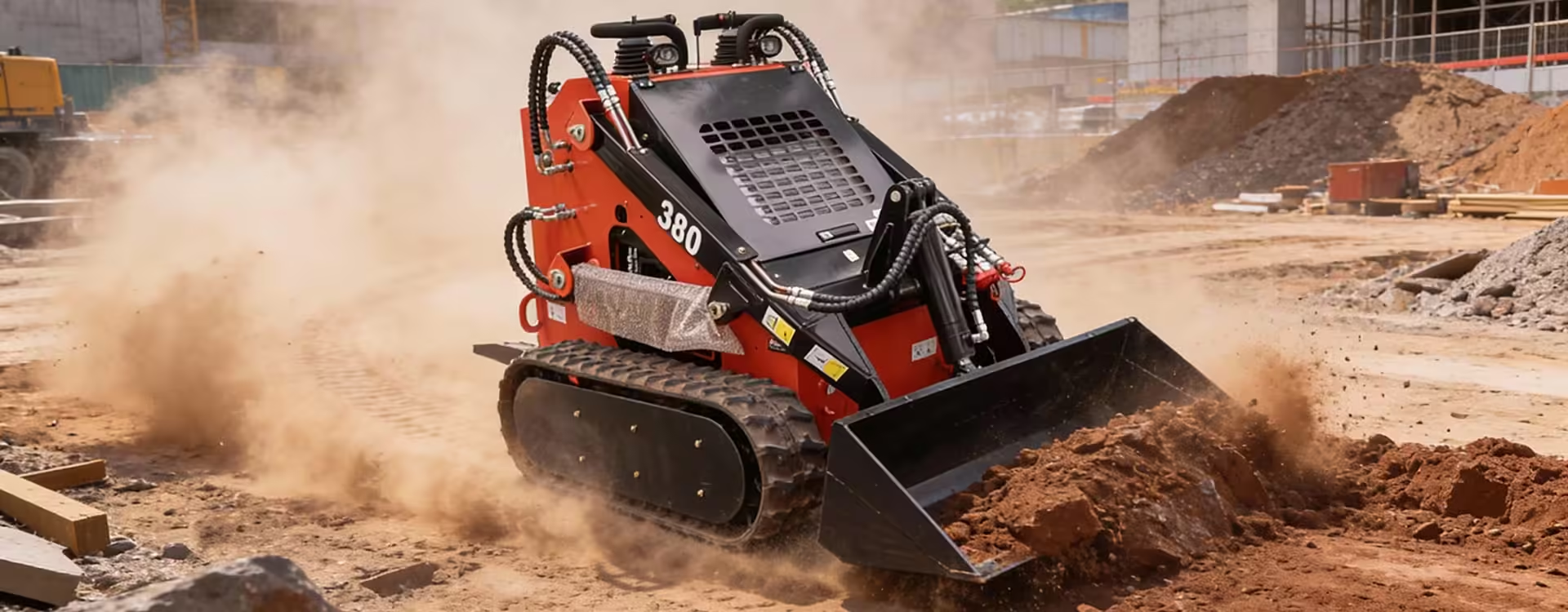
Decision Guide
You need clear criteria to choose the right loader for your job. Consider the following factors when deciding between the QL1100 and QL380:
| Criteria | QL1100 Mini Skid Steer Loader | QL380 Compact Loader |
|---|---|---|
| Attachments & Versatility | Supports a wide range of attachments for landscaping and light construction | Handles basic attachments for smaller tasks |
| Surface Protection | Distributes weight evenly, minimizes turf damage | Stable, but may mark soft ground |
| Transport & Storage | Fits on smaller trailers, easy to store | Requires less space, ideal for quick moves |
| Operating Cost & Maintenance | Lower fuel consumption, simple maintenance | Efficient for lighter workloads, easy upkeep |
| Final Recommendation | Best for tight, agile jobs with lighter loads | Suited for basic tasks in compact areas |
You should match your loader to your most frequent tasks. If you work in landscaping, residential renovation, or small-scale construction, the QL1100 provides the versatility and efficiency you need. For lighter jobs or frequent transport between sites, the QL380 offers a practical solution.
✅ Actionable Guide:
- Assess your typical job site size and material weight.
- List the attachments you use most often.
- Estimate your annual operating hours and maintenance budget.
- Visit a local dealer for a hands-on demo or connect with operators on Reddit’s r/Construction for real-world advice.
You make a smart investment when you choose a loader that matches your workflow and site conditions. The right machine boosts productivity and keeps your crew safe.
You gain a clear advantage with the QL1100 in compact spaces. The loader’s traction, versatility, and operator comfort set it apart. You experience fewer minor accidents and lift more material with less fuel. The table below highlights the main reasons for its win:
| Feature | QL1100 Benefit |
|---|---|
| Traction | Superior on soft ground |
| Versatility | Multiple attachments supported |
| Operator Comfort | Ergonomic cab reduces fatigue |
| Safety | Enhanced visibility, controls |
| Efficiency | Advanced hydraulics, fuel saving |
| Ground Pressure | Protects sensitive surfaces |
You should assess your job site needs before choosing. Arrange a demo or contact a dealer to see which loader fits your workflow best.
FAQ
What makes the QL1100 better for compact spaces?
You get a higher operating capacity, advanced hydraulics, and a compact design with the QL1100. These features help you maneuver easily in tight areas and handle heavier loads. For more details, visit Equipment World.
Can I use the same attachments on both QL1100 and QL380?
You can use most standard attachments, such as buckets, pallet forks, and augers, on both loaders. Always check compatibility with your dealer before purchasing new attachments.
How do I maintain my skid steer loader for long-term reliability?
You should follow the manufacturer’s service schedule, check fluid levels weekly, and inspect hydraulic lines for leaks. Use the loader’s monitoring system to catch issues early. For maintenance tips, see ForConstructionPros.
What is the average fuel consumption for QL1100 and QL380?
| Loader Model | Average Fuel Consumption (L/hr) |
|---|---|
| QL1100 | 2.5 – 3.0 |
| QL380 | 2.0 – 2.5 |
You save fuel by choosing the right working mode for each task.
How quickly can I switch attachments during a job?
You change most attachments in under five minutes using the quick-mount system. This feature keeps your workflow efficient and reduces downtime on busy job sites.
Are these loaders safe for use in residential areas?
You get rollover protection, seatbelts, and emergency stop buttons on both models. These features help you operate safely near homes and gardens. Always follow local safety guidelines.
What is the expected service life of QL1100 and QL380?
| Loader Model | Expected Service Life (hrs) |
|---|---|
| QL1100 | 4,000 – 5,000 |
| QL380 | 3,500 – 4,500 |
You extend service life by performing regular maintenance and using the monitoring system.
Where can I find more user reviews and real-world cases?
You can read user experiences and case studies on Reddit’s r/Construction and LinkedIn Construction Equipment. These platforms offer practical advice from operators.