Welcome to Shandong Qilu Industrial Co., Ltd

 English
 Arabic
 Bulgarian
 Bengali
 Czech
Czech
 Danish
 German
 Greek
Greek
 Spanish
 Finnish
 French
 Hindi
Hindi
 Croatian
 Hungarian
 Indonesian
 Italian
 Japanese
 Korean
 Lithuanian
 Dutch
Dutch
 Norwegian
 Polish
 Portuguese
 Romanian
 Russian
 Slovak
 Slovenian
 Swedish
 Thai
Thai
 Turkish
 Ukrainian
 Vietnamese
 Tagalog
 Malay
Malay
 Estonian
 Catalan
 Latvian
 Urdu
Urdu
 Serbian
 Persian
 Swahili
 Albanian
 Armenian
 Icelandic
 Bosnian
 Luxembourgish
 Afrikaans
English Arabic
Bulgarian
Bengali
Czech
Danish
German
Greek
Spanish
Finnish
French
Hindi
Croatian
Hungarian
Indonesian
Italian
Japanese
Korean
Lithuanian
Dutch
Norwegian
Polish
Portuguese
Romanian
Russian
Slovak
Slovenian
Swedish
Thai
Turkish
Ukrainian
Vietnamese
Tagalog
Malay
Estonian
Catalan
Latvian
Urdu
Serbian
Persian
Swahili
Albanian
Armenian
Icelandic
Bosnian
Luxembourgish
Afrikaans
Afrikaans
English Arabic
Bulgarian
Bengali
Czech
Danish
German
Greek
Spanish
Finnish
French
Hindi
Croatian
Hungarian
Indonesian
Italian
Japanese
Korean
Lithuanian
Dutch
Norwegian
Polish
Portuguese
Romanian
Russian
Slovak
Slovenian
Swedish
Thai
Turkish
Ukrainian
Vietnamese
Tagalog
Malay
Estonian
Catalan
Latvian
Urdu
Serbian
Persian
Swahili
Albanian
Armenian
Icelandic
Bosnian
Luxembourgish
Afrikaans
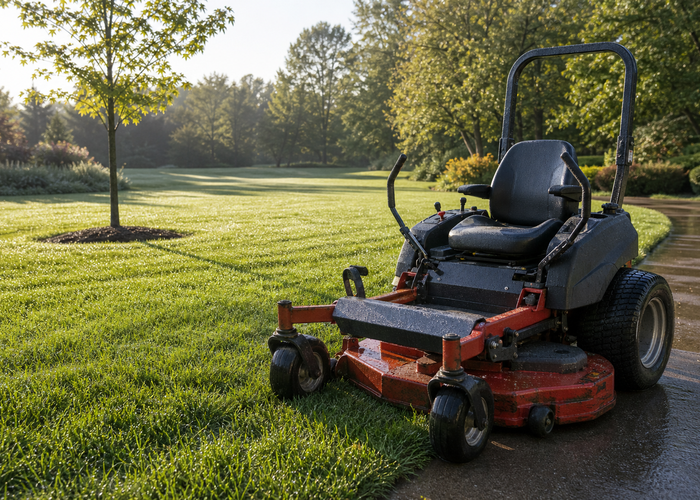
Wet Grass Lawn Mowing Strategy: When to Wait, Raise Deck Height, or Change the Route
A practical guide to mowing wet grass, showing when to wait, when to raise deck height, and how to change the route to protect cut quality and traction.
Wet Grass Lawn Mowing Strategy: When to Wait, Raise Deck Height, or Change the Route sounds like a small decision until the machine starts sliding, scalping, or leaving ragged grass behind. That is why this topic deserves the same practical discipline as heavier equipment work. Buyers comparing the lawn mower lineup should think about traction, cut quality, operator visibility, and route planning before they think about speed.
A mower can cover ground quickly, but it can also create visible problems just as quickly. Wet grass changes traction, airflow under the deck, and how clippings move, so the mower setup that looked perfect yesterday may leave clumps, stripes, or slide marks today The ideas on the lawn mower application solutions page are useful because they keep the discussion anchored to real work scenes rather than generic marketing promises.
That matters whether the operator is using a compact machine such as the QL-R1000 lawn mower or a different model from the broader QiLu Machinery application lineup. The best setup is the one that leaves the grass even, protects the machine, and gives the operator enough control to repeat the result across the whole property.
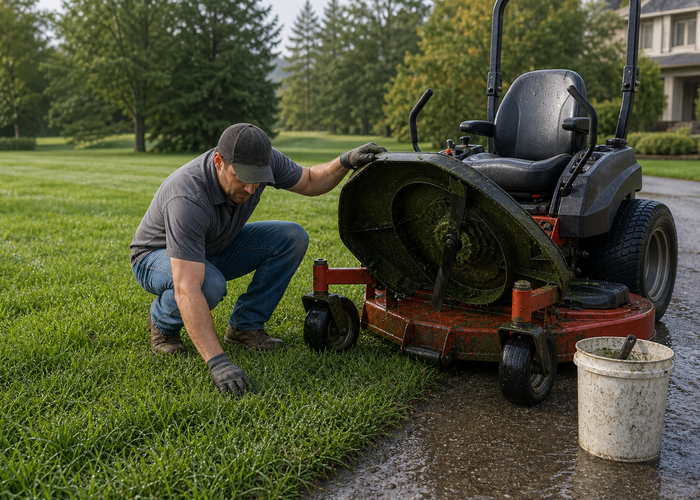
Why Mowing Quality Starts With Setup
The mowing result is decided long before the final pass. Moisture changes both cut quality and control, which means the route and deck setting have to react to the lawn’s condition That is why OSHA’s mowing safety guidance and Penn State’s lawn mowing and safety guide both emphasize route awareness, machine condition, and operator judgment rather than treating mowing as casual driving.
The University of Minnesota’s advice on mowing practices for healthy lawns and Oklahoma State’s lawn mowing best practices make the same point from the turf side: correct height, sharp blades, and suitable mowing conditions protect both appearance and machine load.
The Consumer Product Safety Commission mower-safety guidance is also a useful reminder that blade hazards, thrown objects, and operator inattention remain real risks even on familiar residential or estate properties. That broader safety perspective belongs in the setup conversation because finish quality is not the only standard that matters.
Control The Machine Before Chasing Speed
The operator should use a calmer pace, gentler turns, and more deliberate overlap on wet turf because the mower has less margin for sudden correction A mower that feels calm and repeatable usually leaves the better finish because the operator is free to watch the turf and obstacles instead of constantly correcting direction.
Use The Property Layout To Decide The Pattern
The route should avoid trapping wet clippings on repeated inside turns and should favor the driest straightest sections while the lawn is still shedding surface moisture Choosing the route well often does more for safety and finish quality than pushing for another few minutes of speed.
Read The Test Strip Before Committing To The Whole Route
A short test strip is one of the most useful wet-grass decisions an operator can make. It reveals whether the deck is clearing clippings, whether the tires are leaving marks on turns, and whether the lawn is dry enough to recover visually after the pass. That small preview often tells the truth faster than walking the property alone because it combines turf condition with actual machine behavior.
The operator should look at the strip from more than one angle before committing to the full route. A pass that seems acceptable from the seat may still show clumping, wheel marks, or bent grass when viewed across the light. That extra half minute of checking is usually cheaper than mowing the entire lawn and then realizing the finish standard was never going to hold under current conditions.
Checks To Make Before The Main Mowing Run
Start with the machine itself. Check blade sharpness, deck cleanliness, discharge path, and whether a modest height increase would help the deck move damp grass without plugging Most visible mowing complaints begin with one of those basic details rather than with a deeper mechanical failure.
Then check the property condition. Walk the lawn and note dew pockets, runoff from downspouts, shaded corners, and places where the tires will carry wet clippings into the next pass If the grass is wet, the slope is slick, or the route forces awkward turns near landscaping, the right decision may be to slow down, change direction, or use a different machine.
Finally, decide how the operator will know the setup is working. A good test strip shows acceptable cut quality, manageable clipping flow, and enough tire composure that the operator is not already correcting for slip A repeatable reference point keeps the operator from judging the whole property by a rushed first impression.
Once mowing begins, keep the machine working at a steady rhythm. If clumps begin building or the machine starts tracking moisture into every turn, the operator should change the route or stop and wait rather than mow the whole property into a cleanup project A mower that is constantly sped up and slowed down usually leaves a less even finish and encourages rougher steering inputs.
Cut quality should be checked during the run, not only at the end. Checking the finish early reveals whether raising the deck height helped or whether the lawn is still too wet for a clean professional-looking result That lets the operator correct the deck, the route, or the conditions before the whole property shows the same defect.
If the setup is correct, the work should feel controlled. The mower follows a clear pattern, the cut stays even, and the operator is not fighting slip, clumping, or harsh turn marks.
A Practical Mowing Workflow
| Mowing stage | What to check | Why it matters to cut quality or safety |
|---|---|---|
| Inspect moisture patterns | Identify dew pockets, runoff zones, and shaded wet sections | The route reflects actual lawn condition instead of yesterday’s assumptions |
| Set the mower for wet work | Clean the deck, confirm sharp blades, and consider modest height increase | The deck has a better chance to clear wet clippings |
| Make a test strip | Check cut quality, clumping, and traction before the main run | The operator can decide whether to continue, adjust, or wait |
| Finish only where conditions support it | Keep overlap and turns gentle on wetter sections | The final lawn looks cleaner and suffers less scuffing |
This sequence keeps the operator focused on repeatability instead of speed alone. It also makes it easier to decide when conditions are unsuitable and the machine should wait.
How Conditions Change Between The First And Last Pass
Mowing conditions evolve while the job is happening. Sun can dry one section quickly while another area stays slick under trees, clippings can begin sticking under the deck after a seemingly clean start, and repeated turns can reveal turf softness that was not obvious on the walk-through. That means the operator should keep checking the lawn and the machine instead of assuming the opening pass told the whole story.
If the mower starts leaving a heavier discharge line, a dull-looking cut, or fresh tire marks, the best response is often to slow down and rethink the route. Changing direction, lifting the deck slightly, or postponing the wettest section usually preserves a better finish than driving through the warning signs.
Know When The Right Answer Is To Stop
Stopping is sometimes the most professional choice. If the lawn is slick enough to risk sliding, if the clumps are building faster than the deck can clear them, or if the finish is visibly worse than the property standard, waiting is better than forcing a result the mower cannot deliver cleanly.
Protect Wet Turf Around Obstacles And Turn Zones
Wet turf usually fails first where the mower has to turn, brake, or squeeze around beds, trees, and hardscape edges. Those are the places where operators should reduce steering input, widen the arc, and be willing to leave a small section for later trimming rather than grind the tires into the lawn. A property can recover from a slightly slower route far more easily than it recovers from repeated scuff marks in the same visible corners.
That is also where route planning becomes a buying issue. A mower that feels nimble on dry open lawn may still be the wrong fit if it asks for too much turning room in damp obstacle-heavy sections. Practical buyers compare machine width, steering behavior, and operator sightlines against the wettest parts of the property, not just against the easiest straightaway.
What To Record For The Next Visit
Reliable operators write down what worked: the height setting that left the cleanest finish, the route that reduced tight turns, the tire pressure that helped grip, and the condition in which the deck began to struggle. Those notes matter because lawns and groundskeeping routes repeat, and a recorded setup is far easier to repeat than a remembered one.
It is also helpful to note where the plan changed. Maybe one slope stayed wet longer than expected, maybe a shaded area always clumped when the deck ran too low, or maybe a new blade balance solved a vibration issue. That small record turns everyday mowing into a controlled maintenance process rather than a string of isolated passes.
Over a season, those observations help owners decide whether the current mower still fits the property. They make it clearer whether a different deck width, another machine type, or a revised maintenance interval would improve consistency more than simply asking the operator to drive faster.
How Property Schedule Changes The Best Mowing Window
Wet-grass strategy is not only about the machine. It is also about the schedule around the property. Some lawns receive sprinkler water at night, some collect morning shade for hours, and some cannot be serviced later in the day because the route conflicts with parking, deliveries, or client use. Operators who record those patterns can choose a more reliable mowing window instead of repeatedly fighting the same moisture problem at the same hour.
That scheduling discipline also improves equipment decisions. If a property is almost always cut in a narrow moisture window, then deck-cleaning access, transport speed between sites, and how quickly the mower can switch from a higher wet-cut setup back to a normal dry setup become real ownership factors. The best machine is the one that fits both the lawn and the timing pressure around it.
Seen that way, route timing becomes part of mowing quality control. A clean finish comes from matching turf condition, machine setup, and property schedule at the same time, not from assuming one standard approach will work every visit.
A Buyer Checklist Before Choosing The Mower
Before selecting a mower for this kind of work, buyers should think about the property itself: slope length, gate width, trimming obstacles, grass volume, and how quickly the site must dry before it can be serviced. Those details decide whether a given mower will feel nimble and repeatable or constantly one step out of place.
It is also useful to compare how the mower fits the maintenance rhythm. Deck cleaning access, blade service time, transport between properties, and operator comfort all shape whether the machine can keep leaving a clean finish once the season is busy. A mower that is easy to maintain often protects cut quality better than one that merely looks fast on paper.
That is why practical buyers compare the machine to the route, the season, and the finish standard they actually have to deliver. The right mower is the one that can repeat the property’s desired result without forcing the operator into rushed or damaging choices.
Common Errors That Ruin The Finish
They Push Through Conditions That Are Already Saying No
They mow because the schedule says to mow, even though the lawn is still wet enough to punish the deck and the tires The mower may still move, but the turf and the operator usually pay for that decision.
They Ignore Small Setup Defects
They keep the same dry-day route and deck setting, then blame the mower for problems created by moisture and pattern choice A deck that is only slightly off or a blade that is only slightly dull can still leave a property looking uneven from one end to the other.
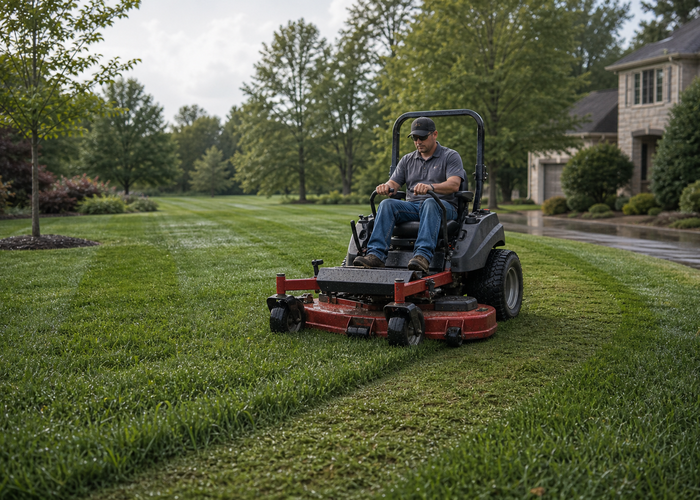
Another useful habit is to write down the setup that worked. Height setting, blade condition, route direction, tire pressure, and property condition become a simple playbook for the next visit.
That record also helps when an owner decides whether the current mower still fits the property. The QL500Y mower page and the other machines in the QiLu lawn mower range make more sense when buyers can compare them against real route width, grass load, slope, and finish expectations.
Good mowing is not about looking busy. It is about leaving a clean result without damaging the turf or pushing the operator into poor decisions. That practical standard is exactly the kind of ownership topic worth keeping on the QiLu Machinery blog.
How To Judge Whether The Mowing Plan Actually Worked
The real test is not whether the mower covered the property quickly. It is whether the turf looks even, the turns stayed clean, and the operator did not need to rely on luck to get through the route. A clean-looking finish with minimal clumping and no fresh scuffing is a better success measure than the clock alone.
Operators should also ask whether the machine ended the job still feeling predictable. If the deck packed with grass, if the tires lost confidence late in the route, or if the cut became rougher as the property progressed, then the setup needs to change next time even if the lawn appears acceptable from a distance.
That review matters because mowing is repetitive work. Small improvements to route, deck setting, blade care, or timing pay back quickly across a season, while small ignored defects usually show up on every property until someone writes them down and fixes them.
The same discipline helps when more than one operator uses the mower. A written note about the route, the ideal deck setting, and the conditions that justify waiting keeps the finish more consistent from one visit to the next.
That kind of simple handoff note also protects the property standard. It gives the next operator a usable baseline instead of forcing them to rediscover the best setup through trial, turf damage, and uneven finish quality.
It also gives the owner a better way to judge equipment performance. If several operators can follow the same wet-condition playbook and still produce a clean result, the machine is supporting the property standard well. If every operator ends up improvising around the same deck, traction, or route problem, then the mower choice or maintenance routine probably needs to change.
FAQ
When is it better to wait instead of mowing wet grass?
When the tires are sliding, clumps are building quickly, or the mower cannot leave an even finish on a simple test strip. Waiting can save both turf appearance and operator effort.
Why does raising deck height sometimes help on wet grass?
A slight height increase can reduce deck overload and improve clipping flow, especially when the grass is heavy with dew or recent rain.
Should the mowing route change after rain?
Yes. Operators should favor drier straighter sections first and avoid tight damp corners or repeated turns that carry wet clippings into the next pass.
What is the biggest wet-grass mowing mistake?
Pretending today’s lawn behaves like a dry lawn. Moisture changes traction, clipping flow, and finish quality enough that the plan must change too.