Welcome to Shandong Qilu Industrial Co., Ltd

 English
 Arabic
 Bulgarian
 Bengali
 Czech
Czech
 Danish
 German
 Greek
Greek
 Spanish
 Finnish
 French
 Hindi
Hindi
 Croatian
 Hungarian
 Indonesian
 Italian
 Japanese
 Korean
 Lithuanian
 Dutch
Dutch
 Norwegian
 Polish
 Portuguese
 Romanian
 Russian
 Slovak
 Slovenian
 Swedish
 Thai
Thai
 Turkish
 Ukrainian
 Vietnamese
 Tagalog
 Malay
Malay
 Estonian
 Catalan
 Latvian
 Urdu
Urdu
 Serbian
 Persian
 Swahili
 Albanian
 Armenian
 Icelandic
 Bosnian
 Luxembourgish
 Afrikaans
English Arabic
Bulgarian
Bengali
Czech
Danish
German
Greek
Spanish
Finnish
French
Hindi
Croatian
Hungarian
Indonesian
Italian
Japanese
Korean
Lithuanian
Dutch
Norwegian
Polish
Portuguese
Romanian
Russian
Slovak
Slovenian
Swedish
Thai
Turkish
Ukrainian
Vietnamese
Tagalog
Malay
Estonian
Catalan
Latvian
Urdu
Serbian
Persian
Swahili
Albanian
Armenian
Icelandic
Bosnian
Luxembourgish
Afrikaans
Afrikaans
English Arabic
Bulgarian
Bengali
Czech
Danish
German
Greek
Spanish
Finnish
French
Hindi
Croatian
Hungarian
Indonesian
Italian
Japanese
Korean
Lithuanian
Dutch
Norwegian
Polish
Portuguese
Romanian
Russian
Slovak
Slovenian
Swedish
Thai
Turkish
Ukrainian
Vietnamese
Tagalog
Malay
Estonian
Catalan
Latvian
Urdu
Serbian
Persian
Swahili
Albanian
Armenian
Icelandic
Bosnian
Luxembourgish
Afrikaans

Why Farm Tractors Drive Efficiency and Growth in Agriculture
You rely on a farm tractor to transform your daily work in agriculture. This machine automates heavy tasks and boosts your productivity while reducing labor costs. With advanced technology and year-round versatility, you gain more control over each season. Farmers who adopted tractors saw higher yields and incomes, as shown in recent studies:
| Study | Findings |
|---|---|
| Abass et al. (2017) | Mechanization increased income and reduced poverty in rural Zambia. |
| Zhou et al. (2020) | Farm machinery raised maize yields, especially for less productive farmers. |
| Mano et al. (2020) | Tractors improved rice productivity during land preparation. |
| Peng et al. (2022) | Mechanization linked to higher output and income in China’s grain and cash crop sectors. |
Investing in a farm tractor drives efficiency and supports growth for your operation.
Key Takeaways
- Farm tractors automate heavy tasks, significantly boosting productivity and reducing labor costs.
- Using tractors can cut labor hours by up to 70%, allowing farmers to focus on crop management.
- Tractors enhance planting and harvesting precision, leading to higher yields and reduced crop losses.
- Investing in tractors can lower labor expenses by up to 40%, freeing up funds for better seeds and fertilizers.
- Tractors offer versatility with multiple attachments, enabling various tasks like lifting, digging, and site preparation.
- Modern tractors equipped with GPS and smart technologies optimize resource use, supporting sustainable farming practices.
- Regular maintenance and training can extend the lifespan of tractors, reducing long-term repair costs.
- Adopting farm tractors allows for scalable growth, enabling farmers to manage larger areas and diversify crops efficiently.
Key Benefits of Farm Tractors
Productivity Gains
Faster Land Work
You can dramatically accelerate land preparation with a farm tractor. This machine handles heavy loads and adapts quickly to changing field conditions. The difference in time required for land preparation is striking:
| Aspect | Tractors | Manual Labor |
|---|---|---|
| Time Required | Significantly reduced time | Longer time required |
| Multifunctionality | Can perform multiple tasks quickly | Limited to one task at a time |
| Power | Handles heavy loads efficiently | Limited by human strength |
| Adaptability | Quickly responds to various needs | Slower adaptation to changes |
A medium-sized corn farm in Iowa switched from manual labor to tractors for plowing and planting. The workforce dropped from 10 to 3 operators, and labor hours during planting fell by 70%. You can allocate the time saved to crop management or equipment maintenance, increasing overall farm output.
Efficient Planting and Harvest
You gain precision and speed in planting and harvesting with a farm tractor. Tractors ensure even spacing during planting, which leads to optimal crop growth. You can pair tractors with harvesters to collect crops at the right time, reducing losses and maximizing yield. For example, a California almond grower reported a 10% increase in harvesting speed after adopting a reverse drive system, which also improved ergonomic comfort for operators.
Tip: Tractors equipped with GPS and smart technologies allow you to manage planting and harvesting schedules with greater accuracy, reducing waste and improving crop quality.
- Tractors save time and reduce manual labor in planting crops.
- Streamlined harvesting ensures crops are collected at the optimal time.
- Precision fertilization enhances soil fertility and maximizes yields.
Labor and Cost Savings
Reduced Manual Effort
You minimize manual effort by automating tasks such as plowing, planting, and fertilizing. Autonomous tractors equipped with GPS and AI perform these operations with minimal human intervention. On a mid-sized farm, automating plowing resulted in a 25% reduction in labor costs. You can focus on strategic decisions and crop monitoring rather than repetitive manual work.
- Autonomous tractors enhance efficiency in farming operations.
- Advanced technologies allow for autonomous operation, reducing manual effort.
- Tasks like plowing and planting require less human intervention.
Lower Labor Expenses
You can achieve significant reductions in labor expenses by implementing farm tractors. Autonomous tractors can cut labor costs by up to 40%. In a case study, a corn farm reduced its workforce from 10 to 3 operators, achieving a 70% decrease in labor hours during planting. These savings allow you to invest in better seeds, fertilizers, or farm infrastructure.
- Automating tasks like plowing leads to a 25% reduction in labor costs.
- Labor cost reductions of up to 40% are possible with autonomous tractors.
Versatility in Operations
Multiple Attachments
You benefit from the versatility of a farm tractor by using a wide range of attachments. Loader attachments help you lift and transport heavy materials, while bucket loaders are ideal for digging and earth-moving. Pallet forks simplify moving large stacks of hay or pallets. A single utility tractor can clear land, handle materials, and prepare sites for planting.
- Loader attachments enable efficient lifting and transport of crops and soil.
- Bucket loaders are perfect for digging and earth-moving tasks.
- Pallet forks make transporting hay and pallets easier.
- One utility tractor can perform land clearing, material handling, and site preparation.
Year-Round Use
You can operate a farm tractor throughout the year, adapting to seasonal demands. The TwinTrac reverse drive system increased harvesting speed for almonds and pistachios by 10%. Fuel consumption averaged 8.21 liters per hour, demonstrating efficient resource use. Ergonomic features reduced operator fatigue, improving comfort and productivity.
At the Swiss Future Farm, smart farming technologies allow you to switch driver profiles and manage tasks efficiently during long harvest days. Data networking and easy task management boost operational efficiency and save resources.
- Year-round tractor use increases farm output and operational efficiency.
- Ergonomic benefits reduce operator fatigue and improve comfort.
- Smart technologies support efficient task management.
For more insights on tractor versatility and operational efficiency, visit Farm Progress or join discussions on AgTalk Forum.
Farm Tractor Technology
Modern farm tractor technology transforms your daily operations by improving precision, efficiency, and safety. You benefit from advanced engines, precision tools, and operator-focused features that set new standards in agricultural productivity.
Advanced Engines
Fuel Efficiency
You can achieve remarkable fuel savings with the latest engine innovations. Modern tractors use advanced fuel injection systems that optimize combustion, reducing both fuel consumption and emissions. Turbocharging technology, including variable geometry and electronic controls, adapts engine performance to your workload. Hydrogen-powered engines are emerging as a sustainable alternative, producing only water vapor and minimizing environmental impact.
- Advanced fuel injection systems optimize combustion for lower fuel use.
- Turbocharging boosts power and efficiency.
- Hydrogen engines offer a clean energy solution for the future.
Reliability
You rely on your tractor to perform every day. Mechanical simplicity in engine design reduces the need for specialized repairs and lowers maintenance costs. Studies show that even a few days of downtime can impact your annual yield. Most operators report significant reductions in maintenance expenses with modern engines.
| Reliability Factor | Impact |
|---|---|
| Maintenance Cost Reduction | Most operators see lower maintenance costs with modern engine designs. |
| Downtime Impact | Even short downtimes can reduce annual yields. |
| Mechanical Simplicity | Simple designs allow faster repairs and less reliance on specialists. |
Precision Tools
GPS Guidance
You gain precise control over planting and input application with GPS guidance. This technology reduces fertilizer overlap by 10-15%, saving you money and protecting the environment. Variable Rate Application (VRA) uses GPS to adjust input rates, optimizing resource use and boosting yields. Over 60% of U.S. farmers now use digital agronomy tools, and precision agriculture could add up to $500 billion to the global economy by 2030.
| Feature | Benefit |
|---|---|
| Fertilizer Overlap Reduction | 10-15% less overlap, lower costs, reduced environmental harm |
| Variable Rate Application | Optimized input use, improved yields |
| Adoption Rates | Over 60% of U.S. farmers use digital tools |
| Economic Impact | Up to $500B added to global GDP by 2030 |
Note: GPS technology enables you to make data-driven decisions, improving accuracy and efficiency in every field operation.
Data Management
You can centralize all your farm data for better decision-making. Modern tractors connect seamlessly with farm management software, using APIs for smooth data flow. Real-time monitoring lets you respond quickly to machinery issues or crop health concerns. Customizable dashboards help you identify areas for improvement and optimize efficiency.
- Centralized data reduces errors and saves time.
- Real-time monitoring supports proactive maintenance.
- Analytics dashboards guide operational improvements.
Comfort and Safety
Ergonomic Features
You spend long hours in the cab, so comfort matters. Adjustable seating with air suspension and lumbar support reduces fatigue. Spacious interiors and intuitive controls minimize strain. Air conditioning, heating, and advanced ventilation keep you comfortable in any weather, while defrosting systems ensure clear visibility.
| Ergonomic Feature | Benefit |
|---|---|
| Adjustable Seating | Reduces fatigue, supports posture |
| Spacious Interiors | Prevents cramped feelings, allows movement |
| Intuitive Controls | Minimizes strain, improves efficiency |
| Climate Control | Maintains comfort in all weather |
| Ventilation Systems | Keeps air fresh, reduces dust exposure |
Safety Systems
You protect yourself and your team with advanced safety systems. Rollover Protective Structures (ROPS) significantly reduce fatalities during overturns. Monitoring features can alert emergency contacts in dangerous situations, improving response times. Data from these systems also helps analyze and prevent future accidents.
- ROPS protect operators during overturns.
- Emergency alerts improve response times.
- Monitoring data supports accident prevention.
For more on tractor technology, visit Farm Progress or join discussions on AgTalk Forum.
Economic Value and Savings
Cost-Benefit Overview
Investment vs. Savings
When you invest in a farm tractor, you make a significant upfront commitment. However, the long-term savings often outweigh the initial cost. Consider the following table, which outlines typical investment and savings over a tractor’s economic life:
| Category | Estimated Value (USD) |
|---|---|
| Initial Purchase Price | $200,000 |
| Accumulated Repair Costs (6,000 hours) | $50,000 |
| Labor Savings (10 years) | $120,000 |
| Input Savings (10 years) | $40,000 |
| Resale Value (after 10 years) | $60,000 |
You can see that labor and input savings, combined with a strong resale value, help offset the initial investment. Over time, your operational costs decrease, and your profit margins improve.
Maintenance Costs
Maintenance costs for tractors can be substantial, especially as usage increases. After 6,000 hours of operation, repair costs may reach about 25% of the tractor’s new price. For example, you might spend around $50,000 on repairs over the machine’s life. Factors such as soil type, region, and operator skill can influence these costs. Compared to other mechanized equipment, tractors often require more frequent and costly maintenance as they age. Planning for these expenses helps you avoid unexpected financial strain.
Tip: Schedule regular maintenance and train operators to extend your tractor’s lifespan and reduce repair costs. For more on budgeting for equipment, visit USDA Economic Research Service or follow AgWeb on Twitter.
Profitability Impact
Higher Yields
You can boost your farm’s profitability by using advanced tractors. Here are real-world examples:
- A corn farmer in Iowa increased yield by 30% after switching to a high-efficiency tractor with GPS. Improved plant spacing and reduced overlap led to better results.
- A soybean grower in Illinois adopted autonomous tractors, saving time and improving soil health. Precision farming techniques increased overall profitability.
Lower Input Costs
Tractors equipped with GPS and automation help you cut input costs. The following table highlights how precision technology reduces expenses:
| Practice | Impact on Input Costs |
|---|---|
| GPS-guided planting and spraying | Less waste, fewer seeds and chemicals |
| Targeted input application | Lower fertilizer and pesticide use |
| Fewer field passes due to accurate mapping | Reduced labor and fuel costs |
- Automation enables efficient use of pesticides and fertilizers, adjusting volume and timing based on real-time data.
- Precision spraying reduces chemical use, directly lowering your input costs.
Note: Precision agriculture not only saves money but also supports sustainable farming. For more insights, check Farm Bureau Financial or join discussions on AgTwitter.
Financing and Resale
Loan Options
You have several financing options when purchasing a new tractor:
- Loans: Traditional financing lets you buy the tractor outright and build equity.
- Leasing: Lower annual payments and minimal upfront costs make leasing attractive if you want newer equipment more often.
- Shared Ownership: Partnering with other farmers or hiring custom operators reduces financial risk and improves asset utilization.
- Used Equipment Financing: Buying well-maintained used tractors lowers your costs and frees up cash for other investments.
Pro Tip: Compare loan rates and terms from multiple lenders. Explore cooperative financing programs through local agricultural banks or government agencies.
Resale Value
A well-maintained tractor retains strong resale value. After a decade of use, you can often recover a significant portion of your initial investment. Keeping detailed maintenance records and following recommended service schedules help maximize your resale price. This financial flexibility allows you to upgrade equipment as your farm grows.
For more on equipment values and financing, visit Farm Credit or connect with peers on LinkedIn Agriculture.
Sustainable Farming with Tractors
Resource Efficiency
Reduced Inputs
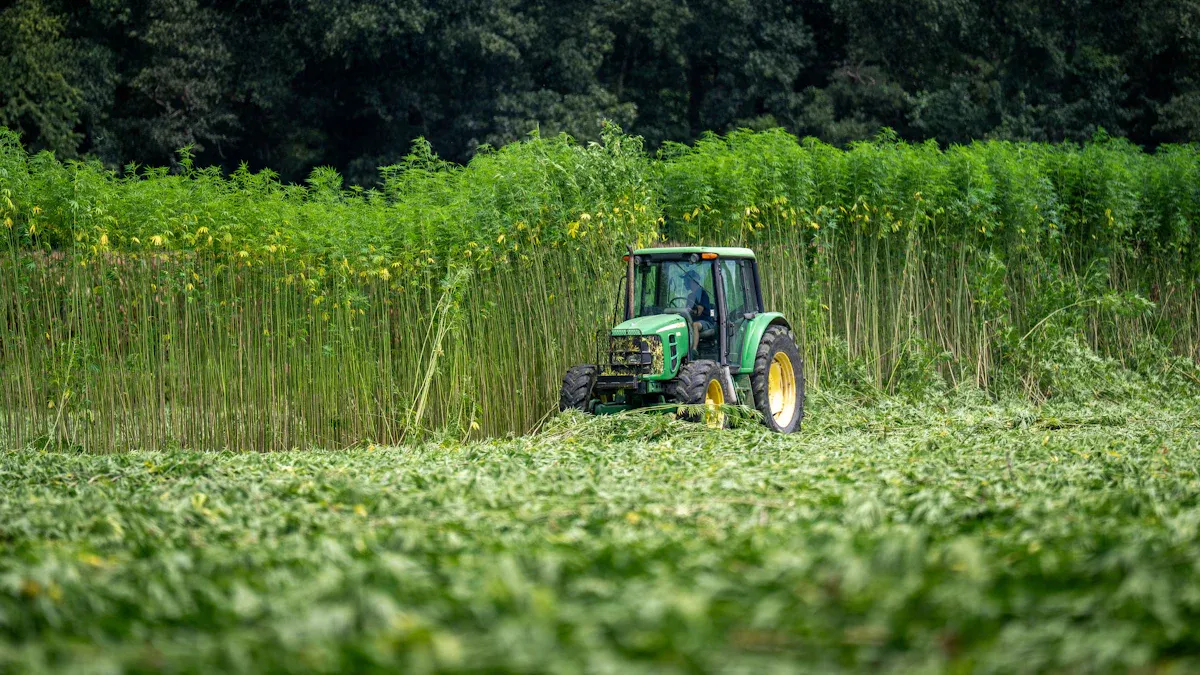
You can improve resource efficiency on your farm by using modern tractors. These machines help you optimize water, fertilizer, and fuel use, which reduces waste and boosts productivity. Precision agriculture tools let you measure crop variability within each field. You apply water, fertilizers, and pesticides only where needed, which means you avoid overuse and save money.
- Tractors optimize the use of water, fertilizers, and fuel, reducing waste.
- Precision agriculture allows you to target resources, minimizing environmental impact.
- You support sustainable practices like crop rotation and reduced tillage, which promote soil health and biodiversity.
Tip: By reducing input waste, you protect your bottom line and contribute to a healthier environment.
Precision Application
You can use advanced tractor technologies for precise application of seeds, fertilizers, and pesticides. GPS-guided systems and variable rate technology ensure that you apply inputs only where crops need them. This approach reduces chemical runoff, which can contaminate water sources and harm local ecosystems.
- Precision spraying technologies reduce chemical runoff and protect water quality.
- Accurate application improves soil health and supports eco-friendly farming.
- You minimize the risk of over-application, which can damage crops and soil.
For more on sustainable resource management, visit Sustainable Agriculture Research & Education (SARE) or follow @SustAg on Twitter.
Soil and Environment
Conservation Practices
You can protect soil health by adopting conservation practices enabled by tractor technology. Direct seeding and no-till planters allow you to plant seeds in undisturbed soil. This method improves water retention and reduces erosion. Residue management implements, such as strip-tillers and residue cutters, help break down previous crops, retain soil moisture, and enhance soil structure. You can also use cover crop interseeding to boost soil fertility and biodiversity.
- Direct seeding and no-till planting improve water retention and reduce erosion.
- Residue management tools enhance soil health and moisture.
- Cover crop interseeding increases soil fertility and supports biodiversity.
Note: Healthy soil leads to stronger crops and long-term farm sustainability.
Lower Emissions
You can lower greenhouse gas emissions by choosing tractors with cleaner technologies. Many modern tractors use less fuel and can run on renewable energy sources. Electric and biofuel-powered tractors significantly reduce emissions compared to traditional diesel models.
| Year | CO2 Equivalent Emissions (metric tons) | Notes |
|---|---|---|
| 2005 | 200,000 | Baseline emissions for agricultural equipment |
| 2019 | 100,000 | Emissions halved due to cleaner technologies |
You help cut down on carbon emissions, which supports climate change mitigation. Cleaner engines and alternative fuels make a measurable difference. For example, electric tractors can reduce emissions by up to 90% compared to diesel engines.
- Cleaner tractor technologies lower air pollution from nonroad engines.
- You contribute to a more sustainable future by adopting these innovations.
For more information on emissions reduction, visit USDA Climate Hubs or join the conversation on #AgSustainability.
Scalability and Growth
Managing Larger Farms
More Acreage
You can expand your farm’s acreage efficiently with the right mechanization strategy. A farm tractor allows you to cultivate larger fields with less labor and time. Many farmers have doubled their operational area after adopting mechanized solutions. For example, a wheat producer in Kansas increased managed acreage from 200 to 500 acres within three years by integrating tractors and precision implements. This expansion became possible because mechanized operations streamline tasks and reduce bottlenecks.
| Mechanization Options | Description |
|---|---|
| Two-wheeled tractors | Affordable and user-friendly, ideal for smallholders to access mechanization |
| Impact on Scalability | Mechanization services exponentially increase the number of farmers and area served |
You can see that mechanization options suit both small and large farms, supporting scalable growth.
Diverse Crops
You gain the flexibility to diversify your crop portfolio with advanced tractors. Mechanized operations let you switch between crops such as corn, soybeans, and specialty vegetables without major delays. Optimized input management helps you allocate water and fertilizers precisely, which supports different crop requirements. Precision farming tools provide real-time data, so you can monitor soil health and adjust practices for each crop.
| Benefit | Description |
|---|---|
| Mechanized Operations | Perform tasks efficiently, enabling cultivation of more land |
| Optimized Input Management | Manage water and fertilizers for improved crop diversity |
| Precision Farming | Use real-time data for informed decisions on crop management and soil health |
- Tractors have significantly increased productivity in agriculture.
- You can cultivate larger areas with less labor.
- Mechanization leads to enhanced efficiency and sustainability.
Adapting to Markets
Flexibility
You need flexibility to respond to changing market conditions. Tractors provide that adaptability by supporting rental, leasing, and shared ownership models. These options help you scale operations up or down based on demand and available capital.
The rental and leasing segments are poised for continued growth as farmers seek flexible, capital-light solutions.
AgDirect brings creative options to the table, like flexible terms and refinancing, that help people lower payments or get a little rate relief when cash flow is tight.
You can adjust your equipment fleet quickly, which helps you manage risk and seize new opportunities.
Quality Standards
You must meet evolving quality standards to stay competitive. Smart technologies, such as GPS guidance and precision application, have become standard features in modern tractors. You can retrofit older machines with efficiency and emission upgrade kits, ensuring compliance with new regulations. Sustainable practices are in high demand, and eco-friendly tractors help you align with market trends.
| Evidence Type | Description |
|---|---|
| Smart Technologies | GPS systems for precision farming enhance operational efficiency |
| Retrofitting Options | Upgrade older tractors to meet modern efficiency and emission standards |
| Sustainable Practices | Eco-friendly tractors support the shift toward sustainable farming methods |
You can find more resources on market adaptation and quality standards at USDA Market News and join discussions on Twitter Agriculture.
Case Study: A diversified vegetable farm in California adopted GPS-guided tractors and retrofitted older equipment. The farm met new organic certification standards and expanded into premium markets within two seasons.
By leveraging the scalability and adaptability of your farm tractor, you position your operation for long-term growth and resilience.
Real-World Impact
Small Farm Success
Output Increase
You can see significant gains in productivity when you adopt smart farming technologies on a small farm. AI-driven micro-tractors and robotics make precision agriculture accessible, allowing you to achieve more with your time and resources. These innovations help you reduce fatal transportation injuries by up to 50%, making your operation safer and more efficient.
- Smart farming tools let you augment your existing skills.
- You can complete more work in less time, increasing your output.
- Precision planting and targeted input application boost yields.
| Evidence Type | Description |
|---|---|
| Increased Output | Smart farming technologies enable small farms to augment their existing knowledge and skills, allowing them to achieve more with their time. |
| Improved Work-Life Balance | The integration of these technologies can lead to reduced work duration and workload, enhancing employee engagement and overall job satisfaction. |
Work-Life Balance
You benefit from improved work-life balance when you integrate AI and robotics into your daily routine. These technologies reduce your workload and shorten workdays, which leads to better mental health and higher job satisfaction. Many small farm owners report that automation allows them to spend more time with family and focus on strategic decisions rather than repetitive manual labor.
“Since adopting smart tractors, I finish fieldwork faster and have more time for my family. My stress levels dropped, and I feel more engaged with my work.” — Small farm owner, Midwest
Large Farm Efficiency
Streamlined Operations
You can streamline your operations on large farms by using advanced tractors equipped with AI and precision agriculture tools. These machines enable data-driven decision-making and precision planting, which optimize your practices and improve sustainability. Predictive analytics help you forecast crop yields and plan planting schedules, while smart monitoring systems identify weeds and diseases for targeted treatment.
- Predictive analytics optimize planting and harvesting.
- AI-driven irrigation systems ensure efficient water use.
- Smart crop and soil monitoring improves resource allocation.
| Benefit | Description |
|---|---|
| Reduced Downtime | Proactive alerts minimize unexpected breakdowns. |
| Lower Repair Costs | Early issue detection prevents small problems from escalating. |
| Enhanced Fleet Management | Telematics provides an overview for smarter scheduling and resource allocation. |
Multiple Fields
You can manage multiple fields efficiently with telematics and fleet management systems. These technologies give you a real-time overview of your equipment, allowing you to allocate resources where they are needed most. Early detection of mechanical issues reduces repair costs and keeps your operation running smoothly across all your land.
Note: For more insights on large-scale efficiency, visit USDA Economic Research Service or join discussions on AgTalk Forum.
Farmer Testimonials
Lessons Learned
You learn valuable lessons when you invest in modern mechanization. Many farmers highlight the importance of training and ongoing education to maximize the benefits of new technology. You should track your data, monitor equipment performance, and stay connected with other growers through online communities.
- Regular maintenance extends equipment life.
- Data analysis helps you identify areas for improvement.
- Peer support accelerates your learning curve.
Choosing the Right Tractor
You need to assess your farm’s size, crop types, and operational goals before selecting a farm tractor. Farmers recommend starting with a needs assessment and consulting with local extension services or industry experts. Joining farmer communities, such as National Young Farmers Coalition or following #AgTwitter, helps you gather real-world advice and stay updated on best practices.
“Choosing the right tractor changed my entire operation. I recommend talking to other farmers and using online resources to make an informed decision.” — Grain producer, Great Plains
You drive efficiency, productivity, and long-term growth when you invest in a farm tractor. You reduce labor costs, increase yields, and support sustainable practices. The right equipment helps you adapt to market changes and scale your operation. Consider how this investment could transform your farm. Explore your options today to secure a more profitable and resilient future.
FAQ
Why should you invest in a farm tractor?
You gain higher productivity, lower labor costs, and improved efficiency. Tractors automate heavy tasks, allowing you to manage more land and increase yields. This investment supports long-term growth and sustainability for your farm.
Why do tractors increase farm profitability?
You reduce manual labor and input waste with tractors. Precision technology helps you optimize planting, fertilizing, and harvesting. These improvements lead to higher yields and lower expenses, which boost your profit margins.
Why are modern tractors considered more sustainable?
Modern tractors use less fuel and support precision agriculture. You minimize resource waste and reduce emissions. Cleaner engines and advanced application tools help you protect the environment while maintaining productivity.
Why do tractors improve work-life balance for farmers?
You spend less time on repetitive manual tasks. Automation and ergonomic features reduce fatigue and stress. This allows you to focus on strategic decisions and enjoy more personal time.
Why is tractor versatility important for your operation?
You can perform multiple tasks with one machine by using different attachments. This flexibility lets you adapt to seasonal changes, manage diverse crops, and maximize equipment use throughout the year.
Why do tractors help you scale your farm?
You manage larger acreage and multiple fields efficiently with tractors. Mechanization enables you to expand operations without increasing labor. This scalability supports growth and helps you meet market demands.
Why should you prioritize safety features in tractors?
You protect yourself and your team with advanced safety systems. Features like rollover protection and emergency alerts reduce accident risks. Prioritizing safety ensures a secure and productive work environment.