Email: [email protected] Whatsapp: +8618266768780

Email: [email protected] Whatsapp: +8618266768780


Transforming a baseball field starts with your commitment and attention to detail. You need the right equipment for lasting results. Professional gear, such as corrosion-resistant metals and welded frames, outperforms basic tools and extends the life of your field. The table below shows how equipment choice impacts quality:
| Quality Indicator | Professional Equipment | Basic Tools |
|---|---|---|
| Material Type | Corrosion-resistant metals | Standard metals |
| Frame Assembly | Welded for strength | Bolted, lower quality |
| Warranty Coverage | 3–5 years on structure | Limited coverage |
A Lawn Mower, tractor, and specialty tools help you restore even the most neglected field. You create impressive visual patterns and maintain a professional diamond with each step.
Choosing the right Lawn Mower sets the foundation for a professional baseball field. You want a machine that delivers a clean cut and helps you create eye-catching patterns. Industry experts recommend two main types for field maintenance:
When selecting a Lawn Mower, consider the size of your field and the type of grass. For larger fields, a wider cutting deck saves time. For finer turf, a reel mower gives you better results. You can find more tips on mower selection from Kissself.com and Sports Turf Managers Association.
| Equipment Type | Features | Suitability for Baseball Field |
|---|---|---|
| Reel Mower | High-quality cut, stripes | Best for professional patterns |
| Rotary Mower | Affordable, easy to use | Good for general maintenance |
| Harley Rake | Levels and smooths soil | Essential for field restoration |
| DIY Roller | Creates patterns | Useful for striping and checks |
Tip: Always check safety standards before using any equipment. Tools that maintain safe playing surfaces protect players and meet league requirements.
A tractor gives you the power and versatility needed for field restoration. You can attach different implements to handle mowing, grading, and pattern creation. When choosing a tractor, focus on these features:
Case Study: A local high school restored its field by using a compact tractor with turf tires and a Harley rake attachment. The team leveled the infield, removed weeds, and created a smooth playing surface in less than a week. You can see similar projects on Instagram and YouTube.
| Safety Standard | Description |
|---|---|
| Player Safety | Use tools that maintain safe playing surfaces according to established standards. |
| Surface Hardness Measurement | Measure and document surface hardness, especially in high-impact areas. |
| Equipment Accountability | Regular measurement helps identify when equipment needs replacement. |
A Harley rake transforms rough, uneven ground into a smooth, playable surface. You attach it to your tractor and use it to break up clumps, remove debris, and level the soil. This tool is essential for restoring neglected fields and preparing the diamond for mowing.
You can adjust the rake’s depth to match your field’s needs. For example, after heavy rain, you might need to loosen compacted soil before mowing. Groundskeepers often use Harley rakes to prepare the infield and warning track, ensuring safe footing for players.
Note: Document surface hardness in high-impact areas like the batter’s box. Simple tools such as clegg hammers help you monitor field safety and equipment performance.
You can find more advice and field restoration stories on Twitter and Kissself.com.
You can create professional-looking patterns on your baseball field without expensive equipment. A DIY roller helps you achieve those crisp stripes and checkerboard designs you see on major league fields. Building your own roller is simple and cost-effective. You only need a few basic materials and some time.
Materials You Need:
Step-by-Step Instructions:
Tip: Use the roller right after mowing. The grass will respond better, and your patterns will look sharper.
How to Use Your DIY Roller:
Troubleshooting Common Issues:
| Problem | Solution |
|---|---|
| Patterns look faded | Add more weight to the roller |
| Roller skips or bounces | Slow down and check for even ground |
| Uneven stripes | Overlap each pass slightly for consistency |
A local youth league used a homemade roller to upgrade their field. They filled a PVC pipe with sand and attached it to a push mower. The team created clear, professional stripes that impressed both players and spectators. You can find more DIY field maintenance tips on kissself.com and social media groups dedicated to groundskeeping.
Remember, regular use of your roller keeps patterns sharp and the field looking its best. Practice different techniques to find what works for your grass type and field size. With patience and creativity, you can achieve a diamond that rivals professional fields.
You often face thick weeds, tall grass, and debris when you begin restoring an abandoned baseball field. Start by walking the entire area to identify hazards like rocks, trash, or hidden holes. Remove large debris by hand or with a rake. Use a brush cutter or heavy-duty mower to tackle tall grass and stubborn weeds. For dense patches, mow in stages, lowering the blade height gradually to avoid overloading your equipment.
A local youth league spent three days clearing a 1.5-acre field that had not been maintained for two years. Volunteers worked in shifts, removing over 200 pounds of debris and filling in 15 holes. After the initial clearing, the team used a rotary mower to bring the grass down to a manageable height. This process required about 20 labor hours but transformed the field from an eyesore into a workable surface.
Tip: Always wear protective gear and check for wildlife before starting heavy mowing.
For more field preparation tips, visit the Sports Field Management Association or join discussions on Twitter.
Selecting the right grass ensures a healthy, resilient playing surface. Your climate zone determines which varieties will thrive. Use the table below to match your region with the best options:
| Climate Zone | Best Grass Types |
|---|---|
| Cool Climate Zone | Tall fescue, Kentucky bluegrass, perennial ryegrass |
| Transition Climate Zone | Tall fescue, Kentucky bluegrass, perennial ryegrass |
| Warm Climate Zone | Bermudagrass, zoysiagrass |
Tall fescue and Kentucky bluegrass work well in cooler regions, providing dense coverage and durability. Bermudagrass and zoysiagrass excel in warmer climates, offering excellent wear tolerance and quick recovery. Test your soil before seeding or sodding. Conduct a soil test to check nutrient levels and pH. Adjust pH with lime or sulfur as needed. Add compost to boost organic matter and improve soil structure. Topdress with sand to enhance drainage and create a smoother surface.
Note: Topdressing with 50 tons of sand per year, split into two applications, helps maintain evenness and turf health.
A level field protects players and supports consistent play. Begin by scarifying the surface to break up compacted soil. Use leveling rakes to spread your infield mix evenly. Finish with a drag mat to smooth out minor bumps. Pay special attention to transitions between the infield and outfield. Hand rake these areas for precision.
Rolling the field can further improve smoothness. Use a roller that applies pressure similar to a heavy mower. Roll only when the soil is moderately moist to avoid compaction. Expert turf managers recommend rolling the top inch of soil to create a firm, safe surface.
Consistent daily and weekly maintenance prevents major issues and keeps your diamond game-ready.
For advanced leveling techniques, explore resources from the National Recreation and Park Association or connect with groundskeepers on Instagram.
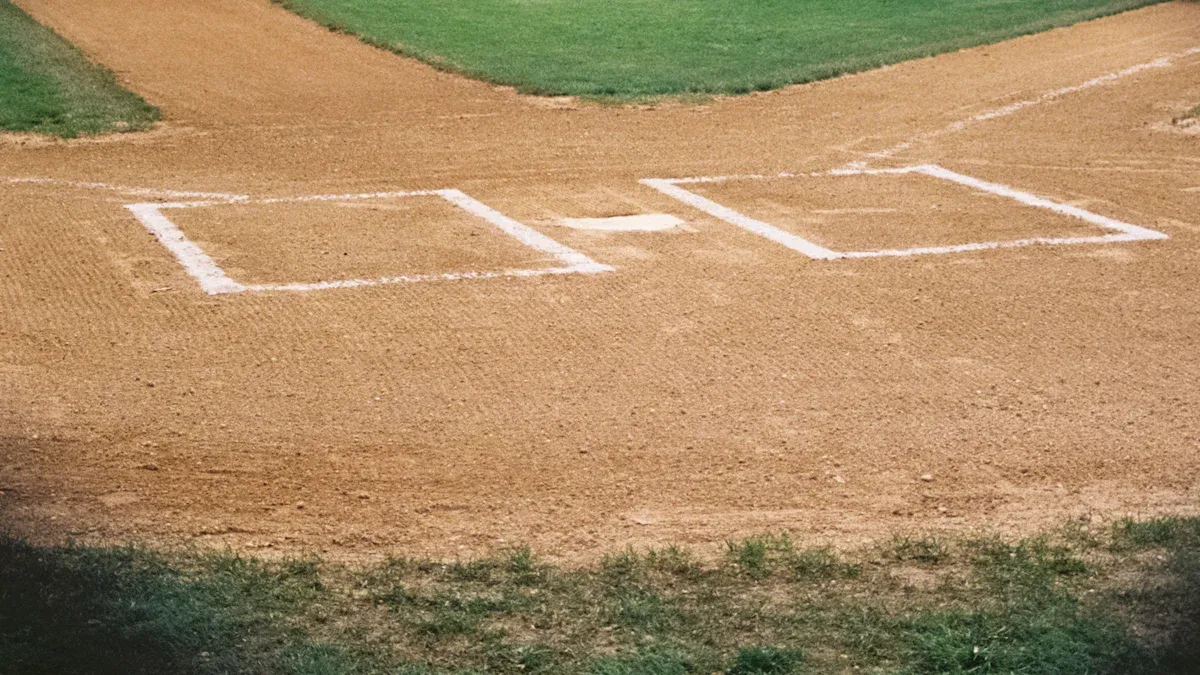
You start the diamond layout by marking the bases. Accurate placement ensures fair play and safety. Begin at home plate, which is a five-sided slab of rubber measuring 17 inches across. Place it so the pointed end faces the field. Use a tape measure and string to mark straight lines for the base paths. First, second, and third bases are white canvas bags, each 15 inches square. Secure them to the ground so they do not shift during play.
To mark the bases, follow these steps:
Tip: Double-check your measurements before securing the bases. Small errors can affect the entire field layout.
Precise measurements create a professional look and ensure the game runs smoothly. Use a long tape measure and chalk to mark the lines. The pitcher’s plate is a rectangular slab of rubber, 24 inches by 6 inches. Set it 60 feet, 6 inches from the back point of home plate. Mark the pitching mound at the correct distance and height. This step prevents common mistakes that can impact gameplay.
Here are the official measurements you should follow:
A local high school team used a measuring wheel and chalk to lay out their diamond. They checked each distance twice and marked the lines with a Lawn Mower for extra visibility. Their attention to detail resulted in a field that met league standards and impressed visiting teams.
Symmetry gives your baseball diamond a professional appearance. You want each base path to form a perfect square. Use string and stakes to keep lines straight. Check the angles at each base with a carpenter’s square. Walk the perimeter and look for any uneven spots.
Many field managers make mistakes during layout. The table below shows common errors and how to avoid them:
| Mistake | Explanation |
|---|---|
| Improperly placing second base | This is a frequent error that can lead to gameplay issues. |
| Miscalculating pitcher’s mound height | This mistake can affect the performance of pitchers and the overall game experience. |
Note: Take your time during this step. Rushing can lead to misaligned bases and uneven play.
A youth league in Texas used stakes, string, and a tape measure to check symmetry. They adjusted the layout several times before securing the bases. Their careful approach resulted in a diamond that looked balanced from every angle.
By following these steps, you create a field that meets official standards and provides a safe, enjoyable experience for players.
You can create a professional look on your baseball field by mastering striping techniques with your Lawn Mower. Start by adjusting the cutting height. Set the blades so you do not remove more than one-third of the grass blade at a time. This keeps the turf healthy and prevents stress. Mow two to three times per week to maintain the right height and encourage dense growth.
Follow these steps for effective striping:
A local youth coach used these steps to transform a dull outfield into a vibrant, striped surface. The team noticed fewer bare spots and a more even playing field after just a few weeks.
Tip: Mow when the grass is dry. Wet grass bends instead of cutting cleanly, which can blur your stripes.
Clean edges make your baseball diamond stand out. Use a string trimmer or edging tool to define the lines around the infield, base paths, and warning track. Walk slowly and keep a steady hand to avoid uneven cuts. Trim grass that grows over the edges of the dirt or base lines. This step gives your field a sharp, finished look.
You can edge once a week or after every mowing session. Consistent edging prevents grass from creeping into the infield and keeps the lines visible. A youth league in Ohio edged their field every Friday before games. Players and parents commented on the professional appearance and improved playability.
Note: Always wear eye protection when using trimmers or edgers.
Overlapping your mowing passes ensures even coverage and a uniform cut. When you mow, overlap each pass by about one-third of the mower’s width. This technique prevents missed strips and helps the grass recover evenly.
The table below explains the benefits of overlapping passes:
| Benefit | Explanation |
|---|---|
| Even grass recovery | Overlapping mowing ensures that grass recovers uniformly, which is crucial for maintaining turf health. |
| Consistent root strength | Proper mowing techniques help maintain strong roots across the field, contributing to overall turf resilience. |
| Enhanced appearance | Alternating mowing directions improves the visual appeal of the field, making it look well-maintained and professional. |
A high school groundskeeper shared that overlapping passes reduced patchy spots and made the field look more consistent. You can see similar results by following this method each time you mow.
For more field care tips, check out resources from the Sports Field Management Association or connect with groundskeepers on Instagram.
You can create crisp stripes on your baseball field using a Lawn Mower and a roller. Begin by mowing a channel around the edge of the field. This perimeter helps you start each pass on the correct side and keeps your lines straight. Next, mow in parallel lines across the field. Make two or three runs in the same direction before switching to the opposite direction. This technique bends the grass blades, causing light to reflect differently and forming visible stripes.
Follow these steps for clear stripes:
Rolling or brushing the grass after mowing can intensify the stripes. The roller bends the grass blades further, making the light and dark stripes more pronounced. You can see examples of professional striping patterns on Instagram and kissself.com.
Tip: Mow when the grass is dry and healthy. Wet or stressed grass will not hold patterns as well.
Checkerboard patterns add a major league look to your field. You achieve this effect by mowing and rolling in two directions. Start by cutting the outside perimeter of the field. Then, mow or roll in parallel diagonal lines from one corner to the opposite corner. After finishing the first set of lines, crisscross over them by mowing or rolling in parallel diagonal lines at a right angle to the first set.
Here is a step-by-step guide:
The checkerboard pattern stands out during games and impresses spectators. You can find more inspiration and field pattern ideas on Twitter.
A DIY roller can help you achieve professional patterns without expensive equipment. Use a heavy-duty PVC pipe filled with sand or water, as described earlier in this blog. Attach a sturdy handle or rope so you can pull the roller behind your Lawn Mower or by hand.
Here are some tips for using your DIY roller:
If you notice uneven stripes or faded patterns, check the field for debris or uneven ground. Clear trash and inspect for surface tears before rolling. Change your mowing and rolling direction regularly to prevent turf wear and encourage healthy grass recovery.
Note: Consistent pattern creation improves turf health and keeps your field looking professional. Schedule monthly grooming sessions and educate players about field-safe practices.
A local youth baseball league tested three pattern techniques over one season. The table below shows their results:
| Pattern Technique | Turf Wear Rate | Recovery Time | Visual Impact | Maintenance Required |
|---|---|---|---|---|
| Straight Stripes | Low | Fast | High | Weekly mowing/rolling |
| Checkerboard | Moderate | Moderate | Very High | Bi-weekly mowing/rolling |
| Single Direction | High | Slow | Medium | Weekly mowing only |
The league found that alternating mowing patterns and using a roller reduced turf wear and improved recovery rates. Checkerboard patterns required more maintenance but delivered the best visual impact. You can view their field transformation on YouTube.
For more DIY roller ideas and troubleshooting tips, visit kissself.com and join groundskeeping groups on social media.
Maintaining consistent patterns on your baseball field takes practice and attention to detail. You want your stripes and checkerboards to look sharp every time you mow. Consistency not only improves the field’s appearance but also helps the turf stay healthy and resilient.
Start by setting a regular mowing schedule. Mow at the same time of day each week. Early morning or late afternoon works best because the grass stands upright and the sun is less intense. Use the same Lawn Mower settings for each session. Keep the blade height and roller weight unchanged unless you need to adjust for weather or turf growth.
You should always follow the same mowing direction for each pattern. For stripes, alternate directions every session to prevent soil compaction and turf wear. For checkerboards, repeat the same diagonal passes each time. Mark your starting points with stakes or cones to help you line up each pass accurately.
Tip: Take photos of your field after each mowing. Compare them over time to spot any fading or unevenness in your patterns.
Troubleshooting is part of keeping your patterns consistent. If you notice faded stripes, check your roller’s weight and the health of your grass. Dry or stressed turf will not hold patterns well. Water and fertilize regularly to keep the grass lush. If your lines start to curve or overlap, use a string line or chalk to guide your passes. Walk the field before each mow to clear debris that could disrupt your pattern.
Here is a quick reference table for troubleshooting common pattern issues:
| Issue | Likely Cause | Solution |
|---|---|---|
| Faded stripes | Roller too light, dry turf | Add weight, water and fertilize grass |
| Uneven lines | Inconsistent mowing speed | Slow down, use guides for straight passes |
| Pattern drift | Missed starting points | Mark start/end with stakes or cones |
| Patchy appearance | Missed overlap, dull blade | Overlap passes, sharpen mower blade |
You can learn from other field managers who have mastered pattern consistency. A youth baseball league in Georgia assigned two volunteers to mow and roll the field every Thursday. They used cones to mark their starting lines and took turns with the roller. After one month, their field showed crisp, even stripes that lasted through the weekend games. Players and coaches noticed the improved look and smoother play.
Consistent mowing and rolling routines help you achieve professional results. Practice, observe, and adjust your technique as needed. Over time, you will develop a system that keeps your baseball diamond looking its best.
For more tips on field pattern maintenance, visit kissself.com or join discussions on Instagram.

You keep your baseball field healthy and visually appealing by following a consistent mowing schedule. Kentucky bluegrass fields need mowing at least twice a week during spring and fall. In summer, if you do not irrigate, mowing once every ten days may be enough. Regular mowing encourages dense turf and prevents weeds from taking over. You should also edge the field periodically. Use a mechanical edger for the main lines, then follow up with a hand loop edger for precision. This routine keeps your field sharp and ready for play.
Sample Weekly Maintenance Schedule
| Task | Spring/Fall Frequency | Summer Frequency |
|---|---|---|
| Mowing | 2x per week | 1x every 10 days |
| Edging | 1x per week | 1x per week |
| Watering | 1–2x per week | 2x per week |
| Fertilizing | 1x per season | As needed |
Tip: Mow early in the morning or late afternoon to avoid heat stress on the turf.
You maintain strong turf by watering and fertilizing on a regular schedule. Aim to provide 1 to 2 inches of water each week during the growing season. Water deeply and infrequently, ideally once or twice a week. Sandy soils may require more frequent watering. Early morning is the best time to water, allowing the grass to dry before use and reducing disease risk.
Fertilize in the fall to promote deep root growth. Use a slow-release fertilizer and monitor soil pH, keeping it between 6.0 and 7.0. This range supports nutrient uptake and healthy turf. Conduct soil tests before fertilizing to determine the right product and application rate.
Note: Consistent watering and fertilizing routines help your field recover from heavy use and weather changes.
High-traffic areas on your baseball field need special attention. You can repair worn turf using deep core aeration. This technique removes soil plugs, reduces compaction, and improves root growth. After aeration, overseed with grass varieties suited to your climate. Overseeding fills in bare spots and strengthens the turf for the next season.
Strategic topdressing helps level the surface and enhances soil structure. Apply a mix of sand and organic material to nurture new seedlings and create a smooth playing area. Focus on base paths, pitcher’s mound, and outfield arcs, where wear is most common.
Case Study:
A youth baseball league in Illinois followed this maintenance plan for their field. Volunteers mowed twice a week in spring, watered early mornings, and fertilized in the fall. They aerated and overseeded high-traffic zones after the season. The field showed fewer bare spots and better turf density by the next spring.
For more turf care tips, visit kissself.com or explore resources from the Sports Field Management Association and Instagram.
You need to adjust your baseball field maintenance routine as the seasons change. Each season brings unique challenges and opportunities for turf health. By planning ahead, you keep your diamond safe and attractive year-round.
Spring
You start the season by inspecting the field for winter damage. Walk the entire area and look for bare spots, compacted soil, or debris. Aerate the turf to relieve compaction and encourage root growth. Overseed thin areas with grass suited to your climate. Apply a balanced fertilizer to jumpstart growth. Water deeply to help new seedlings establish strong roots.
Summer
You focus on mowing and watering. Raise the mower blade to protect grass from heat stress. Mow early in the morning or late afternoon to avoid scorching the turf. Water the field once or twice a week, providing one to two inches each time. Watch for signs of drought, such as wilting or browning. Spot-treat weeds before they spread. Inspect the irrigation system for leaks or clogged heads.
Fall
You prepare the field for colder weather. Lower the mowing height slightly to reduce disease risk. Aerate the soil again to improve drainage. Apply a slow-release fertilizer to support root development. Remove leaves and debris regularly. Overseed worn areas to ensure a thick stand next spring. Topdress with sand or compost to level the surface and enrich the soil.
Winter
You protect the field from harsh conditions. Limit foot traffic to prevent compaction and turf damage. Remove snow promptly if possible, especially from high-traffic zones. Store equipment in a dry, secure location. Inspect fences, dugouts, and bases for damage. Plan repairs and order supplies for spring.
Tip: Keep a seasonal maintenance calendar. Record tasks, weather conditions, and turf health. This helps you track progress and spot patterns over time.
Seasonal Maintenance Table
| Season | Key Tasks | Turf Focus | Common Issues |
|---|---|---|---|
| Spring | Aerate, overseed, fertilize | Recovery, growth | Compaction, bare spots |
| Summer | Mow, water, weed control | Stress prevention | Drought, weeds |
| Fall | Aerate, fertilize, overseed, clean | Root strength | Disease, leaf buildup |
| Winter | Limit traffic, inspect, plan | Protection | Snow, equipment wear |
Case Study:
A youth baseball league in Michigan followed a seasonal care plan for their field. In spring, volunteers aerated and overseeded. During summer, they raised the mower height and watered deeply. In fall, they applied fertilizer and removed leaves weekly. Over winter, they limited access and repaired equipment. By the next season, the field showed fewer bare spots and stronger turf, leading to safer play and fewer cancellations.
You can find more seasonal care tips and field management advice at kissself.com or connect with groundskeepers on Instagram.
You often notice uneven ground after heavy use or poor maintenance. Uneven surfaces can cause injuries and disrupt play. You need to address these issues before they become major problems. Start by choosing the right infield mix. Avoid random dirt. Use a blend with specific ratios of sand, silt, and clay that matches your climate and field usage. Scarify compacted areas, especially around bases and the pitcher’s mound. This process breaks up hard soil and prepares the surface for leveling.
Apply new material to low spots in thin layers. Thick applications can create new irregularities. Use leveling rakes to move soil from high to low areas. Finish with a drag mat, pulling it slowly in overlapping paths. Pay close attention to transitions between the infield and outfield grass. Create a smooth slope to prevent tripping hazards. Regularly drag and hand rake high-traffic zones to keep minor issues from growing. At the end of each season, schedule a thorough leveling session. For severe problems, consider laser grading to restore a perfectly flat surface.
Tip: Consistent weekly maintenance prevents uneven ground from developing. Document trouble spots and address them before games.
Weeds and pests threaten the health and appearance of your baseball field. You need an integrated approach to control them. Healthy turf resists weeds and pests better than neglected grass. Maintain proper mowing and fertilization to reduce infestations of white clover and dandelion. Aggressive overseeding fills bare spots and crowds out weeds, especially if you avoid pesticides.
You can use organic methods like corn gluten meal as a pre-emergent herbicide. Apply it correctly to reduce crabgrass germination. Scout for insects regularly. Frequent monitoring helps you adjust cultural practices and prevent damage. Select endophyte-enhanced turfgrass cultivars to deter surface-feeding insects.
| Strategy | Description | Effectiveness |
|---|---|---|
| Proper Mowing & Fertilization | Maintain healthy turfgrass stand | Reduces white clover and dandelion infestations |
| Aggressive Overseeding | Fill bare spots, crowd out weeds | Most effective pesticide-free method |
| Corn Gluten Meal | Organic pre-emergent herbicide | Reduces crabgrass germination |
| Scouting for Insects | Monitor insect presence | Adjust practices to mitigate damage |
| Endophyte-Enhanced Turfgrass | Select improved cultivars | Deters surface-feeding insects |
Note: Record weed and pest outbreaks in your maintenance log. Adjust your strategy each season for best results.
Equipment problems can halt your field maintenance routine. You need to prevent breakdowns and respond quickly when issues arise. Start with daily care tasks. Remove debris from machines and check moisture levels in the soil. Weekly deep maintenance helps you spot developing problems. Inspect belts, blades, and lubrication points. Clean equipment after each use to extend its life.
When you face a breakdown, evaluate repair costs against replacement benefits. Consider parts, labor, and downtime. Check the remaining life of your equipment before deciding. Warranty coverage on new machines can lower long-term costs. Simple repairs, such as belt replacement or lubrication, can be handled by your staff. For complex electrical issues, call a professional to ensure safety.
Grade and level the field regularly to prevent uneven surfaces that can damage equipment. Rebuild the mound and home plate areas to maintain integrity. Test irrigation systems before peak seasons to avoid turf damage.
Tip: Keep a maintenance checklist for each piece of equipment. Schedule seasonal inspections and document repairs to avoid unexpected failures.
You can find more troubleshooting advice and case studies at kissself.com or connect with field managers on social media.
Weather changes can challenge your baseball field maintenance routine. You need to adjust your approach for rain, drought, heat, and cold. Each weather pattern affects turf health, soil structure, and playability. By learning to adapt, you keep your field safe and attractive all season.
1. Managing Heavy Rain
After heavy rain, you often see puddles and soft spots on the field. Start by inspecting the surface for standing water. Use a squeegee or a wide push broom to move water off the infield. For larger puddles, spread drying agents like calcined clay to absorb moisture. Avoid walking or driving equipment on wet turf. This prevents soil compaction and turf damage.
Tip: Aerate the field in early spring and fall. Aeration improves drainage and helps the soil recover from heavy rainfall.
2. Coping with Drought and Heat
During hot, dry spells, grass can wilt and turn brown. Water deeply but less often. Aim for one to two inches of water per week. Water early in the morning to reduce evaporation. Raise your mower blade to leave grass taller. Taller grass shades the soil and conserves moisture. Avoid mowing during the hottest part of the day.
A youth league in Arizona faced a severe drought one summer. Volunteers adjusted their watering schedule to early mornings and raised the mowing height. They also mulched around the edges to retain soil moisture. The field stayed green and playable, even as nearby parks turned brown.
3. Preparing for Cold and Frost
Cold snaps and frost can stress turf. Before the first frost, mow the grass slightly lower than usual. Remove leaves and debris to prevent mold growth. Limit field use when the ground is frozen. Walking or playing on frozen turf can break grass blades and cause long-term damage.
4. Responding to Sudden Weather Events
Storms and high winds can scatter debris and damage fences. After a storm, walk the field and remove branches, trash, or loose equipment. Check for erosion along base paths and repair any washed-out areas. Inspect fences and dugouts for safety.
Weather Adaptation Checklist
| Weather Event | Key Actions | Field Focus |
|---|---|---|
| Heavy Rain | Remove water, avoid compaction, aerate | Drainage, soil health |
| Drought/Heat | Water deeply, mow high, mulch edges | Moisture retention |
| Cold/Frost | Lower mow height, clear debris, limit use | Turf protection |
| Storms/Wind | Remove debris, inspect structures, repair | Safety, playability |
Note: Keep a weather log for your field. Record rainfall, temperature, and maintenance actions. This helps you spot patterns and plan better for future seasons.
You can find more weather adaptation tips and real-world examples from field managers on Instagram and kissself.com. By staying flexible and proactive, you protect your baseball diamond from weather extremes and keep it game-ready.
You have learned how to turn an overgrown field into a professional diamond. Regular maintenance improves field quality and player satisfaction, as shown below:
| Improvement Type | Description |
|---|---|
| Field Quality | Inspections and upkeep prevent issues, keeping conditions safe and playable. |
| Player Satisfaction | Well-maintained fields create positive experiences for everyone. |
A visually appealing field attracts fans and boosts community pride. You support local sports programs and create memorable events. Share your results with others and keep refining your techniques. Your dedication makes your baseball field a true community hub. 🏟️
You should mow two to three times per week during the growing season. This schedule keeps the turf healthy and helps you maintain sharp patterns. Adjust mowing frequency based on grass growth and weather conditions.
Use a long tape measure and string to mark straight lines. Place stakes at each base and stretch the string tightly. Double-check distances before securing bases. This method ensures symmetry and meets league standards.
Aerate the area, overseed with the right grass type, and topdress with sand or compost. Water deeply after seeding. A youth league in Illinois saw turf recovery within three weeks using this approach.
Yes! Build a DIY roller using heavy-duty PVC pipe filled with sand or water. Attach a sturdy handle. Pull the roller behind your mower or by hand. Many youth leagues achieve crisp stripes using homemade rollers.
Maintain dense turf by mowing and fertilizing regularly. Overseed bare spots to crowd out weeds. Use organic pre-emergent products like corn gluten meal. Scout for insects weekly. Healthy grass resists most common pests.
Remove standing water with a squeegee or push broom. Spread drying agents like calcined clay on wet spots. Avoid using equipment on soft turf. Aerate in spring and fall to improve drainage and prevent future puddles.
Faded patterns often result from light rollers or stressed grass. Add weight to your roller and water the turf regularly. Mow when the grass is dry and healthy. Take photos to track pattern consistency over time.
Walk the field to inspect for debris, holes, or uneven ground. Check base placement and mound height. Test equipment for proper function. Document any issues and address them before games to ensure player safety.






-1.png)