Welcome to Shandong Qilu Industrial Co., Ltd

 English
 Arabic
 Bulgarian
 Bengali
 Czech
Czech
 Danish
 German
 Greek
Greek
 Spanish
 Finnish
 French
 Hindi
Hindi
 Croatian
 Hungarian
 Indonesian
 Italian
 Japanese
 Korean
 Lithuanian
 Dutch
Dutch
 Norwegian
 Polish
 Portuguese
 Romanian
 Russian
 Slovak
 Slovenian
 Swedish
 Thai
Thai
 Turkish
 Ukrainian
 Vietnamese
 Tagalog
 Malay
Malay
 Estonian
 Catalan
 Latvian
 Urdu
Urdu
 Serbian
 Persian
 Swahili
 Albanian
 Armenian
 Icelandic
 Bosnian
 Luxembourgish
 Afrikaans
English Arabic
Bulgarian
Bengali
Czech
Danish
German
Greek
Spanish
Finnish
French
Hindi
Croatian
Hungarian
Indonesian
Italian
Japanese
Korean
Lithuanian
Dutch
Norwegian
Polish
Portuguese
Romanian
Russian
Slovak
Slovenian
Swedish
Thai
Turkish
Ukrainian
Vietnamese
Tagalog
Malay
Estonian
Catalan
Latvian
Urdu
Serbian
Persian
Swahili
Albanian
Armenian
Icelandic
Bosnian
Luxembourgish
Afrikaans
Afrikaans
English Arabic
Bulgarian
Bengali
Czech
Danish
German
Greek
Spanish
Finnish
French
Hindi
Croatian
Hungarian
Indonesian
Italian
Japanese
Korean
Lithuanian
Dutch
Norwegian
Polish
Portuguese
Romanian
Russian
Slovak
Slovenian
Swedish
Thai
Turkish
Ukrainian
Vietnamese
Tagalog
Malay
Estonian
Catalan
Latvian
Urdu
Serbian
Persian
Swahili
Albanian
Armenian
Icelandic
Bosnian
Luxembourgish
Afrikaans

Efficient Land Clearing and Preparation with a Powerful Tractor
Imagine you approach a dense, overgrown field that would take weeks to clear by hand. You choose a powerful tractor with a mulcher attachment. You clear several acres in just one or two days, transforming tangled brush and small trees into manageable mulch. This method delivers efficient land clearing, saving significant time and labor. Matching your tractor’s size and implements to your land type increases speed and improves results. You gain a faster, safer, and more productive workflow.
Key Takeaways
- Choose the right tractor size and attachments based on your land’s size and terrain for optimal efficiency.
- Compact tractors are ideal for small properties, while utility tractors handle larger areas and heavy-duty tasks.
- Perform a thorough site assessment to identify hazards and plan your workflow before starting any land clearing project.
- Use overlapping passes with a brush hog to ensure even vegetation removal and avoid missed spots.
- Implement erosion control measures like mulching and silt fencing to protect soil and local ecosystems after clearing.
- Practice selective clearing to preserve valuable trees and maintain biodiversity in your land management efforts.
- Regularly maintain your equipment to ensure safety and efficiency, preventing mechanical failures during operation.
- Plan access routes for utilities and vehicles early in the project to streamline workflow and avoid costly adjustments.
Choosing Tractors and Attachments
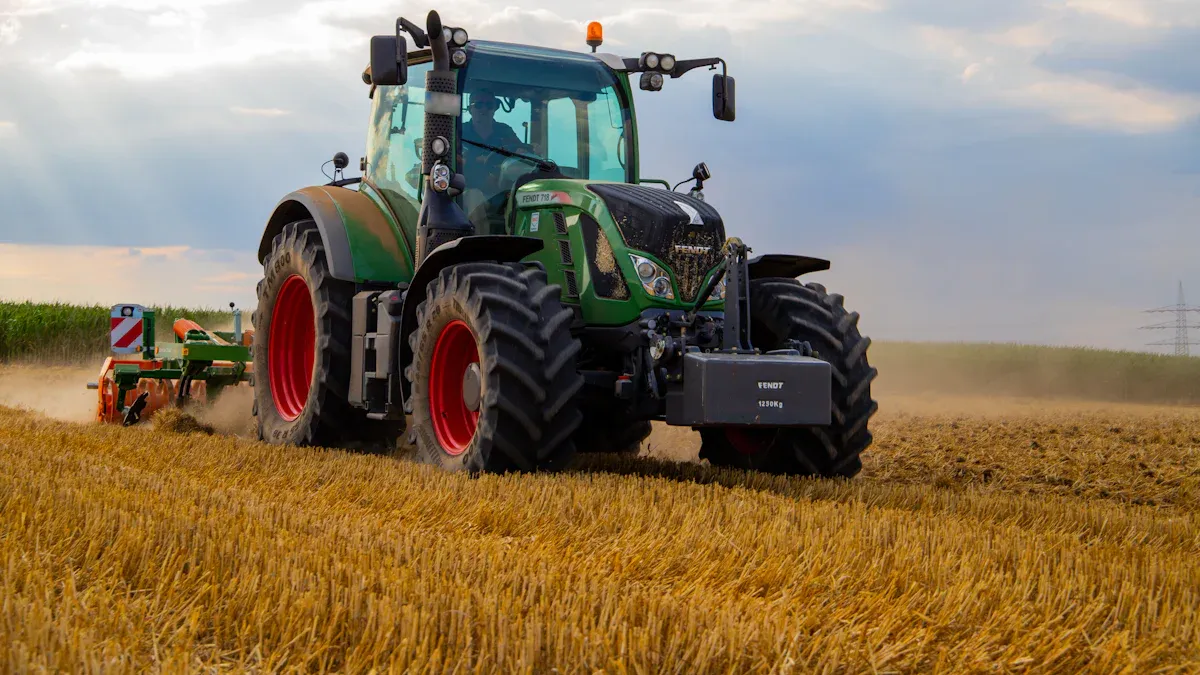
Selecting the right tractor and attachments is the foundation of efficient land clearing. You must consider your property size, terrain, and the specific tasks you plan to tackle. The right combination of horsepower, maneuverability, and implements will maximize productivity and minimize downtime.
Tractor Power and Features
Compact vs. High-HP Models
You need to match tractor size and horsepower to your land and workload. Compact tractors, with horsepower ranging from 20 to 60, suit small to medium properties and lighter tasks. Utility tractors, with horsepower from 50 to 150, handle larger properties and heavy-duty work. Sub-compact tractors, typically 15–25 horsepower, are ideal for properties under five acres and light maintenance.
Tip: Always assess your land size and the density of vegetation before choosing a tractor. Using a tractor with insufficient horsepower can lead to equipment damage and safety risks. Overestimating horsepower may increase fuel costs and maintenance.
Maneuverability and Traction
Tractor maneuverability is crucial for navigating tight spaces, slopes, and uneven terrain. Compact models offer better agility for smaller plots and intricate landscaping. Utility tractors provide superior traction and stability on rough or hilly ground. Modern tractors often feature advanced safety systems, such as operator protection and remote controls, which enhance operational efficiency and reduce direct exposure to hazards.
- Enhanced safety features allow you to control machinery from a protected location.
- Remote-controlled systems improve workflow precision and speed.
- These advancements can reduce labor requirements and fuel consumption.
Essential Implements
Choosing the right attachments is key to efficient land clearing. Each implement serves a specific purpose, and using them correctly will save you time and effort.
Brush Hog and Rotary Cutter
Brush hogs and rotary cutters excel at clearing grass, light brush, and saplings. They attach easily to compact tractors and quickly cover open areas. For dense vegetation, you may need a more robust solution.
| Feature | Brush Cutter | Mulcher |
|---|---|---|
| Cutting Capacity | Best for grass, light brush, and saplings | Handles thick undergrowth and trees |
| Finish Quality | Minimal to moderate finish, leaves debris | Clean finish with mulch for erosion control |
| Speed and Efficiency | Quickly clears smaller areas | Slower but effective for dense growth |
| Equipment Compatibility | Compatible with compact tractors | Requires heavier equipment |
| Cost | Lower initial cost | Higher cost for heavy-duty, long-term use |
Grapple and Loader
Grapple attachments and loaders help you move logs, stumps, rocks, and debris efficiently. Different grapple types offer specialized functions:
- Root Grapples: Sift dirt while clearing, leaving the land cleaner.
- Grapple Rakes: Gather and lift debris, ideal for final cleanup.
- Solid Bottom Grapple Buckets: Capture fine materials for complete site cleanup.
- Stump Grapples: Remove large stumps and embedded roots with less effort.
- Log Jaw Grapples: Secure and transport large timber safely.
Forestry Mulcher
Forestry mulchers break down thick vegetation and small trees into mulch, reducing the need for debris hauling. Mulching improves soil quality and preserves organic material, which benefits future land use. This technique minimizes soil disturbance and promotes ecosystem health.
Note: Mulching techniques reduce the need for burning or hauling debris, preserving land fertility and supporting sustainable clearing practices.
Matching Equipment to Land Size
You must match your tractor and attachments to your property’s acreage and terrain. Consider these guidelines:
- Sub-compact tractors (15–25 HP) work best for 1–5 acres and light tasks.
- Compact tractors (25–50 HP) suit 5–15 acres and general landscaping.
- Utility tractors (50–150 HP) are designed for 15+ acres and heavy-duty clearing.
When you assess your land, consider both size and terrain type. Flat land allows for easier maneuvering, while hilly or rugged terrain requires more power and traction. Matching horsepower to your workload maximizes fuel efficiency, operational safety, and equipment longevity.
Quick Reference:
- Land Size: Determine acreage to select the right tractor.
- Terrain Type: Assess flat, hilly, or rugged conditions for necessary power and traction.
Efficient land clearing depends on your ability to choose the right tractor and attachments for your unique property. By evaluating your needs and understanding the capabilities of each implement, you set yourself up for a productive and safe land clearing project.
Efficient Land Clearing Steps
Site Assessment
Surveying and Planning
You begin every land clearing project with a thorough site assessment. This process helps you understand the terrain, identify obstacles, and plan your workflow for maximum efficiency. Follow these steps for a comprehensive survey:
- Walk the entire property to observe the terrain. Look for slopes, wet areas, and large rocks.
- For large projects, consider hiring a professional surveyor. Surveyors use precise tools to measure elevation and boundaries.
- On smaller plots, use a DIY level to check for flatness and uneven spots.
- Inspect the area for underground utilities, such as water lines or electrical cables. Mark these locations to prevent accidental damage.
Tip: Document your findings with photos or notes. This record helps you track progress and communicate with your team.
A well-executed site assessment sets the foundation for efficient land clearing. You avoid surprises and reduce the risk of equipment damage.
Identifying Hazards
You must identify and address hazards before operating heavy equipment. Common hazards include:
- People or pets in the work area
- Tripping hazards like rocks, stumps, and uneven ground
- Wildlife, especially in forested or rural locations
- Overhead power lines and unstable ground
- Slopes that may require stabilization to prevent erosion
You clear the area of bystanders before felling trees. You stay alert for wildlife and use proper application methods for herbicides or pesticides. You stabilize slopes with silt fences or retaining walls to prevent soil erosion.
Safety Alert: Always plan the fall direction of trees. Make sure the area is clear of people and equipment before cutting.
Clearing Vegetation
Overlapping Passes with Brush Hog
You use a brush hog or rotary cutter to clear grass, weeds, and light brush. For best results, overlap each pass by 6 to 12 inches. This technique ensures you cut all vegetation evenly and avoid missed strips.
Case Example:
You start at one edge of the field. You set your cutting height and move in straight lines, overlapping each pass. You finish the area with a uniform cut, ready for the next stage.
| Step | Action | Result |
|---|---|---|
| 1. Start at edge | Set cutting height, begin first pass | Clean initial strip |
| 2. Overlap passes | Move over by 6–12 inches each time | No missed vegetation |
| 3. Adjust speed | Slow down in dense areas | Consistent cut, less strain |
| 4. Inspect progress | Check for missed spots | Complete coverage |
For more on brush hog techniques, visit this university extension guide.
Using Forestry Mulchers
Forestry mulchers handle dense undergrowth and small trees. You drive slowly through thick vegetation, allowing the mulcher to break down material into fine mulch. This process improves soil quality and reduces the need for burning or hauling debris.
Case Example:
You encounter a patch of saplings and brambles. You engage the mulcher and proceed at a steady pace. The machine shreds the material, leaving a layer of mulch that helps control erosion.
Note: Mulching supports sustainable land management and prepares the soil for future use.
Removing Trees and Debris
Grapple and Loader Techniques
You use a grapple or front-end loader to remove logs, branches, and large debris. Start by clearing smaller items like rocks and brush. Then, use a chainsaw to fell unwanted trees. Attach the grapple to your tractor and haul away the timber.
- Remove small debris first to create a safe workspace.
- Use the loader to transport logs and branches to a designated pile.
- For large trees, push them over with the tractor or pull them down with anchor chains.
Case Example:
You clear a wooded area by first removing fallen limbs and rocks. You cut down a dead tree, then use the grapple to lift and move the trunk. You stack debris for later disposal or mulching.
Rock and Stump Removal
You encounter rocks and stumps during most land clearing projects. Use the right equipment for each task:
- Use a backhoe or heavy-duty chain to extract stumps.
- Employ a stump grinder to cut stumps level with the ground.
- Remove large rocks with a loader or grapple.
- Always wear safety gear and avoid unsafe tasks.
Table: Stump Removal Methods
| Stump Size | Recommended Tool | Safety Precaution |
|---|---|---|
| Small (<12 in) | Heavy-duty chain | Check chain attachment points |
| Medium (12–24) | Backhoe or loader | Keep bystanders clear |
| Large (>24 in) | Stump grinder | Wear PPE, follow instructions |
For more information on safe stump removal, see this government resource.
Efficient Land Clearing requires you to follow these steps methodically. You maximize productivity, minimize downtime, and prepare your land for future use.
Land Preparation and Grading
Leveling Terrain
Smoothing with Leveler
You achieve a smooth, even surface by following a systematic approach with your tractor and land leveler. Begin by inspecting the site for uneven areas and checking your equipment for proper function. Attach the land leveler and adjust the blades to match the desired grade. Operate the tractor slowly, monitoring progress to ensure complete coverage. After finishing, inspect the field, clean your equipment, and document any necessary adjustments.
Steps for Leveling Terrain:
- Inspect the site for uneven spots and verify equipment readiness.
- Attach the land leveler and set blade height.
- Operate the tractor at a steady pace, covering the entire area.
- Review the finished surface, clean implements, and note adjustments.
Tip: Consistent speed and overlapping passes help you avoid ridges and dips, resulting in a professional finish.
Case Example:
You prepare a two-acre plot for a future building site. You start by walking the area and marking low spots. After attaching the leveler, you make slow, overlapping passes. You inspect the surface and notice a few remaining dips, which you address with additional passes. The result is a level, compacted base ready for the next phase.
Soil Conditioning
Proper soil conditioning ensures your land is ready for planting or construction. Tractor implements such as rotary tillers, disc harrows, and cultipackers each serve a unique purpose.
| Implement Type | Functionality | Benefits for Soil Conditioning |
|---|---|---|
| Rotary Tiller | Uses rotating blades to break up and aerate the soil. | Creates a fine, loose seedbed, improves soil structure, integrates organic matter, enhances drainage. |
| Disc Harrow | Covers a wider area and digs up multiple rows at once. | Prepares deeper soil, enhances quality and productivity of the land. |
| Cultipacker | Levels and firms up the seedbed, breaks up dirt clods. | Retains moisture, prevents erosion, improves nutrient availability. |
You use rotary tillers to create a fine seedbed and improve soil structure. Disc harrows prepare deeper soil and cover more ground efficiently. Cultipackers firm and level the seedbed, which helps retain moisture and prevent erosion.
For more details on soil conditioning, visit this university extension resource.
Preparing for Planting or Building
Marking Boundaries
Accurate boundary marking is essential for both planting and construction. You engage a licensed land surveyor to define legal boundaries, which helps you avoid disputes and ensures proper layout. Stake and verify all boundary markers before starting earthwork. Conduct a topographic survey to understand site features and drainage, which aids in grading and planning access.
- Hire a surveyor to define boundaries.
- Stake and verify markers before earthwork.
- Use topographic surveys for site planning.
Note: Proper boundary marking prevents costly mistakes and legal issues.
Access Routes
You plan access routes for utilities and roads early in the project. This step avoids expensive adjustments later and ensures smooth workflow. Identify access points for vehicles, equipment, and utility lines. Adjust your grading plan to accommodate these routes and maintain proper drainage.
- Plan access for vehicles and equipment.
- Design utility routes before grading.
- Ensure drainage systems protect access paths.
Case Example:
You prepare a site for a greenhouse. You mark boundaries with survey stakes and plan a gravel road for equipment access. You install drainage ditches along the route to prevent water accumulation. The result is a well-organized site, ready for planting and future expansion.
Thoughtful planning of boundaries and access routes streamlines your project and supports long-term land use.
Safety and Efficiency Tips
Time-Saving Techniques
Strategic Clearing Patterns
You can maximize productivity by planning your clearing patterns before starting work. Begin at one edge of the property and move systematically across the site. This approach prevents missed areas and reduces unnecessary overlap. For large fields, divide the land into manageable sections and clear each one in a logical sequence. You avoid retracing your steps and save fuel.
Tip: Mark your starting point and use visible flags or stakes to guide your passes. This method keeps your workflow organized and minimizes wasted time.
Multi-Tasking with Implements
You increase efficiency by using implements that perform multiple functions. For example, a grapple attachment can clear debris and transport logs in one pass. Pairing a mulching head with a loader allows you to mulch brush and move material without switching equipment. You reduce downtime and complete tasks faster.
| Aspect | Description |
|---|---|
| Working width | A wider mulching head covers more ground per pass, boosting daily productivity. |
| Cutting capacity | High-quality mulching heads handle dense vegetation and trees up to 20 inches in diameter. |
| Rotor and tool configuration | Tailored rotor types and tool shapes improve cutting efficiency and material distribution. |
| Thermal management | Effective heat dissipation maintains performance during continuous use. |
| Depth control | Fine control over working depth ensures consistent mulching results for land preparation. |
| Equipment matching | Proper matching of mulching head with tractor horsepower and hydraulic capacity is critical for efficiency. |
You should select implements that match your tractor’s capabilities. This strategy ensures you work efficiently and avoid equipment strain.
Safety Precautions
Operator Training
You must receive proper training before operating any tractor or attachment. Read the instruction manual and understand all controls. Attend safety workshops or online courses if available. You learn how to respond to emergencies and operate machinery safely.
- Securely fasten your seat belt if the tractor has a rollover protective structure (ROPS).
- Avoid operating near ditches, embankments, and holes.
- Reduce speed when turning, crossing slopes, or moving on rough terrain.
- Watch your surroundings, especially at row ends, on roads, and near trees.
Safety Reminder: Always wear sturdy, closed-toe shoes, long pants, a long-sleeved shirt, safety glasses, and hearing protection.
Equipment Maintenance
Regular equipment maintenance keeps your operation safe and efficient. Inspect your tractor and implements before each use. Inflate tires and set wheel treads wide for stability. Use rollover and fall-on protective structures to prevent injury from overturns or falling debris. Refuel only when the engine is off.
- Regular maintenance prevents mechanical failures and accidents.
- Well-maintained equipment is predictable and easier to control.
- Reliable machinery reduces operator stress and human error.
- Maintenance protects the environment by preventing leaks and reducing emissions.
- Routine checks minimize downtime and keep your project on schedule.
For more safety guidelines, visit OSHA’s Agricultural Safety page.
You protect yourself and your team by following these safety and efficiency tips. Consistent training, strategic planning, and regular maintenance ensure your land clearing project runs smoothly and safely.
Overcoming Challenges
Tough Terrain Solutions
Slopes and Wet Ground
You often face steep slopes and soggy ground during land clearing. These conditions demand careful planning and specialized techniques. Tractors with a compact frame and low center of gravity offer superior stability on slopes. You can add tire chains to improve traction and reduce wheel spin when working on wet or uneven surfaces. Always approach steep terrain gradually, starting with less challenging areas and working your way up.
Tip: Avoid using landscape rakes on rocky slopes or overly wet ground. Rakes can bend or break, and wet soil may clog equipment, increasing wear.
Case Example:
You need to clear a hillside with a 25-degree slope after heavy rain. You select a tractor with a low center of gravity and install tire chains for extra grip. You begin at the base, working in small sections and monitoring soil conditions. You avoid using rakes until the ground dries, preventing equipment damage and ensuring a safer workflow.
Rocky Areas
Rocky terrain presents unique obstacles. You should remove large rocks before starting major clearing tasks. Use a loader or grapple to lift and transport rocks out of the work zone. Avoid forcing equipment through dense rock clusters, which can cause mechanical failures. For areas with scattered stones, adjust your blade angle to minimize impact and make multiple passes for thorough clearing.
| Terrain Challenge | Recommended Solution | Key Precaution |
|---|---|---|
| Steep Slopes | Low center of gravity, tire chains | Work in stages, monitor soil |
| Wet Ground | Wait for drier conditions | Avoid rakes, prevent clogging |
| Rocky Areas | Loader, grapple, blade adjustment | Remove large rocks first |
For more on safe slope and rocky terrain management, visit Penn State Extension: Slope Mowing Safety.
Preventing Equipment Damage
Avoiding Overload
You protect your tractor and implements by choosing machines with powerful engines and sturdy undercarriages. Always match equipment specifications to the demands of your terrain. Work in stages, starting with less steep or dense areas. Remove large rocks and level uneven ground before heavy clearing. Use smaller equipment to clear underbrush first, reducing strain on larger machines.
- Optimize blade angle to minimize wear.
- Make multiple passes for complete vegetation removal.
- Monitor weather forecasts to avoid working in hazardous conditions.
Case Example:
You clear a rocky field with thick brush. You start by removing large rocks with a loader. You use a smaller cutter for underbrush, then switch to a heavy-duty mulcher for dense areas. You adjust the blade angle and work slowly, preventing overload and extending equipment life.
Quick Fixes
You encounter unexpected equipment issues during challenging projects. Regular maintenance and quick troubleshooting keep your operation on track. Inspect your tractor and attachments before each use. If you notice excessive vibration or reduced cutting performance, check for debris buildup or bent blades. Replace damaged parts promptly and lubricate moving components to prevent further wear.
| Issue | Quick Fix | Preventive Measure |
|---|---|---|
| Clogged Equipment | Clean debris, allow drying | Avoid wet ground, regular checks |
| Bent Blades | Replace or repair blades | Adjust blade angle, avoid rocks |
| Reduced Traction | Install tire chains | Monitor soil, use proper tires |
Regular maintenance and careful operation help you minimize downtime and avoid costly repairs. For more maintenance tips, see OSHA Agricultural Safety.
You overcome tough terrain and equipment challenges by applying these strategies. Careful planning, proper equipment selection, and routine maintenance ensure safe, efficient land clearing in any environment.
Environmental Considerations
Soil and Ecosystem Protection
Responsible Debris Disposal
You play a vital role in protecting soil and local ecosystems during land clearing. Responsible debris disposal starts with sorting materials on-site. Compost organic matter such as leaves, branches, and grass clippings to create nutrient-rich amendments for future planting. Chip wood debris to produce mulch or biomass fuel, which helps retain moisture and reduce erosion. Recycle concrete and other non-organic materials whenever possible. By minimizing waste and reusing resources, you support a healthier environment.
Tip: Composting and mulching not only reduce landfill waste but also improve soil structure and fertility for future land use.
Erosion Control
You must act quickly to prevent soil erosion after clearing land. Maintain as much vegetation cover as possible to stabilize the soil. Use cedar mulching to retain topsoil and nutrients. Implement erosion control measures such as silt fencing, terracing, and mulching. These techniques slow water runoff and keep sediment from entering nearby streams or wetlands.
| Erosion Control Method | Purpose | Best Use Case |
|---|---|---|
| Silt Fencing | Trap sediment, slow runoff | Perimeter of cleared areas |
| Mulching | Retain moisture, protect soil | Slopes and exposed soil |
| Terracing | Reduce slope erosion | Steep terrain |
You can further protect the ecosystem by retaining existing vegetation and facilitating wildlife movement during the clearing process. Restoration efforts, such as planting native species, help rebuild habitats and maintain biodiversity.
For more information on erosion control, visit EPA’s Erosion Control Guidelines.

Sustainable Clearing Practices
Preserving Valuable Trees
You enhance sustainability by practicing selective clearing. Begin with a detailed plan that identifies critical habitats, water sources, and valuable trees. Preserve mature trees and buffer zones around sensitive areas to maintain shade, prevent erosion, and support wildlife. Time your clearing activities to avoid peak wildlife seasons, which reduces disturbance to nesting and migration.
- Conduct biodiversity assessments to protect endangered species.
- Use manual methods in sensitive zones to minimize soil disturbance.
- Recycle and reuse cleared materials for restoration projects.
Case Example:
You clear a five-acre plot for agricultural use. Before starting, you survey the land and mark mature oaks and maples for preservation. You install silt fencing around the perimeter and mulch cleared brush to stabilize exposed soil. After clearing, you plant native grasses and shrubs to restore habitat and prevent erosion. Wildlife returns to the area, and the soil remains fertile for future crops.
Sustainable clearing practices balance land usability with ecosystem health. You protect valuable trees, minimize environmental impact, and create a foundation for long-term productivity.
You achieve efficient land clearing by selecting the right tractor, matching implements to your land, and following a step-by-step process. Key machinery includes excavators, bulldozers, and forestry mulchers. Techniques such as Cut and Grind and Hand Clearing maximize results. You protect soil health and promote biodiversity by minimizing disturbance.
Dr. Anya Sharma notes, “Sustainable land management is not merely about efficiency; it’s a holistic approach to creating a healthier ecosystem.”
Consider these next steps:
- Explore educational resources like the Master Tree Farmer mini-series.
- Develop a comprehensive land use plan.
- Consult experts for guidance on future projects.
FAQ
What tractor size works best for small properties?
You should choose a compact tractor with 20–60 horsepower for properties under 15 acres. Compact models offer better maneuverability and efficiency for light clearing tasks. For more guidance, visit Tractor Selection Tips.
How do you safely remove stumps and rocks?
You can use a loader or grapple for rocks and a stump grinder for large stumps. Always wear protective gear and inspect the area for hazards before starting. For safety tips, check OSHA’s guidelines.
Which attachment clears dense brush most efficiently?
A forestry mulcher handles thick brush and small trees with ease. You should match the mulcher to your tractor’s horsepower for optimal results. Mulching also improves soil quality and reduces debris.
How do you prevent soil erosion after clearing land?
You can apply mulch, install silt fencing, and retain some vegetation to stabilize soil. Terracing helps on slopes. These methods protect your land and local waterways. Learn more at EPA Erosion Control.
What safety gear should you wear during land clearing?
You need sturdy boots, gloves, safety glasses, hearing protection, and long sleeves. Always fasten your seat belt if your tractor has rollover protection. Safety gear reduces injury risk and improves comfort.
How do you maintain your tractor for peak performance?
You should inspect tires, check fluid levels, and clean implements before each use. Lubricate moving parts and replace damaged blades promptly. Regular maintenance extends equipment life and boosts efficiency.
Can you clear land in wet or rocky conditions?
You can clear land in wet or rocky areas by using tire chains for traction and removing large rocks first. Wait for drier conditions when possible. Adjust your clearing strategy to protect equipment and ensure safety.
How do you dispose of debris responsibly?
You should compost organic material, chip wood for mulch, and recycle non-organic debris. Responsible disposal supports soil health and reduces landfill waste. For composting tips, visit EPA Composting Basics.