Email: [email protected] Whatsapp: +8618266768780
Email: [email protected] Whatsapp: +8618266768780


You can transform property management with a tractor, making every task more efficient and manageable. Modern tractors deliver significant advantages: you save time, reduce manual labor, and tackle a wider range of duties with one machine. Features like loaders, compact models, and autonomous systems increase precision and safety. Recent industry reports show compact tractors enhance operational capability and lower costs while supporting property equipment efficiency. If you want actionable solutions, you will find practical advice here on how a tractor can streamline your property management.
You can dramatically increase the speed of property management tasks by using a tractor equipped with loaders and attachments. Front-end loaders allow you to lift and move heavy materials quickly, which minimizes manual effort and accelerates daily operations. For example, you can clear debris or transport hay bales in minutes rather than hours. Backhoes make trenching and digging precise and efficient, saving you valuable time compared to manual methods. Rotary cutters help you maintain fields and control overgrown vegetation, ensuring that your property remains productive and visually appealing.
Tip: Attachments like loaders and backhoes transform your tractor into a multi-purpose tool, letting you complete jobs that would otherwise require several workers or machines.
When you use a tractor for property management, you reduce the need for strenuous manual labor. You can handle tasks such as digging, mowing, and hauling with minimal physical strain. This not only improves productivity but also lowers the risk of injury. Tractors with advanced features, including compact models and autonomous technology, further streamline operations. Autonomous tractors operate continuously, allowing you to manage your property even when you are not present. This technology reduces the need for human drivers and enables skilled labor to focus on more complex tasks.
| Benefit | Description |
|---|---|
| Labor Efficiency | Reduces the need for human drivers, allowing skilled labor to focus on more complex tasks. |
| 24/7 Operation | Operates continuously without breaks, crucial for short-season crops and unpredictable climates. |
| Fuel and Input Savings | Consistent pathing minimizes overlap and missed rows, leading to reduced fuel consumption. |
| Enhanced Safety | Fewer human operators reduce exposure to hazardous conditions and lower accident rates. |
| Precision and Repeatability | Ensures consistent performance in planting and application, improving overall accuracy. |
| Better Data Collection | Gathers operational data for improved decision-making and resource management over time. |
You can use a tractor for a wide range of landscaping and mowing tasks. Compact utility tractors excel at accessing tight spaces and handling jobs that larger equipment cannot. You can mow large fields, trim hedges, and maintain lawns efficiently. Attachments such as rotary cutters and finishing mowers allow you to keep your property neat and healthy throughout the year.
Tractors equipped with loaders and specialized attachments make hauling and moving materials straightforward. You can transport soil, mulch, gravel, and other landscaping items with ease. Material handling becomes safer and faster, reducing the time and effort required for each job.
During winter, you can rely on your tractor for snow management. Attachments such as snow blowers and plows allow you to clear driveways, walkways, and parking areas efficiently. Commercial-grade snow blowers maneuver around obstacles without causing damage, which is essential for maintaining property safety and accessibility.
You can reduce maintenance costs by using a tractor with the right attachments. Fuel costs represent a significant portion of tractor running expenses, so strategies like GPS-guided pathing and selecting efficient implements help you save money. Benchmarking fuel use based on area covered rather than price leads to better cost management.
When you invest in a tractor with versatile attachments, you eliminate the need for multiple specialized machines. One tractor can handle digging, mowing, hauling, spraying, seeding, spreading, and snow management. This consolidation lowers your equipment investment and simplifies maintenance.
| Type of Tractor | Cost Range |
|---|---|
| New Tractor | $10,000 – $150,000 |
| Used Tractor | $5,000 – $80,000 |
| Rental (per day) | $100 – $500 |
You can see how a tractor streamlines your property management by reducing manual labor, increasing versatility, and lowering costs. When you choose the right attachments and technology, you maximize efficiency and minimize expenses. How a Tractor Can Streamline Your Property Management depends on your ability to leverage these features for your specific needs. You gain more control over your property, save time, and improve safety, making your investment worthwhile. How a Tractor Can Streamline Your Property Management becomes clear when you experience the benefits firsthand.
You gain significant protection when you operate a modern tractor for property management. Manufacturers design tractors with advanced safety features that minimize the risk of accidents and injuries. Rollover Protective Structures (ROPS) shield you during overturns, which remains one of the most common causes of serious tractor accidents. Seat belts work in tandem with ROPS to keep you secure in the operator’s seat. Improved hitch designs and weight distribution increase stability, especially on uneven terrain. Enhanced visibility and running lights help you stay aware of your surroundings, reducing the chance of collisions or mishaps during low-light conditions.
| Safety Feature | Description |
|---|---|
| Rollover Protective Structures (ROPS) | Prevents deaths and injuries from tractor overturns. |
| Seat Belts | Enhances operator safety during operation. |
| Improved Hitch Designs | Increases stability of tractors. |
| Weight Distribution | Contributes to overall stability and safety. |
| Improved Visibility | Enhances operator awareness of surroundings. |
| Better Hydraulic Designs | Improves control and safety during operation. |
| Improved Brakes | Enhances stopping power and safety. |
| Wider Wheelbases | Provides better stability on uneven terrain. |
| Running Lights | Improves visibility during low-light conditions. |
| Adjustable Seats | Increases comfort and control for the operator. |
You can see how a tractor can streamline your property management by reducing exposure to hazardous conditions. ROPS and seat belts, for example, have been shown to decrease fatalities in tractor overturn accidents by up to 99% when used together. According to recent safety studies, tractors equipped with these features report far fewer serious injuries compared to older models. For more information on tractor safety standards, you can visit OSHA’s Agricultural Safety page or follow discussions on Twitter’s #FarmSafety.
You experience less physical strain when you use a tractor for property management tasks. Manual labor, such as digging, hauling, or mowing, often leads to fatigue and increases the risk of musculoskeletal injuries. Modern tractors feature ergonomic controls and adjustable seats, allowing you to work comfortably for extended periods. Wider wheelbases and improved hydraulic systems make operation smoother and less physically demanding. You avoid repetitive stress injuries and reduce the likelihood of accidents caused by exhaustion.
| Evidence | Description |
|---|---|
| Rollover Protective Structures (ROPS) | ROPS are designed to protect the driver in case of overturning, significantly reducing the risk of fatalities during accidents. |
| Accident Prevention | ROPS do not prevent accidents but minimize the consequences when they occur, enhancing overall safety compared to manual methods. |
You benefit from better safety and comfort, which means you can focus on managing your property efficiently. How a Tractor Can Streamline Your Property Management becomes clear when you consider the reduction in physical strain and the increase in operator protection. You can handle demanding tasks with confidence, knowing that modern safety features support your well-being.
Note: Always inspect your tractor’s safety features before starting any property management task. Regular maintenance and safety checks further reduce risks and ensure optimal performance.
You can automate lawn care with a tractor equipped with advanced features. Autonomous mowing systems and GPS-guided attachments allow you to maintain large lawns with minimal effort. You set the boundaries, and the tractor handles the rest, ensuring consistent results every time. Automation features, including AI-driven controls, enhance efficiency and reduce the need for manual intervention.
| Feature/Benefit | Description |
|---|---|
| Automation Features | AI and automation improve control and efficiency in property management. |
| Versatility | Garden tractors perform tasks such as mowing, tilling, and clearing. |
| Cost Efficiency | Automation reduces labor costs and improves safety for property owners. |
| Maintenance Considerations | Regular maintenance ensures safety and longevity of equipment. |
Tip: Schedule regular maintenance checks to keep your tractor running smoothly and extend its lifespan.
You streamline fence maintenance by using specialized tractor attachments. Post hole diggers and augers automate the process of installing or repairing fences. You save hours compared to manual digging. Automation in agriculture has led to a 70% reduction in labor requirements since the 1950s. This shift allows you to focus on other essential tasks while your tractor handles routine maintenance.
For more insights on automation trends, visit AgFunderNews or follow discussions on Twitter’s #AgTech.
You manage large areas efficiently with GPS-guided tractors. Precision agriculture technology enables site-specific crop management, optimizing resource use and reducing operator fatigue. Auto-steer systems allow you to cover more ground with less effort, increasing productivity and accuracy.
The transition from manual labor to mechanized tractors marked a turning point in agricultural efficiency. You now complete tasks in fewer passes, lowering input costs and boosting productivity. This advancement is crucial for managing extensive properties.
Note: Precision agriculture helps you make data-driven decisions for better resource allocation.
You clear debris quickly using tractor attachments tailored for your acreage size. For properties between 5 and 10 acres, a wider rotary cutter and a loader with grapple handle debris efficiently. For 10 to 20 acres, a heavy-duty rotary cutter and landscape rake are essential for managing larger debris and grading. You mow down overgrowth, remove debris, level surfaces, and prepare land for future use.
For expert advice on managing large areas, explore resources from PrecisionAg Alliance or join conversations on Twitter’s #PrecisionAg.
You maximize time and labor savings by leveraging automation and specialized equipment. These advancements allow you to maintain your property efficiently, reduce manual workload, and achieve professional results.
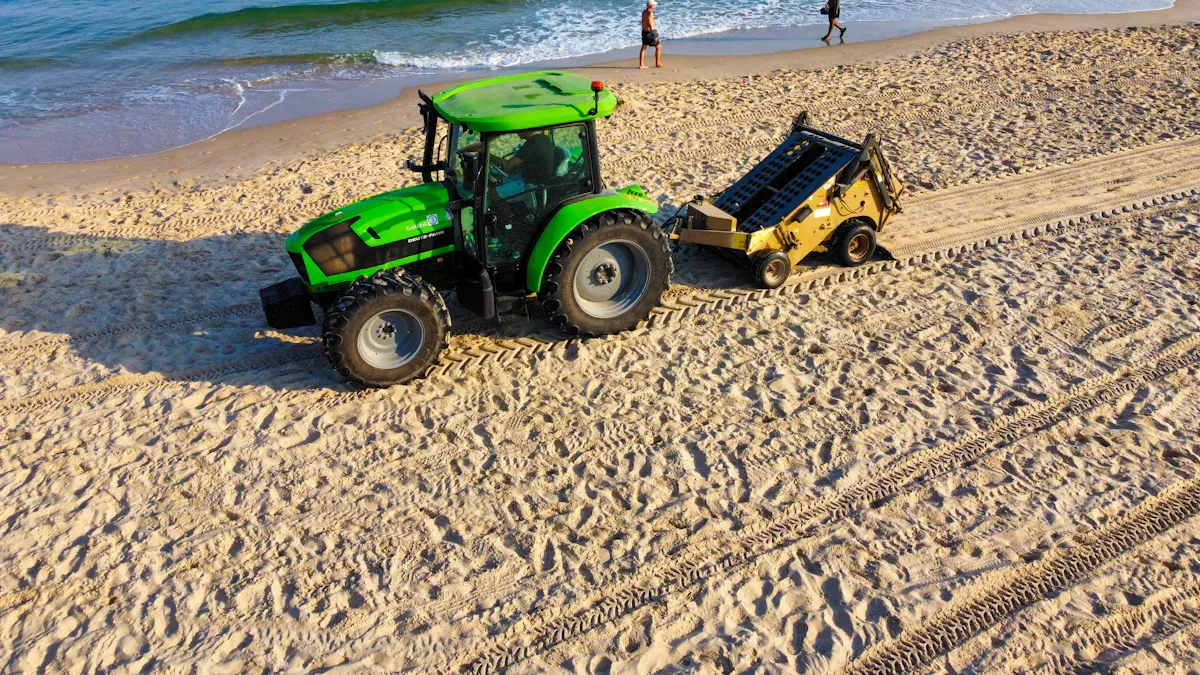
Attachments transform your tractor into a multi-functional powerhouse. You gain the ability to tackle a wide range of property management tasks with efficiency and precision. Loader and backhoe attachments stand out for their adaptability, making them essential for both small and large properties.
You can lift and transport heavy materials with ease using loader and backhoe attachments. These tools excel in environments where space is limited, such as urban or residential properties. You navigate congested areas without difficulty and complete tasks that would otherwise require multiple machines.
| Attachment Type | Key Benefit | Suitable Property Size |
|---|---|---|
| Loader | Lifting, loading, moving | Small to large |
| Backhoe | Digging, trenching | Small to large |
Tip: Compact tractors equipped with loaders and backhoes offer maximum versatility for small properties, while heavy-duty attachments suit larger operations.
You streamline material handling with the right attachments. Loader buckets and grapples make it simple to transport landscaping supplies, clear debris, and manage bulk materials. You boost jobsite productivity by switching between tasks without changing machines.
For more insights on loader and backhoe applications, explore Tractor Attachments Guide or join discussions on Twitter’s #TractorLife.
You adapt quickly to seasonal changes by using specialized attachments. In spring and summer, you prepare soil, clear vegetation, and grade surfaces. Rotary cutters, tillers, and landscape rakes help you maintain healthy lawns and gardens.
| Season | Essential Attachments | Common Tasks |
|---|---|---|
| Spring/Summer | Rotary cutter, tiller | Soil prep, mowing, grading |
| Fall/Winter | Snow blower, blade | Snow removal, leaf clearing |
You maintain property safety and accessibility during colder months. Snow blowers and blades clear driveways and walkways, while leaf vacuums and sweepers handle seasonal debris. You use attachments year-round, which increases your return on investment and keeps your property in top condition.
Note: Utilizing attachments for seasonal adaptability ensures you stay prepared for any property challenge, regardless of the time of year.
For expert advice on seasonal tractor use, visit Land Management Resources or follow updates on Twitter’s #LandCare.
You gain control over your property management expenses by handling routine maintenance tasks yourself. Tractors equipped with user-friendly diagnostics and modular attachments allow you to perform oil changes, filter replacements, and basic repairs without specialized skills. You avoid frequent service calls and reduce downtime. Many property owners report that regular DIY maintenance extends equipment lifespan and lowers annual costs.
Tip: Schedule monthly inspections and keep a maintenance log to track repairs and replacements. This habit helps you anticipate issues before they become costly problems.
You minimize the need for outside contractors when you own a versatile tractor. Tasks such as mowing, grading, snow removal, and debris clearing become manageable with the right attachments. You save money by eliminating recurring service fees and reducing reliance on seasonal labor. The following table compares average annual costs for outsourcing versus in-house tractor management:
| Task | Outsourcing Cost (Annual) | In-House Tractor Cost (Annual) |
|---|---|---|
| Lawn Mowing | $2,000 | $600 |
| Snow Removal | $1,500 | $400 |
| Debris Clearing | $1,200 | $350 |
| Fence Maintenance | $1,000 | $300 |
You see significant savings when you consolidate these tasks with a single machine.
You protect your investment by maintaining your tractor in good condition. Tractors retain value well when you follow recommended service schedules and store equipment properly. When you decide to upgrade or sell, you recover a substantial portion of your initial investment. Well-maintained tractors from reputable manufacturers tend to depreciate slowly, which benefits your long-term financial planning. Understanding the resale market allows you to make informed purchasing decisions and maximize your return.
Note: Research local resale trends and consult online marketplaces to estimate your tractor’s current value. Reliable sources such as TractorData and Farm Equipment Guide provide up-to-date information on equipment pricing.
You depend on your tractor for consistent performance throughout the year. Modern tractors feature robust engineering and advanced safety systems, which reduce breakdowns and extend service intervals. You experience fewer interruptions and avoid costly emergency repairs. Reliability ensures that you complete property management tasks on schedule, regardless of weather or workload.
A case study from a 15-acre property in the Midwest demonstrates cost-effectiveness. The owner invested in a compact tractor with essential attachments and performed regular maintenance. Over five years, the owner reduced outsourcing costs by 60%, maintained high resale value, and reported zero major breakdowns. This approach resulted in substantial savings and improved operational efficiency.
For more insights on tractor reliability and value, explore discussions on Twitter’s #TractorValue and AgWeb’s Equipment Reliability.
You achieve cost-effectiveness by reducing outsourcing, maintaining your tractor, and leveraging its long-term value. These strategies help you manage your property efficiently while maximizing your financial outcomes.
You protect yourself from one of the most serious risks in property management by using tractors equipped with Rollover Protective Structures (ROPS). These structures form a reinforced frame around the operator’s seat, which prevents crushing injuries during a rollover. When you use a seatbelt with ROPS, you achieve nearly 99% effectiveness in preventing injury or death during rollovers. This combination is mandatory in most modern tractors and is especially important when you work on uneven terrain.
Note: Always check that your seatbelt and ROPS are in good condition before starting your tractor.
You experience less fatigue and strain when you operate tractors with ergonomic controls. Manufacturers design these controls to fit your natural movements, which reduces the risk of repetitive stress injuries. Adjustable seats, intuitive levers, and easy-to-reach pedals help you maintain comfort during long hours of operation. Modern compact tractors now include advanced safety systems such as AI-driven collision avoidance and improved stability control. These features monitor your surroundings and adjust tractor behavior to prevent accidents.
| Feature | Benefit |
|---|---|
| Adjustable Seats | Reduces back and joint strain |
| Intuitive Levers | Minimizes hand and wrist fatigue |
| AI-driven Collision Avoidance | Prevents accidental contact with objects |
| Stability Control | Maintains balance on uneven terrain |
Tip: Adjust your seat and controls before each use to ensure maximum comfort and safety.
You reduce the risk of injury by following safe load handling practices. Tractors equipped with loader attachments and stability control systems help you lift and move heavy materials without overexertion. Multi-view cameras enhance your visibility, allowing you to maneuver safely in tight spaces. Proper training ensures you understand how to operate attachments and respond to emergencies.
Always lift loads slowly and check your surroundings before moving materials.
You minimize hazards by establishing safety zones around operating machinery. These zones keep bystanders, especially children, away from moving parts and attachments. Regular maintenance prevents equipment failures that could lead to accidents. Staying alert and wearing proper gear further reduces your risk of injury.
Schedule routine inspections and wear safety gear every time you operate your tractor.
You create a safer environment by using modern safety features and following injury prevention practices. These improvements help you manage your property with confidence and peace of mind.
You can achieve remarkable results on small properties by using tractors for seasonal tasks, construction preparation, and emergency response. Many property owners rent tractors during peak farming seasons to boost productivity. You finish planting and harvesting faster, which increases yield efficiency and reduces downtime. When you prepare construction sites, you clear land and align with project schedules, saving costs and improving flexibility. In emergencies, you deploy tractors quickly for disaster recovery, helping communities recover faster.
| Use Case | Description | Outcomes |
|---|---|---|
| Seasonal Farming Operations | Renting tractors during peak seasons boosts productivity for farmers. | Increased yield efficiency and reduced downtime. |
| Construction Site Preparation | Rental tractors help clear and prepare sites, aligning with project timelines. | Project cost savings and improved scheduling flexibility. |
| Emergency and Disaster Response | Tractors are rented for rapid deployment in disaster recovery efforts. | Quicker community recovery and operational flexibility. |
Note: You can find more property management success stories by exploring Land Management Network or following #PropertySuccess on social media.
You manage large properties more efficiently with tractors equipped for grading, clearing, and pasture maintenance. You grade driveways and pathways to create smooth, even surfaces. You clear brush and debris to keep your property well-maintained. You manage pastures with mowers and rotary cutters, which helps maintain healthy grass and supports livestock.
Tip: Join discussions on #LandCare for practical advice from property owners managing large acreage.
You streamline commercial property management by integrating tractors into landscaping, construction, and municipal operations. You use tractors for grounds maintenance, snow removal, and debris clearing, which improves safety and appearance. You support construction projects by preparing sites and moving materials efficiently. Municipalities rely on tractors for park upkeep, road maintenance, and emergency response, which enhances community resilience.
You increase operational flexibility by renting or owning tractors with specialized attachments. You reduce labor costs and improve scheduling, which leads to higher profitability. You also contribute to sustainability by managing resources more effectively.
Callout: You can discover more commercial property management strategies by visiting Property Management Insider or following #CommercialLandscaping on social media.
You see the real-world impact of tractors across small, large, and commercial properties. You gain efficiency, cost savings, and improved safety, which makes tractors an essential tool for modern property management.
Selecting the right tractor and attachments shapes your property management success. You need to match your equipment to your land, tasks, and long-term goals. This section helps you make informed decisions that maximize efficiency and safety.
Start by evaluating your property’s acreage. For small lots or gardens, sub-compact tractors often provide enough power for mowing, tilling, and light hauling. Larger properties demand compact or utility tractors, which handle heavier workloads and support a wider range of attachments. You should consider how much ground you need to cover and how often you plan to use your tractor.
Examine your land’s terrain. Flat, open fields allow for larger tractors and wider implements. Hilly or uneven ground requires machines with better stability and traction. Compact tractors excel in tight spaces and challenging landscapes, giving you more control and safety on slopes or around obstacles.
Tip: Walk your property and note any slopes, wooded areas, or tight corners. This helps you choose a tractor that fits your environment.
Compact tractors offer versatility and power for most property management tasks. You can use them for mowing, landscaping, hauling, and even snow removal. Utility tractors provide more horsepower and lift capacity, making them suitable for large properties or commercial operations. Sub-compact tractors work best for homeowners with lighter, occasional needs.
Autonomous tractors represent the latest advancement in property management. These machines operate with minimal supervision, using GPS and sensors to perform routine tasks like mowing or tilling. You benefit from increased productivity and reduced labor demands. Consider autonomous options if you manage extensive acreage or want to automate repetitive work.
Choose attachments based on your most common tasks. Essential tools include loaders for lifting, mowers for lawn care, and blades for grading. Always match the attachment’s requirements to your tractor’s horsepower and specifications to prevent damage.
Specialty attachments expand your capabilities. Post hole diggers, snow blowers, and landscape rakes address unique property needs. Select these based on the frequency of use and the specific challenges your land presents.
Key Considerations When Selecting Tractors and Attachments:
Note: Investing in the right combination of tractor and attachments ensures long-term reliability, safety, and value for your property management.
You streamline property management when you invest in a modern tractor. You gain efficiency, versatility, and cost savings while improving safety. Advanced features like loaders, compact models, and autonomous systems redefine productivity. The following table highlights key benefits you experience:
| Benefit | Description |
|---|---|
| Water Wastage Reduction | Tractors help minimize water wastage. |
| Energy Cost Savings | Efficient implements lower energy costs. |
| Resource Optimization | You enhance use of available resources. |
| Labor Reduction | Smart implements decrease manual labor. |
Assess your property needs and explore the right tractor and attachments. You can elevate your management strategy today.
You should match tractor size to your acreage and tasks. For properties under 5 acres, a sub-compact model works well. For 5–20 acres, choose a compact or utility tractor. Larger areas require more horsepower and heavier attachments.
You should follow the maintenance schedule in your owner’s manual. Most tractors need oil changes, filter replacements, and inspections every 50–100 hours of use. Regular checks help prevent breakdowns and extend equipment life.
You benefit most from loader buckets, mowers, and blades. These attachments handle lifting, mowing, and grading. For specialized tasks, consider post hole diggers, snow blowers, or landscape rakes. Choose attachments based on your property’s needs.
You can operate a tractor on slopes if you use proper safety practices. Always drive slowly, keep loads low, and use tractors with rollover protection. Avoid turning sharply or working across steep inclines.
Autonomous tractors perform routine tasks like mowing or tilling without supervision. You save time and reduce labor costs. GPS and sensors ensure precise operation, which increases efficiency and safety on your property.
You can rent a tractor for seasonal or one-time projects. Renting helps you avoid large upfront costs and maintenance responsibilities. This option works well if you only need equipment occasionally.
You should wear sturdy boots, gloves, and close-fitting clothing. Always use a seatbelt if your tractor has rollover protection. Protective eyewear and hearing protection add extra safety during operation.
You should consider your property size and workload. Compact tractors suit small to medium properties and varied tasks. Utility tractors offer more power for large properties or heavy-duty jobs. Assess your needs before making a decision.

-1.png)