Email: [email protected] Whatsapp: +8618266768780

Email: [email protected] Whatsapp: +8618266768780


When you start a Tractor-Based Landscaping business, you need to gather the right equipment. You will use tractors, loaders, mowers, aerators, and a variety of attachments. Always match your equipment to the services you plan to offer. Think about the different needs of residential and commercial properties. Make smart choices by considering cost, maintenance, and how efficient each tool is for your work.
Tractors form the backbone of Tractor-Based Landscaping. You rely on them for efficiency, productivity, and versatility. Industry experts highlight several reasons why tractors are central to landscaping operations:
You need to choose the right tractor and attachments for your services. The right equipment lets you handle both residential and commercial projects with confidence.
Selecting the right size and horsepower is crucial. You should match the tractor size to your property and the jobs you plan to perform. If you choose a tractor that is too small, you risk breakdowns and delays. If you choose one that is too large, you may waste fuel and struggle with maneuverability.
Tip: For most landscaping tasks, a tractor with 25-30 horsepower and a cutting width of 42-72 inches works well. This range covers mowing, hauling, and light grading.
When you evaluate tractors, consider these factors:
A reliable tractor should have a durable engine, solid build, and easy access to parts and service. Many professionals choose models with a strong reputation for dependability and a good dealer network. For example, one landscaper selected a high-end model with a powerful loader for its reliability and service support, which helped reduce downtime and keep projects on schedule.
Here is a comparison of common tractor options for landscaping:
| Brand Type | Average Price Range (USD) | Typical HP Range | Warranty (Years) | Pros | Cons |
|---|---|---|---|---|---|
| Premium | $10,000 – $50,000+ | 20-60 HP | 2-4 | Robust build, high resale value | Higher initial cost |
| Standard | $8,000 – $40,000+ | 20-50 HP | 2-4 | Good value, feature-rich | Dealer network may vary |
| Entry-Level | $8,000 – $40,000+ | 20-50 HP | 2-4 | Competitive pricing | Quality control can vary |
When you choose a tractor, look for features that improve comfort, safety, and efficiency. Adjustable seats, ergonomic controls, and easy-to-read displays help you work longer with less fatigue. Automated controls and fuel-efficient engines save you money over time. Electric tractors are becoming popular for their quiet operation and low maintenance needs.
A front-end loader is essential for moving soil, mulch, gravel, and debris. You can use it for loading trucks, spreading materials, or clearing sites. Many landscaping businesses find that a loader increases job speed and reduces manual labor.
You may wonder whether to choose a skid steer or a tractor loader. Each has advantages and disadvantages. The table below compares key features:
| Feature | Skid Steer Loader | Track Loader (Compact Track Loader) |
|---|---|---|
| Advantages | Versatile, many attachments, easy to maneuver | Better on soft/uneven terrain, stable on slopes |
| Cost-effective, replaces multiple machines | Smooth drive, excellent slope handling | |
| Disadvantages | Can get stuck in mud, tire maintenance needed | Heavier, may need more power |
Track loaders excel in muddy or sloped conditions. Skid steers work best on paved surfaces. For example, a contractor on a housing project switched between a skid steer for concrete prep and a track loader after heavy rain. This flexibility kept the project on schedule. In another case, a landscaping company increased productivity by 25% after switching to track loaders for hillside work.
Walk-behind aerators are ideal for small lawns and tight spaces. You push or guide them to punch holes in the soil, which improves water and nutrient flow. These machines are easy to transport and store.
For larger properties, tractor-mounted aerators save time and effort. You attach them to your tractor and cover more ground quickly. Some models let you aerate and overseed in one pass, which reduces labor and fuel costs.
A finish mower gives lawns a clean, manicured look. You use it for regular mowing on smooth, even terrain. Wide cutting decks help you finish jobs faster, which increases your productivity.
A brush hog handles rough, overgrown areas. You use it to clear tall grass, weeds, and light brush. This attachment is essential for reclaiming neglected land or preparing sites for new landscaping.
Note: Aerators and mowers play a big role in the quality and speed of your services. Aerators with spreader attachments let you aerate and seed in one step. This combination saves time and boosts your competitiveness. Commercial mowing operations that include turf maintenance can increase your revenue.
Common types of aerators and mowers in professional landscaping include rotary mowers, reel mowers, stand-on mowers, and specialty aerating equipment. You should choose the models that fit your service area and client needs.
By selecting the right tractor, loader, and attachments, you set your Tractor-Based Landscaping business up for success. You improve efficiency, reduce labor costs, and deliver high-quality results for your clients.
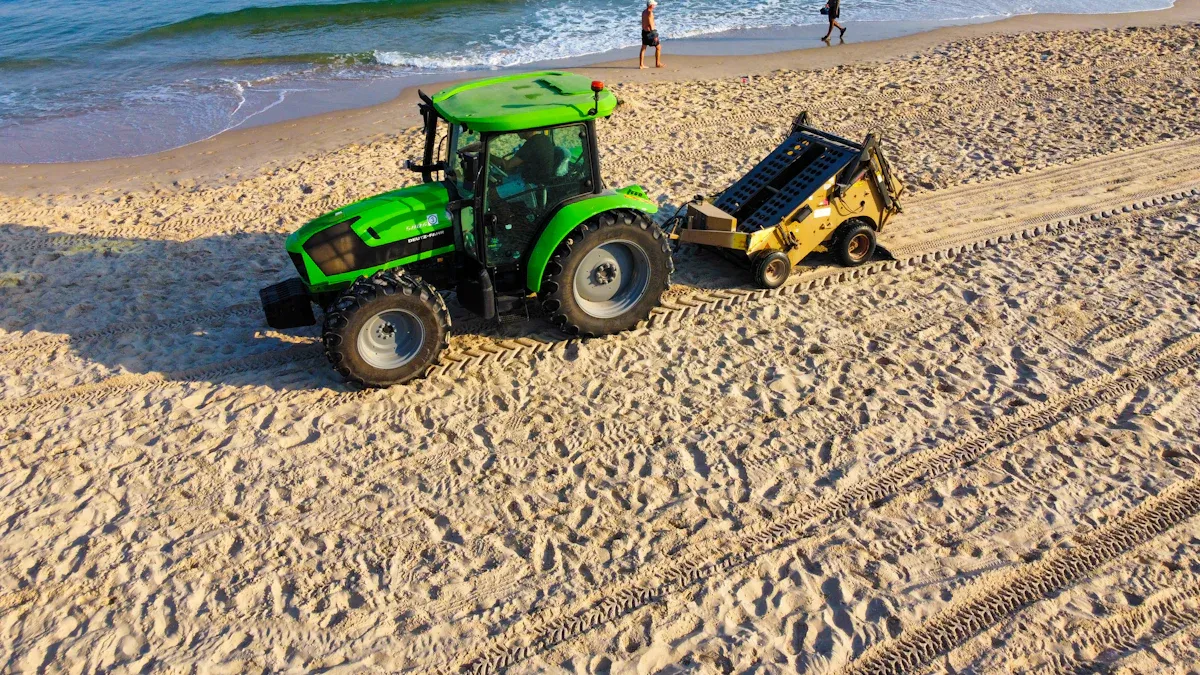
A box blade is one of the most practical attachments for grading and leveling soil. You use it to smooth driveways, prepare lawns, and spread gravel. The box blade features adjustable scarifiers that break up hard ground, making it easier to shape the landscape. Many landscaping professionals rely on this tool to create even surfaces before laying sod or installing patios. For example, you might use a box blade to level a backyard before building a new deck. You can also use it to repair gravel driveways after heavy rain. The ability to adjust the blade angle helps you control the depth and finish of your grading work. This attachment saves you time and reduces manual labor, especially on larger properties.
Backhoes and excavators expand the range of services you can offer in Tractor-Based Landscaping. You use a backhoe to dig trenches for irrigation, plant trees, or install drainage systems. The backhoe attachment mounts to your tractor, allowing you to switch between digging and loading tasks quickly.
Backhoes and tractor loaders are important additions to a landscape contractor’s fleet because the equipment makes the contractor more versatile and more productive. The additional equipment gives a landscape contractor the opportunity to bid jobs that may have been too large in the past.
You can pair a backhoe with a thumb attachment to grip and move heavy rocks or logs. This combination increases your efficiency on complex projects. For example, you might dig a trench for a water line, then use the loader to backfill the soil. This approach saves you from buying separate machines for digging and filling. When you need to move large amounts of gravel or mulch, a bigger loader bucket means fewer trips across the job site.
A post hole digger is essential for installing fences, planting shrubs, or setting posts for decks and signs. You attach it to your tractor or use a standalone auger for smaller jobs. The post hole digger drills precise holes quickly, even in tough or compacted soil.
| Feature | Benefit |
|---|---|
| Powerful Engine | Enables quick and efficient digging through hard and compact soil. |
| Different Drill Bits | Offers versatility for various digging needs, accommodating different sizes of plants and posts. |
| Adjustable Depth | Allows customization of hole depth up to 3 feet for diverse project requirements. |
| EPA Certified | Ensures safety and environmental compliance, making it a responsible choice. |
| Easy to Use | Ergonomic design and simple controls make it user-friendly, even for beginners. |
You can adjust the depth to match your project needs, which is helpful when planting trees or installing fence posts at different heights. The post hole digger’s ergonomic design makes it easy to operate, even if you are new to landscaping equipment. This tool helps you complete installations faster and with less effort.
By adding these attachments and implements to your fleet, you increase your productivity and expand the services you can offer. You also make your Tractor-Based Landscaping business more competitive and efficient.
A landscape rake is a must-have tool for anyone working in Tractor-Based Landscaping. You use this attachment to prepare and clean up job sites quickly. The landscape rake features curved tines that grab and pull debris, rocks, and roots from the soil. You can use it both forward and in reverse, which makes it versatile for different tasks.
Many professionals rely on the landscape rake for site preparation. For example, you might use it to clean up a construction site before installing a new lawn. The rake helps you create a smooth, even surface, which is important for planting and landscaping. You can also use it to maintain gravel driveways by spreading and leveling the stones. The ability to switch between forward and reverse operation saves you time and effort on large projects.
Power rakes and pulverizers play a key role in soil preparation. You use these attachments to break up compacted soil, remove debris, and create a fine, even surface for planting. The table below shows the main functions of power rakes and pulverizers:
| Function | Description |
|---|---|
| Soil Preparation | Breaks up and loosens soil, improving seed-to-soil contact and water flow. |
| Debris Removal | Clears rocks, roots, and unwanted materials from the soil. |
| Surface Grading | Levels the ground for driveways, patios, or landscaping projects. |
| Seedbed Preparation | Creates a suitable environment for seed germination. |
| Weed Control | Uproots weeds and unwanted vegetation, keeping soil clean. |
You can use a power rake to remove thatch from lawns, which helps grass grow better. A pulverizer works well for breaking up hard clumps of soil after construction. For example, if you need to prepare a yard for new sod, you run the power rake over the area to loosen the soil and remove rocks. This process creates a smooth, level surface that is ready for planting. You also save time by combining soil preparation and debris removal in one step.
Spreaders and seeders help you establish and maintain healthy lawns efficiently. You use a spreader to apply grass seed, fertilizer, or compost evenly across large areas. This ensures that every part of the lawn receives the right amount of seed or nutrients.
For example, when you start a new lawn, you use a seeder to distribute grass seed evenly. This method gives you a thick, green lawn with fewer bare spots. When maintaining established lawns, you use a spreader to apply fertilizer, which promotes healthy growth and color. These tools save you time and reduce waste, making your Tractor-Based Landscaping business more productive.
Pallet forks are one of the most practical attachments you can add to your tractor-based landscaping business. You use them to lift and move heavy materials such as pallets, boxes, lumber, and even large bags of soil or mulch. Their design features strong, premium-grade tines that keep loads stable while you transport them across your job site. This stability helps you avoid accidents and keeps your workflow smooth.
You will find pallet forks especially useful when you need to unload deliveries or organize your storage area. For example, you can use pallet forks to move a stack of pavers from your truck to the backyard without breaking a sweat. You can also lift bundles of fencing or rolls of sod directly to the installation area. This reduces the need for manual lifting and saves you time on every project.
The durability of pallet forks stands out in landscaping work. The robust construction handles the daily rigors of moving heavy and awkward items. You do not have to worry about bending or breaking the tines under normal use. This toughness means you spend less time on repairs and maintenance, which keeps your business running efficiently. Over time, you will notice cost savings because you avoid frequent replacements and downtime.
Tip: Use pallet forks to move bulky debris after a storm. You can clear branches, logs, or even old fencing quickly and safely.
Here is a quick look at how pallet forks can improve your workflow:
| Task | Manual Labor (Time/People) | With Pallet Forks (Time/People) |
|---|---|---|
| Move a pallet of sod | 2-3 hours / 3 people | 20 minutes / 1 person |
| Unload landscape timbers | 1 hour / 2 people | 10 minutes / 1 person |
| Transport mulch bags | 1.5 hours / 2 people | 15 minutes / 1 person |
You can see how pallet forks reduce labor and speed up material handling. This efficiency lets you take on more jobs and increase your profits.
Many landscaping professionals share their success stories on industry forums and social media. One contractor described how pallet forks helped them finish a large retaining wall project ahead of schedule. They used the forks to move blocks directly to the work area, which cut down on manual handling and kept the crew focused on installation. You can find more tips and real-world examples by joining landscaping groups online.
If you want to expand your services, pallet forks give you the flexibility to handle new types of materials. You can offer debris removal, material delivery, or even help clients with seasonal cleanups. By investing in pallet forks, you make your tractor more versatile and your business more competitive.
You need a trimmer and an edger for clean, professional results on every landscaping job. Trimmers help you cut grass and weeds in areas your mower cannot reach, such as around trees, fences, and flower beds. Edgers create crisp lines along sidewalks, driveways, and garden borders. These tools give your projects a polished look that clients notice.
A diverse toolkit lets you handle a wider range of landscaping tasks. For example, you might use a trimmer to tidy up a playground after mowing, or an edger to define the boundary between a lawn and a mulch bed. Many professionals share before-and-after photos on landscaping forums to show how edging transforms a property’s appearance.
Tip: Use a trimmer for emergency touch-ups before a client visit. Quick trims can make a big difference in curb appeal.
A leaf blower saves you time and effort during cleanup. You use it to clear leaves, grass clippings, and debris from lawns, driveways, and patios. This tool works much faster than a rake, especially on large properties or after a storm.
Leaf blowers also help you prepare sites for new projects. For example, you might clear a patio before sealing it, or remove debris from a lawn before overseeding. Many landscaping crews post videos on YouTube showing how a blower can clean a yard in minutes.
Here is a quick comparison of cleanup methods:
| Task | Manual Raking (Time) | Leaf Blower (Time) |
|---|---|---|
| Small yard cleanup | 30 minutes | 10 minutes |
| Large driveway | 20 minutes | 5 minutes |
| Patio clearing | 15 minutes | 3 minutes |
Using the right tool, like a leaf blower instead of a rake, improves your efficiency and the quality of your work.
Rakes and shovels are essential for daily landscaping. You use a rake to gather leaves in the fall, level soil, or spread mulch. A shovel helps you dig, move dirt, and transplant plants. These tools handle tasks that tractors and machines cannot reach.
You might use a soil rake to prepare a garden bed, or a snow shovel for winter cleanup. Many landscapers recommend keeping several types of rakes and shovels on hand for different jobs. For example, a square shovel works well for moving gravel, while a hand trowel is perfect for planting flowers.
You can find more tool recommendations and real-world tips on professional landscaping groups and industry sites.
A well-chosen set of basic and hand tools complements your tractor-based equipment. You boost your efficiency and deliver high-quality results on every project.
You need pruners and a sprayer to complete your landscaping toolkit. These tools help you maintain healthy plants and keep your clients’ properties looking their best. Pruners allow you to shape shrubs, cut back overgrown branches, and remove dead or diseased growth. A sprayer helps you apply fertilizers, herbicides, or pesticides efficiently.
How to Use Pruners in Landscaping:
Tip: Prune in the early morning or late afternoon to reduce plant stress. Sharp blades make cleaner cuts and help plants heal faster.
You can use pruners for more than just shrubs. Trim perennials, shape hedges, and even harvest flowers for decorative displays. Regular pruning encourages healthy growth and improves the appearance of every landscape you manage.
How to Use a Sprayer Effectively:
| Task | Tool Type | Best Practice |
|---|---|---|
| Shrub shaping | Bypass pruner | Cut just above a leaf node |
| Tree branch removal | Lopper/pruner | Use two hands for thicker branches |
| Weed control | Sprayer | Apply on calm, dry days |
| Fertilizer application | Sprayer | Even coverage for healthy growth |
You should check your pruners and sprayer before each job. Look for dull blades, leaks, or clogged nozzles. Regular maintenance extends the life of your tools and ensures safe operation.
Note: Clean tools prevent the spread of plant diseases. Disinfect blades with rubbing alcohol between jobs.
Pruners and sprayers help you deliver professional results. You can offer pruning, pest control, and fertilization as add-on services. These tools set you apart from competitors who only mow and edge. By mastering their use, you increase your value to clients and grow your landscaping business.
You need reliable transport to move your landscaping equipment safely and efficiently. A well-chosen trailer and truck combination helps you reach job sites on time and keeps your tools in top condition. You should always follow best practices for loading and transporting your gear:
You can choose a flatbed truck for heavy equipment or an enclosed trailer for smaller tools. Many landscaping professionals plan their routes with GPS to save time and fuel. For example, a small business owner uses a single-axle trailer and a pickup truck to transport a compact tractor, mower, and hand tools. They cover loose materials with tarps and secure everything with straps, reducing the risk of accidents. You can find more transport safety tips on OSHA’s website.
Tip: Regular maintenance checks on your transport vehicles help prevent breakdowns and costly delays.
Proper storage protects your investment and extends the life of your equipment. The best storage solution depends on the size of your business and the types of tools you use. Here is a comparison of common storage options:
| Storage Solution | Benefits | Impact on Longevity & Security |
|---|---|---|
| Dedicated Storage Facility | Weather protection, organized space | Extends tool lifespan, reduces weather damage |
| Mobile Storage Units | Quick access, enhanced security | Prevents theft, keeps equipment organized |
| Proper Organization | Maintenance practices, easy access | Reduces wear and tear, keeps tools in good condition |
If you run a small operation, an enclosed trailer can serve as both transport and secure storage. You can park it in a safe location overnight, keeping your tools protected and ready for the next job. Larger businesses often invest in dedicated facilities like garages or warehouses. These spaces offer better organization and security, which helps you manage a bigger fleet of equipment.
For example, a landscaping company with multiple crews uses a central warehouse to store tractors, mowers, and attachments. They assign each crew a mobile storage unit for daily use, which improves efficiency and reduces lost tools. You can join discussions about storage solutions on Reddit’s landscaping community or follow industry updates on Total Landscape Care.
Note: Organized storage not only protects your equipment from theft and weather but also helps you keep track of maintenance schedules.
By investing in the right transport and storage solutions, you keep your landscaping business running smoothly and your equipment in top shape.
Careful cost and maintenance planning keeps your Tractor-Based Landscaping business profitable and reliable. You need to consider not only the initial purchase price but also ongoing maintenance, repairs, and eventual equipment replacement. These costs can impact your bottom line if you do not manage them well.
You should create a formal budget that includes all equipment expenses, expected revenue, and your financial goals. This budget helps you make informed decisions about when to buy new tools or hire more help. Many successful landscaping businesses set aside 10-15% of each equipment’s value every year in a replacement fund. This practice ensures you have money ready for replacements and avoids cash flow problems.
Here is a sample equipment budgeting table:
| Equipment Type | Estimated Cost | Annual Replacement Fund (10-15%) | Maintenance Budget | Replacement Cycle (Years) |
|---|---|---|---|---|
| Tractor | $20,000 | $2,000 – $3,000 | $500 | 7-10 |
| Loader Attachment | $4,000 | $400 – $600 | $150 | 8-12 |
| Mower | $3,500 | $350 – $525 | $200 | 5-8 |
| Aerator | $2,000 | $200 – $300 | $100 | 6-10 |
A well-structured budget helps you avoid emergency loans and keeps your business running smoothly.
Regular maintenance prevents costly breakdowns and keeps your equipment working efficiently. You should develop a checklist for daily, weekly, and seasonal tasks. This checklist ensures you inspect key components and catch problems early.
A maintenance checklist reduces downtime and repair costs. It also helps you avoid losing clients due to delays or poor results. Many landscaping professionals share their checklists and tips on industry forums and social media groups. You can find more ideas by joining these communities.

Unexpected repairs and replacements can disrupt your schedule and budget. Common issues include seasonal wear, storm damage, and normal aging of parts. If you leave repair costs out of your annual plan, you may face surprise expenses. Regular evaluations of your equipment, hardscapes, and irrigation systems help you spot problems before they grow.
Tip: Review your repair and replacement plan every season. Update your budget and checklist as your business grows.
By following these strategies, you protect your investment and keep your Tractor-Based Landscaping business efficient and profitable.
You need to match your equipment to the type of clients you serve. Residential and commercial landscaping projects have different requirements. Residential jobs often involve smaller yards and lighter tasks. Commercial properties usually cover larger areas and demand more power and efficiency.
You should assess each job before choosing your equipment. This approach helps you deliver quality results and avoid unnecessary expenses.
You face an important decision when starting your Tractor-Based Landscaping business: Should you rent or buy your equipment? Each option has advantages and drawbacks.
| Pros of Renting | Cons of Renting |
|---|---|
| No winter storage, avoiding storage costs during off-seasons. | No equity built from renting equipment. |
| No upfront costs, making it easier for new businesses. | Unfamiliarity with rented equipment may affect productivity. |
| No upkeep costs as maintenance is handled by the dealer. | Inconvenience of picking up or returning equipment. |
| Access to project-specific equipment for better results. | No ownership may not suit all business styles. |
| Fast scaling to meet changing demand. | Uncertain condition of rental equipment. |
Renting lets you access professional-grade equipment without a large investment. You avoid ongoing maintenance costs and storage concerns. You can try the latest models and specialized tools for unique projects. Renting also helps you preserve capital for other business expenses and may offer tax benefits.
However, renting can cost more over time if you use equipment frequently. You may face limited availability during busy seasons. You need to plan for transportation and adapt to different models. Scheduling can also depend on rental company hours.
Tip: If you are just starting out or want to test new services, renting gives you flexibility. When your workload grows, buying may become more cost-effective.
As your business grows, your equipment needs will change. You should plan for expansion by reviewing your service area, client base, and project types regularly.
Scaling your business step by step helps you manage costs and avoid unnecessary debt. You can take on larger projects and serve more clients as your fleet grows.
Note: Regularly assess your equipment and service offerings. This practice keeps your Tractor-Based Landscaping business competitive and ready for new opportunities.
You need the right equipment to succeed in Tractor-Based Landscaping. Start by listing your essentials: tractors, attachments, hand tools, and storage solutions. Use a checklist to plan purchases and schedule maintenance. Research each tool, set a clear budget, and build your collection step by step. Careful planning helps you deliver quality work and grow your business with confidence.
You need a reliable tractor, a mower, a loader or skid steer, and basic hand tools. Start with these essentials. Add attachments like aerators or rakes as your services expand.
You should match the tractor’s horsepower and size to your typical job. Smaller properties need compact models. Large commercial sites require more power and wider cutting decks.
Renting works well if you want to test services or have limited funds. Buying makes sense if you plan to use equipment often. Consider your workload and budget before deciding.
Check your equipment before and after each use. Follow a regular schedule for oil changes, lubrication, and inspections. Routine maintenance prevents breakdowns and extends equipment life.
Wear protective gear. Inspect equipment before use. Follow manufacturer instructions. Keep bystanders away from work areas. Secure loads during transport. Safety reduces accidents and protects your investment.
You can use many tools for both types of jobs. However, commercial projects often need larger, more powerful equipment. Assess each job and choose tools that fit the property size and scope.
Use a trailer and truck rated for your equipment’s weight. Secure all items with straps. Cover loose materials with tarps. Check local transport regulations to ensure safe and legal travel.
Lawn mowing, grading, debris removal, and soil preparation generate steady income. You can increase profits by adding services like aeration, seeding, and landscape installation as your business grows.




-1.png)