Welcome to Shandong Qilu Industrial Co., Ltd

 English
 Arabic
 Bulgarian
 Bengali
 Czech
Czech
 Danish
 German
 Greek
Greek
 Spanish
 Finnish
 French
 Hindi
Hindi
 Croatian
 Hungarian
 Indonesian
 Italian
 Japanese
 Korean
 Lithuanian
 Dutch
Dutch
 Norwegian
 Polish
 Portuguese
 Romanian
 Russian
 Slovak
 Slovenian
 Swedish
 Thai
Thai
 Turkish
 Ukrainian
 Vietnamese
 Tagalog
 Malay
Malay
 Estonian
 Catalan
 Latvian
 Urdu
Urdu
 Serbian
 Persian
 Swahili
 Albanian
 Armenian
 Icelandic
 Bosnian
 Luxembourgish
 Afrikaans
English Arabic
Bulgarian
Bengali
Czech
Danish
German
Greek
Spanish
Finnish
French
Hindi
Croatian
Hungarian
Indonesian
Italian
Japanese
Korean
Lithuanian
Dutch
Norwegian
Polish
Portuguese
Romanian
Russian
Slovak
Slovenian
Swedish
Thai
Turkish
Ukrainian
Vietnamese
Tagalog
Malay
Estonian
Catalan
Latvian
Urdu
Serbian
Persian
Swahili
Albanian
Armenian
Icelandic
Bosnian
Luxembourgish
Afrikaans
Afrikaans
English Arabic
Bulgarian
Bengali
Czech
Danish
German
Greek
Spanish
Finnish
French
Hindi
Croatian
Hungarian
Indonesian
Italian
Japanese
Korean
Lithuanian
Dutch
Norwegian
Polish
Portuguese
Romanian
Russian
Slovak
Slovenian
Swedish
Thai
Turkish
Ukrainian
Vietnamese
Tagalog
Malay
Estonian
Catalan
Latvian
Urdu
Serbian
Persian
Swahili
Albanian
Armenian
Icelandic
Bosnian
Luxembourgish
Afrikaans

The 2.5-Ton Revolution: Why the ‘Sub-4 Ton’ Segment is Dominating Global Construction
Something significant is happening on job sites across every major city. Tight alleyways, noise ordinances, underground utilities, and shrinking project timelines have quietly made traditional heavy equipment a liability — and compact mechanization the smart play. The 2.5 ton excavator has moved from a niche rental item to a frontline production tool, and the numbers back it up.
The global mini excavator market is projected to reach $9.4 billion by 2030, with the ‘less than 4 tons’ segment generating the highest revenue of any weight class — a clear signal that the industry has voted with its purchasing power.
📊 Market Insight
Why Sub-4 Ton Leads the Segment: The under-4-ton class combines transport flexibility (no special hauling permits), reduced ground disturbance, and genuine digging capability — making it the preferred class for urban residential, utility, and landscaping work worldwide.
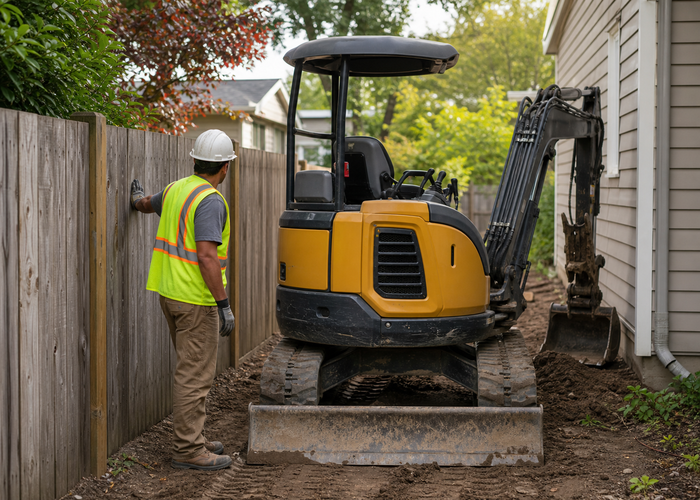
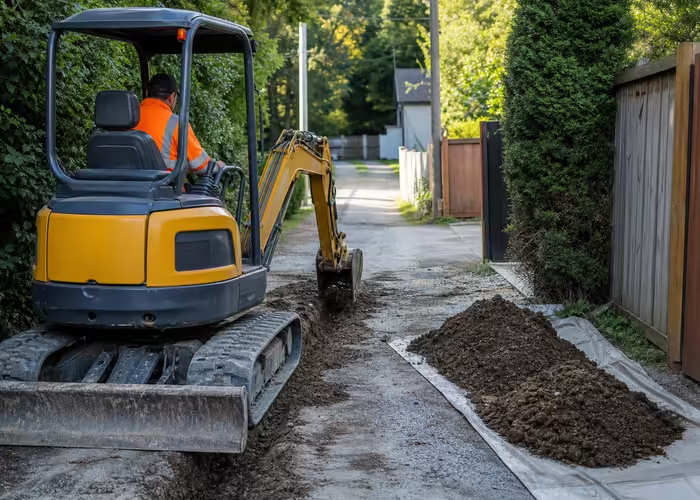
The shift isn’t just about size. Urban construction equipment demands more intelligence per pound than ever before. Crews working in dense neighborhoods can’t afford a machine that tears up pavement on the approach or requires a dedicated operator certification. What the market needed was a Goldilocks machine — powerful enough to outperform lightweight residential units, compact enough to avoid the permitting and access headaches of larger iron.
The QL-25Eco represents a direct response to that demand. It isn’t simply a scaled-down large excavator or a scaled-up homeowner tool. It occupies a deliberate sweet spot engineered for professional-grade output within urban constraints.
Understanding why that 2.5-ton threshold matters — specifically the breakout force it unlocks — is where the real case for this machine begins.
Power vs. Portability: Decoding the Breakout Force of the QL-25Eco
The conversation about equipment class isn’t just about size — it’s about whether a machine can actually finish the job. And when it comes to the mini excavator 2.5 ton category, the numbers tell a compelling story.
The ‘Doubling Point’ Explained
A 2.5-ton excavator delivers approximately double the breakout force of a standard 1-ton residential unit, translating directly into the ability to extract stumps up to 18–24 inches in diameter — the kind of work that smaller machines simply abandon mid-task. According to AHM Corp, this doubling effect isn’t linear across the weight class spectrum; it represents a genuine capability threshold, not just a marginal improvement.
At 2.5 tons, you cross from ‘capable’ into ‘professional-grade.’
Hydraulic Pressure Meets Real-World Resistance
The QL-25Eco’s hydraulic system is where portability stops compromising performance. Higher operating pressure means the bucket and thumb attachment can generate the sustained force required to break through 8–12 inch reinforced concrete slabs — a common obstacle in urban utility trenching and driveway demolition. In practice, this is the difference between one mobilization and three.
What typically happens with undersized machines on concrete work is a frustrating cycle: partial breaks, repositioning, and ultimately a call for supplemental equipment. The QL-25Eco eliminates that middle step.
Where 1-Ton Machines Fall Short
| Capability | 1-Ton Unit | QL-25Eco (2.5-Ton) |
|---|---|---|
| Max Dig Depth | ~5.5 ft | ~8.5 ft |
| Bucket Breakout Force | ~3,500 lbf | ~7,200 lbf |
| Lift Capacity | ~660 lbs | ~1,500 lbs |
The data reflects a practical reality: lighter residential machines are optimized for soft soil and shallow work. Push them into urban demolition or mature root systems and performance degrades quickly — sometimes dangerously.
However, raw power alone doesn’t determine job-site success. The QL-25Eco’s capability has to be deployable in the spaces where urban contractors actually work — and that’s where machine geometry becomes just as important as hydraulic output.
The Zero-Tail Swing Advantage: Navigating the ‘Tight-Squeeze’ Reality
We’ve established that the QL-25Eco delivers serious digging muscle in a compact frame. But raw breakout force only tells half the story. In dense urban environments, where a machine can swing is just as critical as how hard it can dig.
That’s where Zero Tail Swing (ZTS) technology becomes a genuine game-changer.
Zero Tail Swing means the machine’s upper body stays within the width of its tracks during a full 360-degree rotation — eliminating the dangerous overhang that traditionally follows a counterweight through its arc. In practical terms, the ql-25eco excavator can rotate freely without its rear swinging out and striking a wall, parked vehicle, or passing worker. According to Newman Tractor, this design keeps the counterweight within the track width at all times, directly reducing collision risk on confined job sites.
For contractors, that’s not just a convenience — it’s a liability shield.
Three Scenarios Where ZTS Isn’t Optional
- Narrow alley utility work: Digging alongside a building facade or within a gated courtyard leaves almost no buffer room. A machine with conventional tail overhang simply cannot rotate safely in these conditions — ZTS makes the job executable.
- Active pedestrian zones: Urban landscaping and infrastructure projects often run adjacent to foot traffic. Any uncontrolled swing arc introduces serious insurance exposure. ZTS effectively shrinks that risk to near zero.
- Tight basement or below-grade access: Excavating foundation drainage or utility runs in below-grade enclosures requires precise rotation control. Standard counterweight overhang can contact structural walls; ZTS removes that variable entirely.
[YOUTUBE VIDEO PLACEHOLDER — QL-25Eco ZTS rotation demonstration in confined space]
“The most expensive mistake on a crowded job site is an accidental collision — ZTS technology makes that outcome structurally preventable, not just operationally avoidable.”
On the other hand, ZTS does involve a design trade-off: the counterweight is smaller, which means stability depends more on track width and machine weight distribution. The QL-25Eco addresses this through a reinforced undercarriage that maximizes ground contact, maintaining a stable working platform even on uneven urban terrain.
When safety and jobsite access align this cleanly, the cost conversation changes too — and that’s exactly where we’re headed next.
Operational ROI: How ‘Eco Mode’ Intelligence Slashes Long-Term Overhead
When operators and fleet managers evaluate a small digger for sale, the sticker price is only the beginning of the conversation. Fuel costs, maintenance intervals, and downtime expenses quietly erode profitability over months and years — and that’s precisely where the QL-25Eco’s engineering philosophy pays dividends.
The Hidden Cost of Running Compact Machinery
Fuel is one of the most significant recurring expenses in any excavation or landscaping operation. On a standard jobsite, compact excavators running at fixed engine output — regardless of actual workload — waste a measurable percentage of every tank. Idling between tasks, transitioning between light grading and heavy digging, or running at full throttle during low-demand cycles all contribute to unnecessary consumption. These inefficiencies compound quickly across a full operating season.
Intelligent Hydraulics: Matching Output to Demand
The QL-25Eco addresses this directly through an intelligent hydraulic management system that continuously adjusts engine output to match the real-time load. During lighter tasks — finish grading, backfilling, or careful positioning — the system automatically reduces engine demand rather than maintaining peak output unnecessarily. When heavier digging cycles begin, power is restored seamlessly. The operator doesn’t manage this manually; the machine does it autonomously.
This adaptive approach is what separates a genuinely optimized platform from a machine that simply looks efficient on a spec sheet.
Quantifying the Savings
According to industry analysis from Sniper Rentals and Rippa, modern compact excavators utilizing Eco Mode can reduce fuel consumption by 10–15% compared to older, non-optimized models. Over a full working year, that gap translates directly to lower operating costs and stronger margins on every contracted job.
Extended maintenance intervals and robust component durability in the QL series mean fewer service interruptions — and that’s a competitive advantage that compounds over time.
The QL series is also engineered for longevity. Extended service intervals reduce the frequency of consumable replacements, and the machine’s core hydraulic components are built to withstand demanding daily use without accelerating wear.
Pro Tip — Idle Reduction Strategy: Program automatic idle engagement after 5 seconds of inactivity. On a typical 8-hour shift, operators spend a surprising portion of time repositioning or waiting — and that idle time adds up. Combining the QL-25Eco’s Eco Mode with disciplined idle-reduction habits can push real-world fuel savings well beyond the baseline 10–15% benchmark.
Efficiency gains like these also extend the machine’s practical lifespan, making the ROI case even stronger. And once you’ve locked in that operational efficiency, the next natural question becomes: what else can this machine do? The QL-25Eco’s answer to that question involves a surprisingly broad range of attachments — from hydraulic breakers to precision augers — that transform it from a capable digger into a true multi-tool for urban and landscaping work.
Versatility in Action: From Concrete Demolition to Precision Landscaping
According to KBV Research, the 2.5-ton class is the primary choice for urban construction precisely because it bridges the gap between DIY tools and full-size heavy machinery. That flexibility isn’t accidental — it’s engineered. The QL-25Eco’s auxiliary hydraulic circuit is purpose-built to power a wide range of attachments, delivering genuine compact excavator performance across job types that would otherwise require multiple specialized machines.
Demolition: Hydraulic Breaker Applications
When a project calls for breaking concrete, busting up pavement, or demolishing a masonry wall, the QL-25Eco transforms into a site-ready demolition tool by swapping the bucket for a hydraulic breaker. The machine’s hydraulic flow and pressure ratings are matched to breakers commonly used in the 2–3 ton class, making quick work of medium-duty teardowns without over-stressing the system.
Recommended attachments:
- Hydraulic breaker (medium-class, 300–500 ft-lb impact energy)
- Compactor plate for post-demolition ground prep
- Sorting/skeleton bucket for debris separation
Utility Work: Auger and Precision Digging Tools
For municipalities and contractors handling utility repairs — think water line replacements, conduit installation, or gas service trenching — the auger attachment is a game-changer. Paired with a thumb attachment, the QL-25Eco can grip, place, and position pipe sections with surgical control, reducing the need for a second laborer on-site.
Recommended attachments:
- Auger (6–18 inch diameter bits)
- Hydraulic thumb (weld-on or pin-on)
- Narrow trenching bucket (6–9 inch)
Landscaping: Grading, Planting, and Fine Detail Work
Example scenario: a residential landscaping contractor uses the same machine in the morning for rough grading a new lawn and in the afternoon for planting specimen trees using an auger. The QL-25Eco handles both without reconfiguring the base machine — just swap the tool. Explore the full range of compatible options on the Qilu Machinery Attachments page.
Recommended attachments:
- Grading/tilt bucket
- Earth auger (12–24 inch)
- Ripper tooth for root and rock removal
The machine’s true strength is this real-world adaptability — a point that naturally raises practical questions about day-to-day operation, which the next section addresses directly.
Expert FAQ: Everything You Need to Know About 2.5-Ton Excavator Operations
Whether you’re a first-time buyer or a seasoned fleet manager, a few practical questions almost always surface before committing to a machine in this class. Here are the most common ones — answered clearly.
Can a 2.5-ton excavator be towed by a standard pickup truck?
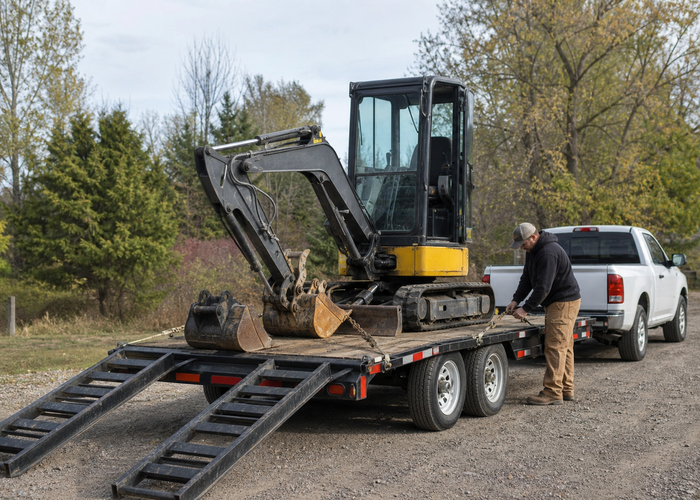
In practice, yes — and that’s one of the most compelling logistical advantages of this weight class. As noted by the Industry Logistics Standard, “The 2.5-ton model is the sweet spot for contractors who need to transport equipment without a CDL in many jurisdictions.” A standard half-ton or three-quarter-ton pickup with an appropriate trailer typically handles the load, dramatically cutting mobilization costs compared to heavier equipment.
What is the maximum digging depth of the QL-25Eco?
The QL-25Eco delivers a maximum digging depth of approximately 2,700 mm (roughly 8.9 feet), making it well-suited for utility trenching, footing excavation, and drainage work across most residential and light commercial projects. That depth capability, paired with its compact footprint, makes it a genuinely versatile production machine — not just a site-access solution.
How does the QL-25Eco handle steep terrain or soft soil?
A zero tail swing mini excavator design like the QL-25Eco keeps the counterweight within the track width, which improves balance on slopes and reduces tipping risk in uneven conditions. On soft soil, operators typically benefit from the machine’s wide rubber track options, which distribute ground pressure more evenly and minimize surface damage — a priority in high-end landscaping and sensitive urban environments.
What are the primary maintenance requirements for the ‘Eco’ hydraulic system?
The Eco hydraulic system is engineered for lower heat generation and reduced fluid consumption, which extends service intervals compared to conventional systems. Routine maintenance focuses on hydraulic filter changes, fluid level checks, and periodic inspection of hose connections. For manufacturer-recommended service schedules and support resources, visit the Qilu Machinery Service and Support page to ensure your machine operates at peak performance throughout its lifecycle.
A well-maintained 2.5-ton machine consistently delivers the kind of uptime that justifies every dollar of the initial investment.
Key Takeaways
- Hydraulic breaker (medium-class, 300–500 ft-lb impact energy)
- Compactor plate for post-demolition ground prep
- Sorting/skeleton bucket for debris separation
- Auger (6–18 inch diameter bits)
- Hydraulic thumb (weld-on or pin-on)