Welcome to Shandong Qilu Industrial Co., Ltd

 English
 Arabic
 Bulgarian
 Bengali
 Czech
Czech
 Danish
 German
 Greek
Greek
 Spanish
 Finnish
 French
 Hindi
Hindi
 Croatian
 Hungarian
 Indonesian
 Italian
 Japanese
 Korean
 Lithuanian
 Dutch
Dutch
 Norwegian
 Polish
 Portuguese
 Romanian
 Russian
 Slovak
 Slovenian
 Swedish
 Thai
Thai
 Turkish
 Ukrainian
 Vietnamese
 Tagalog
 Malay
Malay
 Estonian
 Catalan
 Latvian
 Urdu
Urdu
 Serbian
 Persian
 Swahili
 Albanian
 Armenian
 Icelandic
 Bosnian
 Luxembourgish
 Afrikaans
English Arabic
Bulgarian
Bengali
Czech
Danish
German
Greek
Spanish
Finnish
French
Hindi
Croatian
Hungarian
Indonesian
Italian
Japanese
Korean
Lithuanian
Dutch
Norwegian
Polish
Portuguese
Romanian
Russian
Slovak
Slovenian
Swedish
Thai
Turkish
Ukrainian
Vietnamese
Tagalog
Malay
Estonian
Catalan
Latvian
Urdu
Serbian
Persian
Swahili
Albanian
Armenian
Icelandic
Bosnian
Luxembourgish
Afrikaans
Afrikaans
English Arabic
Bulgarian
Bengali
Czech
Danish
German
Greek
Spanish
Finnish
French
Hindi
Croatian
Hungarian
Indonesian
Italian
Japanese
Korean
Lithuanian
Dutch
Norwegian
Polish
Portuguese
Romanian
Russian
Slovak
Slovenian
Swedish
Thai
Turkish
Ukrainian
Vietnamese
Tagalog
Malay
Estonian
Catalan
Latvian
Urdu
Serbian
Persian
Swahili
Albanian
Armenian
Icelandic
Bosnian
Luxembourgish
Afrikaans
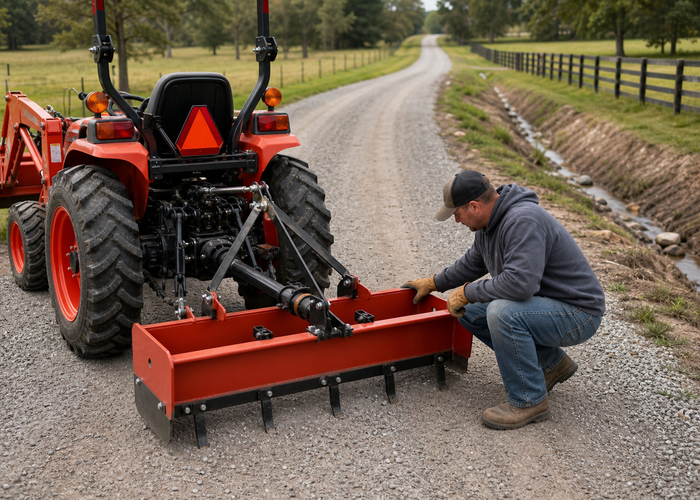
Compact Tractor Box Blade Driveway Grading: Crown, Drainage, and First Pass Planning
A practical compact tractor box blade driveway grading guide for crown, drainage, scarifier setup, first pass planning, and gravel road maintenance.
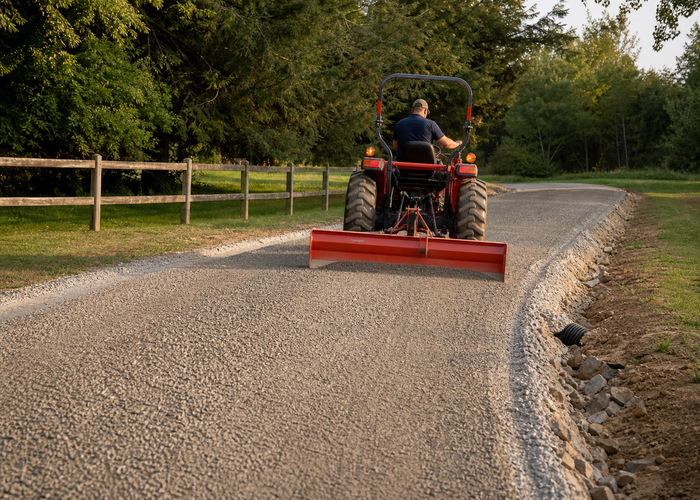
Compact tractor box blade driveway grading is not just scraping gravel until it looks flat. A working farm lane or rural driveway needs crown, drainage, edge control, and a first pass that moves material without cutting too deep. The operator should read the driveway before the tractor moves, especially after rain or heavy vehicle traffic.
QiLu Machinery customers comparing tractor options often ask about horsepower, loader capability, and implement size. For driveway grading, the more useful question is whether the tractor, box blade, tire setup, and operator routine can restore shape without pushing good gravel into the ditch.
This guide uses practical field routines and safety thinking supported by OSHA and CDC agricultural safety resources. The aim is a driveway that sheds water, supports traffic, and can be maintained before potholes become repairs.
Read the Driveway Before Lowering the Blade
Walk the lane first. Look for potholes, washboard areas, soft shoulders, standing water, loose crown material, plugged culverts, and places where traffic has pushed gravel outward. The worst mistake is beginning in the middle without knowing where the water is supposed to go.
A driveway should not be perfectly flat across the full width unless it has another drainage design. Most gravel lanes need a gentle crown or cross slope so water leaves the surface. If the operator grades the surface smooth but traps water, the next storm will rebuild the potholes.
Scarifiers, Top Link, and First Pass Depth
Scarifiers can loosen compacted potholes and washboard sections, but they can also pull up too much base if set too aggressively. Start shallow, test a short section, and inspect the result. The top link angle controls how the box blade cuts, carries, and releases material. Small adjustments matter.
The first pass should gather and redistribute loose material, not rebuild the entire road in one pull. Work slowly, keep the tractor stable, and avoid sudden turns with the blade loaded. If the tractor begins to hop or spin, reduce the cut and reassess moisture and material depth.
Crown, Shoulders, and Drainage Edges
Driveway shoulders often reveal the real problem. If gravel has migrated to the sides, the center loses height and water stays in the wheel tracks. Pull usable gravel inward when appropriate, but keep ditches and drainage outlets open. A blade full of gravel should not be dumped where water needs to flow.
For equipment selection context, compare this work with tractor application solutions and QiLu Machinery product range before choosing blade width and tractor size.
Build a Repeatable Grading Pattern
A repeatable pattern saves time. Many operators begin by loosening damaged areas, pulling material from shoulders, rebuilding the crown, and finishing with light smoothing passes. The exact order depends on material, slope, and drainage, but the operator should know the goal of each pass.
Avoid overworking dry gravel until it segregates into loose stone and dust. Avoid grading saturated material that pumps under the tires. If the driveway is too wet, open drainage first or wait. The right moisture can help material knit; the wrong moisture creates ruts.
Keep the blade raised during travel turns and lower it only when aligned for the next pass. Watch fence lines, mailboxes, culverts, landscape edges, and buried utility markings. Driveway grading often happens near property features that are expensive to replace.
Inspection After the Finish Pass
After the finish pass, walk the lane again. Look for trapped water paths, thin gravel over potholes, loose piles at the edge, and spots where the blade cut into base material. A good finish pass should guide water away without creating a ridge that catches tires.
Record what changed: top link setting, scarifier depth, number of passes, moisture, trouble spots, and whether new gravel is needed. These notes help schedule light maintenance before the lane needs heavy repair.
Short Driveway Grading Checklist
Walk the lane, identify drainage, set scarifiers shallow, adjust top link, test a short pass, pull edge material carefully, rebuild crown, keep ditches open, finish lightly, and document trouble spots.
Field Scenario: How the Plan Changes the Workday
A good equipment plan changes the first hour of work. Instead of driving directly into the task, the operator reads the ground, checks the machine, studies the route, confirms bystander distance, and decides what the first safe pass should accomplish. This short pause often prevents the long delays that come from rutting, damaged attachments, blocked access, poor drainage, or a machine that has to be recovered later.
The job should be described in ordinary field language. What surface is being protected? Where will material move? What happens if the ground softens? Which edge, fence, doorway, ditch, or slope cannot be damaged? Which part of the route must stay open for other equipment? These questions make the machine choice more practical than a simple horsepower or weight comparison.
Operator Communication and Stop Rules
Every job needs a stop rule that everyone understands. The operator should stop when the machine handles differently, when the route changes, when a person enters the work zone, when a hose or pin looks wrong, when visibility is poor, or when the planned first pass no longer matches the real ground. Stopping early is a professional decision, not a sign of uncertainty.
Helpers should stand where the operator can see them, never between the machine and a fixed object. When a spotter is needed, agree on signals before the machine moves. If the signal is unclear, the operator should stop and reset communication rather than guess.
Inspection Clues During the Job
Some problems appear only under load. A driveway may look firm until the blade begins to pull gravel. A root may seem loose until it lifts a section of lawn. A snow pile may look harmless until it blocks a door, drain, fuel tank, or equipment path. The operator should treat these changes as information and adjust the plan.
Records are useful when they capture the moment something changed. Write down the surface condition, attachment setting, machine behavior, weather, and result. Over several jobs, those notes show which setup works, which route creates damage, and which attachment saves time.
Planning Resources and Link-Rich Notes
For internal planning, compare the task with QiLu Machinery’s all machinery products, product application solutions, equipment application page, and machinery blog. These pages help connect a single job to the wider equipment fleet instead of choosing a machine in isolation.
For external reference, use general safety and site-planning resources from OSHA, NIOSH, USDA NRCS soil health guidance, University of Minnesota Extension farm safety resources, and CDC agricultural safety resources. These resources do not replace the operator manual, but they reinforce the same habits: inspect first, protect people, read the ground, and stop when the machine gives a warning.
Recordkeeping That Actually Helps
A useful record can be short: date, operator, machine, attachment, ground condition, work goal, unusual observations, and follow-up action. The important part is reviewing the pattern. If the same lane washes out, the same root area damages turf, or the same snow pile blocks access, the plan needs to change before the next job.
Managers should turn repeated notes into action. That action may be a repair, a better route, a different attachment, a drainage improvement, or a new training point. A note that is never reviewed is just storage; a reviewed note becomes better uptime.
Box Blade Setup Details That Change the Result
The box blade should be matched to the tractor’s traction, width, and hydraulic control, not just to the driveway width. A blade that is too wide can overload a compact tractor before it has enough material in the box to shape the lane. A blade that is too narrow may leave tire tracks outside the graded path and require too many passes. A common starting point is a blade close to the outside width of the rear tires, with enough tractor weight and tire grip to pull a shallow load without spinning.
Top link adjustment deserves more attention than many new operators give it. Shortening the top link tips the front cutting edge down, which helps the blade cut. Lengthening it lets the box carry and release material more gently. Neither setting is permanently correct. A pothole repair, a shoulder pull, and a finish pass may all need different angles. Operators who write those settings down can repeat a good result much faster on the next maintenance day.
Decision Table for First-Pass Choices
| Driveway condition | First action | What to avoid |
|---|---|---|
| Loose gravel on shoulders | Pull material inward with a shallow angle and slow travel | Dumping gravel into ditches or against culvert openings |
| Hard potholes | Loosen lightly with scarifiers, then refill from nearby material | Skimming over the hole and leaving compacted edges untouched |
| Standing water | Open drainage and restore crown before smoothing | Finishing the surface flat because it looks tidy |
| Thin gravel over base | Plan added aggregate or very light reshaping | Cutting into the base layer to make short-term material |
Common Mistakes That Create Repeat Repairs
The first mistake is grading only the visible pothole. A pothole is usually a water problem, a compaction problem, or a missing-crown problem. Filling the depression without breaking the rim and guiding water away gives the driveway a better look for a few days, but traffic will pump the weak spot open again. Repair the shape around the hole, not only the hole itself.
The second mistake is working too fast. Higher travel speed makes the blade bounce, which creates washboard texture and uneven material release. Slow passes let the tractor pull smoothly, keep the blade loaded, and make the operator’s hand and hydraulic adjustments more precise. That matters on long lanes where a small mistake repeats for hundreds of feet.
The third mistake is treating every season the same. Spring thaw, dusty summer gravel, and wet autumn traffic all behave differently. When soil and base material are saturated, the better decision may be to clear outlets and wait. Resources such as the USDA NRCS soil guidance are useful reminders that ground structure and water movement are part of machinery planning, not separate topics.
Buying and Maintenance Questions Before the Next Driveway Job
Before ordering or assigning a compact tractor for driveway grading, ask how often the lane will be maintained, how long it is, whether it has slopes, and whether the operator must also handle loader work, mowing, snow clearing, or fence work. If the same machine must handle several jobs, the best tractor is the one that balances drawbar traction, hydraulic convenience, service access, and implement compatibility. The tractor category and equipment application guidance are useful internal references when comparing those duties.
Maintenance should also be planned before the blade goes to work. Check tire pressure, wheel lug condition, three-point hitch pins, sway control, hydraulic response, lighting, and operator visibility. A loose stabilizer or missing lynch pin can turn a simple driveway pass into a damaged implement or bent hitch point. For broader operator habits, University of Minnesota Extension tractor safety material reinforces the value of inspection and controlled operation.
When the Box Blade Is Not Enough
A box blade can reshape and maintain many gravel lanes, but it cannot solve every driveway problem. If water crosses the surface because the ditch is too shallow, the culvert is undersized, or the roadbed lacks enough aggregate, the tractor is only treating symptoms. In those cases, use the grading pass to document what happens: where water enters, where it slows, where gravel disappears, and where heavier vehicles deform the surface.
Those observations can guide a larger repair plan. A property owner may need new stone, ditch cleaning, culvert work, geotextile reinforcement, or a different traffic route for heavy deliveries. A compact tractor remains useful in that plan, but the final fix comes from matching drainage, material, and equipment rather than asking the blade to overcome a design problem.
Practical FAQ
How should this guide be used? Use it as a planning aid together with the machine manual, site rules, and the operator’s field judgement.
What should stop the job? Stop for unstable handling, damaged pins, leaking hoses, unclear visibility, bystanders in the work area, unexpected ground movement, or any condition the operator cannot explain.
How can a small crew stay consistent? Keep the checklist near the machine, use the same stop rules every day, and review short job notes at least weekly.
Compact tractor box blade driveway grading works best when the operator treats crown and drainage as the real goal. A smooth surface that holds water will fail quickly; a slightly crowned surface with open shoulders, clean ditches, and documented maintenance will serve the property longer.