Welcome to Shandong Qilu Industrial Co., Ltd

 English
 Arabic
 Bulgarian
 Bengali
 Czech
Czech
 Danish
 German
 Greek
Greek
 Spanish
 Finnish
 French
 Hindi
Hindi
 Croatian
 Hungarian
 Indonesian
 Italian
 Japanese
 Korean
 Lithuanian
 Dutch
Dutch
 Norwegian
 Polish
 Portuguese
 Romanian
 Russian
 Slovak
 Slovenian
 Swedish
 Thai
Thai
 Turkish
 Ukrainian
 Vietnamese
 Tagalog
 Malay
Malay
 Estonian
 Catalan
 Latvian
 Urdu
Urdu
 Serbian
 Persian
 Swahili
 Albanian
 Armenian
 Icelandic
 Bosnian
 Luxembourgish
 Afrikaans
English Arabic
Bulgarian
Bengali
Czech
Danish
German
Greek
Spanish
Finnish
French
Hindi
Croatian
Hungarian
Indonesian
Italian
Japanese
Korean
Lithuanian
Dutch
Norwegian
Polish
Portuguese
Romanian
Russian
Slovak
Slovenian
Swedish
Thai
Turkish
Ukrainian
Vietnamese
Tagalog
Malay
Estonian
Catalan
Latvian
Urdu
Serbian
Persian
Swahili
Albanian
Armenian
Icelandic
Bosnian
Luxembourgish
Afrikaans
Afrikaans
English Arabic
Bulgarian
Bengali
Czech
Danish
German
Greek
Spanish
Finnish
French
Hindi
Croatian
Hungarian
Indonesian
Italian
Japanese
Korean
Lithuanian
Dutch
Norwegian
Polish
Portuguese
Romanian
Russian
Slovak
Slovenian
Swedish
Thai
Turkish
Ukrainian
Vietnamese
Tagalog
Malay
Estonian
Catalan
Latvian
Urdu
Serbian
Persian
Swahili
Albanian
Armenian
Icelandic
Bosnian
Luxembourgish
Afrikaans
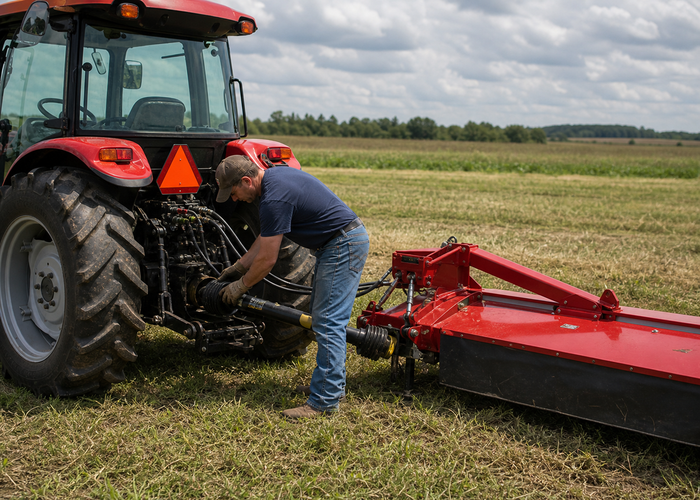
Small Farm Hay Work: Tractor Horsepower, PTO, Hydraulics, and Implement Sequence
A practical small-farm hay guide covering tractor horsepower, PTO reserve, hydraulics, mower and baler matching, and field workflow planning.
Small-farm hay work is rarely limited by one specification. The weather window is short, the labor pool is usually smaller than planned, and one tractor often has to mow, rake, move wagons, and sometimes power the baler too. A setup that looks fine on paper can become frustrating very quickly when the PTO load, hydraulic demand, and field speed no longer match the tractor.
That is why hay questions should begin with the work sequence rather than a single horsepower number. Owners shopping the farm tractor category need to think through mowing, conditioning, raking, baling, loading, and transport as one connected system. The right tractor for a ten-acre horse hay operation is not automatically the right tractor for a larger beef or mixed-livestock workflow.
A practical setup also depends on whether the farm makes small square bales, large round bales, dry hay, or occasional wrapped forage. The operator may need PTO power, hydraulic outlets, machine weight, and braking capacity in different combinations as the day progresses. That is why a careful buyer often compares both the 50-70 HP tractor range and the 75-100 HP tractor range before settling on one machine.
Think in Terms of the Whole Hay Chain
The Iowa State Extension guide Buyer’s Guide to Hay Equipment is useful because it looks at hay equipment choices from the perspective of smaller and compact tractor owners. That matters because many hay problems begin when a farm buys a tractor to run one implement acceptably but forgets that the next implement in the chain may demand more PTO power, more hydraulic capacity, or more stability on slopes.
University of Georgia’s PDF What Size Farm Tractor Do I Need? is also practical because it separates engine horsepower, PTO horsepower, drawbar demand, and implement draft. Hay work uses all of those concepts in different ways. A mower or baler may care about PTO power, while wagons and field transport care more about weight, brakes, and traction.
That is why one of the best planning questions is simple: what tool actually sets the upper limit of the system? On many small farms, the mower-conditioner or baler determines the minimum tractor more than the rake does. If the tractor is chosen only around the rake or light utility chores, the farm may later discover that the real harvest machine is too much for it.
Mower, Conditioner, and Cutter Requirements Come First
The Cornell Small Farms article Making Hay is helpful because it contrasts older haybines with higher-demand disk mowers and mower-conditioners. That distinction matters. A farm that wants a modest-width haybine can often operate with less PTO power than a farm trying to run a wider disk mower or discbine at commercial pace.
That is also why tractor size should be matched to the actual cutting width and field speed target. A smaller machine can make good hay when expectations are realistic and weather timing allows a more patient pace. Problems begin when the operator expects a compact tractor to deliver the capacity of a heavier utility tractor with more PTO reserve.
Hydraulic needs also begin at the cutting stage. Lift functions, tongue swing, conditioner adjustments, and transport locks may not be complex one by one, but they add up. Before a purchase, operators should compare their likely implement list against available remotes and flow, then review tractor application solutions with those actual jobs in mind rather than relying on broad horsepower labels.
Rakes and Tedders Usually Demand Less Power but Still Shape the System
Rakes and tedders often require less power than mowers and balers, yet they strongly influence daily efficiency. If the tractor is too large and heavy for soft hay ground, it may leave tracks that slow drying. If it is too small and under-braked, transport between fields becomes tiring and sometimes unsafe. Good hay machinery planning is about fit, not simply maximum size.
That is why many smaller operations do well with a medium tractor that handles raking comfortably and mows within a realistic width, while relying on custom work or a second machine for heavier baling jobs. On other farms, one utility tractor is expected to do everything, which raises the importance of PTO reserve and operator comfort over a full day.
Baling Changes the Conversation Fast
The Ohio State fact sheet Purchasing Hay Equipment: Balers is valuable because it reminds smaller producers that small square balers usually have lower horsepower requirements and are easier to market in some horse-hay channels. That makes them attractive to farms that want flexibility without committing to the mass and power needed by larger round-bale systems.
Round balers, however, change the load profile. Even when the PTO requirement itself is manageable, the tractor still has to control the bale, handle slopes, and stop safely while towing the baler on uneven terrain. The Wisconsin article Farm machinery pre-purchase considerations: needs and economics is useful because it ties horsepower planning to actual farm tasks instead of abstract class labels.
If the farm expects to move heavy round bales after baling, that should be planned at the same time, not after the tractor is purchased. Loader capacity, rear ballast, tire setup, and field access all become part of the same decision. This is where many operators benefit from comparing the broader product application solutions pages before locking in one machine as the only hay tractor.
PTO Power and Hydraulic Capacity Need To Be Read Together
The Michigan State bulletin Matching Tractor Horsepower and Farm Implement Size is a good reminder that field performance is not equal to sticker horsepower. PTO demand, transmission losses, soil condition, and travel speed all affect what the tractor really delivers.
For hay, that means the smartest buyer looks at PTO horsepower first for the powered implement, then asks whether the tractor still has enough hydraulic capacity and cooling reserve to work through a long afternoon in heat and dust. A tractor that technically meets the PTO number but runs on the edge all day can turn a narrow harvest window into a stressful one.
Hydraulic remotes matter more than many first-time buyers expect. Lift cylinders, tailgates, rake adjustments, tongue swing, and occasionally bale handling tools all add demands. Operators moving between hay work and other chores should make sure the tractor’s remote layout and coupler access are as practical as its power rating.
Another issue is machine weight. Hay equipment may not always require deep-draft pulling power, but transport stability still matters. A tractor towing a baler or loaded wagon over rolling ground needs enough mass, wheelbase, and braking confidence to remain composed, especially when weather pressure pushes the operator to hurry.
That is why some farms keep one tractor mainly for mowing and raking and another for baling and bale handling. Other farms cannot justify that split, so they compromise by selecting one machine large enough for the hardest step in the chain, even if it feels oversized for lighter tasks. Neither approach is wrong as long as the tradeoff is planned rather than discovered during harvest.
For farms that want one-tractor simplicity, a written job list is essential: mower width, rake type, baler type, field slope, wagon weight, and loader expectations should all be on paper before the purchase. It is much easier to size the tractor correctly when each of those jobs is visible together.
A Simple Hay-Work Planning Table
| Hay step | Main tractor demand | What often gets overlooked |
|---|---|---|
| Mowing or conditioning | PTO horsepower and hydraulic lift functions | Dust, heat, and long continuous load |
| Raking or tedding | Light-to-moderate power, maneuverability | Ground pressure and drying quality |
| Square baling | Steady PTO load and wagon control | Stopping, wagon weight, operator fatigue |
| Round baling | PTO load, machine weight, slope control | Bale handling after baling |
| Bale transport | Loader balance, brakes, ballast, visibility | Road travel and uneven field exits |
This sequence is why the best hay tractor is usually the one that handles the toughest step cleanly without becoming awkward in the rest of the chain.
What a One-Tractor Hay Compromise Usually Looks Like
Many small farms cannot justify one tractor for mowing and another for baling, so they end up choosing a compromise machine. In good cases, that compromise is deliberate: the tractor is selected around the most demanding implement, then paired with widths and field speeds that keep the whole chain realistic. In weak cases, the compromise is accidental, and the operator spends every cutting window fighting a tractor that is just a little too small for the hardest step or unnecessarily cumbersome for the easiest one.
A sound one-tractor plan usually includes modest implement width, enough PTO reserve that the operator does not have to run flat out all day, and enough machine weight that transport with wagons and bales still feels composed. It also means accepting that a smaller farm does not need to imitate the capacity of a larger custom operation. A balanced, repeatable harvest schedule is often more profitable than chasing bigger hay tools that force the tractor past its comfortable range.
This is also where the 120-160 HP tractor range and the smaller utility categories should be viewed as system choices rather than status choices. The best fit is the tractor class that leaves enough reserve for real field days while still being easy to fuel, service, store, and use for chores after the hay is in the barn.
Where Small Farms Usually Gain the Most
Small farms often gain more from correct matching than from maximum capacity. A well-matched mid-size tractor paired with realistic implement widths can make excellent hay, protect the machine, and reduce operator stress. Oversized hay equipment attached to an undersized tractor usually creates more downtime than productivity.
The Wisconsin guidance and Cornell hay references both point toward the same practical lesson: narrow harvest windows reward reliability more than bragging rights. A tractor that starts, couples easily, powers the implement without drama, and moves finished bales safely is far more valuable than one impressive specification surrounded by weak supporting details.
That also applies when comparing future growth. If the farm expects acreage to increase, it may make sense to step up one class now and choose from the 120-160 HP tractor range. If acreage will stay modest, a right-sized machine that matches the current hay workflow may deliver the better ownership result.
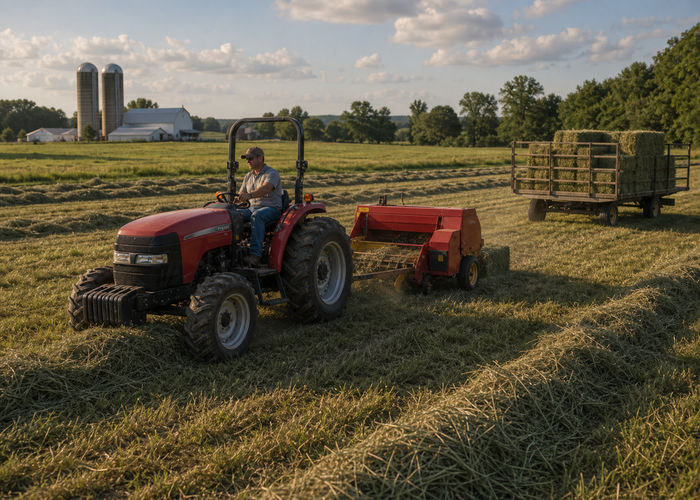
When owners start with the hay chain instead of one isolated implement, better decisions follow. They see the difference between PTO demand and transport demand. They see why hydraulic outlets matter. They see why bale handling after the field pass can require as much thought as mowing itself.
That broader view also makes internal planning easier. A buyer can move from a general hay question to specific tractors, tractor categories, and support content on the QiLu Machinery blog without forcing one article to answer every purchase decision at once.
In the end, small-farm hay work rewards balanced systems. Match the tractor to the most demanding real step in the chain, leave enough reserve for difficult field days, and keep the setup practical enough that one operator can execute the sequence without fighting the machine.
FAQ
Can a compact tractor make hay successfully?
Yes, if the implement width, bale type, field size, and pace expectations fit the tractor. Compact tractors can work well in smaller hay systems, especially with lighter cutting and square-bale plans.
What matters more for hay, engine horsepower or PTO horsepower?
PTO horsepower is usually the more practical number for powered hay tools such as mowers and balers. Engine horsepower alone can hide what is actually available at the shaft.
Why do hydraulics matter so much in hay work?
Because many hay machines rely on lift cylinders, folding functions, tailgates, and adjustments. A tractor may have enough PTO power yet still be inconvenient if remote outlets or hydraulic response are limited.
Should bale handling be part of the tractor decision?
Absolutely. The tractor that makes the bale also needs to move it, stack it, or tow the wagon safely. Ignoring that second half of the workflow leads to under-sized purchases.