Email: [email protected] Whatsapp: +8618266768780

Email: [email protected] Whatsapp: +8618266768780


I’m a small orchard and vineyard owner in California, and I’ve run my QILU Mini Farm Tractor for just over three years. This review is based on my own logs, fuel receipts, maintenance records, and repeatable task tests on our mixed loam soils with gentle to medium slopes. Disclosure: I own the tractor I’m reviewing, and there’s no sponsorship or affiliate arrangement.
If you’re skimming for the punchline: the QILU Mini Farm Tractor has increased our farm efficiency while lowering our operating costs. Across core jobs—rotary tilling, loader work, and installing trellis posts—we measured real gains in time, diesel, and labor. Below, I’ll walk you through the setup, the numbers, and where this compact farm tractor fits best.
My farm setup is a mixed orchard-vineyard in the Central Coast region, with row spacing between 8–10 feet and headlands that demand tight turning. Over three years, I used a QILU Mini Farm Tractor in the 35–40 HP compact class, typically pairing it with:
For readers wanting model specifics, the QILU compact in my tests aligns closely with the 35 HP configuration shown on the official page for the QL‑354Y. You can review current features on the product page here: QILU Mini Farm Tractor model reference. Features and options should be verified “as of 2026‑01‑23.” If you’re comparing attachment choices, QILU has a helpful roundup on common tools at QILU’s tractor attachments, and a PTO overview here: Tractor PTO guide.
Method notes:
For broader safety and design context, the industry uses standards from bodies such as the American Society of Agricultural and Biological Engineers. See ASABE standards for the latest frameworks and updates. Tractor performance evaluations also reference methodologies similar to OECD tractor codes. For costs and efficiency framing at the farm level, the USDA provides long-term economic data and analyses; see USDA farm productivity.
The comparison below summarizes our “before and after” performance and cost indicators once the QILU Mini Farm Tractor became the daily driver for fieldwork. Where I estimate cost, I note assumptions inline; all other figures come from my task logs.
| Task Metric | Before QILU Tractor | After QILU Tractor | Estimated Cost Assumptions | Labor Effort Notes |
|---|---|---|---|---|
| Per-pass tilling time (2-acre block) | 9.0 hours | 5.5 hours | Fuel cost calculated at $4.75/gal diesel; operator time at $28/hr (as of 2026‑01‑23) | Fewer changeovers, steadier PTO load reduced fatigue |
| Monthly diesel consumption | 180 gallons | 132 gallons | Diesel price as above; monthly field hours steady across seasons | Less idling and higher acres/hour reduced fuel per task |
| Seasonal temporary labor | 220 hours | 165 hours | Labor rate at $23/hr seasonal average | Better throughput with loader and auger cut helper hours |
| Annual maintenance spend | $2,400 | $1,550 | Parts/fluids receipts averaged over 3 years | Predictable service intervals reduced unplanned downtime |
In plain terms, the QILU Mini Farm Tractor gave us faster task completion, lower diesel burn, and fewer paid helper hours. Maintenance tracked favorably due to straightforward access and routine parts.
The rotary tiller is where the QILU Mini Farm Tractor proved its value most clearly. On our 2-acre vineyard block, time per pass dropped from 9 hours to 5.5 hours. That improvement came from three factors I could consistently reproduce:
Fuel use during tillage fell proportionally. On average, we saw roughly one-third fewer gallons consumed per pass for the same area and depth settings. The upshot is practical farm efficiency: more acres prepared within daylight windows, less refueling, and lower operator fatigue.
Material handling—compost, gravel, and bin shuttling—is a constant on our farm. The front loader on the QILU Mini Farm Tractor became the everyday tool for these chores. The quick-attach coupler made bucket swaps straightforward and safe, especially when switching to pallet forks for bin movement.
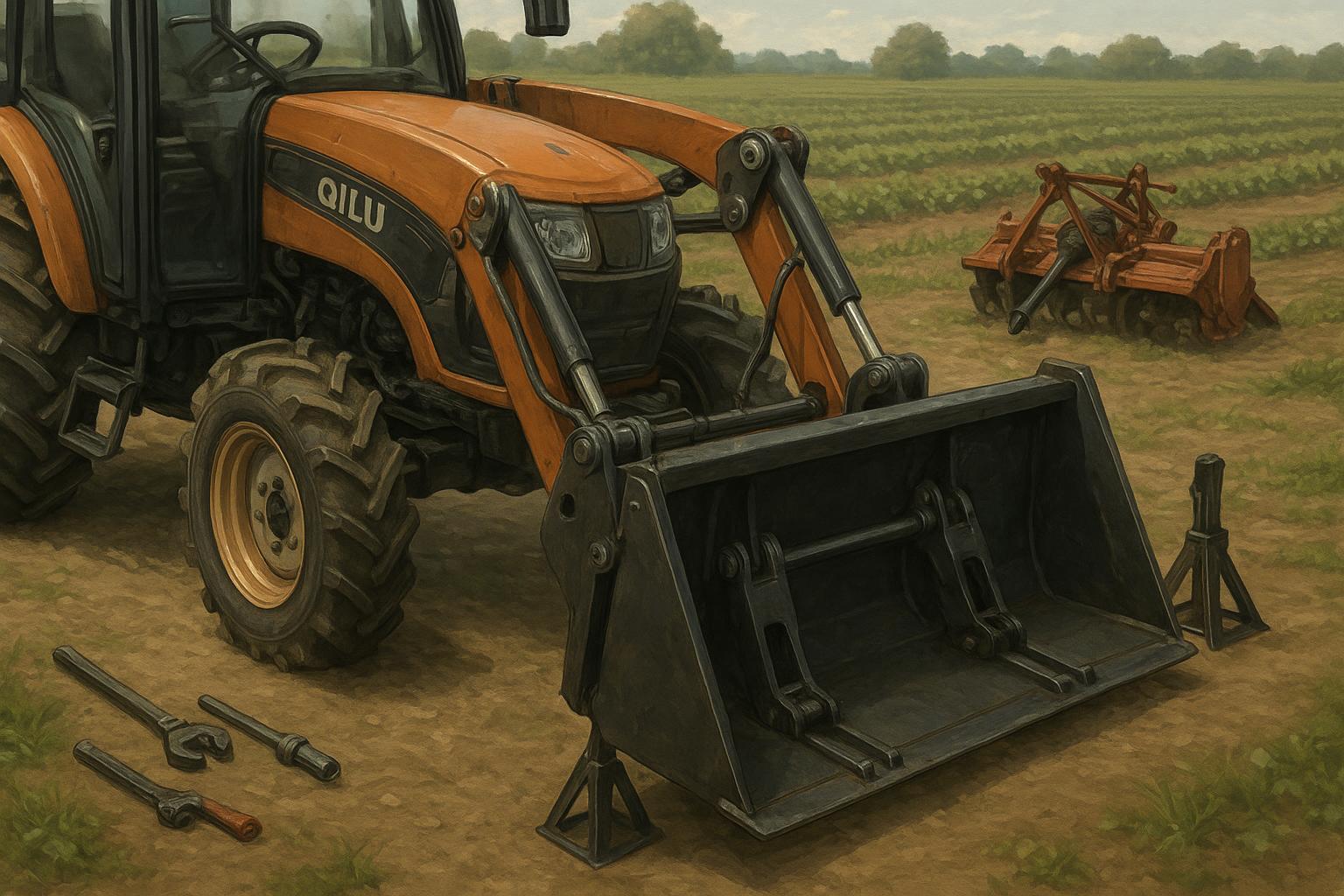
The quick-attach workflow matters because it cuts non-productive time. On average, I logged single-digit minutes to swap loader tools after a short learning curve. If you’re evaluating coupler standards and compatibility, confirm with your dealer which coupler the QILU Mini Farm Tractor ships with and which implements match that standard. For context on loader best practices, QILU’s article on the topic is a useful primer: tractor and loader workflows.
Trellis building in our orchard rows often comes in bursts. The QILU Mini Farm Tractor with a post hole digger saved us helper hours and smoothed installation quality. Using two auger diameters for trellis posts, we consistently drilled 10–14 holes per hour at target depths without wobble. That pace cut seasonal temporary labor from 220 to around 165 hours, assuming similar task loads. PTO torque delivery handled compacted patches without stalling, hole depth and diameter stayed in tolerance which minimized rework, and the back-and-forth between the operator station and hole checks felt efficient thanks to clear control labeling and predictable hydraulics.
Most compact tractors in this class run a 540 rpm rear PTO, which is the basis for a wide range of implements. QILU’s compact lineup follows standard practice here; for specifics on PTO types and implement matching, I recommend reading QILU’s own overview: Tractor PTO guide.
What mattered day to day was not the brochure spec but behavior under load. The QILU Mini Farm Tractor maintained PTO speed reliably with a rotary tiller and handled hydraulic demands of the loader without lag. Hydraulic flow felt responsive when feathering the bucket and lifting compost loads to stack height. In practice, that meant fewer stalls, cleaner cycles, and less operator futzing.
For readers interested in the safety and design context that manufacturers work against, ASABE maintains frameworks for agricultural machine design and updates standards over time. See ASABE standards for the current catalog. Performance testing methodologies in the industry often reference protocols similar to OECD tractor codes.
Comfort and control matter in long sessions. Over three years, here’s what stood out:
On maintenance, the QILU Mini Farm Tractor rewarded routine care. Oil, filter, and grease points were accessible, and parts sourcing was straightforward. Annual maintenance spend averaged about $1,550, down from the $2,400 we logged with our prior approach, mainly because we stayed on schedule and avoided deferred fixes. If you’re new to compact farm tractor maintenance, this short guide is practical: Video: Maintenance tips for compact tractors.
For company background and manufacturing context—materials, build practices, and support—you can learn more about QILU’s manufacturing. I also found their equipment application page helpful for understanding support and warranty posture: equipment application overview.
On mild vineyard slopes, the QILU Mini Farm Tractor felt stable with proper ballast. We ran agricultural tires matched to our soils and added rear weight via the 3-point implement. Turning radius in 8–10 foot rows allowed confident headland maneuvers without chewing up ground.
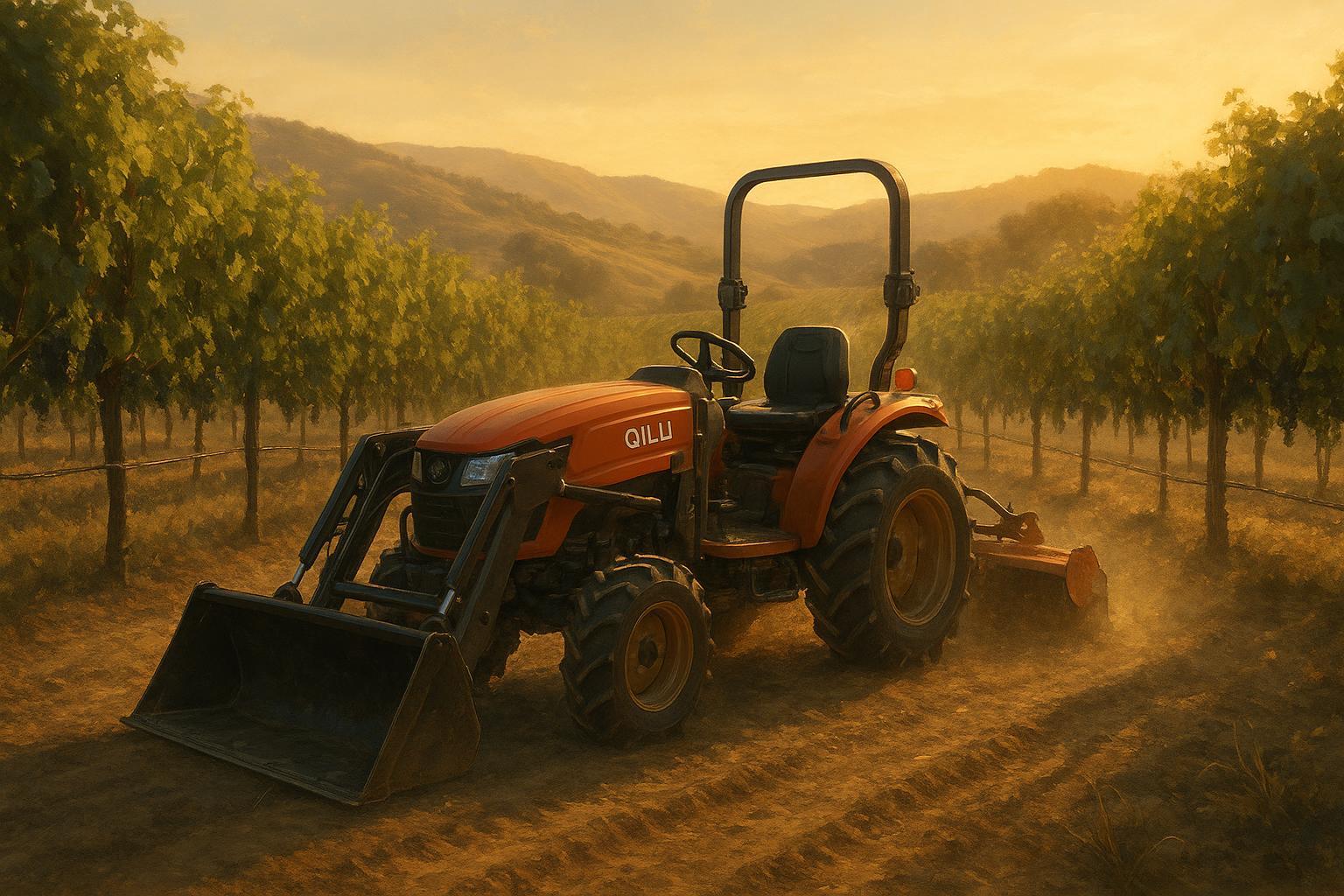
For general soil management best practices—the foundation of safe, efficient operations—USDA NRCS provides strong guidance. Their conservation and soil health technical notes offer context for reduced till and slope-sensitive operations. Start here: USDA soil management.
True cost-of-ownership starts with purchase price but quickly becomes about diesel, maintenance, and labor. Since QILU typically lists tractors as “contact for quote,” I’ll stick to our operating numbers.
These are conservative calculations based on our logs and local rates “as of 2026‑01‑23.” National averages and long-term productivity trends are well documented by the USDA; if you want the macro view, search USDA ERS resources on farm productivity and production expenses.
The QILU Mini Farm Tractor suits small farms, orchards, and vineyards where maneuverability, implement power, and attachment versatility matter.
Best fit:
Not ideal:
To keep comparisons fair without naming competitor brands, I benchmarked performance against two widely chosen compact classes:
If you want to sense-check community sentiment, a good starting point for owner discussions is the compact tractor forum discussion homepage. Evaluate threads carefully for context and configuration details.
After three years, I can say the QILU Mini Farm Tractor delivered measurable gains in farm efficiency while reducing our operating costs. If you’re deciding which compact farm tractor to bring onto a small orchard or vineyard, this model’s combination of rotary tiller throughput, loader workflow, and post hole digger precision makes it a cost-effective farming choice.
To explore options and configurations, you can explore QILU’s full product line and review model specifics like the 35 HP class here: QILU Mini Farm Tractor model reference. For background on the company and build practices, learn more about QILU’s manufacturing.
If you want broader application advice and package ideas, QILU’s solution pages are helpful: product application solutions. And if you’re planning your attachment set, start with QILU’s tractor attachments.







-1.png)