Welcome to Shandong Qilu Industrial Co., Ltd

 English
 Arabic
 Bulgarian
 Bengali
 Czech
 Danish
 German
 Greek
 Spanish
 Finnish
 French
 Hindi
 Croatian
 Hungarian
 Indonesian
 Italian
 Japanese
 Korean
 Lithuanian
 Dutch
 Norwegian
 Polish
 Portuguese
 Romanian
 Russian
 Slovak
 Slovenian
 Swedish
 Thai
 Turkish
 Ukrainian
 Vietnamese
 Tagalog
 Malay
 Estonian
 Catalan
 Latvian
 Urdu
 Serbian
 Persian
 Swahili
 Albanian
 Armenian
 Icelandic
 Bosnian
 Luxembourgish
 Afrikaans
English Arabic
Bulgarian
Bengali
Czech
Danish
German
Greek
Spanish
Finnish
French
Hindi
Croatian
Hungarian
Indonesian
Italian
Japanese
Korean
Lithuanian
Dutch
Norwegian
Polish
Portuguese
Romanian
Russian
Slovak
Slovenian
Swedish
Thai
Turkish
Ukrainian
Vietnamese
Tagalog
Malay
Estonian
Catalan
Latvian
Urdu
Serbian
Persian
Swahili
Albanian
Armenian
Icelandic
Bosnian
Luxembourgish
Afrikaans
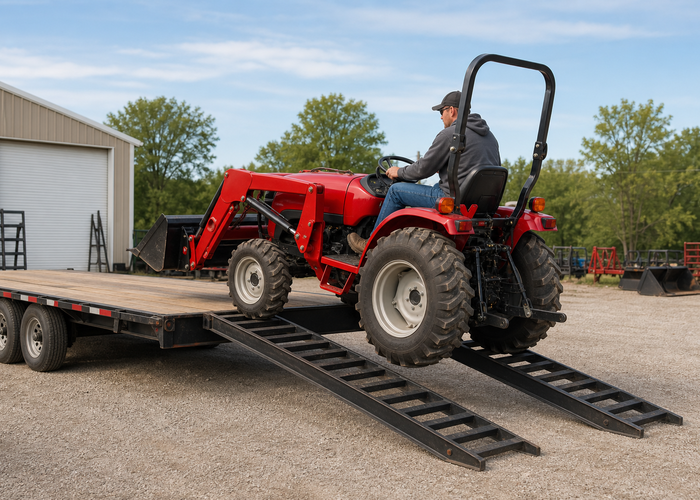
Compact Tractor Trailer Loading and Tie-Down Plan Before Road Transport
A practical guide to compact tractor trailer loading and tie-down planning before road transport, covering weight balance, attachment position, and cargo securement checks.
Compact Tractor Trailer Loading and Tie-Down Plan Before Road Transport matters because this kind of job exposes small setup mistakes quickly. A compact tractor can look capable in the yard and still work poorly once a loading ramp, road trailer, and a machine that has to arrive exactly as safely as it left starts. Operators who browse the farm tractor range often compare horsepower first, but this job usually depends more on load position, attachment stance, and how the tractor will be restrained for the road and the order in which the operator sets the machine up.
The right choice is rarely a single spec-sheet number. a stable balanced trailer that can travel without shifting, bouncing, or rushed roadside corrections depends on ballast, tire grip, PTO behavior, ground condition, and whether the operator can maintain a repeatable working rhythm. The machine selection ideas on the tractor application solutions page are useful because they frame the tractor as a work system instead of a loose list of features.
That is also why buyers comparing a utility model like the QL-904B tractor with other machines in the QiLu Machinery product lineup should think about the full task: how the implement starts, how the tractor turns, where weight transfers during the job, and which checks need to happen before the first pass. Those details are what separate a smooth workday from avoidable downtime or unsafe improvisation.
Why This Job Punishes a Casual Setup
The task becomes difficult when the operator assumes the tractor can simply pull or spin its way through it. Road transport fails when operators treat loading like parking instead of like cargo securement, which means the dangerous mistake often happens before the truck even leaves the yard That is why the OSHA guidance on agricultural tractor operation and Penn State Extension’s tractor safety overview both stay focused on stability, shielding, operator attention, and terrain instead of treating the job as a pure power question.
The same lesson appears in the University of Minnesota’s tractor safety guidance and the CDC’s agricultural injury resources: once an operator works on uneven ground, near rotating equipment, or around repeated transport and hookup steps, discipline matters more than confidence. A tractor that is technically big enough can still be a poor match if the tires, speed range, implement angle, or travel path are wrong.
Match The Tractor To The Actual Working Pace
Start by deciding how slowly or steadily the tractor must work, not how fast it could work. The loading pace should be slow enough that the tractor can climb the ramps straight, settle where the trailer wants the weight, and stop without harsh brake or clutch inputs When the job has a clear target pace, the operator can choose the gear, engine speed, ballast level, and turning pattern that keep the machine composed rather than constantly correcting.
Build The Day Around Ground Condition And Clearance
Ground condition often decides the setup before the implement even begins. Trailer loading areas need level footing, clear escape space, and a ramp approach that does not twist the tractor before the tires are fully on the deck If the approach path is soft, rough, or narrow, that path should influence tire choice, ballast, and route planning before the implement enters the work zone.
Check Trailer Balance Before The Tractor Starts Climbing
Operators often focus so hard on the tractor that they forget the trailer is part of the machine system now. Deck length, axle position, tongue weight target, and the location of the tractor’s heaviest attachment all affect whether the final load will track calmly on the road. A loading plan should therefore start with a marked stopping zone on the trailer deck instead of a vague idea that the operator will “feel” when the tractor is in the right place.
That stopping zone should reflect the real transport configuration, not the bare tractor alone. A front loader, ballast box, rotary cutter, or implement left on the three-point hitch changes how weight transfers onto the trailer axles and the tow vehicle hitch. When operators ignore that, they often end up creeping forward and backward on the ramps while guessing at balance, which is exactly when straight loading discipline starts to disappear.
Checks To Make Before The First Pass
Before starting, confirm the site, the route, and the support plan. Confirm trailer rating, ramp condition, trailer attitude, and which attachments should be lowered, centered, or removed before transport If the job could expose buried utilities or hidden edges, start with 811 utility locating and visible marking rather than assuming the work area is clear.
Then confirm operator protection and implement condition. Inspect chains, binders, attachment lock points, parking brake function, and whether loose tools or accessories will become their own cargo problem on the road That is the practical value of revisiting the OSHA and extension references before a seasonal task resumes: they force the operator to ask whether the setup is truly ready or merely familiar.
Finally, decide what a clean first hour looks like. A good first loading attempt ends with the tractor in the right place on the deck and ready for restraint, not with repeated repositioning because the balance plan was unclear A tractor setup should be judged by repeatability: can the machine keep the same line, the same PTO rhythm, and the same operator visibility without extra strain?
Once the first pass begins, the operator should stay disciplined about pace. Once loaded, the operator should think like a cargo inspector, not like a driver who is already late This is where many tractors perform well on paper but poorly in practice, because the operator keeps adjusting rather than following a stable plan.
Load transfer also needs attention during the working run. The best tie-down plan restrains the tractor and its attachments as a system so that braking, bumps, and lane changes do not create fresh movement on the deck Small corrections made early are cheaper than one large correction made after the implement or trailer is already out of line.
If the setup is right, the job starts to look uneventful. The tractor tracks cleanly, the implement stays predictable, and the operator is free to watch the work rather than fight the machine. That is usually the clearest sign that the machine choice and setup order were correct.
A Practical Workflow For The Job
| Work stage | What the tractor must do | What to verify before moving on |
|---|---|---|
| Prepare the trailer | Check rating, ramps, deck condition, and anchor points | The trailer is ready before the tractor starts climbing |
| Load the tractor | Drive up straight and stop at the planned balance point | The machine lands where securement can work properly |
| Secure the load | Apply chains, binders, and attachment restraint in a planned order | The tractor and implements resist movement as a system |
| Recheck before departure | Inspect every contact point and loose item | The road trip begins without hidden slack or overlooked hazards |
This sequence is useful because it keeps the operator from skipping ahead. A tractor that is rushed into the main task without those checkpoints often creates the very delays it was supposed to prevent.
How Conditions Change The Setup Midday
Weather and surface change matter even after the machine is already working. A dry lane can soften after irrigation, a pasture edge can hide more moisture than the center, and a transport ramp that felt secure in the morning can become slick in the afternoon. Operators should therefore treat the first successful pass as a baseline, not as a guarantee that the same settings will still be right later in the day.
That is also why it helps to pause after the first third of the job and ask whether the tractor is still balanced, whether tire grip still feels the same, and whether the implement is still leaving the intended result. If those answers change, the right reaction is to adjust the plan deliberately instead of pushing through because the machine has already started.
Know When A Different Tool Is Better
A disciplined operator also knows when the tractor should not solve the whole problem alone. Some jobs need a different attachment, more staging help, drier ground, or another machine for the tightest or steepest section. Changing the tool or delaying the task is not lost time if it prevents damage, unsafe operation, or an expensive cleanup later.
Plan The First Roadside Recheck Before Departure
Road transport safety does not end when the last binder is tightened in the yard. Experienced operators build a planned recheck into the trip, especially after the first short section of road where chains settle, tires flex, and attachments reveal whether they were restrained well enough. That first stop should be treated as part of the loading workflow, not as a sign that something already went wrong.
A good recheck is methodical. Walk one full circle around the trailer, inspect each chain angle, look for movement at the attachment corners, and confirm that ramps, pins, and loose items have not shifted. The most valuable part of that stop is often not retightening hardware; it is catching the one detail the operator could not judge clearly while standing next to a running tractor on the trailer deck.
What To Record For The Next Job
One of the most useful ownership habits is writing down what the successful setup actually was. Deck height, auger diameter, tie-down order, ballast amount, and the travel speed that felt stable are all details worth saving. Those notes turn one good day into a repeatable operating standard instead of forcing the next operator to relearn the job from memory.
That record should also include what changed the plan. If a soft shoulder forced a new route, if taller grass demanded extra overlap, or if a trailer needed a different load position than expected, write that down too. Those are the lessons that improve future machine selection and help buyers compare whether a different tractor or attachment would make the work easier.
Over time, that kind of practical record becomes more valuable than marketing language because it connects the tractor directly to jobs the owner really performs. It is also the clearest way to decide whether the current machine still fits the workload or whether another model in the same product family would reduce strain, downtime, or safety compromises.
How To Match The Trailer To The Tractor Instead Of Just Making It Fit
Buyers also make better transport decisions when they judge the trailer as seriously as they judge the tractor. Deck width, deck height, ramp angle, axle spacing, and anchor-point layout decide whether the machine can be loaded calmly and restrained without awkward chain paths. A trailer that technically accepts the tractor but forces sharp breakover angle, poor tongue weight, or improvised chain routing is still the wrong trailer for the job.
That is especially important for owners who rotate between several tractor chores. A compact tractor that spends one week mowing and the next week carrying a loader or rear attachment may need different loading marks or even a different trailer strategy. Writing those combinations down helps owners keep transport repeatable instead of reinventing the balance plan every time the machine leaves the property.
Seen that way, transport equipment becomes part of ownership efficiency. The right trailer shortens loading time, reduces binder adjustments, and lowers operator stress because the machine lands where it should almost automatically. That practical fit matters more in daily use than a trailer that only looks adequate in a parked yard comparison.
A Buyer Checklist Before Choosing The Tractor
Before buying or assigning a tractor to this job, ask a few blunt questions. Can the machine hold the correct working speed without forcing the operator to rush? Can the tires, ballast, and hitch geometry support the actual ground condition? Can the operator see the critical part of the task clearly enough to work calmly? Those questions tend to reveal fit much faster than another horsepower comparison.
It also helps to compare the tractor against the ownership pattern around it. If the same machine must handle mowing, fence work, transport, loader chores, and seasonal support, then setup flexibility matters as much as raw strength. That is why attachment changeover time, storage space, and operator familiarity deserve a place in the buying decision too.
Operators who use that checklist usually make more durable choices because they are comparing the tractor to recurring jobs instead of to advertising language. A machine that feels slightly less impressive on paper can still be the more valuable purchase when it performs the actual route, attachment, and terrain sequence with fewer compromises.
Where Owners Commonly Go Wrong
They Size The Tractor Around The Marketing Number
They assume the trailer will forgive poor weight placement as long as the tractor fits between the fenders That is why the product application solutions pages are more useful than broad advertising language: they push buyers back toward job fit, terrain, and attachment behavior.
They Treat The Support Plan As Optional
They focus on only one chain point or one attachment and forget that the full load path includes the tractor, the implement, and every loose object riding with them Support items such as markers, chains, extra pins, tie-down gear, or cleanup tools should be loaded deliberately rather than borrowed from memory once the tractor is already in position.

Another frequent mistake is ignoring the second half of the job. Operators often think about the opening move and forget about the turns, reloads, cleanup, or transport steps that happen later. Yet those later steps are where fatigue, rushed decisions, and poor visibility start to matter most.
It also helps to record the setup that worked. Tire pressure, ballast amount, hitch setting, travel speed, and a note about ground condition make the next job faster to prepare. That practical record is more valuable than vague memory, especially when the tractor rotates among several operators or seasonal tasks.
Buyers who want a tractor that stays useful across several work patterns should keep comparing the machine against real applications rather than just against other spec sheets. The QiLu Machinery blog is the right place to keep that kind of practical decision framework because it ties the machine back to daily ownership instead of abstract advertising claims.
Transport planning also reveals how disciplined the entire equipment routine really is. If the same owner consistently knows where the tractor should stop, which chain goes on first, and when the first roadside recheck will happen, then loading becomes routine in the best sense of the word: repeatable, calm, and easy to audit. Reviewing the FMCSA cargo-securement rules alongside that routine helps owners compare their daily habits against the road standard that actually matters. That predictability is often the clearest sign that the tractor, trailer, and support equipment are matched to each other properly.
FAQ
What matters most before a compact tractor is loaded on a trailer?
Weight placement, ramp approach, and a complete tie-down plan matter most. The trailer should already have a clear loading target before the tractor starts climbing the ramps.
Why is cargo securement different from simple parking?
Because road forces are not the same as yard conditions. Braking, bumps, and cornering all test whether the tractor and attachments are truly restrained.
Should attachments be part of the tie-down plan?
Yes. Loader arms, three-point implements, and any accessory on the trailer influence balance and can create movement if they are not restrained deliberately.
What is the most common transport mistake?
Rushing the loading step. Poor deck position and improvised chain placement usually start at the ramp, not after the truck is moving.