Welcome to Shandong Qilu Industrial Co., Ltd

 English
 Arabic
 Bulgarian
 Bengali
 Czech
Czech
 Danish
 German
 Greek
Greek
 Spanish
 Finnish
 French
 Hindi
Hindi
 Croatian
 Hungarian
 Indonesian
 Italian
 Japanese
 Korean
 Lithuanian
 Dutch
Dutch
 Norwegian
 Polish
 Portuguese
 Romanian
 Russian
 Slovak
 Slovenian
 Swedish
 Thai
Thai
 Turkish
 Ukrainian
 Vietnamese
 Tagalog
 Malay
Malay
 Estonian
 Catalan
 Latvian
 Urdu
Urdu
 Serbian
 Persian
 Swahili
 Albanian
 Armenian
 Icelandic
 Bosnian
 Luxembourgish
 Afrikaans
English Arabic
Bulgarian
Bengali
Czech
Danish
German
Greek
Spanish
Finnish
French
Hindi
Croatian
Hungarian
Indonesian
Italian
Japanese
Korean
Lithuanian
Dutch
Norwegian
Polish
Portuguese
Romanian
Russian
Slovak
Slovenian
Swedish
Thai
Turkish
Ukrainian
Vietnamese
Tagalog
Malay
Estonian
Catalan
Latvian
Urdu
Serbian
Persian
Swahili
Albanian
Armenian
Icelandic
Bosnian
Luxembourgish
Afrikaans
Afrikaans
English Arabic
Bulgarian
Bengali
Czech
Danish
German
Greek
Spanish
Finnish
French
Hindi
Croatian
Hungarian
Indonesian
Italian
Japanese
Korean
Lithuanian
Dutch
Norwegian
Polish
Portuguese
Romanian
Russian
Slovak
Slovenian
Swedish
Thai
Turkish
Ukrainian
Vietnamese
Tagalog
Malay
Estonian
Catalan
Latvian
Urdu
Serbian
Persian
Swahili
Albanian
Armenian
Icelandic
Bosnian
Luxembourgish
Afrikaans
Drilling Rig Site Preparation Checklist Before Small Borehole Jobs
A practical drilling rig site preparation checklist for small borehole jobs, covering access, utility marking, level pads, stabilizers, water control, exclusion zones, and crew roles.
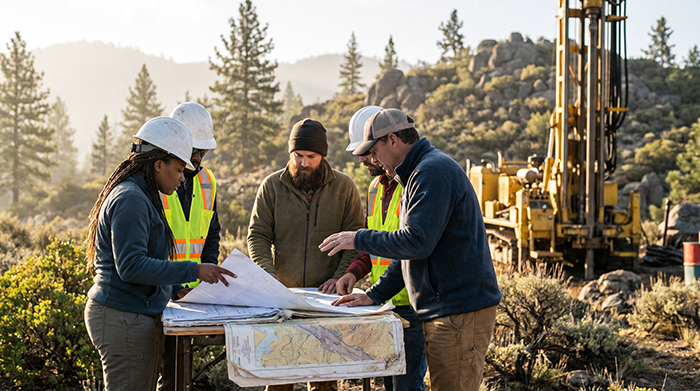
A drilling rig site preparation checklist protects the crew before the borehole begins. The most important decisions happen while the rig is still parked: access route, utility marking, pad stability, exclusion zone, water handling, spoil control, and emergency access. Once the mast is raised and work starts, every missing detail becomes harder to correct.
QiLu Machinery customers reviewing drilling rig equipment usually focus on drilling depth, power, mobility, and transport size. Those specifications matter, but the site decides whether the rig can work safely. A capable rig still needs a level pad, firm access, clear overhead space, and a crew that understands the sequence.
This guide combines practical site checks with general safety context from OSHA construction resources, NIOSH construction safety information, and basic groundwater awareness from USGS groundwater education. It is written for small construction, farm infrastructure, and utility-style borehole planning.

Confirm Access Before the Rig Arrives
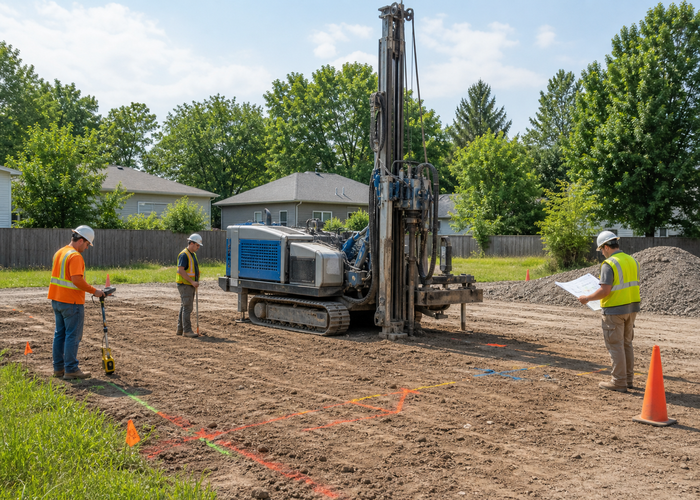
Access is not only the driveway. Check gate width, turning radius, overhead branches, power lines, soft shoulders, culverts, slopes, parked vehicles, and the path for support equipment. A route that handles a pickup may not handle a drilling rig, water supply, compressor, trailer, or service truck.
Walk the route in the direction the rig will travel. Identify where it will turn, reverse, unload, stabilize, and leave if weather changes. If the exit depends on dry ground, the site plan is incomplete.
Utility Marking and Exclusion Zones
No drilling should begin until underground utilities and known site services have been addressed according to local requirements. Mark electric, gas, water, communication, irrigation, drainage, and septic concerns where relevant. If information is uncertain, stop and confirm before equipment enters the bore area.
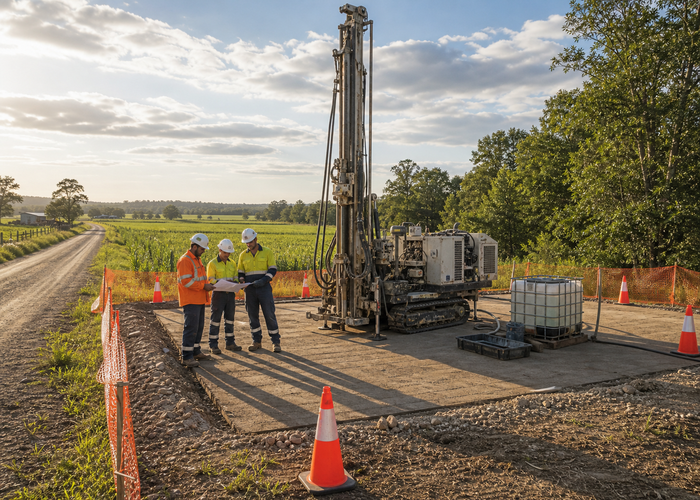
Set an exclusion zone before work starts. Cones, tape, barriers, or spotters should keep nonessential people away from the mast, rotating tools, hoses, spoil area, and support vehicles. The exclusion zone should move if the job layout changes.
Level Pad, Stabilizers, and Ground Support
A drilling rig needs stable support. Inspect soil, fill, pavement, slope, drainage, and nearby edges. Stabilizers should bear on suitable ground or approved pads. A rig that is level at arrival can change if the pad settles under vibration or water.
Water and spoil management belong in the setup plan. Decide where water will come from, where it will go, how cuttings will be contained, and how muddy runoff will be prevented from entering roads, drains, or finished areas.
Crew Checks Before Raising the Mast
Inspect mast components, hoses, guards, controls, drill tooling, emergency stops, communication signals, and personal protective equipment. The crew should know who controls the rig, who watches the exclusion zone, and who communicates with visitors or property owners.
Weather matters. Wind, rain, lightning, freezing ground, and poor visibility can all change the risk. If the site becomes unstable or visibility drops, lower the mast and pause. The borehole is not more important than control of the site.
Tooling should match the ground and job requirement. Hard soil, loose fill, gravel, clay, and mixed debris create different drilling behavior. If the rig begins to chatter, shift, bind, or pull material unexpectedly, stop and reassess.
Document the starting conditions: site photos, access route, utility marks, pad condition, weather, crew, rig setup, and planned depth. These notes support safety, client communication, and future maintenance.
Warning Signs During Setup
Stop for settling stabilizers, unknown utilities, unclear hand signals, leaking hoses, unstable spoil, unsafe bystanders, overhead conflict, or water running where it should not. These are setup problems, not normal inconveniences.
A small borehole job can still carry serious risk. The crew should treat the first hour as a controlled setup period, not a race to depth.
Planning Resources and Field Notes
For internal planning, review QiLu Machinery’s drilling rig category, all machinery products, and product application solutions pages before matching equipment to site conditions.
For outside safety context, compare site notes with OSHA construction safety resources, NIOSH construction resources, and USGS groundwater information where borehole work involves water or soil decisions.
A Short Site Preparation Checklist
Confirm access route, utility marks, overhead clearance, level pad, stabilizer support, exclusion zone, water plan, spoil control, emergency access, weather, crew roles, tooling, and shutdown signals before drilling begins.
Management Notes for Daily Use
Managers should keep a site preparation form that travels with the rig. The form should be short enough to use but specific enough to show who approved access, utility checks, pad condition, and exclusion zone setup.
After each job, review what slowed the crew down. Repeated access trouble, water control issues, or unstable pads should change future planning. Better site preparation is learned from real jobs.
Field Scenario: How the Checklist Changes the Workday
Consider a crew that arrives with a clear schedule but only a vague plan. The machine is unloaded, the operator sees the work area, and everyone expects the job to begin immediately. Without a checklist, the first decision is usually speed: move the material, cut the grass, start the bore, or finish the first pass. With a checklist, the first decision is control. The operator confirms the surface, machine condition, people nearby, attachment condition, and stop points before committing the equipment.
That difference changes the whole day. A loose fitting is found before hydraulic pressure rises. A soft shoulder is marked before the machine turns across it. A bystander route is moved before the operator reverses. A poor discharge direction is corrected before debris reaches glass, vehicles, or workers. These are ordinary details, but ordinary details are where many job delays begin.
Good operators do not treat inspection as separate from production. They know the first clean setup is part of the work. If the route, attachment, ground, or crew communication is wrong, production will slow down later anyway. The checklist simply moves that pause to a safer moment.
Operator Communication and Stop Signals
Every job should have a simple stop signal. It may be a hand signal, radio call, horn signal, or verbal command, but everyone on site should understand it before the machine moves. The person operating the equipment should not have to guess whether a helper is asking for a small adjustment or an immediate stop.
Communication is especially important when visibility is limited. Buckets, mower decks, drilling masts, trailers, walls, shrubs, parked vehicles, and slopes all create blind spots. A helper who steps into the wrong area can become invisible at the worst time. Define where helpers stand, how they signal, and when they must leave the work zone.
Maintenance Clues During the Job
Some defects only appear under load. A hose may look fine when parked but rub when the attachment is lifted. A belt may sound normal at idle but smell hot during long operation. A tire may hold pressure in the shop but show sidewall stress on uneven ground. An access pad may look firm until vibration, water, or repeated passes expose weakness.
When a symptom appears, record it in plain language. Write what the machine was doing, where it was working, what attachment was connected, what the ground felt like, and what changed. These notes help a manager decide whether the issue is a machine repair, operator training point, route problem, or mismatch between equipment and job.
Training New Operators Without Overloading Them
New operators do not need a lecture on every possible failure. They need a repeatable routine they can remember under pressure. Start with five anchors: inspect the machine, inspect the work area, confirm people are clear, test movement slowly, and stop when anything changes. More detailed checks can be added as the operator gains experience.
Experienced operators also benefit from a written routine because familiarity can hide risk. A person who has completed the same job for years may skip the step that catches a changed ground condition, missing pin, dull blade, loose hose, or blocked access route. The checklist protects skill from becoming habit without attention.
Recordkeeping That Actually Helps
A useful record does not need to be long. Date, operator, machine, attachment, site condition, work performed, unusual observations, and follow-up action are enough for many crews. The important part is reviewing the record. If notes disappear into a binder that no one opens, the crew loses the value of its own experience.
Review patterns once a week. If the same attachment is difficult to connect, inspect the latch and storage method. If the same area becomes soft after rain, improve drainage or change the route. If operators keep reporting vibration, do not wait for a breakdown. Repeated notes are not complaints; they are early warnings.
Cost Control Through Better Setup
Better setup often saves money quietly. It reduces damaged turf, broken hoses, bent guards, wasted travel time, repeated site visits, and emergency repairs. It also protects the finished work. A job can be technically complete and still disappoint a customer if the machine left ruts, torn grass, scattered spoil, or damaged edges behind.
Machine choice matters, but machine discipline matters too. The best equipment package is one the crew can inspect, operate, service, and document consistently. That is why buyers should compare specifications with real work routines rather than only looking at headline power or capacity.
For more internal planning, compare this topic with QiLu Machinery product range, product application solutions, the machinery blog, and the relevant product category pages before choosing a machine package.
For outside references, keep general safety guidance from OSHA, NIOSH, the National Safety Council, and USDA NRCS available when training operators or reviewing site conditions.
Final Pre-Start Review
The final review should be short, spoken aloud if a crew is present, and tied to the actual job. Confirm the machine, attachment, route, ground condition, nearby people, emergency stop method, and first task. This last review often catches the one item that was assumed rather than checked.
For purchase and planning context, operators can also compare the current job with QiLu Machinery’s equipment application page. That page helps connect daily field use with broader machine selection, especially when one site uses loaders, mowers, tractors, excavators, and drilling equipment together.
A good crew learns from every job. If the setup worked, record why it worked. If the setup was slow, record what caused the delay. If the machine felt wrong, record the first moment it changed. These small notes help the next operator start with better information instead of repeating the same discovery.
After the borehole job, review the site before demobilizing. Check whether the access route stayed firm, whether water and spoil were contained, whether the exclusion zone worked, and whether any utility or overhead concern appeared during the work. Those notes can improve the next mobilization and prevent the crew from treating each job as if it starts from zero.
A drilling crew also benefits from a short closeout photo set. Photograph the pad, spoil area, restored access route, and final work zone. These images help confirm that the site was left in controlled condition and give managers a practical reference when planning similar small borehole jobs later.
This final check protects both crew efficiency and site quality.
`nPractical FAQ
How should this guide be used? Use it as a field planning aid together with the operator manual and local safety rules. The exact machine manual always controls service limits, fluids, attachment ratings, and shutdown steps.
What should stop the job? Stop for unstable handling, damaged guards, missing pins, leaking hoses, unclear ground conditions, bystanders inside the work area, or any warning that the operator cannot explain.
How can a small team keep the routine consistent? Keep a short checklist near the machine, assign one person to review notes weekly, and turn repeated observations into repair, training, or route-planning actions.
A drilling rig site preparation checklist is the calm part of a high-consequence job. When access, utilities, pad stability, water, spoil, and crew roles are clear, the rig can work with fewer surprises.