Welcome to Shandong Qilu Industrial Co., Ltd

 English
 Arabic
 Bulgarian
 Bengali
 Czech
Czech
 Danish
 German
 Greek
Greek
 Spanish
 Finnish
 French
 Hindi
Hindi
 Croatian
 Hungarian
 Indonesian
 Italian
 Japanese
 Korean
 Lithuanian
 Dutch
Dutch
 Norwegian
 Polish
 Portuguese
 Romanian
 Russian
 Slovak
 Slovenian
 Swedish
 Thai
Thai
 Turkish
 Ukrainian
 Vietnamese
 Tagalog
 Malay
Malay
 Estonian
 Catalan
 Latvian
 Urdu
Urdu
 Serbian
 Persian
 Swahili
 Albanian
 Armenian
 Icelandic
 Bosnian
 Luxembourgish
 Afrikaans
English Arabic
Bulgarian
Bengali
Czech
Danish
German
Greek
Spanish
Finnish
French
Hindi
Croatian
Hungarian
Indonesian
Italian
Japanese
Korean
Lithuanian
Dutch
Norwegian
Polish
Portuguese
Romanian
Russian
Slovak
Slovenian
Swedish
Thai
Turkish
Ukrainian
Vietnamese
Tagalog
Malay
Estonian
Catalan
Latvian
Urdu
Serbian
Persian
Swahili
Albanian
Armenian
Icelandic
Bosnian
Luxembourgish
Afrikaans
Afrikaans
English Arabic
Bulgarian
Bengali
Czech
Danish
German
Greek
Spanish
Finnish
French
Hindi
Croatian
Hungarian
Indonesian
Italian
Japanese
Korean
Lithuanian
Dutch
Norwegian
Polish
Portuguese
Romanian
Russian
Slovak
Slovenian
Swedish
Thai
Turkish
Ukrainian
Vietnamese
Tagalog
Malay
Estonian
Catalan
Latvian
Urdu
Serbian
Persian
Swahili
Albanian
Armenian
Icelandic
Bosnian
Luxembourgish
Afrikaans
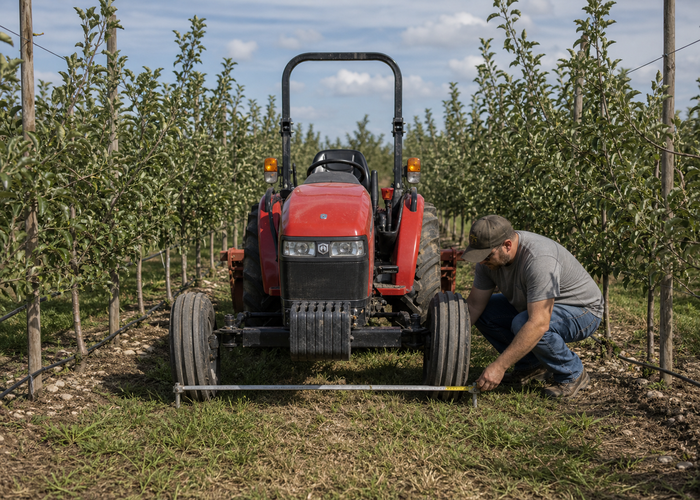
Orchard Tractor Setup: Turning Radius, Canopy Clearance, PTO Tools, and Tire Choice
A practical orchard tractor setup guide covering turning radius, canopy clearance, PTO sprayer and mower planning, tire choice, and row-fit decisions.
An orchard tractor is judged in inches long before it is judged in horsepower. The machine has to turn before the row ends, clear low limbs without beating up the canopy, keep the operator out of branch strike zones, and still run the sprayer or mower that makes the orchard productive. A tractor that feels perfect in an open field can become awkward and expensive once every pass happens between tree rows.
That is why orchard setup should start with the row environment itself. Buyers who begin with the farm tractor range often compare horsepower classes first, but orchard success usually comes from fit, visibility, attachment match, and predictable stability. In many orchards, especially mixed fruit blocks and developing plantings, the best answer sits somewhere between the 25-50 HP tractor range and the 50-70 HP tractor range, depending on sprayer size, mower width, and trailer loads.
Owners also need to separate field habits from orchard habits. Loader work, haying, and transport can forgive a broad turning circle or a higher operator station, while orchard alleys rarely do. If the plan is to use one machine for mowing, spraying, pruning support, and occasional transport, it helps to review both the core tractor classes and the broader tractor application solutions before choosing the final setup.
Why Orchard Tractors Are Evaluated From the Trees Inward
Orchard rows create a fixed operating envelope. Tree spacing, trellis posts, irrigation lines, spray drift control, and branch clearance all narrow what the tractor can do. Cornell’s article Planting Systems for New York Apple Orchards is useful here because it shows how training system, row width, and tree architecture change the working space available to equipment. Even when a grower is not planting high-density apples, the same principle holds: the crop layout should shape machine choice.
That working envelope becomes more important as attachments get involved. A rear airblast sprayer, offset mower, or platform trailer changes how far the machine swings into the headland and how quickly an operator can recover from a poor entry angle. Operators who think only about engine output often end up with a tractor that can pull the tool but wastes time every time it turns.
The practical question is simple: can the tractor complete a full day of orchard passes without scraping bark, folding mirrors, or forcing three-point turns at row ends? If the answer is uncertain, the setup is not finished yet, even if the horsepower number looks attractive on paper. That same fit question should stay in view when browsing the farm tractor article library or comparing machines across a broader product list.
Turning Radius Matters More Than Advertised Length
Published overall length does not tell the whole story. Orchard work punishes tractors with a large outside turning radius because the operator reaches the headland, begins to rotate, and suddenly discovers that the rear implement or front tire tracks need more space than expected. Front axle design, wheelbase, tire width, and steering stop settings all influence how cleanly the machine enters the next row.
A useful field check is to mark the row-end space, then measure what the tractor needs with the intended front and rear tires mounted. The result is often more revealing than a brochure. Many buyers realize they do not need more horsepower; they need a shorter wheelbase, better steering angle, or a narrower rear setup. For orchards that combine spraying and mowing, this is often more important than moving from one engine class to the next.
Canopy Clearance Is About More Than Overall Height
Low branches do not just threaten sheet metal. They slow the operator, damage lights and controls, and make every pass tiring. Cornell’s PDF Tall Spindle Planting Systems for Apples and the related Cornell PDF Planning a High Density Orchard both reinforce how modern orchard architecture changes the working relationship between the crop and equipment. Once tree height, canopy spread, and trellis structure are defined, tractor profile matters every day.
In practice, growers should pay attention to hood height, ROPS configuration, operator station edges, mirror placement, and anything that can snag under a limb. Visibility also matters. A tractor that clears branches physically but forces the operator to lean constantly around sprayer frames or low foliage creates fatigue and increases the chance of a clipped post or damaged tree.
PTO Tool Planning Should Happen Before the Tractor Is Ordered
Many orchard tractors live on the PTO. Sprayers, mulchers, flail mowers, shredders, and some under-vine tools all push the buying decision beyond simple transport duty. If the orchard’s busiest months rely on a PTO-driven implement, the implement should set the baseline requirement, not the least-demanding chore on the farm.
PTO planning is also where buyers often discover that one tractor may serve the orchard better than a larger general-purpose machine. A right-sized chassis that matches PTO speed, hydraulic remotes, and hitch geometry can outperform a more powerful but awkward tractor once the work shifts into narrow, repetitive rows. That is why it helps to compare orchard requirements against the wider product application solutions instead of assuming the biggest utility tractor is the safest choice.
Sprayer Calibration Depends on Row Geometry, Not Guesswork
Washington State University explains in Six Steps to Calibrate and Optimize Airblast Sprayers that spray performance depends on calibration, canopy target, and output balance. That matters because orchard tractor setup is not only about fitting through the row. The machine also has to hold a consistent speed and PTO output so the sprayer actually applies material where it belongs.
When growers undersize the tractor for the sprayer, they often compensate by slowing erratically or running the equipment at poor engine speeds. When they oversize the tractor, they may carry more mass and width than the orchard needs. The better approach is to match PTO demand, tank size, and row rhythm first, then confirm the tractor still turns cleanly with the sprayer attached.
Mowers, Shredders, and Under-Canopy Tools Change Tire and Hitch Decisions
Rear flail mowers and under-canopy tools make tire choice more important because the machine needs side-hill confidence without chewing up the alley floor. A heavy rear mower can stabilize one tractor and overwork another. Hitch lift capacity matters, but so do lift geometry, rear overhang, and how the attachment behaves when the operator reverses near posts or irrigation hardware.
PTO safety cannot be treated casually in orchard service. Purdue’s Power Take-Off Safety reference is worth linking because orchards often involve frequent coupling, guarding checks, and close work near attachments. A tractor that makes PTO hookups awkward or leaves guards hard to inspect will cost time and invite bad habits.
Tire selection is where orchard setup stops being theoretical. Narrower tires may preserve row clearance and reduce branch contact, but they can also change stability and flotation on soft alleyways. Wider turf or agricultural tires may carry the machine better in damp conditions, yet they may crowd the row when the orchard is planted tightly.
The right answer depends on the orchard floor. A smooth, maintained grass alley asks different things from a rough block with ruts, exposed roots, and seasonal mud. Operators should test the expected tire package with ballast and the actual rear tool attached, not as a bare tractor in a yard. That is often the only honest way to see steering effort, sidewall flex, and fender clearance together.
The National Agricultural Tractor Safety Initiative’s PDF National Tractor Safety Initiative is helpful here because it keeps stability in focus. Orchard work includes slopes, soft shoulders, and repeated tight turns. Tire choice should support stability first and convenience second.
A Practical Orchard Setup Checklist
| Setup area | What to measure or confirm | Why it matters in orchard work |
|---|---|---|
| Turning space | Headland width with actual rear tool attached | Prevents wasted multi-point turns and tree contact |
| Canopy clearance | ROPS, hood, lights, and operator station under low branches | Protects trees and reduces operator fatigue |
| PTO demand | Sprayer or mower power need at working speed | Keeps application and mowing performance consistent |
| Tire package | Rear width, tread style, inflation, and side-hill feel | Balances row fit with traction and stability |
| Hydraulic and hitch fit | Remotes, lift geometry, and hookup access | Improves daily attachment changes and safe operation |
This table is intentionally practical. It is easier to live with a tractor that is slightly conservative on horsepower but clean in turning and attachment fit than a machine that is strong on paper yet awkward in every row-end maneuver.
How To Test an Orchard Setup Before the Busy Season
A useful preseason test is to build one representative work circuit and run it exactly as the orchard will demand it. Enter a row with the real sprayer or mower attached, complete the headland turn at operating speed, reverse once near a post, and then repeat the pass in the opposite direction. This exposes steering limits, branch strike points, and rear-tool swing long before the orchard is under timing pressure.
It is also smart to test the setup with a second operator. The owner who knows every tree on the property can often work around a marginal tractor in ways a newer operator cannot. If the machine is intended for shared seasonal use, the test should prove that a normal operator can maintain row spacing, PTO rhythm, and safe visibility without constant correction. That is especially important when the orchard mixes mowing and spraying and the tractor may spend long days repeating the same path.
Finally, record the configuration that worked. Wheel spacing, tire pressure, ballast, hitch hole position, and engine speed target are all worth documenting. Those notes turn a good trial into a repeatable setup. They also help when a grower later compares whether the orchard has outgrown its current machine and needs to move into the 75-100 HP tractor range for larger sprayers or more demanding implement combinations.
Common Orchard Tractor Mistakes
The first mistake is shopping from the road. A tractor may look compact in a dealership yard and still be wrong once trellis posts, drip lines, and branch spread are involved. The second mistake is selecting the tractor before choosing the sprayer or mower. In orchards, the attachments usually define the real workday.
The third mistake is ignoring service access. If checking the PTO shield, filling the sprayer, or adjusting tire pressure is inconvenient, those tasks slip. Small maintenance delays become larger operating costs during spray windows and mowing peaks. Buyers comparing the QiLu Machinery product lineup should look for a setup that stays practical not just on delivery day but across a full season of repetitive orchard passes.
The fourth mistake is pretending one tire setup fits every block. Older orchards, new plantings, slopes, and wet lanes may ask for different compromises. A grower who documents successful tire pressures, ballast choices, and tool combinations will usually outperform one who relies on memory and luck.
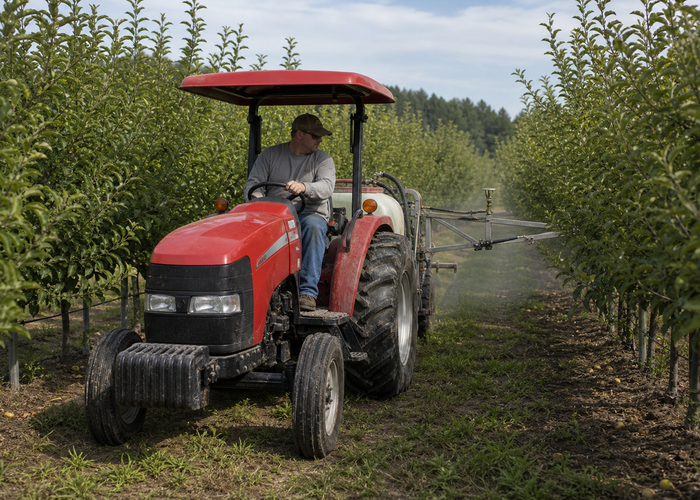
For that reason, orchard setup should be treated as a system. Turning radius, canopy clearance, PTO tool match, and tire choice all influence each other. A change in rear implement weight may change the best tire pressure. A different orchard block may change the preferred wheel track. A slightly lower profile tractor may change how confidently an operator uses the sprayer near mature canopies.
Buyers who step back and test the whole system usually make better purchases. They ask how the machine behaves after six hours of mowing, whether it can reverse safely with the intended tool, and whether a second operator can run it without fighting the row geometry. Those are better questions than asking only how much horsepower the tractor advertises.
When the setup is right, the orchard tractor becomes predictable. It enters rows cleanly, supports steady PTO work, protects the crop, and gives the operator enough confidence to maintain pace during the busiest spray and mowing periods. That is the kind of practical fit worth prioritizing on the QiLu Machinery blog and in real orchard buying decisions.
FAQ
How much turning space should an orchard tractor have?
Enough to complete the row-end turn with the actual rear tool attached and without clipping trees, posts, or irrigation hardware. The true test is the working setup, not the bare tractor spec sheet.
Is a lower tractor always better in orchards?
Not automatically. Lower profile helps with canopy clearance, but visibility, operator comfort, stability, and PTO tool compatibility still matter. The best orchard tractor is low enough to clear the crop and stable enough to work safely.
Should the sprayer or mower decide tractor size?
Usually yes. In orchard service, the PTO-driven tool often defines the real workload, so the attachment should set the baseline for horsepower, hitch fit, and hydraulic needs.
What is the biggest setup mistake orchard buyers make?
Choosing a general-purpose tractor before measuring the row environment. Orchard work is constrained by headland space, canopy architecture, and attachment behavior, so fit should come before broad field assumptions.