Welcome to Shandong Qilu Industrial Co., Ltd

 English
 Arabic
 Bulgarian
 Bengali
 Czech
Czech
 Danish
 German
 Greek
Greek
 Spanish
 Finnish
 French
 Hindi
Hindi
 Croatian
 Hungarian
 Indonesian
 Italian
 Japanese
 Korean
 Lithuanian
 Dutch
Dutch
 Norwegian
 Polish
 Portuguese
 Romanian
 Russian
 Slovak
 Slovenian
 Swedish
 Thai
Thai
 Turkish
 Ukrainian
 Vietnamese
 Tagalog
 Malay
Malay
 Estonian
 Catalan
 Latvian
 Urdu
Urdu
 Serbian
 Persian
 Swahili
 Albanian
 Armenian
 Icelandic
 Bosnian
 Luxembourgish
 Afrikaans
English Arabic
Bulgarian
Bengali
Czech
Danish
German
Greek
Spanish
Finnish
French
Hindi
Croatian
Hungarian
Indonesian
Italian
Japanese
Korean
Lithuanian
Dutch
Norwegian
Polish
Portuguese
Romanian
Russian
Slovak
Slovenian
Swedish
Thai
Turkish
Ukrainian
Vietnamese
Tagalog
Malay
Estonian
Catalan
Latvian
Urdu
Serbian
Persian
Swahili
Albanian
Armenian
Icelandic
Bosnian
Luxembourgish
Afrikaans
Afrikaans
English Arabic
Bulgarian
Bengali
Czech
Danish
German
Greek
Spanish
Finnish
French
Hindi
Croatian
Hungarian
Indonesian
Italian
Japanese
Korean
Lithuanian
Dutch
Norwegian
Polish
Portuguese
Romanian
Russian
Slovak
Slovenian
Swedish
Thai
Turkish
Ukrainian
Vietnamese
Tagalog
Malay
Estonian
Catalan
Latvian
Urdu
Serbian
Persian
Swahili
Albanian
Armenian
Icelandic
Bosnian
Luxembourgish
Afrikaans
Wet Soil Tractor Operation: When to Wait, Change Tires, or Reduce Ballast
A field-focused guide to wet soil tractor operation, compaction risk, tire pressure, ballast choices, controlled traffic, and safer decisions after rain.
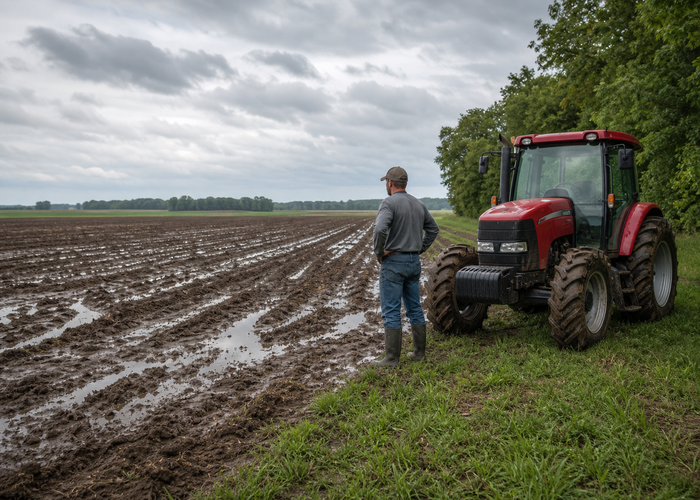
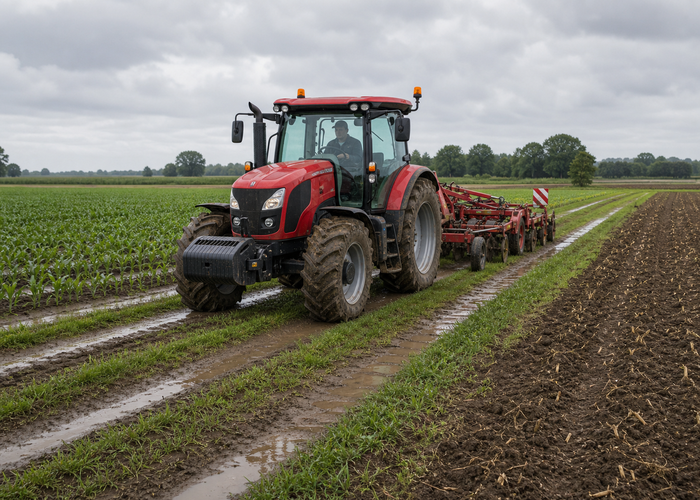
Wet soil tractor operation is one of those farm decisions that looks simple from the cab and complicated after the ruts dry. A tractor can move through a field before the soil is ready, but the tire tracks, compaction layer, and damaged headlands may remain long after the job is finished. The better decision is not always to wait forever. It is to know when the soil can carry the tractor, when the job should be changed, and when the route should be moved.
Farm tractor buyers often focus on horsepower, traction, and implement width. Those matter, but soil condition decides whether that power helps or hurts. A machine from QiLu Machinery’s farm tractor category should be matched not only to acreage but also to soil type, drainage, seasonal rainfall, tires, ballast, and field access.
This guide gives operators a practical way to think about wet fields, tire tracks, ballast, and compaction risk. It draws on general soil health principles from sources such as USDA NRCS soil health resources and safety reminders from OSHA tractor operation guidance.
Why Wet Soil Changes Tractor Decisions
Soil carries equipment through a mix of particle strength, pore space, organic matter, structure, and moisture. When soil is too wet, pore spaces are full of water and the structure is easier to squeeze. A tractor tire can push that structure together, leaving compaction that restricts root growth, slows water movement, and makes future passes harder.
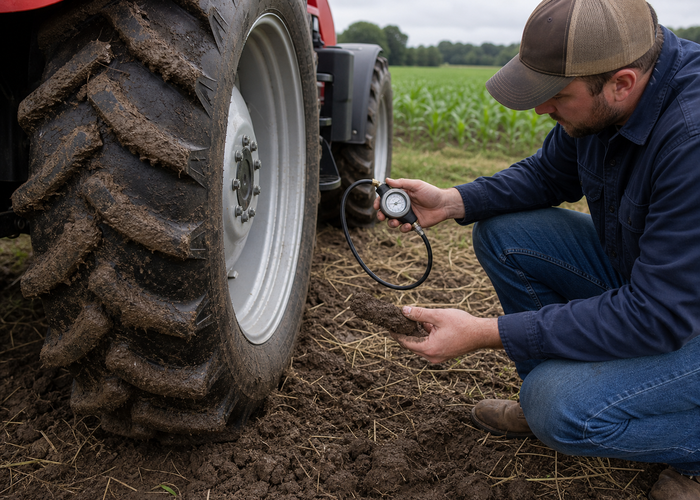
The operator feels this as soft steering, deeper tire marks, wheel slip, or a tractor that needs more throttle than usual. The field shows it as shiny smears, standing water, deep ruts, and soil that sticks to the tire rather than crumbling. These signs should change the plan before the tractor is committed to a long pass.
When Waiting Is the Best Field Operation
Waiting can be the most profitable operation when a task is not urgent. If tillage, mowing, hauling, or spraying can be delayed without losing the crop window, a day or two of drying may prevent weeks of dealing with ruts. The decision should consider the forecast, soil texture, drainage, field slope, and the importance of the task.
A light tractor with narrow tires can still compact wet soil. A heavier tractor with better tires can still leave damage when the surface is saturated. Tire type and ballast help, but they do not cancel the physics of wet ground. The operator should treat the soil as part of the machine system.
How to Test the Field Before Driving In
Check the headland first because that is where turning, braking, and repeated passes cause the most stress. Walk the entry point, press a boot into the soil, look for water at the surface, and handle a small sample. If the soil ribbons easily and shines when pressed, it is often too wet for heavy travel. If it crumbles and supports a boot with only shallow marks, the risk may be lower.
Make a short test pass only where recovery is easy. Keep speed low, avoid turning under load, and stop if ruts deepen quickly. The goal is not to prove the tractor can make it. The goal is to learn whether the field should be worked today.
Operators planning frequent wet-season chores should review QiLu Machinery’s tractor application solutions and product application solutions pages to think through job timing, travel routes, and machine choice before the weather turns difficult.
Tires, Ballast, and Controlled Traffic
Tire pressure should match the tractor, tire, load, and manual guidance. Lower pressure within approved limits can increase footprint and reduce compaction in some conditions, but running tires too soft can damage sidewalls, reduce stability, or make road travel unsafe. Do not guess. Use the tire and tractor information for the load being carried.
Ballast should be reconsidered in wet conditions. Extra weight may improve traction, but it also increases ground pressure. A loader tractor that needs rear ballast for stability should not simply remove all ballast and enter a wet field. Instead, the operator may need to reduce the load, move on firmer lanes, wait for drying, or use a different work sequence.
Controlled traffic can protect the rest of the field. Reusing firm lanes or headland routes concentrates damage where it can be managed instead of spreading shallow compaction across every row. This approach works best when field entrances, storage points, and implement widths are planned together.
Safety sources such as Penn State Extension tractor safety guidance and NIOSH agricultural injury prevention resources are useful reminders that wet ground is not only an agronomy issue. Slips, rollovers, stuck equipment, and rushed recovery attempts can all create operator hazards.
Recovery Without Making the Damage Worse
If the tractor begins to sink or spin, stop early. More throttle usually digs deeper. Lower attachments where safe, back out slowly along the entry path if possible, and avoid sharp steering. If recovery equipment is needed, use rated tow points, proper chains or straps, clear signals, and bystander exclusion. Do not attach to weak points or pull from unsafe angles.
After the field dries, inspect the ruts. Some shallow tracks may level during normal operations. Deep ruts may need targeted repair, but aggressive tillage at the wrong moisture can create another problem. The repair plan should fit the crop, soil, and season rather than simply hiding the tire marks.
Planning Resources and Link-Rich Field Notes
For internal route planning, connect this wet-soil decision process with QiLu Machinery’s all machinery products, QL 60HP tractor, and QL 904B tractor pages. The right choice depends on the jobs that happen during imperfect weather, not only on ideal field days.
For outside reading, compare field observations with USDA NRCS soil health guidance, University of Missouri machinery maintenance resources, and University of Minnesota tractor safety guidance. The agronomy and safety sides point to the same habit: slow down, read the ground, and change the plan before the machine is committed.
A Wet Field Go or No-Go Checklist
Check the forecast, field entrance, headland, soil sample, tire pressure, ballast requirement, route, load size, and recovery plan. If three or more items are uncertain, wait or redesign the job. If the route is firm, the load is light, the soil supports a boot, and the operator has a clear exit path, proceed slowly and keep checking conditions.
Wet soil tractor operation is not about being timid. It is about protecting tomorrow?s work. A tractor that waits when the field is too soft, travels on planned lanes, and carries only the load the soil can support will usually finish more work across the season than a tractor that proves its strength in the mud.
Field Example: The Headland Looks Dry but the Subsoil Is Not
A common wet-soil mistake happens when the surface crust looks firm but the layer below it remains soft. The first pass may seem acceptable, then the tractor begins to sink at the headland where turning loads the tires. By the time the operator notices deep ruts, the field entrance is damaged and every following trip crosses the same weak spot. A short walk and soil check before entry can prevent that chain of problems.
Another example is loader or wagon work after rain. The tractor may travel on a lane, then turn onto a wet edge to load or unload. That short turn can create more damage than the longer straight pass. The operator should identify the turning area, not just the driving lane. If the turn cannot be made on firm ground, the job plan needs to change.
How Tire Choice Changes the Conversation
Tire tread affects traction, flotation, turf protection, and road comfort. Agricultural tires may pull well but can dig aggressively when the operator spins. Industrial tires may be durable for loader work but still compact wet soil under heavy loads. Turf tires may protect grass but lack traction for some field tasks. No tire solves every wet-soil problem, so the decision should match the work that happens most often.
Duals, wider tires, or approved lower inflation can reduce ground pressure in some operations, but they also require correct setup, clearance, and transport planning. The operator should not improvise tire changes without understanding the axle, rim, load, and manual guidance. The right tire is a system decision, not a cosmetic upgrade.
Ballast Tradeoffs in Wet Conditions
Ballast is useful when the tractor needs traction or loader stability, but wet soil forces a tradeoff. More weight can reduce wheel slip in one moment and increase compaction in the next. Removing too much ballast can make a loader unsafe. The practical answer is often smaller loads, slower travel, controlled lanes, and better timing rather than simply adding or removing weight.
If the tractor must enter wet ground for livestock, irrigation, emergency repair, or time-sensitive crop work, reduce nonessential weight, choose the firmest route, avoid repeated passes, and keep implements low and controlled. The operator should also plan how to leave the field before entering it. A good exit route is part of the job, not an afterthought.
Training Operators to Read Soil Signals
Train operators to report soil signals in plain language: shiny smear, boot sinks, tire lugs fill, water appears in track, steering feels soft, wheel slip increases, or headland turns become rough. These observations are easier to act on than a vague comment that the field was bad. A few consistent words help managers compare fields and operators.
Photos can help too. A phone photo of the tire track, soil surface, and field entrance can support later decisions. The goal is not to blame the operator. The goal is to learn which fields recover quickly, which entrances need improvement, and which routes should be avoided after rain.
After the Field Dries
When the soil dries, inspect crop response and rut depth before repairing. Some damage is shallow and can be managed later. Some compaction may need targeted action when moisture conditions are right. Rushing into repair with the wrong tool at the wrong time can create another compaction layer or smear the soil again.
Use the experience to improve the next wet-weather plan. Add gravel to a weak entrance, change the staging area, reduce wagon size, adjust tire pressure within approved limits, or schedule the task earlier before heavy rain. Wet-soil management improves when each difficult day changes the plan for the next one.
Management Notes for Daily Use
A practical article becomes more useful when it turns into a repeatable farm habit. Managers should decide who checks the machine, where notes are stored, when a concern is escalated, and which jobs require a second person. Without those simple rules, even a good checklist can become a private habit that disappears when the usual operator is away.
Keep the record short enough to use in the field. A useful note can include the date, tractor hours, attachment, ground condition, load, operator, and one sentence about anything unusual. Over time, these small notes show patterns: a recurring hose rub, a tire that loses pressure, an implement that is difficult to connect, or a field entrance that fails after every storm.
Review those notes before buying another attachment or changing the tractor setup. The best equipment decision is often hidden in ordinary records. If operators repeatedly mention slow cycles, rutting, heat, difficult hookup, or unstable handling, the farm has evidence for a better attachment match, different tire setup, route improvement, or additional operator training.
Practical FAQ
How should an operator use this guide? Treat it as a field planning aid, not a substitute for the tractor or implement manual. The manual controls service intervals, safe limits, fluids, torque values, and attachment requirements for the exact machine.
What should stop the job? Stop when the tractor behaves differently than expected, when a guard or hose is damaged, when the ground condition changes, when a warning light appears, or when the operator cannot explain a noise, leak, vibration, or handling change.
Where should the guide be stored? Keep a printed copy or short version near the service bay, key storage, or implement shed. A checklist hidden in an office folder will not help the operator who is already at the gate.