Email: [email protected] Whatsapp: +8618266768780
Email: [email protected] Whatsapp: +8618266768780


You want the right tractor for your land, but the answer to Compact vs. Utility Tractors: Which is Right for Your Farm? depends on your unique needs. Consider how many acres you manage, what tasks fill your day, and how much you plan to invest. Think about the future growth of your farm. Take a moment to assess your priorities before making a decision.
You need to match your tractor choice to your farm’s size, daily tasks, and future plans. If you manage a small property or focus on lighter chores like mowing, landscaping, or gardening, a compact tractor offers the best balance of affordability, maneuverability, and ease of use. For larger farms or operations that require heavy-duty work such as plowing, hauling, or managing livestock, a utility tractor delivers the power and versatility you need.
Tip: Start by listing your most frequent tasks and acreage. This will help you decide which tractor type fits your workflow.
Consider this example:
A hobby farmer with 8 acres uses a compact tractor for mowing, light tilling, and moving mulch. The smaller size lets you navigate tight spaces and maintain lawns efficiently. In contrast, a commercial grower with 60 acres relies on a utility tractor to handle deep tilling, large-scale hauling, and field preparation. The extra horsepower and attachment options make heavy work faster and more efficient.
For more guidance, you can explore expert discussions on tractor selection at Farm Progress and see real-world user experiences on Reddit’s farming community.
When you compare Compact vs. Utility Tractors: Which is Right for Your Farm?, focus on these critical differences:
| Feature | Compact Utility Tractors (CUT) | Sub-Compact Utility Tractors (SCUT) |
|---|---|---|
| Horsepower | Over 30 hp | Less than 25 hp |
| Ideal Use | Intensive tasks, larger scale | Lighter tasks, residential use |
| Clearance | Higher clearance | Lower to the ground |
| Maneuverability | Less maneuverable | More maneuverable, tight turn radii |
| Weight | Heavier | Lighter |
| Cab Options | May include enclosed cabs | Typically no enclosed cabs |
| Ideal for | Wooded areas, farming | Lawn and garden spaces |
You should also consider the following:
| Tractor Type | Ideal For | Key Features |
|---|---|---|
| Compact Tractors | Small farms, urban settings | Smaller size, maneuverable, affordable, fuel-efficient, suitable for beginners and hobbyists. |
| Utility Tractors | Large-scale farming operations | Larger, more powerful, versatile with various attachments, ideal for heavy-duty tasks and efficiency. |
Case Study:
You operate a 15-acre mixed-use farm with vegetable plots, a few livestock, and a small orchard. You need a tractor that can mow, till, and haul feed. A compact tractor gives you enough power for these tasks, fits between orchard rows, and keeps costs manageable. If you expand to 40 acres and add hay production, a utility tractor becomes essential for handling larger implements and heavier loads.
Note: Utility tractors excel in durability and long-term value for farms planning to scale up. Compact tractors shine in ease of use and lower operating costs for smaller or specialized properties.
You can find more detailed comparisons and user stories at Successful Farming and join discussions on Twitter’s #FarmEquipment.
Compact vs. Utility Tractors: Which is Right for Your Farm? depends on your acreage, workload, and budget. Review your needs, consult with local dealers, and connect with other farmers online to make an informed decision.
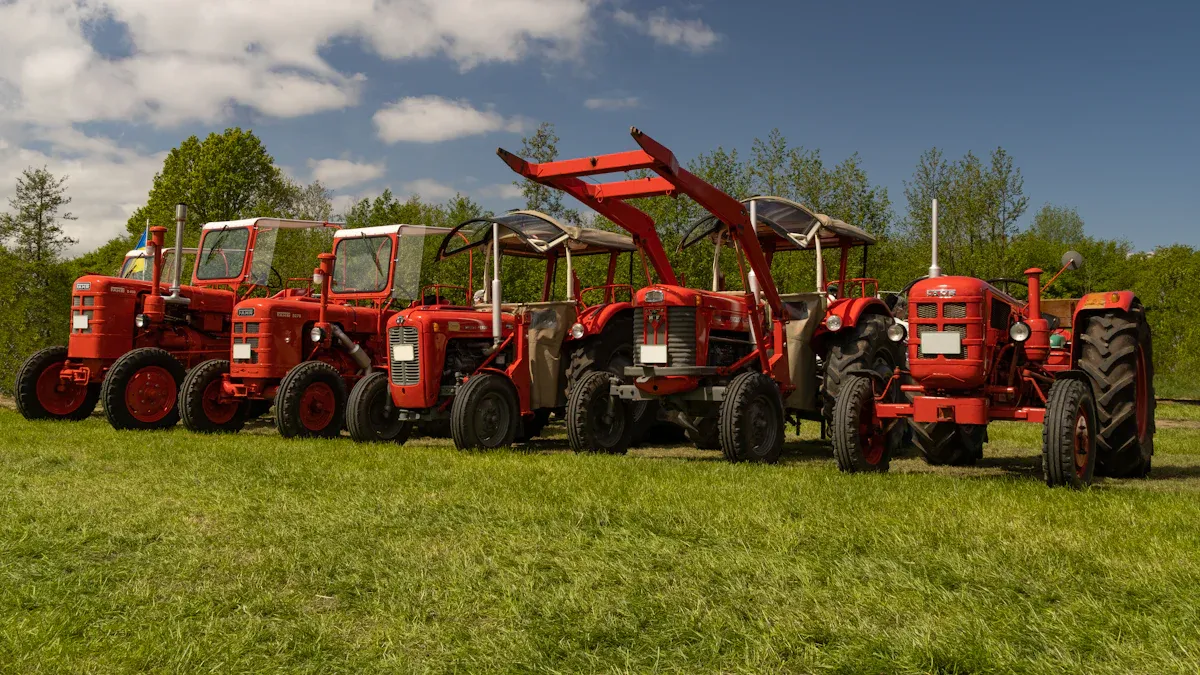
Compact tractors deliver a blend of power and agility that suits small to mid-sized farms. You typically find these machines in the 20 to 60 horsepower range. For lighter tasks like mowing or basic landscaping, 20–30 horsepower is often enough. If you manage heavier chores or a mid-size property, you may need at least 40 horsepower. Compact tractors feature a smaller frame, tight turning radius, and user-friendly controls. Many models offer four-wheel drive, hydrostatic transmissions, and a variety of attachment options. You benefit from fuel efficiency and lower operating costs, making these tractors ideal for budget-conscious owners.
| Feature | Compact Tractors |
|---|---|
| Horsepower Range | 20–60 HP |
| Size | Small to mid-size |
| Maneuverability | High |
| Fuel Efficiency | Excellent |
| Attachment Options | Versatile |
| Typical Operator Skill | Beginner to advanced |
Tip: Compact tractors work well in tight spaces, such as orchards, gardens, or small livestock areas. You can learn more about compact tractor features and user experiences on Reddit’s farming community.
You can accomplish a wide range of tasks with a compact tractor on your farm. Common uses include:
For example, if you operate a 10-acre property with mixed landscaping and a few animals, a compact tractor allows you to mow, haul feed, and maintain your land with ease. Many small farm owners share their compact tractor projects and tips on platforms like Twitter’s #FarmEquipment.
Utility tractors offer more power and versatility for larger operations. You usually see horsepower ratings between 50 and 100, which supports demanding tasks and larger implements. These tractors have a heavier build, higher ground clearance, and advanced hydraulic systems. You can attach loaders, mowers, and other equipment for specialized work. Utility tractors often include comfort features such as enclosed cabs and climate control, which help you work longer hours in various weather conditions.
| Feature | Utility Tractors |
|---|---|
| Horsepower Range | 50–100 HP |
| Size | Medium to large |
| Maneuverability | Moderate |
| Fuel Efficiency | Good |
| Attachment Options | Highly versatile |
| Typical Operator Skill | Intermediate to expert |
Note: Utility tractors excel when you need to cover more acreage or handle heavy-duty jobs. For in-depth comparisons and advice, visit Farm Progress.
You rely on utility tractors for a broad spectrum of medium and large farm tasks, such as:
Consider a real-world scenario: On a 50-acre hay farm, you use a utility tractor to pull large balers, transport harvested crops, and clear snow from access roads. This level of power and flexibility helps you maximize productivity and adapt to changing farm needs.
When you ask, Compact vs. Utility Tractors: Which is Right for Your Farm?, reviewing these features and typical uses helps you match the right machine to your acreage and workload. For more insights, explore user stories and expert advice at Successful Farming.
When you evaluate tractors for your farm, size and maneuverability often become deciding factors. Compact tractors feature a smaller footprint, which allows you to navigate tight spaces with ease. This design makes them ideal for tasks in orchards, gardens, or areas with limited access. You can turn around obstacles, work between rows, and operate efficiently in confined environments. For example, many compact tractor models offer a turning radius as tight as 9.84 feet, which means you can make sharp turns and minimize time spent repositioning.
Utility tractors, on the other hand, have a larger frame and require more space to operate. Their increased size provides stability and strength for heavy-duty work, but you may find them less agile in small or cluttered areas. If your farm includes wide-open fields or you need to cover large acreage, the extra size becomes an advantage. However, for properties with many obstacles or narrow passages, compact tractors deliver superior maneuverability.
Tip: If you manage a property with tight corners, trees, or multiple outbuildings, a compact tractor will help you complete tasks faster and with less hassle.
Horsepower directly impacts what your tractor can accomplish. Compact tractors typically range from 20 to 60 horsepower, which supports most light to moderate farm tasks. You can mow, till, and haul moderate loads with confidence. Some compact models even handle heavy-duty jobs, thanks to efficient design and strong loader lift capacities.
Utility tractors offer higher horsepower, usually between 50 and 100. This extra power allows you to pull larger implements, lift heavier loads, and work longer hours without strain. If you plan to plow large fields, bale hay, or transport substantial materials, you will benefit from the performance of a utility tractor.
Here is a comparison of horsepower and loader lift capacity for typical compact tractor models:
| Model | Horsepower (HP) | Loader Lift Capacity (lbs) | Suitable for Heavy-Duty Tasks |
|---|---|---|---|
| 1023R | 23.9 | N/A | Yes |
| 2032R | 31.1 | N/A | Yes |
| 3038E | 37.3 | N/A | Yes |
| 4044M | 43.1 | 2,222 | Yes |
You can see that even compact tractors with lower horsepower can handle demanding jobs, but utility tractors excel when you need sustained power and higher lifting capacities. For more technical comparisons and user experiences, you can visit Successful Farming.
Versatility defines how well your tractor adapts to different tasks throughout the year. Both compact and utility tractors support a wide range of attachments, but the scale and capacity differ.
You can equip compact tractors with attachments such as:
Utility tractors accept similar attachments but can handle larger, heavier implements. This capability allows you to tackle more demanding jobs, such as large-scale hay production or deep tillage. You also benefit from specialized equipment for livestock, seeding, and spraying.
Both tractor types offer:
Compact tractors stand out for their ability to switch between tasks quickly and operate in tight spaces. They come in various sizes, from subcompact to heavy-duty, so you can match horsepower and attachments to your needs. Their design ensures stability on uneven terrain and easy maneuverability, making them suitable for both commercial and personal use.
Note: When you consider Compact vs. Utility Tractors: Which is Right for Your Farm?, think about the range of tasks you perform each season. The right tractor should handle your current workload and adapt as your farm evolves. For more ideas on maximizing tractor versatility, check out discussions on Reddit’s farming community.
You must consider both the initial investment and the long-term value when choosing between compact and utility tractors. Compact tractors usually have a lower purchase price, making them accessible for small farms or those with limited budgets. Utility tractors cost more upfront, but they offer greater power and capacity for larger operations.
Here is a comparison of average purchase prices:
| Tractor Type | Price Range |
|---|---|
| Compact Tractors | $10,000 – $25,000 |
| Utility Tractors | $25,000 – $50,000 |
You should weigh these costs against the tasks you perform most often. If you manage a small property and focus on mowing, landscaping, or light hauling, a compact tractor delivers strong value without overextending your budget. For larger farms or operations that require heavy-duty work, a utility tractor justifies its higher price by handling bigger implements and more demanding jobs.
Tip: Consider the resale value and expected lifespan. Utility tractors often retain value well, especially if you maintain them properly. Compact tractors also hold value in the used market, particularly for hobby farmers and landscapers.
You can find more insights on tractor pricing and value retention at TractorData and join discussions about real-world ownership costs on Reddit’s farming community.
Fuel efficiency impacts your operating costs over time. Compact tractors generally use less fuel per hour because of their smaller engines and lighter frames. When you perform heavy work, such as tilling or hauling, compact tractors like the BX22 consume about one gallon of diesel per hour. Utility tractors, with their larger engines, show similar fuel consumption rates during demanding tasks, but they cover more ground and complete jobs faster.
You should match tractor size to your acreage and workload to maximize efficiency. For small farms, a compact tractor’s lower fuel use keeps expenses manageable. On larger properties, a utility tractor’s ability to finish big jobs quickly can offset higher hourly fuel consumption.
Note: Track your average fuel use for each season. This helps you budget accurately and compare the true cost of ownership between tractor types.
For more details on fuel efficiency and user experiences, visit Successful Farming’s equipment section or browse tips from other farmers on Twitter’s #FarmEquipment.
Ease of use plays a major role in daily productivity. Compact tractors feature intuitive controls, simple dashboards, and comfortable seating. You can learn to operate them quickly, even if you have limited experience. Their smaller size and lighter weight make them easy to maneuver, especially in tight spaces or around obstacles.
Utility tractors require more skill due to their size and advanced features. You benefit from higher ground clearance and more powerful hydraulics, but you may need additional training to use all functions safely. Many utility tractors include comfort upgrades, such as enclosed cabs and climate control, which help you work longer hours in different weather conditions.
You should consider who will operate the tractor most often. If you share equipment with family members or employees, a compact tractor’s user-friendly design reduces the learning curve. For larger teams or specialized tasks, utility tractors offer advanced features that boost efficiency once you master the controls.
Tip: Test drive both types at a local dealer. Hands-on experience helps you judge comfort, visibility, and ease of operation before you commit.
You can read more about operator experiences and training tips at Farm Progress and connect with other owners on Reddit’s farming community.
The question of Compact vs. Utility Tractors: Which is Right for Your Farm? depends on how you balance cost, fuel efficiency, and ease of use with your farm’s unique needs.
When you invest in a tractor, durability and maintenance shape your long-term satisfaction and cost of ownership. You want a machine that stands up to daily use and requires minimal downtime. Compact and utility tractors both offer robust construction, but their lifespans and maintenance needs differ based on size, workload, and operating conditions.
You can expect a well-maintained compact tractor to last between 4,000 and 8,000 operating hours, which translates to about 10 to 20 years on a typical small farm. Utility tractors, built for heavier workloads, often reach 6,000 to 10,000 hours or 15 to 25 years. If you operate in demanding environments or run your equipment year-round, these numbers may vary.
| Tractor Type | Average Lifespan (Operating Hours) | Average Lifespan (Years) |
|---|---|---|
| Compact Tractors | 4,000 to 8,000 | 10 to 20 |
| Utility Tractors | 6,000 to 10,000 | 15 to 25 |
| Heavy-Duty 4WD | Over 15,000 | 25 to 30 |
Tip: Track your tractor’s operating hours and schedule regular maintenance. This practice extends the useful life of your equipment and helps you plan for future upgrades.
You will encounter routine maintenance tasks with both compact and utility tractors. However, the frequency and complexity of these tasks can differ. Compact tractors, due to their lighter build, may require more frequent checks on components like belts and filters. Utility tractors, with more advanced hydraulics and larger engines, need regular attention to fluids and moving parts.
Here are some of the most common maintenance issues you might face:
| Maintenance Issue | Description |
|---|---|
| Engine Start Issue | Problems with starting the engine, including battery issues, electric circuitry, fuel system, and air intake. |
| Engine Overheating | Causes of overheating include low oil or coolant levels, fan belt issues, and airflow problems. |
| Steering Problems | Issues with steering can arise from low hydraulic oil, clogged filters, lack of lubrication, or a bent axle. |
You can reduce downtime by inspecting these systems regularly and addressing small problems before they become major repairs. For more practical maintenance tips, you can visit Successful Farming’s maintenance guides or join discussions on Reddit’s farming community.
Consider a small vegetable farm operating a compact tractor for daily mowing, tilling, and hauling. With consistent oil changes, filter replacements, and seasonal checks, the tractor remains reliable for over 15 years. In contrast, a livestock operation using a utility tractor for heavy hauling and fieldwork sees 20 years of service with a disciplined maintenance schedule and timely part replacements.
Regular maintenance not only extends your tractor’s life but also improves safety and performance. You can find more advice and connect with other owners on Twitter’s #FarmEquipment.
When you ask, Compact vs. Utility Tractors: Which is Right for Your Farm?, consider how much time and resources you can dedicate to upkeep. A well-maintained tractor, whether compact or utility, will serve your farm reliably for many years.
You manage a small property, so you need a tractor that offers agility and efficiency. Compact tractors with 20–35 horsepower work best for mowing, light hauling, and garden preparation. Their smaller frames allow you to maneuver around landscaping features and tight spaces. You can see the recommended horsepower for different acreage ranges in the table below:
| Acreage Range | Recommended Horsepower | Suitable Tractor Series |
|---|---|---|
| 0–5 acres | 25–35 hp | Subcompact/Compact |
| 5–10 acres | 35+ hp | Compact |
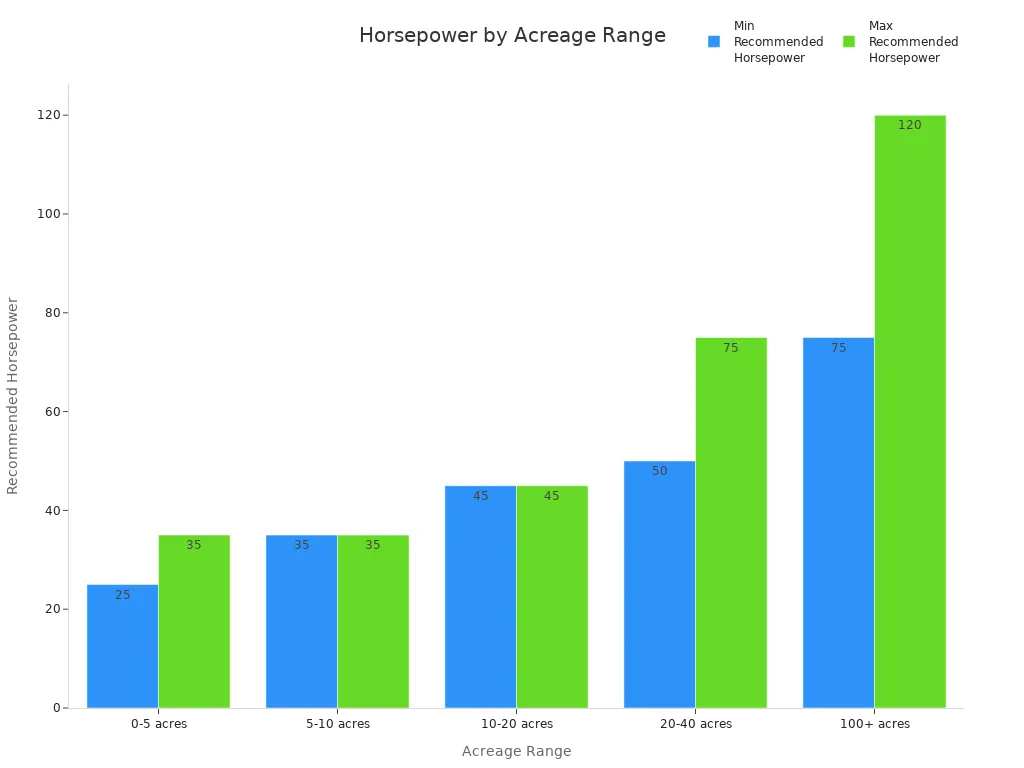
For mid-sized farms, you require more power and versatility. Tractors in the 35–75 horsepower range handle loader work, tilling, pasture management, and hay handling. These machines support heavier implements and cover more ground efficiently. The following table outlines typical uses by acreage:
| Acreage | Recommended HP Range | Typical Uses |
|---|---|---|
| 10–20 acres | 35–50 HP | Hay handling, heavier tillage, small livestock |
| 20–40 acres | 50–75 HP | Larger implements, higher production |
Large farms demand utility tractors with 75–120 horsepower. You need this level of power for large-scale plowing, baling, and heavy transport. These tractors support advanced attachments and withstand continuous operation. For properties over 100 acres, you benefit from the highest horsepower and durability.
Both compact and utility tractors perform well for mowing and property maintenance. Compact models excel in tight spaces and around obstacles. Utility tractors cover large areas quickly and handle roadside mowing with ease.
You need to match tractor size to your tillage needs. Compact tractors handle garden tilling and light plowing. For deep tillage or breaking new ground, utility tractors with higher horsepower deliver better results.
You rely on your tractor for moving materials, feed, or equipment. Compact tractors manage light loads, while utility tractors haul heavier items and support larger trailers.
If you manage livestock, both tractor types help with feeding and cleaning. Utility tractors offer more power for handling bales and operating specialized attachments.
Compact tractors cost less initially, making them accessible for small farms. Utility tractors require a higher investment but provide greater capacity. You can explore financing options such as buy-now-pay-later plans, lines of credit, and revolving accounts to manage your purchase.
Utility tractors last longer, often exceeding 5,000 hours of service. Compact tractors have shorter lifespans but retain value for resale. Higher-quality machines reduce repair costs and offer better long-term returns.
Tip: Review your acreage, main tasks, and budget before deciding. Compact vs. Utility Tractors: Which is Right for Your Farm? depends on how you balance these factors for your operation.
You need to think beyond your current needs when choosing a tractor. Planning for growth ensures your equipment investment continues to serve you as your farm evolves. Many producers do not expect rapid expansion, but you should still prepare for changes in acreage, workload, or operator requirements.
A recent survey shows that about half of producers have no plans to grow their farms. Around 40% intend to maintain their current size, while only a small percentage expect significant annual growth. Even if you fall into the majority, you benefit from selecting a tractor that adapts to new challenges or opportunities.
Tip: Choose a tractor with a little more horsepower and attachment capacity than you need today. This approach gives you flexibility if you add livestock, expand your fields, or diversify your crops.
When you plan for the future, consider these key factors:
You should also match your tractor’s attachment system to your future needs. A model that supports a wide range of implements allows you to adapt as your farm changes. For example, you may start with mowing and light tilling, then add hay production or livestock handling as your operation grows.
Note: If you expect to share your tractor with family members or employees, select models with color-coded controls and a simple instrument panel. These features reduce the learning curve and improve safety for less experienced operators.
You can find more advice on planning for farm growth and equipment needs from agricultural extension services and farmer forums such as Reddit’s farming community. By thinking ahead, you protect your investment and ensure your tractor remains a valuable tool for years to come.
You gain several advantages when you choose a compact tractor for your farm. These machines offer flexibility and efficiency for small to mid-sized properties. You can maneuver easily around tight spaces, such as orchards, gardens, and livestock pens. Compact tractors use less fuel, which helps you control operating costs over time. You benefit from lower upfront investment, making these tractors accessible if you have a limited budget.
Tip: If you manage a property under 20 acres, a compact tractor often meets your needs for daily chores and seasonal projects. You can read more about compact tractor benefits at Successful Farming and join discussions on Reddit’s farming community.
| Advantage | Practical Example |
|---|---|
| Maneuverability | You mow between orchard rows without damaging trees. |
| Fuel Efficiency | You use less than 1 gallon of diesel per hour mowing. |
| Affordability | You invest $10,000–$25,000 for a reliable machine. |
You may encounter limitations with compact tractors, especially if your farm grows or your workload increases. These machines struggle with heavy-duty tasks, such as deep plowing or hauling large loads. You may find the lift capacity and horsepower insufficient for demanding operations. Compact tractors often lack advanced comfort features, such as enclosed cabs or climate control, which can affect your productivity during long workdays.
Note: If you plan to expand your farm or add new enterprises, consider whether a compact tractor will continue to meet your needs. For more user experiences, visit Twitter’s #FarmEquipment.
| Disadvantage | Practical Example |
|---|---|
| Limited Power | You struggle to plow new fields after heavy rain. |
| Lower Lift | You cannot move large hay bales in one trip. |
| Basic Comfort | You work in open weather during winter chores. |
You gain significant benefits when you invest in a utility tractor. These machines deliver higher horsepower and greater lift capacity, which allows you to tackle demanding tasks on larger properties. You operate advanced attachments for plowing, baling, and heavy hauling. Utility tractors often include comfort upgrades, such as enclosed cabs and ergonomic controls, which help you work longer hours in any season.
Tip: If you manage over 50 acres or run a commercial operation, a utility tractor supports your productivity and long-term growth. Explore more about utility tractor advantages at Farm Progress and connect with other owners on Reddit’s farming community.
| Advantage | Practical Example |
|---|---|
| High Power | You plow 40 acres in less time with larger implements. |
| Lift Capacity | You transport multiple hay bales in one trip. |
| Comfort | You work comfortably in an enclosed cab during summer. |
While utility tractors offer impressive power and versatility, you should weigh several drawbacks before making your investment. Understanding these limitations helps you avoid surprises and plan for the true cost of ownership.
Note: You should always match your tractor choice to your property size, main tasks, and operator experience. Overspending on horsepower or features you do not use can reduce your farm’s efficiency.
| Disadvantage | Impact on Your Farm |
|---|---|
| High Upfront Cost | Limits cash flow for other investments |
| Lower Maneuverability | Slows work in tight or obstacle-filled areas |
| Higher Fuel Use | Increases annual operating expenses |
| Complex Maintenance | Requires more time, tools, and sometimes specialists |
| Steep Learning Curve | Demands extra training for safe operation |
You should review your farm’s layout, workload, and team experience before choosing a utility tractor. For more real-world advice, join discussions on Twitter’s #FarmEquipment or consult with local equipment dealers.
If you manage a small farm, you need a tractor that matches your scale and daily tasks. Compact tractors work best for properties under 10 acres. You benefit from their maneuverability and ease of use. These machines handle mowing, light tilling, landscaping, and hauling small loads. You save on fuel and maintenance costs, which helps you keep your budget in check.
Key Recommendations for Small Farms:
Tip: Test drive several models at your local dealer. This helps you find the right fit for your property and comfort level. For more advice, visit Reddit’s farming community to read about real user experiences.
Medium farms, ranging from 10 to 50 acres, require more power and versatility. You often need to manage larger fields, livestock, and a wider range of tasks. Utility tractors in the 35–75 horsepower range offer the best balance of strength and flexibility. These machines support heavier implements and help you complete jobs faster.
Recommended Features for Medium Farms:
Note: You should review your farm’s layout and main tasks before choosing a tractor. For more insights, check out Successful Farming’s equipment section.
Large farms, with over 50 acres, demand robust equipment. You need a utility tractor with 75–120 horsepower to handle heavy-duty work. These tractors support large implements for plowing, baling, and transporting materials. You benefit from advanced features and increased durability.
Best Practices for Large Farms:
Tip: Connect with other large-scale producers on Twitter’s #FarmEquipment to share experiences and learn about new technologies.
By matching your tractor choice to your farm size, you ensure efficient operations and long-term value. Always consider your current needs and future plans before making a final decision.
If you operate a mixed-use farm, you face unique challenges. You likely manage a combination of crops, livestock, orchards, and specialty enterprises. Your tractor must handle a wide variety of tasks, from mowing and tilling to hauling feed and managing heavy implements. You need equipment that adapts to changing workloads throughout the year.
Key Considerations for Mixed-Use Farms:
Tip: Create a seasonal task calendar. This helps you identify which attachments you need most often and plan your equipment upgrades accordingly. For more ideas, join discussions on Reddit’s farming community or review expert advice at Successful Farming.
Sample Tractor Selection Table for Mixed-Use Farms
| Farm Size (Acres) | Recommended HP | Key Attachments | Main Benefits |
|---|---|---|---|
| 10–30 | 40–55 | Loader, mower, tiller | Flexibility, easy maneuvering |
| 30–60 | 55–75 | Loader, baler, rotary cutter | Power for field and livestock |
| 60+ | 75+ | Loader, hay tools, sprayer | Efficiency, heavy-duty tasks |
You should also consider your farm’s future. If you plan to expand or diversify, select a tractor with extra hydraulic outlets and a higher lift capacity. This foresight ensures your equipment remains useful as your operation grows.
Action Steps for Mixed-Use Farms:
Note: Mixed-use farms benefit most from tractors that offer both power and adaptability. By choosing wisely, you set yourself up for efficient, year-round productivity. For more practical tips, explore Twitter’s #FarmEquipment and connect with experienced operators.
When you decide between compact and utility tractors, focus on horsepower, safety features, tire selection, and transmission type. Ask yourself what your primary tasks are, the biggest job you expect, and your ideal price range. Match your tractor to your acreage, workload, and budget. For the best results, make a checklist of your needs and visit a local dealer for hands-on advice. Choosing wisely ensures you get the most value from your investment. Compact vs. Utility Tractors: Which is Right for Your Farm? becomes clear when you align your equipment with your goals.
Investing in the right tractor sets your farm up for years of productivity and growth.
You should choose a compact tractor with 25–35 horsepower. This size handles mowing, light tilling, and hauling. You gain maneuverability for gardens and tight spaces. For more advice, visit Reddit’s farming community.
Compact tractors handle light to moderate work. You may struggle with deep plowing or moving large bales. For heavy-duty tasks, you need a utility tractor with higher horsepower and lift capacity.
List your main tasks and acreage. If you focus on mowing, landscaping, or small-scale chores, choose a compact tractor. For large fields, livestock, or heavy hauling, select a utility tractor.
Utility tractors require more skill due to advanced features and larger size. You may need training for safe operation. Compact tractors offer simpler controls and suit beginners.
You can use loaders, mowers, tillers, blades, and snow removal tools. Compact tractors support many implements, but you must check weight and compatibility before purchase.
Compact tractors cost less upfront and use less fuel. Utility tractors last longer and handle bigger jobs, but require higher investment and maintenance. Track your expenses to compare total ownership costs.
You benefit from extra horsepower if you plan to expand or add new tasks. A slightly larger tractor gives flexibility for future growth. Avoid overspending on power you will not use.
-1.png)