Email: [email protected] Whatsapp: +8618266768780

Email: [email protected] Whatsapp: +8618266768780


Efficient excavator demolition starts with careful planning, precise machine setup, and strict safety protocols. You need to select the right excavator size and attachments for your project, then organize the job site to support smooth workflow and equipment movement. Reliable hydraulic systems play a crucial role in maintaining productivity, as poor performance or frequent failures can disrupt timelines and increase costs.
Regularly inspect hydraulic connections and attachments to prevent downtime and protect your investment.
How to Use an Excavator for Efficient Demolition Work requires you to maintain equipment, follow safety guidelines, and approach every step with attention to detail.
You must begin every demolition project with a thorough site assessment. This step helps you identify hazards and plan for safe operations. Common risks include unstable structures, hazardous materials like asbestos, and environmental concerns.
Tip: Use a checklist to document each risk you identify. This practice improves accountability and supports compliance with safety regulations.
Efficient demolition depends on clear access routes for your excavator and support vehicles. You should map out entry and exit points, considering both the size of your equipment and the location of spoil piles.
For more guidance, review OSHA’s excavation safety standards and connect with industry professionals on LinkedIn.
Proper staging keeps your demolition site efficient and safe. Place excavators, attachments, and spoil piles at least two feet from excavation edges, as required by OSHA.
Establish safety zones to protect workers and equipment.
Note: Regular safety briefings help reinforce protocols and reduce accident rates.
Selecting the right excavator model is critical for demolition efficiency. Consider the scope of your project and the types of materials you will encounter.
Match your excavator with attachments that suit your demolition tasks. Review the table below for key criteria:
| Criteria | Description |
|---|---|
| Attachment Requirements | Ensure the excavator supports the tools and sizes needed for your project. |
| Reliability and Support | Select machines built for demanding jobs, with stability and warranty. |
| Latest Technology | Look for features like load weighing and telematics for better operations. |
You can improve efficiency by using multi-functional accessories and modern technology.
Case Study: On a recent school demolition project, the team identified asbestos and unstable walls during site assessment. They staged equipment away from hazards and selected an excavator with a high-reach arm and hydraulic shear. This approach minimized risk and reduced project time by 20%.
You must inspect the hydraulic system before starting any demolition work. Begin by checking for leaks, damaged hoses, and loose fittings. Examine the hydraulic fluid level and quality. Clean filters and replace them if necessary. Test the system by cycling the boom, arm, and bucket to confirm smooth operation. Reliable hydraulics ensure consistent power and precise control, which are essential for safe and efficient demolition.
Tip: Schedule daily hydraulic inspections during active demolition phases to prevent unexpected breakdowns.
Select the correct attachment for your demolition task. Common choices include hydraulic breakers, shears, and grapples. Secure the attachment to the excavator’s coupler, then verify all pins and locks are engaged. Connect hydraulic lines and check for leaks. Test the attachment’s movement and response before entering the work zone. Proper installation reduces downtime and increases productivity.
| Efficiency Metric | Description | Target Value |
|---|---|---|
| Attachment Change Time | Time to swap attachments | Under 10 minutes |
| Hydraulic Leak Incidents | Number per project | Zero |
| Attachment Failure Rate | Failures per 100 hours of use | <1 |
Position your excavator on firm, level ground. Lower the blade or outriggers if available to increase stability. Always dig over the front idlers for maximum lifting capacity and balance. Avoid working on slopes or soft surfaces that may shift under the machine’s weight. Proper stabilization prevents tipping and ensures precise movements.
Maintain a safe distance from structures and other equipment. Mark exclusion zones with cones or barriers. Communicate boundaries to all team members. Keep spoil piles and materials staged away from the excavator’s swing radius. The table below outlines best practices for positioning to maximize safety and efficiency:
| Best Practice | Description |
|---|---|
| Stage your work area correctly | Set up the work area to prevent the excavator from becoming boxed in. |
| Choose the right size excavator | Select the appropriate size for the job to save time and fuel. |
| Consider truck and excavator position | Place the truck on the left side for efficient loading and a 25-degree swing. |
| Excavate from the top down | Work gradually downward to avoid cave-ins and wasted effort. |
| Dig over the front idlers | Dig over the front for better stability and lifting capacity. |
| Use excavators with grade control | Implement control systems to prevent over/under digging and save resources. |
Note: Review OSHA’s guidelines for additional safety requirements. For practical tips, follow demolition experts on LinkedIn.
How to Use an Excavator for Efficient Demolition Work involves following a systematic sequence. You should:
This approach minimizes risk and keeps the worksite organized.
You must maintain structural stability throughout demolition. Use excavators with a three-section demolition arm for enhanced flexibility and reach. Each arm section operates with dedicated hydraulic cylinders, allowing precise control even when fully extended. Manage the center of gravity by moving each section independently, which helps balance the machine during operation.
Alert: Never remove load-bearing walls or supports until upper floors are cleared. This practice prevents sudden collapses and protects your team.
A demolition crew faced a challenge with a multi-story warehouse in a crowded urban area. The team followed the principles of How to Use an Excavator for Efficient Demolition Work. They began with a thorough hydraulic system check and installed a high-reach shear attachment. The excavator was positioned on reinforced concrete pads, with spoil piles staged away from the swing radius. The crew marked safety zones and coordinated with nearby businesses to maintain clear access routes.
Demolition started from the top floor, with debris dropped through a designated shaft. The three-section arm allowed precise removal of beams and panels, maintaining stability throughout. Daily hydraulic inspections and attachment checks prevented downtime. The project finished ahead of schedule, with zero safety incidents and efficient debris management.
For more real-world examples, connect with demolition professionals on LinkedIn.
You face several hazards during excavator demolition. Falling debris remains one of the most frequent dangers. You must stay alert for loose materials, collapsing walls, and overhead objects. The following risks often appear on demolition sites:
Stay vigilant and monitor the structure for shifting materials. Mark hazardous zones and keep unauthorized personnel away from active demolition areas.
Machine instability can lead to tipping or loss of control. You should always inspect the ground for hidden obstacles and soil stability issues before operating. Uneven terrain, soft soil, and nearby traffic increase the risk of accidents. Position your excavator on firm, level ground and avoid working near slopes or trenches.
Note: Regularly check for underground utilities and unmarked lines to prevent sudden ground collapse.
Personal protective equipment (PPE) protects you from injuries. You must wear a hard hat, high-visibility vest, steel-toed boots, gloves, and eye protection. Mandate PPE for all crew members on site. Proper gear reduces the risk of injury from debris, noise, and dust.
Clear communication keeps your team safe. Use radios, hand signals, and daily briefings to coordinate movements and share updates. Mark work areas with cones and signage to prevent unwanted entry. You should always inform your team about changes in the demolition plan or site conditions.
| Safety Practice | Description |
|---|---|
| Inspect Your Equipment Before Beginning Work | Check for damage or abnormal operation before starting your shift. |
| Check the Ground Prior to Working | Assess terrain for hidden obstacles to avoid tipping over. |
Tip: Conduct safety briefings at the start of each shift. Reinforce protocols and encourage questions to improve team awareness.
You must prepare for emergencies before starting demolition. Establish a clear shutdown process for the excavator. In case of fire, hydraulic failure, or structural collapse, follow these steps:
| Safety Procedure | Description |
|---|---|
| Site Inspection | Identify hazards like instability and hazardous materials. |
| Hazard Identification | Mark locations of asbestos and lead-based paint. |
| Safety Plan | Create a detailed plan based on inspection and hazard identification. |
| Communication | Ensure clear communication about hazards and protocols. |
| PPE Requirements | Mandate appropriate gear for all workers. |
| Training | Provide safety training for equipment use. |
| Equipment Inspections | Regularly inspect all demolition equipment. |
| Waste Management | Dispose of demolition waste properly. |
| Safety Barriers | Install barriers and signage to prevent unauthorized access. |
| Utility Shut-downs | Shut off all utilities before demolition. |
| Environmental Considerations | Minimize dust, noise, and pollution. |
| Emergency Response Plan | Establish a plan for unforeseen incidents. |
Prepare a first aid kit and train your team in basic emergency care. Assign a responsible person for emergencies and display their contact information on site. Create an escape route map and rescue flow chart for common risks. You must master the excavator emergency response process for critical situations.
Alert: Immediate response saves lives. Practice emergency drills monthly and update your plan as needed.
A demolition crew worked on a hospital wing with unstable walls and hidden utility lines. The team conducted a thorough site inspection and marked hazardous zones. Each member wore full PPE and attended daily safety briefings. The supervisor used radios to coordinate movements and update the team about changing conditions. When a hydraulic hose burst, the operator followed shutdown steps and evacuated the area. The emergency response plan activated quickly, and first aid was provided within minutes. No injuries occurred, and the project finished safely.
For more safety resources, visit OSHA’s official site and connect with safety professionals on LinkedIn.
| Safety Statistic | Value |
|---|---|
| Incidents prevented | 100% |
| PPE compliance rate | 100% |
| Emergency response time | Under 5 min |
You can boost demolition speed and precision by using hydraulic breakers. These attachments deliver high-impact energy, allowing you to break concrete slabs and hard rock quickly. Hydraulic breakers outperform manual tools in power and versatility. You complete tasks in less time and reduce physical strain on your crew.
Grapples and demolition shears help you handle large or irregular debris efficiently. Grapples grab and move bulky items, saving time and reducing manual handling. Demolition shears use hydraulic jaws to break and carry materials, minimizing damage to other equipment.
Use the table below to compare common excavator attachments for demolition:
| Attachment Type | Description | Advantages |
|---|---|---|
| Demolition Shears | Hydraulic jaws for breaking and carrying materials. | Enhances efficiency, minimizes equipment damage. |
| Grapples | Grabs large or oddly shaped items. | Saves time, reduces manual labor. |
| Pulverizer | Crushes reinforced concrete into smaller pieces. | Useful for initial and secondary demolition. |
| Rotating Pulverizer | Lighter, designed for primary demolition. | Reduces machinery needs, supports eco-friendly practices. |
| Rippers | Pre-excavation on rigid surfaces. | Enables targeted material separation for recycling. |
| Hydraulic Clamps | Secure grip using hydraulic pressure. | Improves safety, reduces falling objects. |
Tip: Select attachments based on your project’s material types and demolition goals.
You achieve precise demolition by focusing on smooth, controlled excavator movements. Use hydraulic controls for gradual, accurate actions. Maintain balance by operating on a stable platform and confining digging to the front or rear of the machine.
Reduce idle time to save fuel and extend equipment life. Educate operators about the cost of engine idling and encourage shutting down machines not in use for more than ten seconds. Use monitoring systems to track idle times and adjust workflows. Plan projects to deploy the right number of machines and select models with automatic start-stop technology.
Efficient debris sorting keeps your site safe and organized. Use mechanized equipment like skid steers and compact loaders to sort debris quickly. Avoid manual sorting with wheelbarrows, as it slows progress. Keep personnel out of sorting areas to reduce injury risks.
Follow a step-by-step process for thorough site cleanup:
Note: Teamwork and clear communication improve workflow and safety. Hold daily briefings and use radios or hand signals to coordinate tasks.
A demolition team faced a tight deadline on a commercial building. They selected hydraulic breakers and grapples for rapid debris removal. Operators used smooth, controlled movements and minimized idle time by shutting down machines during breaks. Mechanized sorting kept the site clear, and daily briefings ensured everyone understood their roles. The project finished ahead of schedule with reduced costs and zero safety incidents.
For more best practices, visit OSHA’s demolition resources and connect with professionals on LinkedIn.
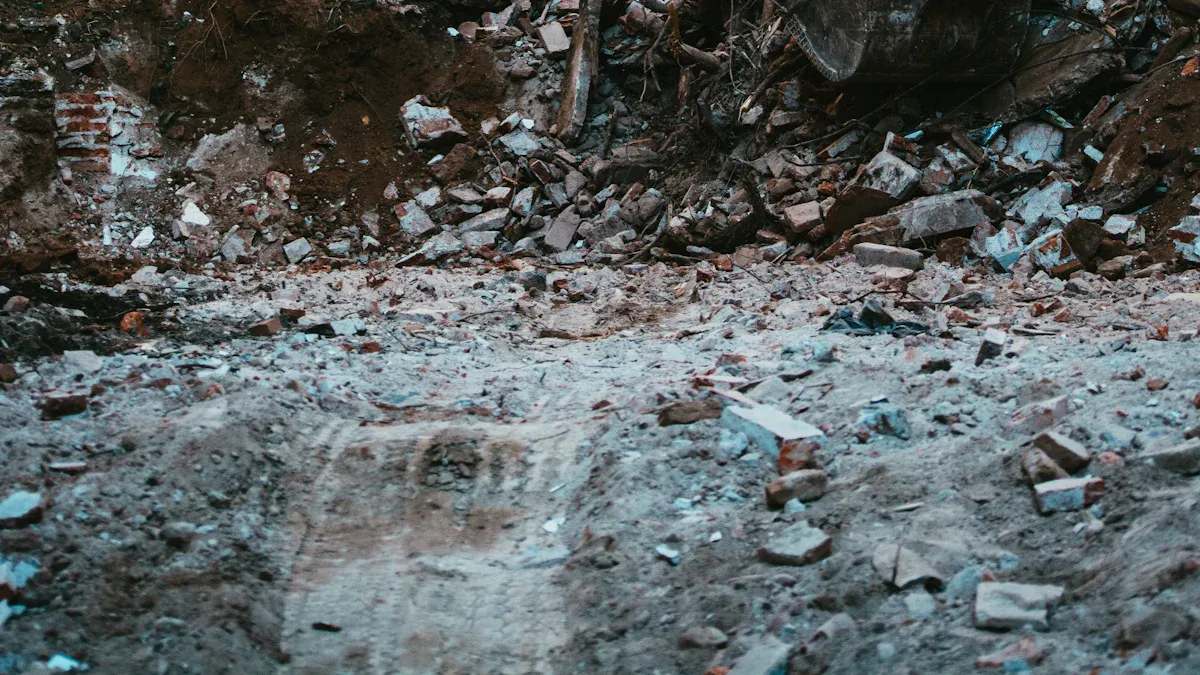
You must approach final cleanup with a systematic plan. Begin by assessing the site for debris types and quantities. This step helps you select the right tools and equipment for efficient removal. Use excavators to clear large debris, then transport waste to designated disposal sites. Remove any leftover materials and hazardous waste to protect public health and safety. Grade and level the ground to prepare for new construction or landscaping.
Site Restoration Checklist:
Tip: Always confirm that hazardous waste has been handled by certified professionals to avoid regulatory issues.
After debris removal, inspect the ground for damage caused by heavy equipment. You may need to fill holes, compact soil, and restore drainage patterns. Use grading attachments to achieve a smooth, level surface. Address any erosion or compaction to ensure the site meets requirements for new construction.
| Ground Repair Task | Description | Recommended Tool |
|---|---|---|
| Fill Excavator Tracks | Restore soil in ruts and tracks | Loader, Grader |
| Compact Loose Soil | Improve stability | Plate Compactor |
| Restore Drainage | Prevent water pooling | Trencher, Shovel |
You must inspect your excavator after demolition work. Check for wear on hydraulic hoses, pins, and attachments. Look for leaks, cracks, or loose components. Document any issues and address them before the next project. Daily inspections help you catch problems early and maintain reliability.
Regular maintenance keeps your excavator running efficiently. You should check diesel levels, replace filters, and monitor coolant daily. Replace wear parts as needed and follow a strict service schedule. The table below outlines a recommended maintenance routine:
| Maintenance Task | Frequency | Notes |
|---|---|---|
| Diesel Refueling | Daily | Check before each shift |
| Filter Replacement | Weekly | Inspect for clogging |
| Coolant Check | Daily | Top up as needed |
| Wear Parts Replacement | Monthly | Inspect for damage |
Note: Consistent maintenance reduces downtime and extends equipment life.
Case Study: Equipment Maintenance Success
A demolition crew implemented daily inspections and scheduled monthly service for their excavators. They checked diesel, coolant, and filters every morning. Wear parts were replaced before failure. As a result, the team reduced breakdowns by 30% and completed projects ahead of schedule.
For more maintenance tips, connect with professionals on LinkedIn or review best practices from industry associations.
You need to keep detailed records of every demolition task. Document the process, materials removed, and disposal methods. Ensure all permits are closed out and comply with local regulations. Accurate records support future project planning and regulatory compliance.
Prepare a final safety report after each project. Review the demolition process, note any incidents, and evaluate safety protocols. Use these reports to improve future operations and maintain a safe work environment.
Tip: Share your project reviews with your team and industry peers to promote continuous improvement.
For more guidance on documentation, visit OSHA’s demolition resources or join discussions on LinkedIn.
You must follow the manufacturer’s operating manual for every excavator demolition project. The manual provides step-by-step instructions for safe operation and maintenance. Before starting work, inspect tracks, check the hydraulic system, and confirm that cabin safety features function properly. Remove obstacles from the worksite and check ground stability. Always wear protective gear and familiarize yourself with the control mode. Sit properly, fasten your seatbelt, and align the machine during digging. Control your speed on uneven terrain and check your surroundings before rotating the cabin. If you hear abnormal sounds, stop operations and take breaks to prevent fatigue.
| Category | Key Points |
|---|---|
| Equipment Check | Inspect tracks, check hydraulic system, ensure cabin safety features are functional. |
| Worksite Assessment | Remove obstacles, check ground stability, confirm absence of unauthorized personnel. |
| Personal Preparation | Wear protective gear, familiarize with control mode. |
| Basic Operational Safety | Maintain stability, sit properly, fasten seatbelt, ensure machine alignment during digging. |
| Driving Safety | Control speed on uneven terrain, check surroundings before rotating cabin. |
| Emergency Compliance | Stop operations for abnormal sounds, take breaks to prevent fatigue. |
Tip: Review the manual before each new project to stay updated on safety protocols and operational changes.
You protect your investment by respecting warranty limits. Most manufacturers require you to follow recommended maintenance schedules and use approved attachments. If you ignore these guidelines, you risk voiding your warranty. Always document inspections and repairs. Keep records of attachment changes and hydraulic system checks. This practice helps you resolve warranty claims quickly and ensures long-term equipment reliability.
You must comply with OSHA regulations during excavator demolition. These rules set clear standards for worker safety and operational procedures. For example, no workers may enter areas affected by demolition during balling or clamming. The weight of the demolition ball must not exceed half the crane’s rated load. Keep the crane boom and loadline as short as possible. Attach the ball with a swivel-type connection to prevent twisting. Cut all steel members free before pulling walls, and remove ornamental stonework first. A competent person must inspect the site regularly to detect hazards.
| Standard | Description |
|---|---|
| 1926.859(a) | No workers permitted in areas affected by demolition operations during balling or clamming. |
| 1926.859(b) | Demolition ball weight must not exceed 50% of crane’s rated load. |
| 1926.859(c) | Crane boom and loadline should be kept as short as possible. |
| 1926.859(d) | Ball must be attached with a swivel-type connection to prevent twisting. |
| 1926.859(e) | All steel members must be cut free before pulling walls. |
| 1926.859(f) | Ornamental stonework must be removed prior to pulling walls. |
| 1926.859(g) | Inspections by a competent person must be ongoing to detect hazards. |
Note: Regular inspections and strict adherence to OSHA rules reduce accident rates and improve project outcomes.
You need the correct permits before starting demolition. These include official authorizations for removing structures, complete or partial demolition, and redevelopment projects. If you work on historic properties, you may need special permits and processes. Always provide proof of utility disconnection and complete environmental and safety reviews for hazardous materials like asbestos.
| Permit Type | Description |
|---|---|
| Demolition Permits | Official authorizations for the removal of structures, ensuring safety and legal compliance. |
| Complete Structure Removal | Required when demolishing an entire building, including foundations. |
| Partial Structure Demolition | Needed for removing parts of a structure, triggering safety inspections. |
| Redevelopment Projects | Necessary for clearing sites for new construction or expansion. |
| Historic Properties | Special processes may be required for buildings over a certain age or designated as historic. |
| Utility Disconnection Proof | Required to ensure all utilities are safely disconnected before demolition. |
| Environmental and Safety Reviews | Inspections for hazardous materials like asbestos may be mandated before permit approval. |
Alert: Secure all permits before mobilizing equipment to avoid costly delays and legal issues.
You must establish sorting protocols for on-site material separation. Sort demolition debris before disposal and ensure materials go to licensed waste management companies. Partner with local recycling facilities to process materials properly. Conduct pre-demolition assessments to identify salvageable materials and hazards. Develop a waste management plan that categorizes materials and outlines recovery, recycling, and disposal pathways. Follow regulatory requirements during loading, transporting, and dropping off materials.
Tip: Responsible disposal protects the environment and supports community health.
You can minimize environmental impact by practicing source reduction and reusing materials. Use excavated soil and rocks as backfill, and repurpose old bricks and concrete. Recycle concrete, asphalt, and metals to reduce landfill waste. Use dust suppression techniques and modern equipment with emissions controls to minimize air pollution. Implement erosion control measures and handle hazardous materials properly to protect soil and water quality. Use noise-reducing equipment and set work hour limitations to control noise and vibration. Assess the site for protected species and collaborate with environmental specialists to develop preservation strategies.
Note: Sustainable demolition practices reduce your project’s environmental footprint and support regulatory compliance.
You achieve efficient and safe excavator demolition by following key steps. Identify hazards such as underground utilities before work begins. Familiarize yourself with emergency shutdown procedures for quick response. Hire trained professionals to ensure compliance and safety. Maintain equipment, follow manufacturer guidelines, and adhere to legal standards. Provide regular training and workshops to keep your team skilled. Establish strong communication channels and encourage innovation for continuous improvement.
You must wear a hard hat, steel-toed boots, high-visibility vest, gloves, and eye protection. These items protect you from falling debris and machine hazards.
You should assess the material type and demolition scope. Hydraulic breakers work best for concrete. Grapples and shears handle large debris. Consult your equipment manual for compatibility.
You need to position the excavator on firm, level soil. Lower the blade or outriggers for stability. Avoid working near slopes or trenches. Always inspect the ground before starting.
You should use water sprays to suppress dust. Schedule work during permitted hours. Select equipment with noise-reducing features. Communicate with neighbors to reduce complaints.
You must sort materials on-site using mechanized loaders. Separate recyclables from waste. Transport debris to licensed facilities. Daily briefings help coordinate cleanup tasks.
You should inspect the excavator daily. Check hydraulic hoses, fluid levels, and attachments before each shift. Document issues and address them immediately to prevent breakdowns.
You must stop all machine movement. Lower the boom and attachment. Turn off the engine. Evacuate the area. Notify your supervisor and follow the site’s emergency response plan.
A team demolished a multi-story warehouse by starting from the top floor. They used a high-reach shear and daily safety briefings. Efficient debris sorting and machine inspections helped finish ahead of schedule with zero incidents.







-1.png)