Email: [email protected] Whatsapp: +8618266768780

Email: [email protected] Whatsapp: +8618266768780


The drilling rig industry is undergoing one of the most significant transformations in its history — and the companies paying attention are already pulling ahead. What was once a fragmented market dominated by rigid, purpose-built machinery is evolving into a dynamic ecosystem where adaptability isn’t just a preference; it’s a requirement.
According to Fortune Business Insights, the global drilling rig market is projected to surge from $73.43 billion in 2023 to $131.54 billion by 2030 — a growth trajectory that signals far more than increased demand. It signals a fundamental rethinking of what drilling equipment needs to do.
The old “single-use machine” mindset is losing ground fast. Infrastructure expansion, urban energy projects, and geothermal development are creating job sites with radically different requirements — sometimes simultaneously. A drilling rig that can only perform one function is increasingly a liability, not an asset.
This pressure has accelerated a broader trend that’s reshaping equipment strategy across industries: the shift toward modular systems. The rise of modular drilling attachments mirrors what’s already happening in heavy equipment fleet planning, where operators are moving away from monolithic machines toward configurable, task-specific tooling.
Versatility is the new horsepower. And as the next section reveals, nowhere is that shift more consequential — or more legally urgent — than in the urban job sites now governed by a tightening web of noise and emissions regulations.
The $131 billion transformation reshaping the drilling industry isn’t happening in a vacuum — it’s colliding head-on with an expanding web of municipal noise ordinances, emissions restrictions, and residential zone regulations. For contractors operating near populated areas, the old-school oil drilling rig running diesel around the clock is quickly becoming a liability rather than an asset.
Cities across the US are tightening permissible decibel limits and emissions thresholds in residential and commercial zones, and violations carry serious financial teeth. A single noise citation can trigger work stoppages lasting days, eroding project margins before a resolution is reached. When downtime costs can run $15,000–$50,000 per idle day on active contracts, compliance isn’t just a regulatory checkbox — it’s a direct line item on your ROI calculation.
Regulatory downtime is the hidden cost most contractors underestimate until it’s already bleeding their budget.
This is exactly where dual-power drilling systems become a genuine competitive weapon. According to the International Society of Trenchless Technology, modern compact rigs now feature systems that allow seamless switching between diesel and electric modes — enabling continuous 24/7 operation even in noise-restricted environments. Electric mode reduces both decibel output and exhaust emissions simultaneously, satisfying the two most common urban compliance triggers with a single operational adjustment.
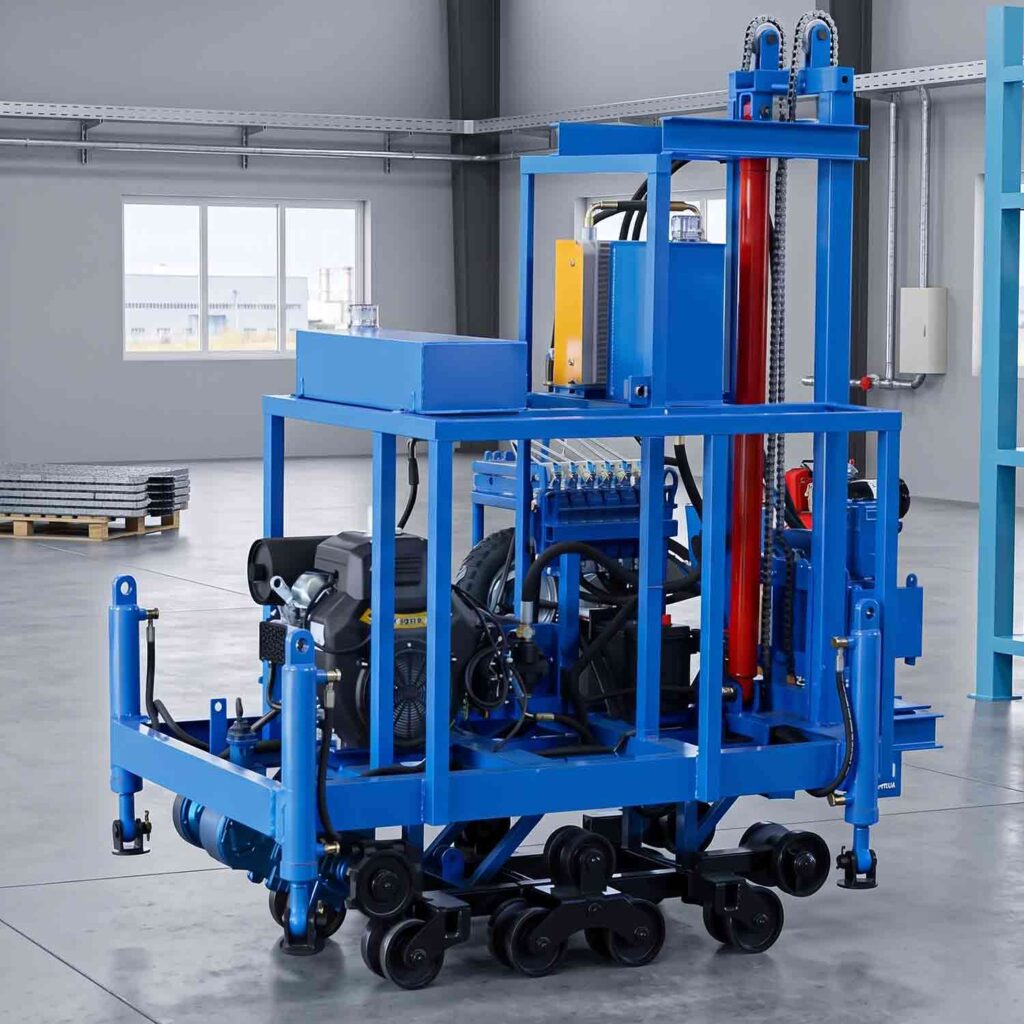
In practice, contractors using this technology can schedule diesel-intensive work during permitted hours, then switch to electric mode overnight without demobilizing the site.
Urban Contractor Compliance Checklist
- ✅ Verify local decibel limits before mobilizing
- ✅ Confirm emissions standards for the project zone
- ✅ Document power-mode transitions for inspector records
- ✅ Pre-schedule electric-mode windows for overnight phases
This modular approach to power management shares a philosophy with retrofit-friendly equipment trends gaining traction across multiple industries — adaptability as a built-in feature, not an afterthought.
Beyond avoiding penalties, demonstrating a documented emissions-compliance process is increasingly influencing contract awards. Municipal and government clients in particular are prioritizing vendors who can prove environmental accountability throughout a project’s lifecycle.
As geothermal and ground-source applications continue expanding into rural and agricultural markets, these dual-power capabilities are proving equally valuable in sensitive land environments — a trend worth watching closely.
While urban contractors wrestle with emission regulations, rural developers and farm managers are quietly discovering one of the most profitable new drilling rig jobs in the market — geothermal loop installation. The numbers back this up: according to the International Ground Source Heat Pump Association (IGSHPA), geothermal drilling for residential heating and cooling systems is expected to grow at a 13% annual rate through 2028. That’s not a niche trend. That’s a structural shift.
Ground-source heat pumps are driving this demand. Rural property owners with acreage have a distinct advantage — land availability makes vertical and horizontal loop configurations far more viable than in dense suburban areas. For agricultural land managers, unused field margins, pasture edges, and fallow sections suddenly have a new revenue-generating purpose.
Geothermal Opportunity Markers — Is Your Operation Positioned to Capitalize?
Geothermal work demands equipment that’s simultaneously precise and transport-friendly — reaching depth without disturbing surrounding land. That’s where modern compact machinery, including hydraulic-compatible excavator setups, is rewriting what’s operationally possible on rural sites.
Geothermal isn’t just a green energy trend — it’s a revenue strategy for anyone with land and the right modular equipment. And that equipment equation leads directly to the next question: how do you maximize returns without multiplying your fleet?
The logistics alone can sink a project budget. Hauling multiple dedicated machines to a single job site — separate rigs for drilling, trenching, and augering — means higher transport costs, more trailer permits, extended mobilization windows, and a larger crew just to keep everything operational. For contractors managing lean fleets, that burden compounds fast.
That’s exactly where hydraulic attachments change the math entirely.
A single mini-excavator equipped with the right modular attachments can replace two or three dedicated units on most small-to-mid-scale drilling jobs. As Equipment World Magazine notes, “the shift toward modular and multifunctional drilling attachments for mini-excavators is revolutionizing small-scale site preparation by reducing the need for multiple dedicated machines.”
The mechanics are straightforward. Modern mini-excavators with dual hydraulic pumps deliver the consistent pressure output needed to power rotary drill heads, auger drives, and hydraulic breakers interchangeably. Swapping between attachments takes minutes, not hours — and you’re running one standardized power unit throughout.
| Factor | Dedicated Drilling Rig | Modular Hydraulic Attachment |
|---|---|---|
| Upfront Cost | $80,000–$250,000+ | $8,000–$35,000 |
| Transport Requirements | Specialized trailer + permits | Standard trailer with host machine |
| Maintenance Systems | Multiple proprietary platforms | Single excavator service schedule |
| Versatility | Single function | Multi-application |
| Mobilization Time | 4–8 hours | 30–90 minutes |
The maintenance advantage is often overlooked. Standardizing around one host machine means your technicians service one hydraulic system, one engine platform, and one electrical architecture. Compare that to the complexity of maintaining a purpose-built offshore drilling rig analogue on land — multiple proprietary systems, specialized parts, and narrower technician expertise.
Explore how versatile attachments expand job scope without expanding your fleet footprint. However, it’s worth noting that modular setups do have depth and torque limitations for heavy industrial applications — understanding those boundaries upfront is essential for accurate project scoping.
The ROI case is compelling, but maximizing it requires more than the right equipment mix — it demands disciplined operational habits, which is exactly what separates top-performing fleets from the rest.
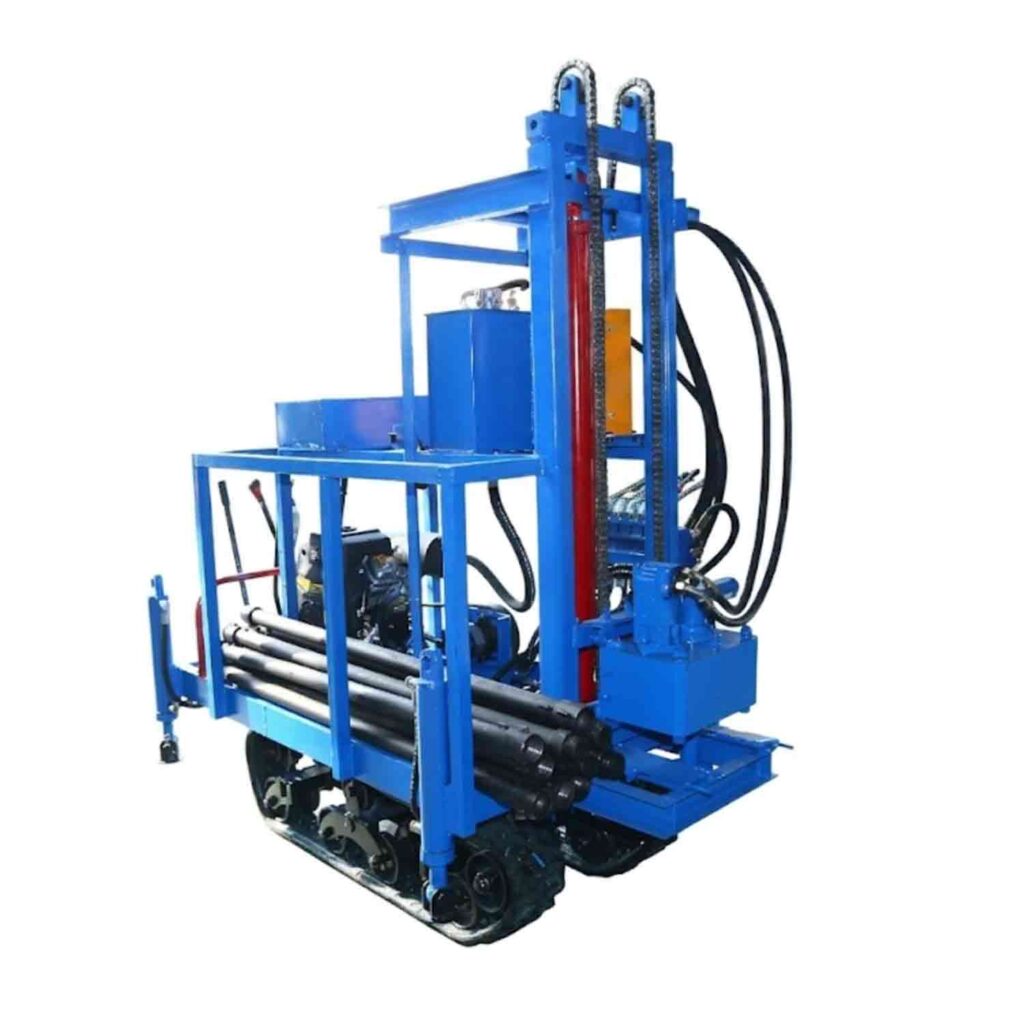
Modular rigs give you deployment flexibility, but longevity comes down to disciplined maintenance. Whether you’re working with a regional dealer or sourcing direct from a drilling rig company, keeping your system in peak condition separates profitable operators from those constantly chasing unplanned downtime.
High-pressure hydraulic circuits are the circulatory system of any rotary drilling platform. Critical inspection points include:
In practice, most hydraulic failures aren’t sudden — they’re gradual, and a consistent inspection log catches them early. Understanding how application-matched machine design reduces system stress is equally valuable here.
Fatigue in drill string components often begins as microscopic surface cracks — invisible to the naked eye but detectable through ultrasonic testing before catastrophic failure occurs, according to Shandong Qilu Industrial Technical Support. Establish a rotation-hour threshold for string inspections rather than relying on visual checks alone.
Neglecting rotary table lubrication is the single fastest way to turn a productive rig into an expensive paperweight. Advanced schedules should specify lubricant viscosity grades by ambient temperature range, re-greasing intervals tied to operating hours rather than calendar days, and bearing clearance measurements logged after each service.
Operator training ties all three disciplines together — a well-trained crew catches anomalies before they escalate, which leads naturally into the sourcing and safety questions most operators are asking before they ever turn a wrench.
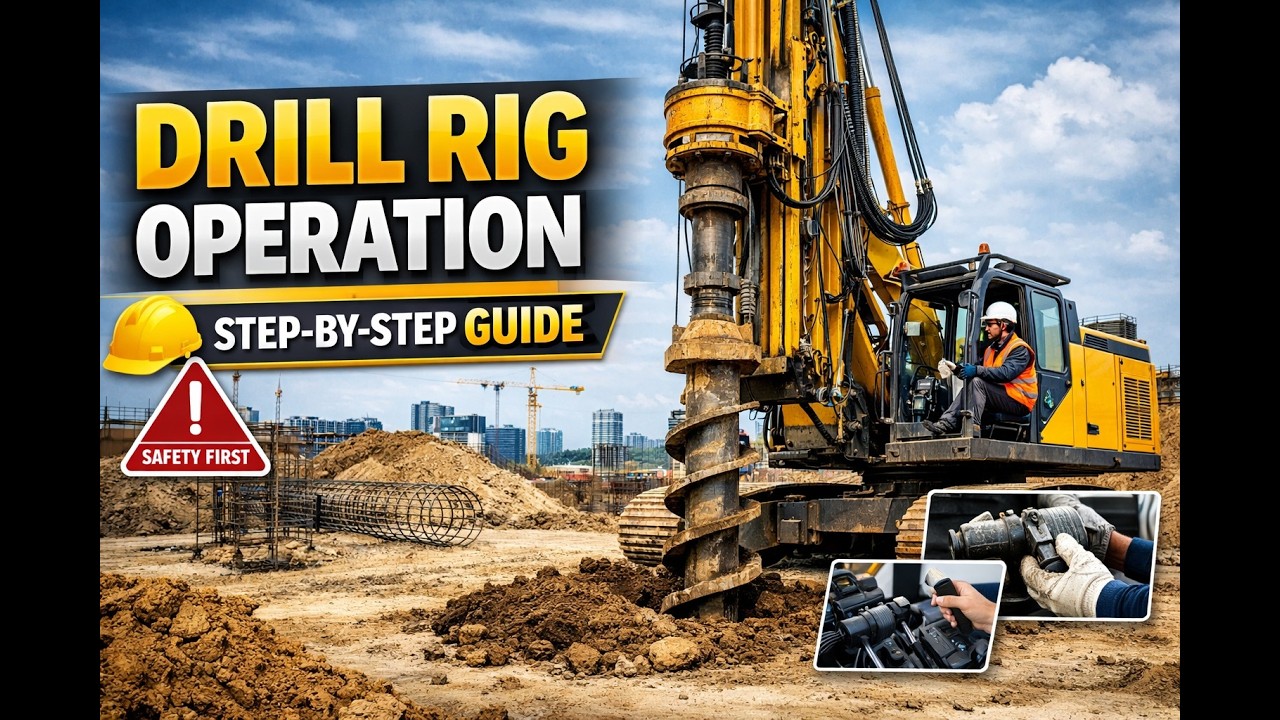
What are the main types of drilling rigs for small-scale construction?
The most common options include rotary, auger, and percussion rigs. Modular skid-mounted rigs dominate small-scale work because they’re transportable and adaptable across foundation drilling, utility boring, and water well applications.
How do I choose between factory-direct and local dealer sourcing?
Factory-direct sourcing typically unlocks custom specifications and — critically — 24-hour technical support resolution that standard dealers rarely match. For operators managing tight project timelines, that response speed can be the difference between a one-day fix and a week-long delay. Local dealers offer convenience; factory-direct offers control.
What safety standards are required for deep-well exploration?
Deep-well operations generally require compliance with OSHA 1926 Subpart P standards, pressure-rated drilling fluid systems, and documented blowout prevention protocols. Always verify local permitting requirements before mobilizing.
Can a mini-excavator handle geothermal drilling depths?
Not independently. Geothermal drilling typically requires dedicated rotary equipment reaching 150–400 feet. However, compact multi-tool platforms can handle surface preparation and shallow bore work that supports geothermal site setup efficiently.
The right rig, sourced strategically, keeps every project moving forward.





-1.png)