Welcome to Shandong Qilu Industrial Co., Ltd

 English
 Arabic
 Bulgarian
 Bengali
 Czech
Czech
 Danish
 German
 Greek
Greek
 Spanish
 Finnish
 French
 Hindi
Hindi
 Croatian
 Hungarian
 Indonesian
 Italian
 Japanese
 Korean
 Lithuanian
 Dutch
Dutch
 Norwegian
 Polish
 Portuguese
 Romanian
 Russian
 Slovak
 Slovenian
 Swedish
 Thai
Thai
 Turkish
 Ukrainian
 Vietnamese
 Tagalog
 Malay
Malay
 Estonian
 Catalan
 Latvian
 Urdu
Urdu
 Serbian
 Persian
 Swahili
 Albanian
 Armenian
 Icelandic
 Bosnian
 Luxembourgish
 Afrikaans
English Arabic
Bulgarian
Bengali
Czech
Danish
German
Greek
Spanish
Finnish
French
Hindi
Croatian
Hungarian
Indonesian
Italian
Japanese
Korean
Lithuanian
Dutch
Norwegian
Polish
Portuguese
Romanian
Russian
Slovak
Slovenian
Swedish
Thai
Turkish
Ukrainian
Vietnamese
Tagalog
Malay
Estonian
Catalan
Latvian
Urdu
Serbian
Persian
Swahili
Albanian
Armenian
Icelandic
Bosnian
Luxembourgish
Afrikaans
Afrikaans
English Arabic
Bulgarian
Bengali
Czech
Danish
German
Greek
Spanish
Finnish
French
Hindi
Croatian
Hungarian
Indonesian
Italian
Japanese
Korean
Lithuanian
Dutch
Norwegian
Polish
Portuguese
Romanian
Russian
Slovak
Slovenian
Swedish
Thai
Turkish
Ukrainian
Vietnamese
Tagalog
Malay
Estonian
Catalan
Latvian
Urdu
Serbian
Persian
Swahili
Albanian
Armenian
Icelandic
Bosnian
Luxembourgish
Afrikaans
PTO Safety Checks Every Tractor Operator Should Make Before Hooking Up an Implement
A step-by-step tractor PTO safety guide for implement hookup, driveline guards, shaft locking, geometry, hose routing, startup checks, and shutdown habits.
A useful tractor PTO safety checks is less about making a tractor look tidy and more about catching small faults before they become field delays. On a busy farm morning, ten quiet minutes around the machine can protect the operator, the implement, and the crop schedule. This guide is written for owners and operators who use a farm tractor for loader work, mowing, hauling, tillage, and everyday utility jobs.
QiLu Machinery buyers often compare horsepower and attachments first, but the real ownership experience depends on repeatable checks. A tractor that starts, steers, stops, lifts, cools, and connects predictably is easier to use than a bigger machine that surprises the operator. The same habit also helps when matching a machine to tractor application solutions or deciding which implement should be used first on a long workday.
The following sections focus on practical decisions rather than brand claims. They combine field routines with public safety reminders from sources such as OSHA tractor operation safety guidance, NIOSH agricultural safety resources, and university extension guidance. Use the ideas as a working framework and always follow the specific operator manual for the tractor and implement in front of you.
Build PTO Safety Before the Shaft Turns
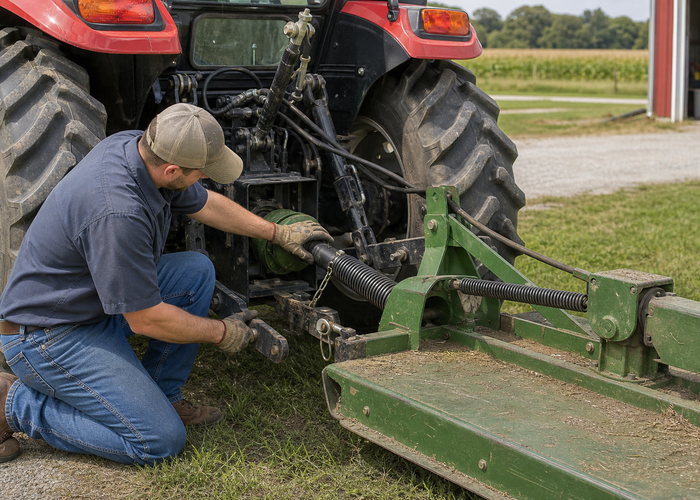
A PTO hookup deserves full attention because it brings together rotating power, hitch geometry, driveline length, guarding, and human hands. The tractor should be stopped, the engine off, the key removed, and the implement resting securely before the operator works near the shaft.
The first check is guarding. The tractor master shield, implement shield, and driveline guard should be present, secure, and able to cover the rotating parts they were designed to cover. A missing or damaged guard is not a cosmetic defect. It changes the risk of the whole job.
Next check driveline length and angle. A shaft that is too long can bottom out and damage the tractor or implement. A shaft that is too short can separate. A severe angle can vibrate, bind, or wear components quickly. Hitch height, top link length, drawbar position, and implement level all influence that geometry.
Guarding, Alignment, and Driveline Fit
Clean the PTO stub and coupler before connection. Dirt, rust, and damaged splines make hookup harder and encourage forceful handling. The locking collar or pin should fully engage, and the operator should tug the shaft gently to confirm it is locked before moving away from the hitch area.
Public safety agencies keep repeating the same message because farm tractors concentrate weight, power, rotating shafts, hydraulics, and human judgement in one machine. Penn State Extension tractor safety guidance and University of Minnesota Extension tractor safety material both stress that safe operation begins before the work starts. The best checklist is not a wall poster; it is a sequence the operator can actually complete beside the tractor.
For a purchase team, the same thinking also improves specification choices. A buyer reviewing all machinery products should ask how the tractor will be inspected, serviced, connected, and stored. A machine that fits the work but cannot be checked easily will invite skipped steps. That is where product selection and daily practice meet.
When the job involves multiple tools, walk the whole work chain. Look at the tractor, the implement, the travel route, the loading point, the slope, the gate width, and the turnaround space. If the task depends on a loader, PTO, or hydraulic coupler, include that system in the first inspection rather than waiting until the tractor is already in position.
Keep clothing, drawstrings, gloves, hair, and tools away from the shaft area. Even when the engine is off, the habit matters because routines carry over into rushed conditions. Safe operators create physical distance before power is applied.
Hookup Steps That Keep Hands Out of Pinch Points
After hookup, route hydraulic hoses, electrical leads, and safety chains so they cannot wrap, pinch, drag, or rub on the driveline. Cycle the three-point hitch or drawbar movement slowly where appropriate and watch clearances from the side, not from a pinch point.
Before engaging the PTO, confirm that the implement is designed for the tractor?s PTO speed and horsepower. Use the correct rpm, start at low engine speed where the manual recommends it, and listen for vibration, knocking, or unusual noise. Shut down immediately if the implement behaves differently than expected.
Never step over, lean across, or reach around a PTO shaft. The shortcut saves seconds and risks far more. Walk around the machine, wait for all movement to stop, and keep the work area clear of bystanders before engaging power.
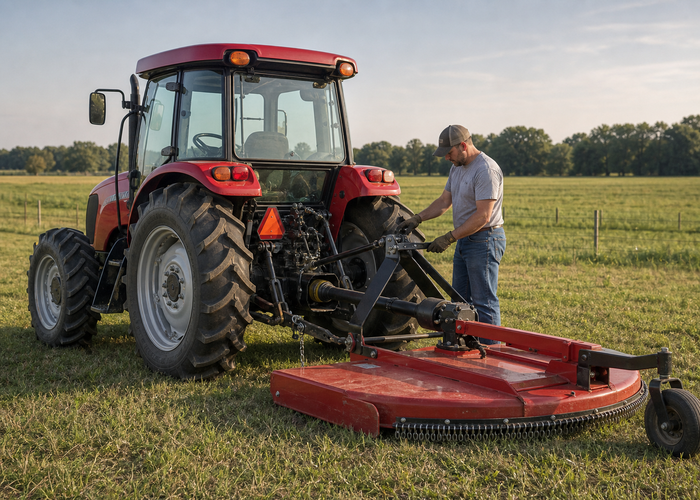
PTO safety also belongs in training, not only in repair notes. A new operator should practice hookup steps with the engine off, identify every shield, learn the stop sequence, and understand what a normal engagement sounds like. Familiarity reduces panic when something feels wrong.
For farms using several implements, label or record driveline requirements, pin sizes, spare clips, grease points, and storage stands. Many PTO problems begin because an implement was parked badly, a shield was damaged in storage, or a shaft was left dirty after the last job.
Shut down with the same discipline used at startup. Disengage the PTO, idle down as instructed, wait for all rotation to stop, lower the implement, set the brake, turn off the engine, and remove the key before inspection or adjustment. Do not trust silence until movement has actually stopped.
When an implement is changed, repeat the full check instead of assuming the last setup applies. A mower, tiller, spreader, pump, baler, and post-hole digger place different loads on the driveline. The safe setup is the one verified for the implement being used today.
Engagement, Shutdown, and Training Habits
Good routines are simple enough to survive pressure. Keep the checklist near the key, toolbox, fuel point, or service bay. Keep spare hitch pins, lynch pins, gloves, shop towels, and tire pressure tools where they are actually used. For larger fleet planning, the same records can support service decisions around the QL 60HP tractor, the QL 904B tractor, and other equipment in a mixed yard.
The final test is whether the operator can explain the stop condition. If a leak, damaged guard, low tire, loose pin, warning light, unusual sound, or unstable load appears, the correct answer is to stop and fix the cause. University of Missouri farm machinery maintenance guidance and other extension publications frame maintenance as a prevention habit, not a paperwork exercise.
PTO safety is built before the shaft turns. Guards, geometry, locks, hose routing, operator position, and shutdown habits all have to work together. A careful hookup routine may feel slow at first, but it becomes the fastest way to keep power where it belongs: inside the machine, not near the operator.
The safest PTO routine begins before the tractor is backed up. Inspect the implement where it is parked. Is the stand stable, is the driveline supported, is the shield intact, are the pins nearby, and is there enough level space to align the tractor without forcing the shaft? Many risky hookups begin because the implement was left at a poor angle or half buried in grass, mud, or crop residue. Good storage is part of safe hookup.
Alignment should be slow and deliberate. Back squarely, stop short, set the brake, and make small adjustments instead of using body strength to drag a heavy implement into place. If the three-point hitch arms are not level, adjust them before fighting the shaft. If the drawbar position is wrong, correct it before attaching. The goal is to remove force from the operator?s hands and put alignment back into the machine setup.
Driveline shields need a functional check, not only a glance. The guard should cover the rotating shaft, turn freely where designed, and not be tied back, cracked, missing, or jammed with debris. Safety chains or anti-rotation devices should be attached where the design requires them. A shield that looks present but cannot function is a false comfort. Replace damaged guards before the implement is used.
PTO speed must match the implement. Running a tool at the wrong rpm can create vibration, poor cutting, thrown material, driveline stress, and unnecessary danger. Confirm whether the implement requires 540 rpm, 1000 rpm, or another configuration, and make sure the tractor setting matches. If the operator is unsure, the correct response is to stop and check the manual or equipment plate.
Storage and Inspection for Older Implements
After connection, perform a low-power function check in a clear area. Raise and lower the implement through the range needed for the job, watch for shaft binding, check hose clearance, and listen during initial engagement. If the implement shakes, knocks, rubs, or pulls the tractor unexpectedly, disengage and shut down. Early symptoms are useful warnings, not obstacles to ignore.
Finally, make the shutdown sequence a habit everyone on the farm recognizes. Disengage PTO power, throttle down, wait for all rotation to stop, lower the implement, set the brake, shut off the engine, remove the key, and only then approach the shaft or implement. Consistency protects experienced operators as much as beginners because most serious mistakes happen when a familiar job feels routine.
Field Use Notes
PTO routines are easiest to improve when implements are stored consistently. Park them on firm level ground, support the driveline, keep pins and clips with the implement, and protect shields from damage. A clean storage habit prevents hurried repairs at hookup time. It also helps a new operator see what normal looks like before the tractor is backed into position.
For managers, the most useful record is not a perfect archive but a pattern that can be acted on. If the same tire loses pressure, the same coupler leaks, the same operator reports unstable handling, or the same implement is difficult to attach, the farm has found a training or maintenance priority. Review the notes weekly, keep the language plain, and turn repeated observations into repairs, storage changes, or operator reminders before the busy season makes every small fault harder to fix.
Communication matters whenever more than one person is involved. The person in the seat should control the tractor, while helpers stay visible and outside pinch points. Agree that any person can signal stop, and that no one touches the implement, shaft, hoses, or pins until the tractor is secured. Clear roles prevent the common mistake where one person assumes the other is still watching.
Older implements deserve special caution because guards, decals, storage stands, and driveline parts may have been changed or removed over time. Before using second-hand equipment, inspect it as if its history is unknown. Replace missing shields, confirm the correct shaft length, check bearings and universal joints, and verify that the implement can be parked safely after the work is finished.
When planning PTO-driven jobs, it helps to connect the safety routine with the right machine and implement package. Start with QiLu Machinery’s farm tractor range, the product application solutions hub, and the tractor application solutions page. For outside safety checks, compare the routine with Penn State Extension tractor safety guidance, OSHA agricultural tractor guidance, and NIOSH farm injury prevention resources.
Practical FAQ
How often should a tractor checklist be used? Use a short walk-around before every work period and a more detailed inspection when the job changes, when an implement is attached, after transport, or after the tractor has been operated by someone else. The point is consistency, not paperwork volume.
When to Stop Before Re-Engaging the PTO
What should stop the job immediately? Stop for active fluid leaks, brake problems, steering problems, damaged guards, missing hitch retainers, warning lights, unstable loads, unusual vibration, overheated systems, damaged tires, or any condition that makes the operator unsure. A delayed repair is cheaper than a damaged tractor or injured worker.
Should the same checklist be used for every implement? Keep a common tractor checklist, then add a short implement-specific section. Loader work, PTO work, mowing, road travel, and tillage expose different risks. A few focused lines are more useful than one generic form that tries to cover every possible situation.
What is the most common reason a good checklist fails? The checklist fails when it is stored away from the machine, written in language operators do not use, or made too long for the morning routine. Keep it visible, practical, and connected to real stop conditions.
For more practical machinery topics, review the QiLu Machinery blog and the broader product application solutions pages. A farm tractor earns its keep when it is selected for real work, checked before real work, and operated with enough discipline to come home ready for tomorrow.