Dobrodošli na Shandong Qilu Industrial Co., Ltd

 Slovenian
 English
 Arabic
 Bulgarian
 Bengali
 Czech
Czech
 Danish
 German
 Greek
Greek
 Spanish
 Finnish
 French
 Hindi
Hindi
 Croatian
 Hungarian
 Indonesian
 Italian
 Japanese
 Korean
 Lithuanian
 Dutch
Dutch
 Norwegian
 Polish
 Portuguese
 Romanian
 Russian
 Slovak
 Swedish
 Thai
Thai
 Turkish
 Ukrainian
 Vietnamese
 Tagalog
 Malay
Malay
 Estonian
 Catalan
 Latvian
 Urdu
Urdu
 Serbian
 Persian
 Swahili
 Albanian
 Armenian
 Icelandic
 Bosnian
 Luxembourgish
 Afrikaans
Slovenian English
Arabic
Bulgarian
Bengali
Czech
Danish
German
Greek
Spanish
Finnish
French
Hindi
Croatian
Hungarian
Indonesian
Italian
Japanese
Korean
Lithuanian
Dutch
Norwegian
Polish
Portuguese
Romanian
Russian
Slovak
Swedish
Thai
Turkish
Ukrainian
Vietnamese
Tagalog
Malay
Estonian
Catalan
Latvian
Urdu
Serbian
Persian
Swahili
Albanian
Armenian
Icelandic
Bosnian
Luxembourgish
Afrikaans
Afrikaans
Slovenian English
Arabic
Bulgarian
Bengali
Czech
Danish
German
Greek
Spanish
Finnish
French
Hindi
Croatian
Hungarian
Indonesian
Italian
Japanese
Korean
Lithuanian
Dutch
Norwegian
Polish
Portuguese
Romanian
Russian
Slovak
Swedish
Thai
Turkish
Ukrainian
Vietnamese
Tagalog
Malay
Estonian
Catalan
Latvian
Urdu
Serbian
Persian
Swahili
Albanian
Armenian
Icelandic
Bosnian
Luxembourgish
Afrikaans
Načrtovanje teže prikolice mini bagra: Osnove stroja, vedra, goriva in vezave
Praktično transportno vodilo mini bagra za težo stroja, nazivno vrednost prikolice, žlice, gorivo, priključke, ravnotežje jezika, privezovanje in predcestne preglede.
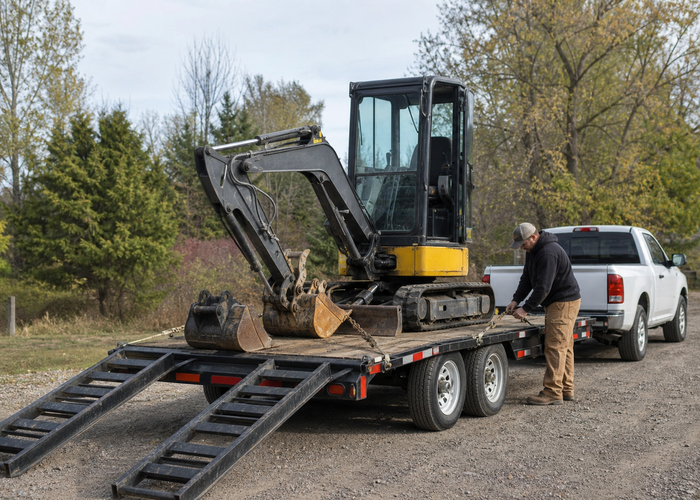
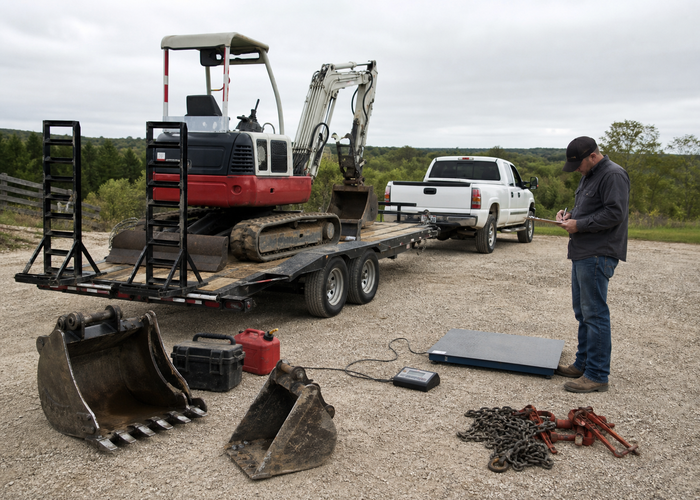
Mini excavator trailer weight planning should happen before the machine reaches the ramps. The transport load is not only the base machine. It includes buckets, couplers, fuel, thumb or breaker, chains, binders, mats, tools, spare parts, and sometimes mud carried in the tracks. A trailer that looks large enough can still be overloaded or poorly balanced once the full work package is counted.
Primerjava kupcev QiLu Machinery mini excavator models should treat transport as part of ownership. A machine that fits the jobsite but does not fit the trailer, tow vehicle, access road, or tie-down routine will create delays. The safest transport plan starts with numbers, then confirms the loading method in the yard.
This article uses practical transport planning and general public resources from FMCSA, Informacije o varnosti v cestnem prometu NHTSA, in OSHA. It is not legal advice; buyers should check local rules, trailer labels, machine manuals, and professional transport requirements for their area.
Count the Whole Load, Not Only the Machine
Start with the operating weight of the excavator in the configuration being transported. Cab, canopy, counterweight, blade, rubber tracks, thumb, quick coupler, and bucket choice can all change the number. Then add every attachment that travels with the machine. A small grading bucket, trenching bucket, hydraulic breaker, auger drive, fuel can, and tool box each adds weight.
The trailer also has its own weight. Gross vehicle weight rating is not the same as payload capacity. The empty trailer weight must be subtracted from its gross rating before the allowable payload is known. If the trailer plate is missing, unreadable, or inconsistent with the axle rating, stop and verify before loading.
Bucket, Fuel, and Mud Are Easy to Forget
Buckets are often treated like accessories, but they can be heavy. A wide cleanup bucket, rock bucket, or extra trenching bucket may change the transport plan. Fuel matters too. A full tank and a portable fuel can add more weight than the operator expects. Mud in tracks and undercarriage can also add weight and create road debris. Clean the machine when practical before loading.
Attachments should be loaded intentionally. Put them where they do not slide, damage hoses, overload one axle, or interfere with tie-down angles. If the trailer deck becomes crowded, the load plan may be wrong even if the total weight appears acceptable.
Trailer Rating and Tow Vehicle Rating Must Agree
The trailer, tow vehicle, hitch, ball, coupler, safety chains, brake controller, tires, and license requirements all belong in the same check. A strong trailer pulled by an unsuitable vehicle is not a safe transport plan. A capable truck with an underrated hitch is also a problem. Compare the weakest rated component with the full loaded weight, not the empty machine weight.
For internal comparison, buyers can review the compact 0,8 tone mini bager, larger 3.5T excavator, and rešitve za nanašanje bagrov. Transport planning changes as machine class, bucket set, and daily route change.
Loading Position and Tongue Weight
The excavator position on the deck affects tongue weight and axle balance. Too much weight forward can overload the hitch or rear axle of the tow vehicle. Too much weight rearward can create unstable trailer behavior. The correct position depends on trailer design, machine weight, attachments, axle placement, and tow vehicle requirements.
Load on level ground when possible. Keep bystanders away from the ramps. Align the machine straight, travel slowly, keep the boom and bucket controlled, and avoid sudden turns on the ramps. Once on the deck, lower the attachment, set the blade as directed, shut down, and secure the machine before adjusting smaller items.
| Transport item | Question to answer | Common mistake |
|---|---|---|
| Teža stroja | What is the operating weight in this configuration? | Using a bare brochure weight without attachments |
| Trailer payload | What payload remains after empty trailer weight? | Reading GVWR as payload capacity |
| Priloge | Which buckets, tools, and mats travel today? | Adding tools after the machine is already loaded |
| Tongue balance | Where should the excavator sit on this trailer? | Assuming the same position works for every attachment set |
| Tie-downs | Are chains, binders, and anchor points rated and placed correctly? | Using convenient points instead of proper securement points |
Tie-Downs and Securement Points
Tie-down equipment must be rated, in good condition, and attached to proper points. Chains, binders, straps, hooks, and trailer anchor points should be inspected before loading. Bent hooks, worn chains, damaged binders, loose anchor points, and frayed straps should be removed from service.
Machine manuals and transport rules should guide securement. The goal is to prevent movement forward, backward, sideways, and upward during normal road forces. The bucket, blade, and attachments may also need separate securement. A heavy bucket sitting loose on a deck can become a hazard even when the excavator itself is chained well.
Road safety resources from NHTSA tire safety information are useful reminders because trailer tires often fail from age, underinflation, heat, or overload. Check tires, lights, brakes, breakaway battery, chains, coupler lock, and load height before departure.
Route and Site Access Planning
Transport planning continues after the machine is chained. Confirm the route, bridge or driveway limits, slope into the jobsite, turning space, overhead branches, gate width, and where the trailer can be parked for unloading. A trailer that cannot turn around near the work area may force a risky unload position.
Weather changes the plan. Rain can make ramps slick, soften access lanes, and add mud to tracks. Wind can affect highway behavior. Darkness makes tie-down inspection harder. If the transport happens before sunrise or after a long workday, use a checklist rather than relying on memory.
Documentation That Saves the Next Trip
Keep a transport sheet for each machine package. Record excavator model, bucket set, attachment weights, trailer, tow vehicle, preferred deck position, tie-down points, and any route warnings. If the crew changes from a small bucket to a breaker or auger, update the sheet. A one-page record can prevent the same weighing and guessing process from repeating every week.
Uporabite notranje strani za načrtovanje, kot so Izdelki QiLu Machinery, rešitve za uporabo izdelkov, equipment application guidance, and the machinery blog to match the excavator decision with transport, digging, grading, and maintenance needs.
Loading Sequence That Reduces Guesswork
A repeatable loading sequence keeps the operator from making a new decision every time. First, inspect the trailer deck, ramps, tires, lights, coupler, chains, and brake connection. Second, stage buckets, tools, mats, and fuel where they can be loaded in the intended order. Third, load the excavator slowly and stop on the deck before final positioning. Fourth, place attachments where they support the balance plan rather than wherever space remains.
Once the machine is positioned, lower the boom and bucket as directed by the manual, shut down, remove the key, and begin securement. Do not leave the machine idling while people work around chains and binders. Do not let a helper reach under a suspended bucket or stand between the machine and trailer edge. The trailer deck is a work zone, not just a parking space.
Axle Balance and Tire Loading
Trailer axle balance matters because overload can hide in one place even when total weight looks acceptable. A trailer can be under gross rating but still overload the tongue, one axle, or one tire. Uneven side loading can also appear when buckets and tools are placed carelessly. If the trailer leans, the tires look compressed, or the tow vehicle squats more than expected, stop and reassess before road travel.
Tire load rating, inflation, age, and heat should be checked before heavy hauling. A trailer that sits most of the month can still have tire problems on the day it carries the excavator. Look for cracks, cuts, uneven wear, low pressure, missing valve caps, and heat after a short test drive. Heavy equipment transport is a poor place to discover tire neglect.
Attachment Securement Is Its Own Task
Extra buckets and hydraulic attachments need their own securement plan. A bucket nested on the deck may still shift under braking. A breaker or auger drive can damage hoses if it rolls. A fuel can must be transported according to applicable safety rules, not squeezed into any open corner. The operator should be able to explain how every item on the deck is restrained.
Chains and binders should not rub hydraulic hoses, cylinders, sharp corners, lights, or painted surfaces that will be damaged by vibration. If an attachment has a designated tie point, use it. If not, secure it so that it cannot slide, bounce, rotate, or contact the machine. After a few miles, stop in a safe place and recheck the load, especially after the first trip with a new attachment package.
Unloading Is Part of Transport Planning
Many transport mistakes happen at the destination. The crew arrives, finds a narrow shoulder, a sloped driveway, soft ground, or limited turning space, and then unloads in a compromised position. The departure plan should include the unloading location. If the site cannot support safe unloading, the transport route or machine choice may need to change.
Unload on firm, level ground when possible. Keep people away from the ramps. Use low speed, straight alignment, and clear communication. If the ramps are wet, muddy, icy, or damaged, stop and correct the condition. The machine should not be driven off a trailer because the crew feels rushed. A few minutes of setup protects the machine, trailer, and people around it.
Transport Record for Small Fleets
A small fleet benefits from a written transport record. Include machine model, standard bucket, optional buckets, attachment weights, preferred trailer, preferred tow vehicle, deck position, tie-down points, and known route cautions. Add a photo of the correct loaded position if the crew changes often. The record should live where operators can see it before loading, not hidden in an office folder.
The record also helps with purchasing. If the same trailer is always at its limit, the next machine decision should include transport upgrade cost. If the excavator is rarely moved with more than one bucket, the transport package may remain simple. If the crew often carries augers, breakers, mats, and fuel, a larger trailer or separate support vehicle may be more practical than overloading a compact setup.
Documentation is not paperwork for its own sake. It is a memory tool for repeated work. It keeps the same crew from repeating the same uncertain loading routine and helps new operators learn the proven setup before they have to make a decision beside the road.
Roadside Inspection Habit
After the first short drive, stop in a safe legal place and inspect the load again. Check chain tension, binder position, ramp locks, tire heat, lights, coupler, safety chains, and whether any bucket or tool shifted. A load that looked perfect in the yard can settle after the first bumps. This habit is especially useful after changing attachments, loading position, trailer, or rough route conditions.
Drivers should also keep emergency equipment organized: gloves, spare pins, warning triangles where required, tire pressure gauge, suitable jack, wheel chocks, and contact information for service help. General road safety resources from the U.S. Department of Transportation and injury-prevention material from CDC NIOSH reinforce the same basic idea: plan before movement, inspect during movement, and stop when the setup changes.
Praktična pogosta vprašanja
Is the machine brochure weight enough for trailer planning? No. Use the operating configuration plus bucket, fuel, attachments, chains, tools, and any material carried on the trailer.
Can the same trailer position be used every time? Not always. Bucket set, extra attachments, fuel, and trailer design can change balance. Verify tongue weight and axle loading.
What should be checked before departure? Check coupler, safety chains, brakes, lights, tires, tie-downs, bucket security, ramps, load height, and route conditions.
Mini excavator trailer weight planning is a practical ownership habit. Count the full load, respect trailer and tow vehicle ratings, secure every movable item, and document the setup that works.